Christianna, to begin with, tell us about the highlights of your journey. What have been the key milestones that brought you to where you are today?
I was born and raised in Athens, but I think a big part of me was born in Spetses, where I spent all my summers. Our house was opposite the boatyards, and from a very young age I was fascinated by everything that surrounded them.
At 18, I left for London and studied Sculpture at Chelsea School of Art & Design and Central Saint Martins. Perhaps strangely, the longer I lived away from Greece, the more I began to observe and appreciate things I had previously taken for granted: its traditions, as well as those that were slowly disappearing.
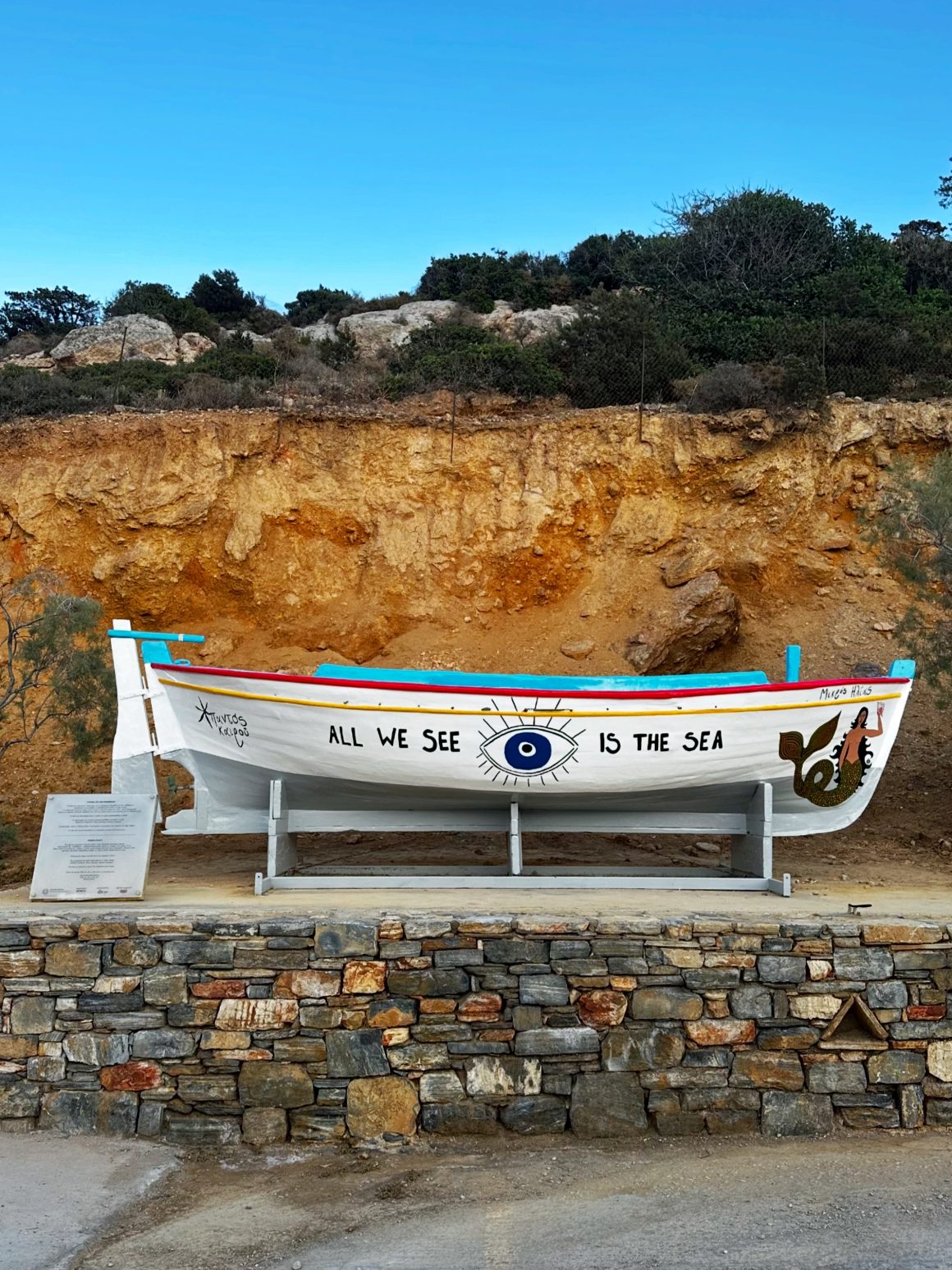
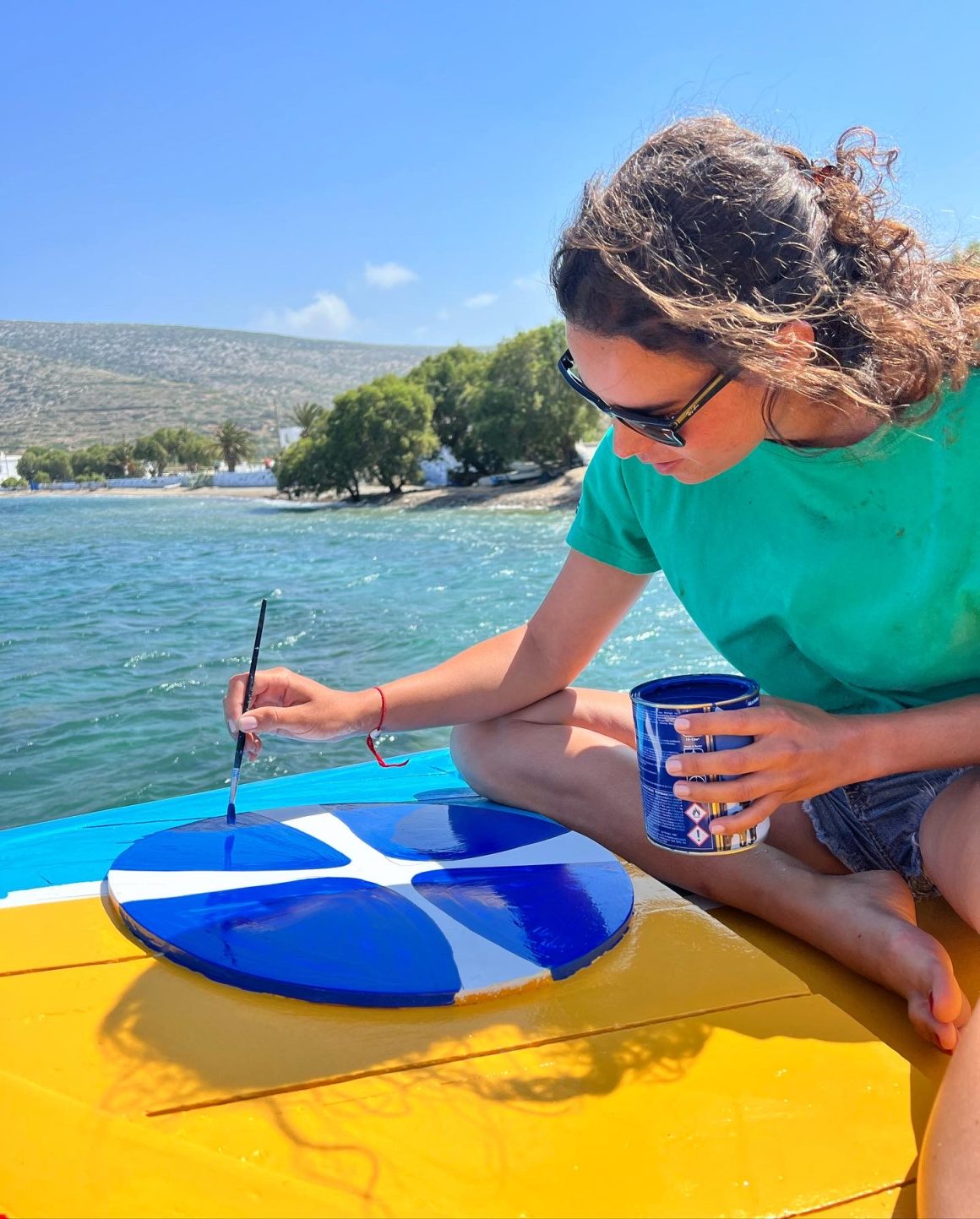
When I returned in 2015, I started the Karavia Pou Den Fovithikan (Ships That Were Not Afraid) project in Schinoussa, an artistic restoration programme for old, abandoned fishing boats. Today, these boats adorn the harbours of the Small Cyclades, Naoussa and Spetses as works of art—a tribute to our sailors and our sea. From there came the islands, the people, the workshops with children, my own studio and, eventually, All We See Is The Sea.
Looking back, I don’t feel there was ever a very specific plan. I simply travelled with the tide as it came.
What was All We See Is The Sea, how did the idea come about, and how has it evolved?
It was my life in the Small Cyclades from 2015, when I moved there permanently and began the project with the fishing boats. It was a phrase I used to write on my boats—I think it was more of a state of mind.
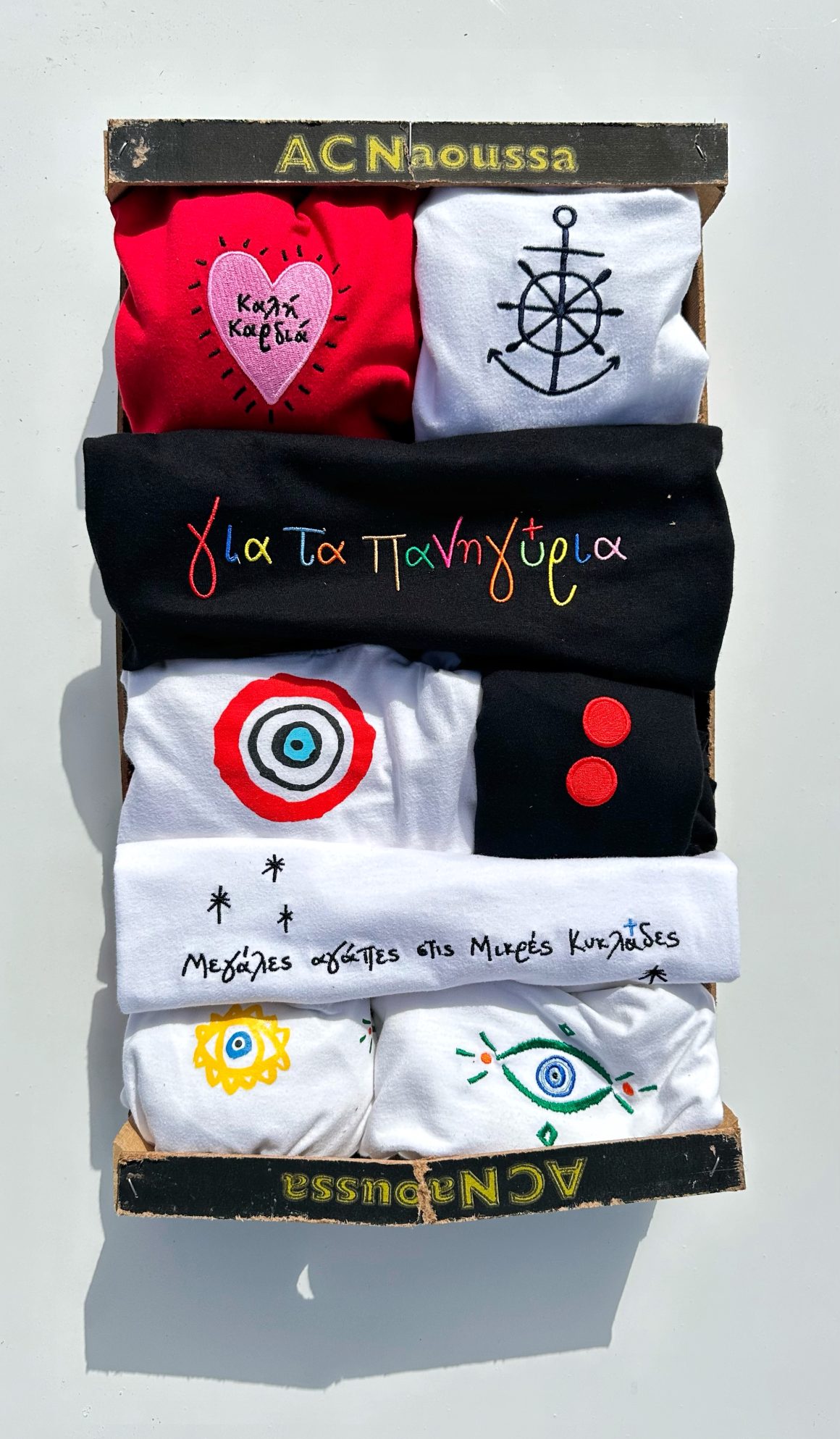
When I was preparing Kyra Sofia, my third boat, in Koufonissi, I printed some T-shirts for ourselves and the friends who would be there. People started asking for them, and suddenly I realised that this little world I had created around the boats could travel in other ways too.
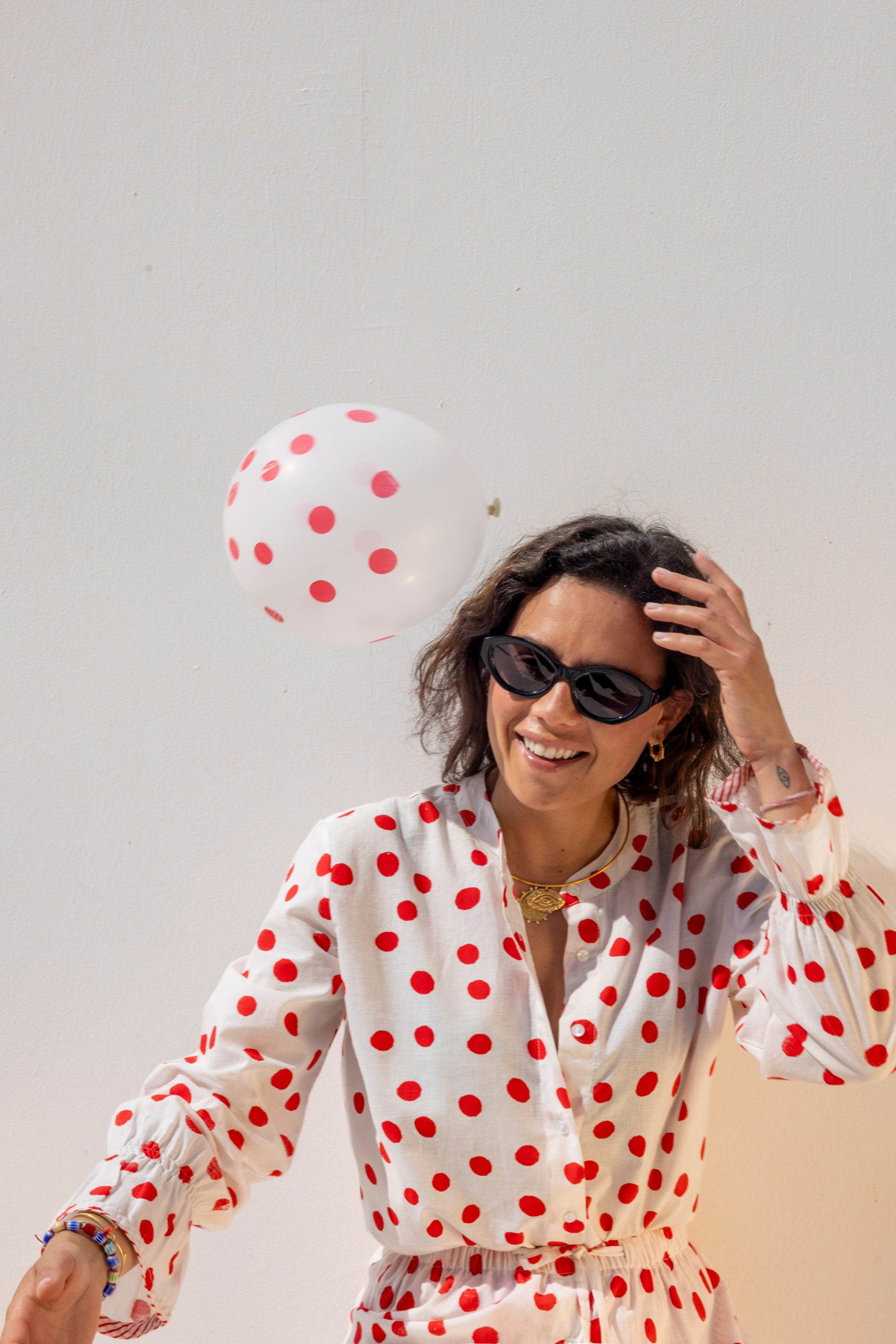
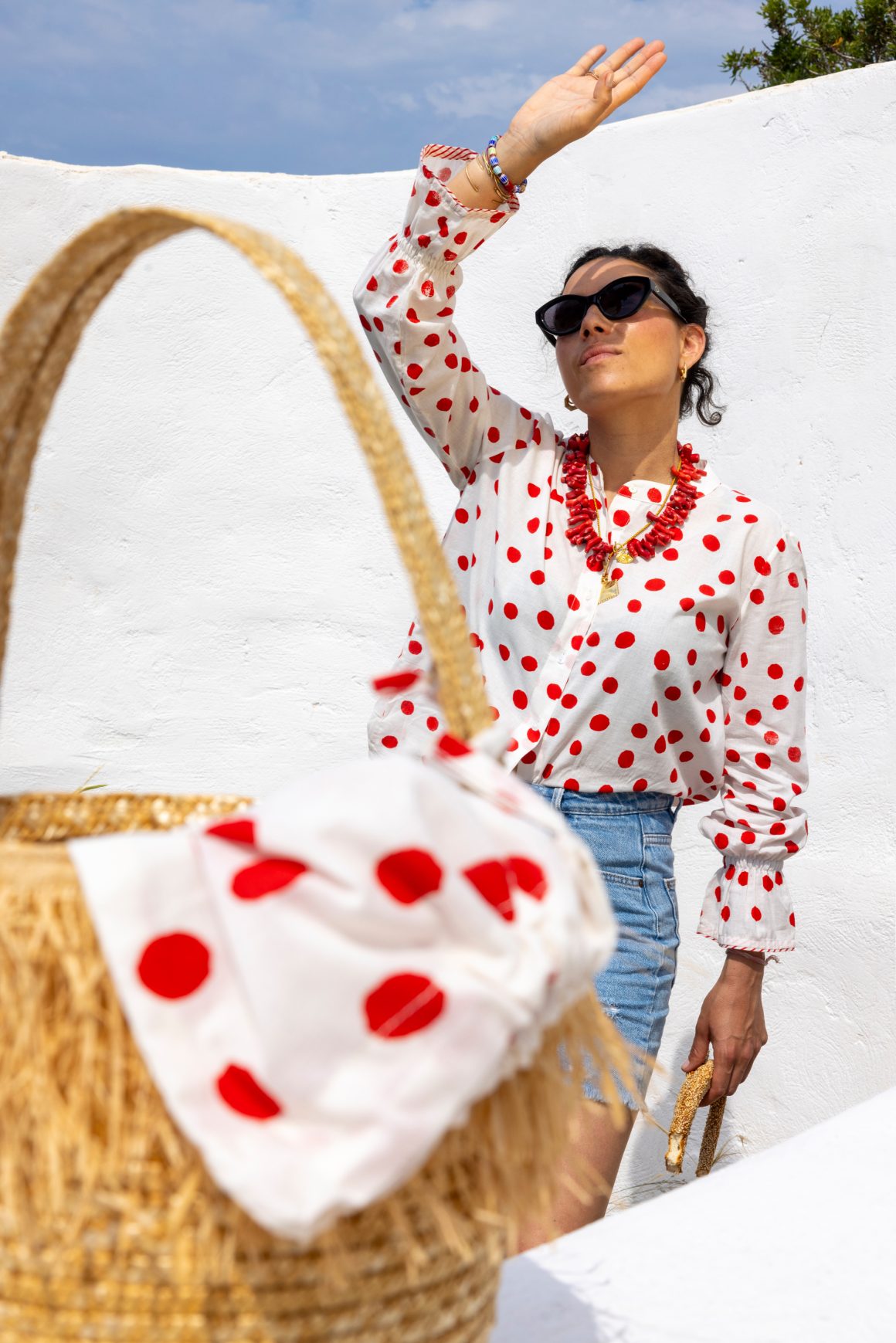
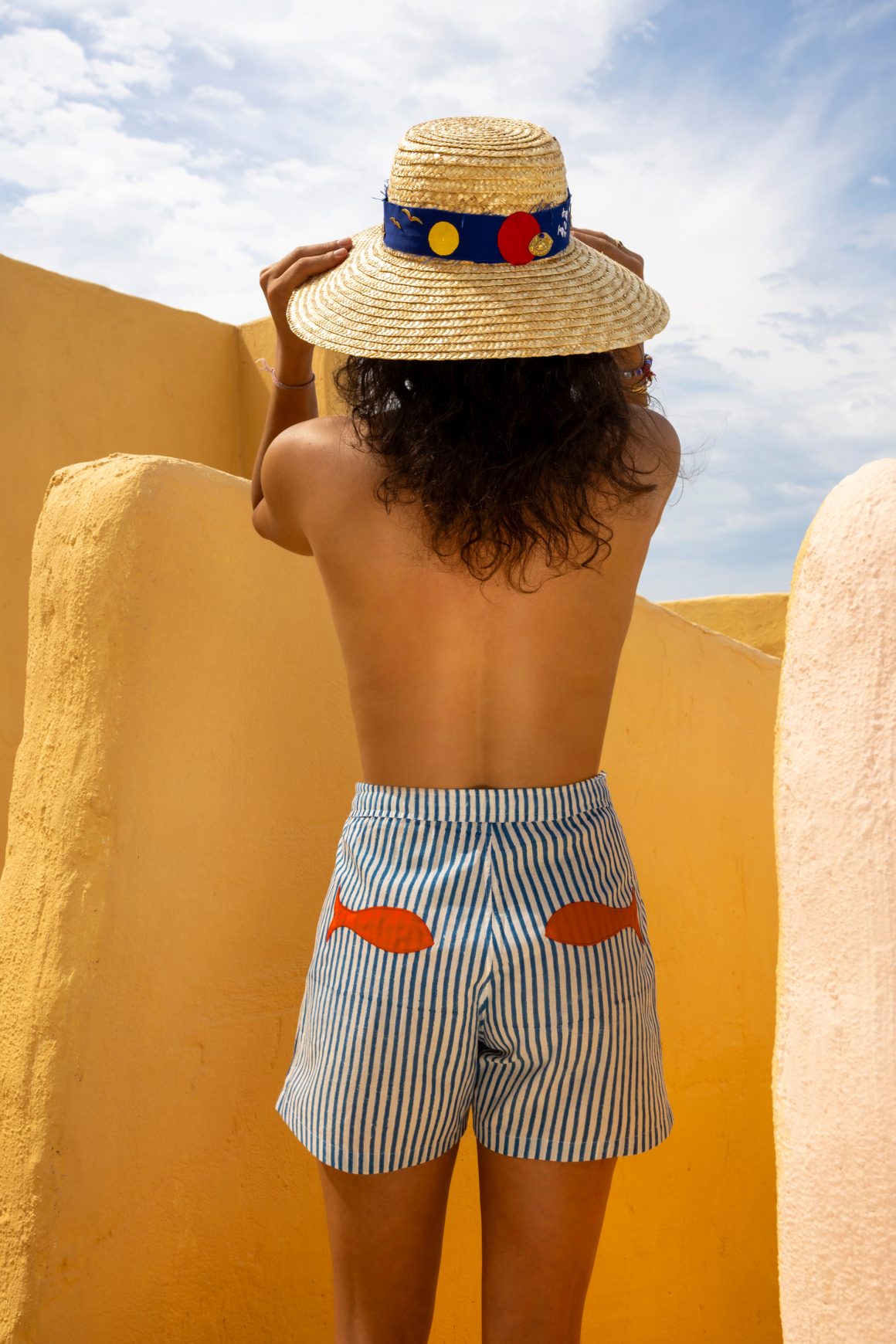
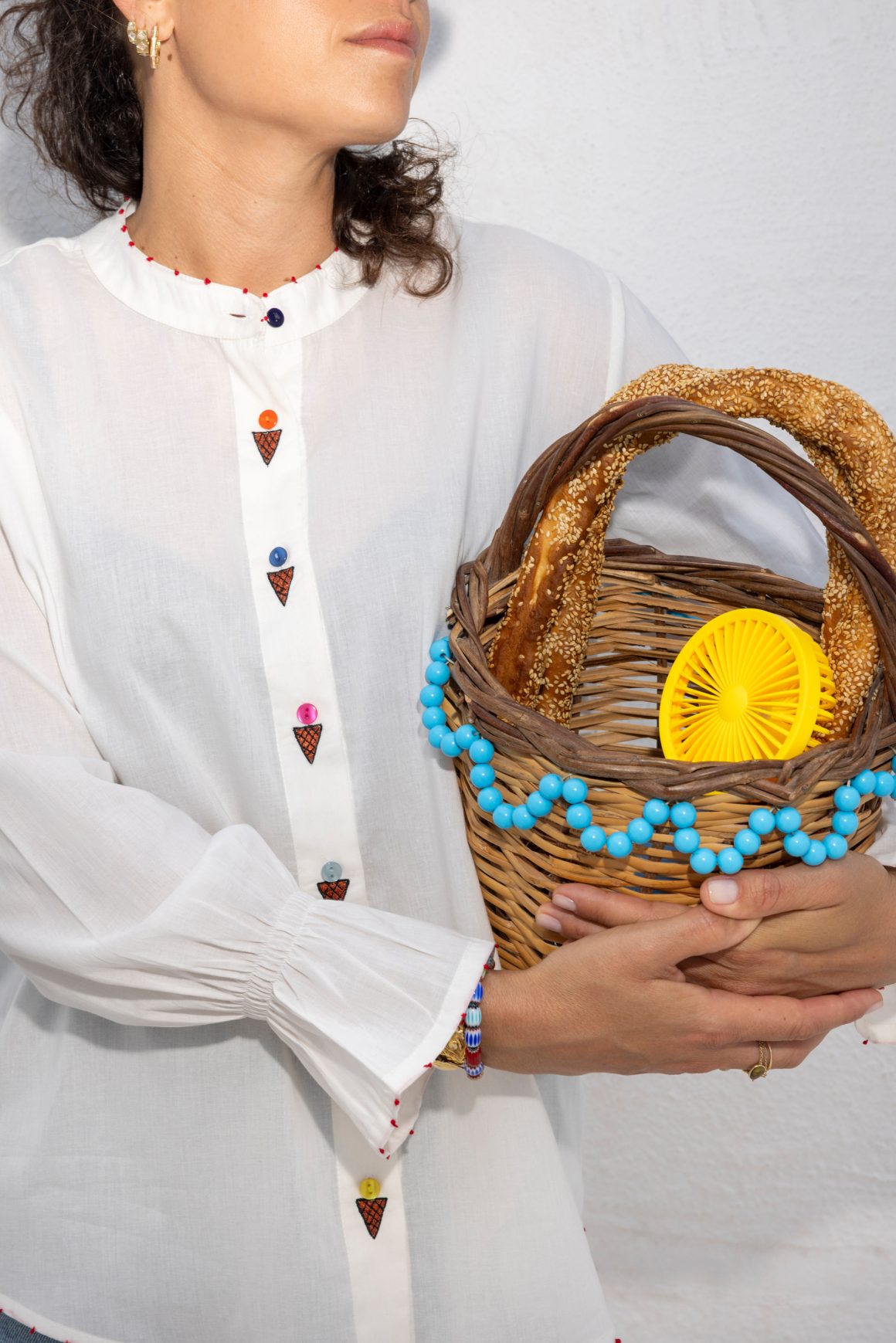
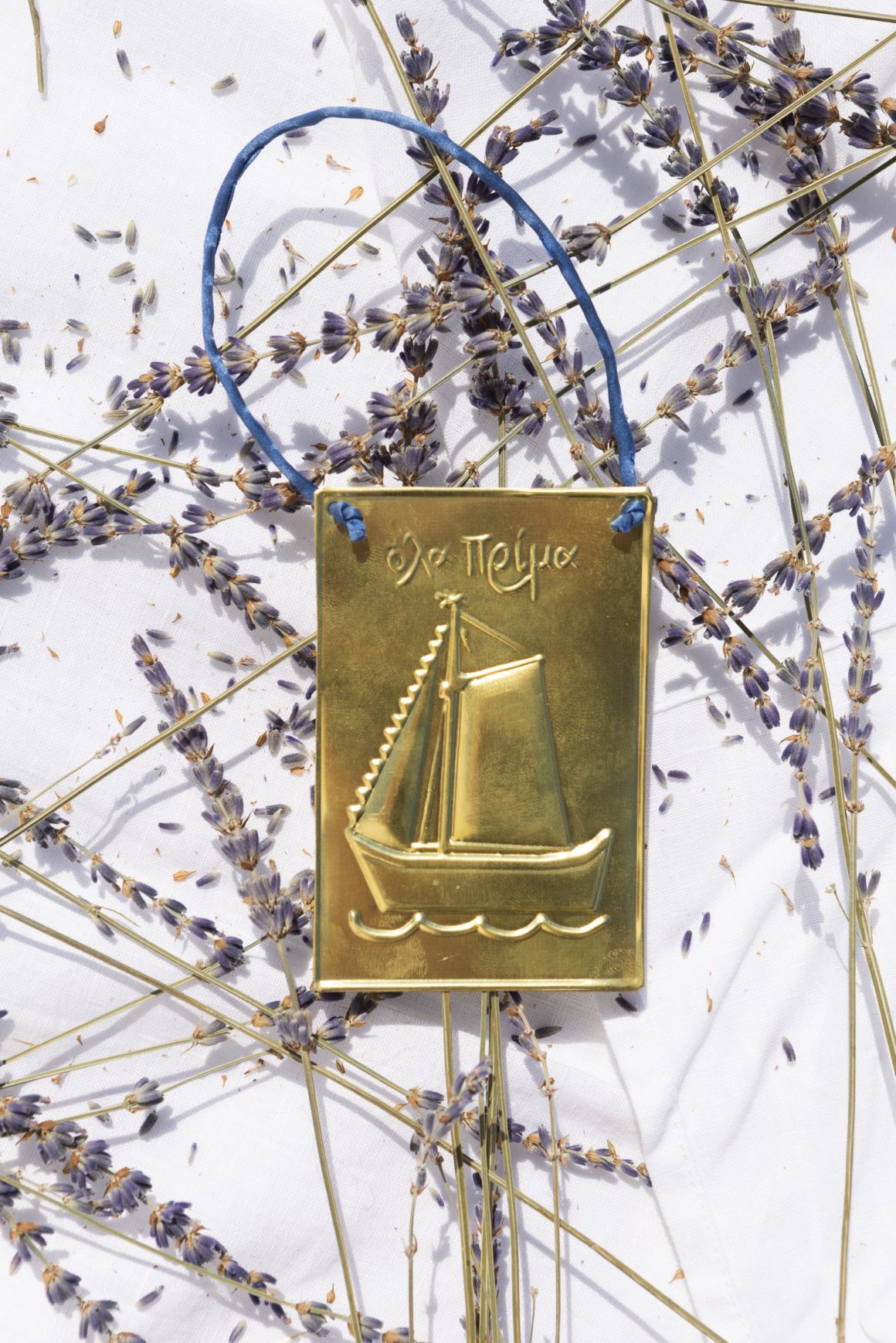
That is how All We See Is The Sea was born, and within it many other things came to life: ceramics, jewellery, tamata (votive offerings), wooden objects, little boats and clothing. I was never interested in making “souvenirs”, which is why the brand never followed that direction. What interests me is taking something very familiar, almost archetypal, and giving it a twist. That is why our motto is “We Twist Tradition.”
It is what I call neo-traditional: tradition without nostalgia and without folklore.
You have a unique way of creating objects that radiate the joy of life and the light of summer. Tell us a story that has stayed with you.
I remember the first time I arrived in Schinoussa in February. Nothing resembled what we have in mind when we think of a “Greek island”. It was windy and cold, there were very few people, and the harbour was almost empty. And yet, it was perhaps then that I understood more than ever what an island truly means.
I was looking for an old fishing boat without knowing exactly what I would do when I found one. And when I finally found Mikros Ilias, an entire adventure began, with people initially looking at me rather strangely, wondering whether I was actually crazy—haha—and what I wanted to do with a rotten old boat.
In the end, however, the boat became the concern of the whole island. The island became my friends and my “family”, and eleven years later, I can tell you that if there is one period I feel nostalgic for, it is precisely that very beginning. That is what I take away from that story: things acquire a real life when they cease to belong exclusively to you.
What were the most powerful moments along this journey, and perhaps its disappointments?
The most powerful moments were always the dawn of the opening day and the celebration at each harbour. I was always incredibly moved, physically exhausted but also immensely proud. This journey of the past eleven years is literally loaded into the hold of a fishing boat that keeps travelling—through calm days and days of rough seas.
There were many disappointments, of course; there have to be. But it is precisely because of them that the greatest joys have meaning.
You inspire us to love Greece and the Greek summer even more. What do you think you do best, and what is it that you most love doing?
I think what I do best is observe.
I like finding things that are right in front of us but that we have stopped seeing, and then mixing them up and reinterpreting them.
What I love most is the process of creating itself. I can spend hours alone in the studio, especially very early in the morning or late at night, when the island becomes quiet. Lately, I don’t do it as much because I simply don’t have the time, and perhaps that is what I miss most. During those hours there is no brand, no deadline, no collection. There is only the joy of asking, “What would happen if I tried this?” And I think that, in moments like these, everything I have created so far was born.
What new directions are you exploring, and how did they come about?
I find myself increasingly interested in the idea of a complete way of life.
I want All We See Is The Sea to be more than a collection of products—to be a small world of its own. A world where you can wear something, eat from a plate, put an object on your wall, and have everything carry the same story.
What interesting stories does the brand have to tell, and how many more are yet to come?
If I start, I don’t know where I will stop!
Almost every object has a story behind it. The Karaves, for example, are inspired by the makeshift boats that children in the Cyclades used to make from old olive-oil tins. The tamata carry an entire world of faith and folk art. The nautical words on the ceramics are words I hear in my everyday life. Even the colours are often connected in my mind to specific islands, different moods of the sea and changing weather.
And I think the stories yet to come are more numerous than those already told, because the best seas are the ones we have not yet sailed.
What is it really like to live and create from a sun-filled Cycladic island like Paros?
Real life on an island has much less to do with Instagram than we might imagine.
There is winter, wind, solitude, difficulties and small communities. But there is also something that is priceless to me—a rhythm. You watch the weather change. You notice when the north wind blows and when the south wind comes. You know which boat left in the morning. You can tell the time by the colour of the sky outside.
Of course, for me, this is an enormous creative wealth. The light and the sea are the obvious sources of inspiration. But people are the true inspiration of a place.
How do international visitors respond to your work?
It is interesting that foreigners often see things in it that we consider completely ordinary.
A Greek word, for example, can carry a very strong emotional power for them, and perhaps that also helps me to look at Greece again from a distance. What matters to me is that they don’t see these objects simply as “Greek souvenirs”. They understand that behind them lies a genuine cultural memory.
What is the wisest advice you would give, and what is the best advice you have received?
Don’t wait until everything is ready before you start.
If I had waited until I had a perfect plan, until I knew how to restore a fishing boat, how to build a brand or what my life would look like five years later, I probably would never have done anything.
The best advice I have received is probably to follow what genuinely moves me, rather than what I think I “should” be doing. Unfortunately, only one person among all those I have known has ever told me that—my father. He would always say to me: “Keep moving forward, and whatever comes, let the rest go.”
What is your favourite creation?
I find it very difficult to choose one object. Emotionally, however, I always return to the fishing boats, because without them none of what followed would have existed.
If I had to choose one, it would probably be the first one, Mikros Ilias from Schinoussa. Not because it is my best work, but because back then I had absolutely no idea where what I was doing would lead me, or what would come next—and that, in the end, was also the most beautiful part.
What is the magic ingredient that can elevate a creation?
Truth.
Something can be perfectly designed and still leave you feeling nothing.
And then you also need a little humour and a little flirtation with your creation.
What does Greece mean to you, and how do you feel about the way it is evolving? What would you change, and what would you keep forever?
For me, Greece is a connection to people, places, time and the sea. I love my country and I am proud to be Greek, although I have many concerns these days.
I worry about the speed at which so many places are becoming alike. I don’t want every island to have the same hotel, the same restaurant, the same beach, the same “Cycladic aesthetic”.
I would change the idea that progress necessarily means more and bigger.
I would keep forever the small things—the kafeneio, the village festival, the fisherman who tells you what the weather will be like without an app. The table that suddenly grows to make room for three more people.
And above all, the idea that the sea is not a view. It is life.
Where do you feel Greece has remained authentic?
In places that still have a life of their own when the visitors leave.
The Small Cyclades taught me a great deal about this. But there are still such places all over Greece—in the smaller islands, mountain villages and city neighbourhoods.
Authenticity does not depend on how beautiful a place is. It depends on whether the people who live there still have a genuine relationship with it.
How do you feel your own aesthetic has evolved through your creative journey?
At the beginning, I perhaps felt a stronger need to “preserve” something. Now I am more interested in having a dialogue with it.
I have greater freedom in my relationship with tradition. I think my aesthetic is becoming both simpler and more playful at the same time.
I keep fewer and fewer things—but I want the things that remain to say more.
What do you consider your greatest achievements?
The most important thing is that I have managed to build a life close to what I love.
I am also very proud of Karavia Pou Den Fovithikan (Ships That Were Not Afraid), because it was a project with no obvious commercial purpose. It began almost instinctively and eventually took on a life of its own.
And I am moved by the fact that All We See Is The Sea has evolved without losing that original story—that a small fishing boat in Schinoussa led to an entire creative world.
What is coming up next in your plans?
I want to expand this world further.
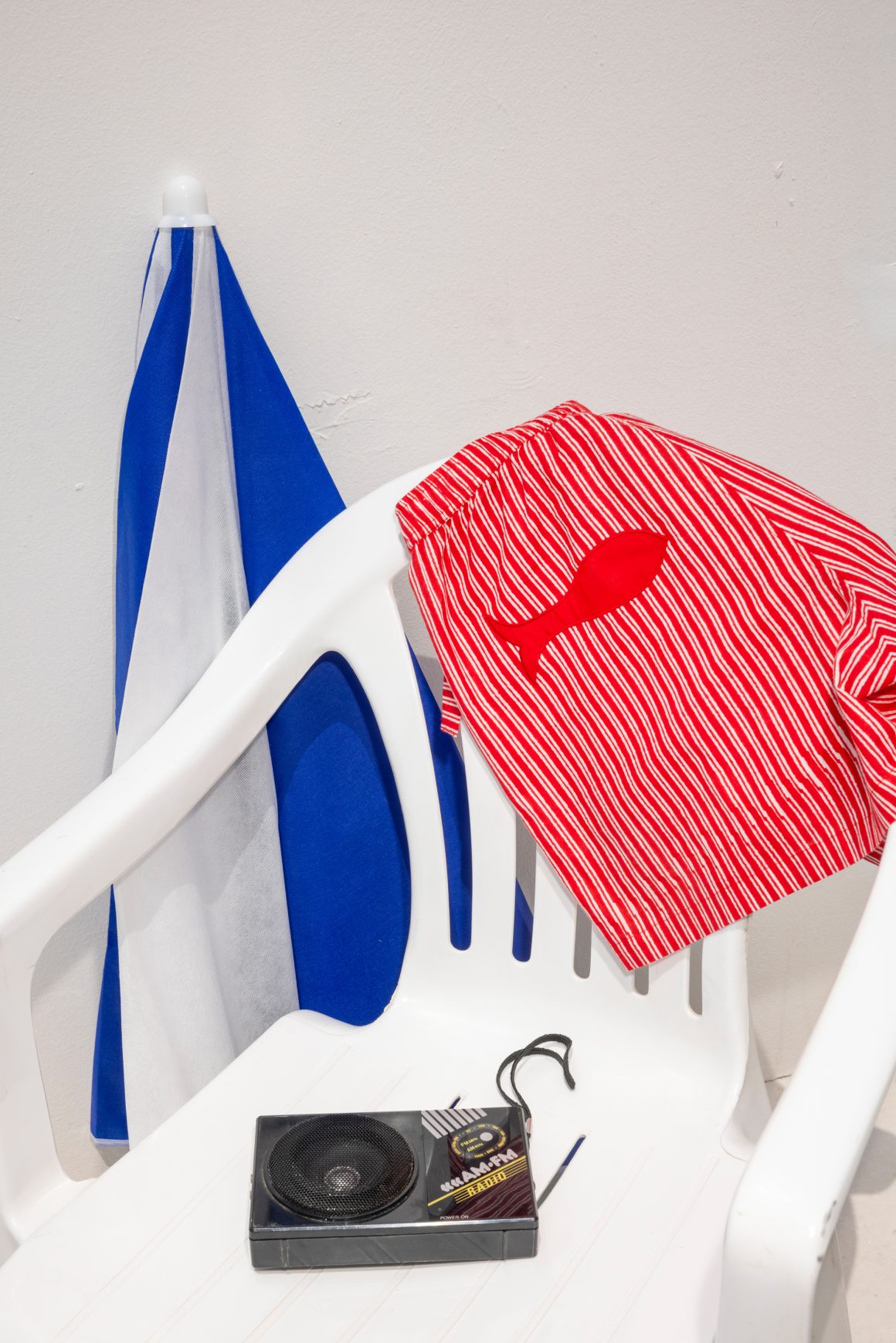
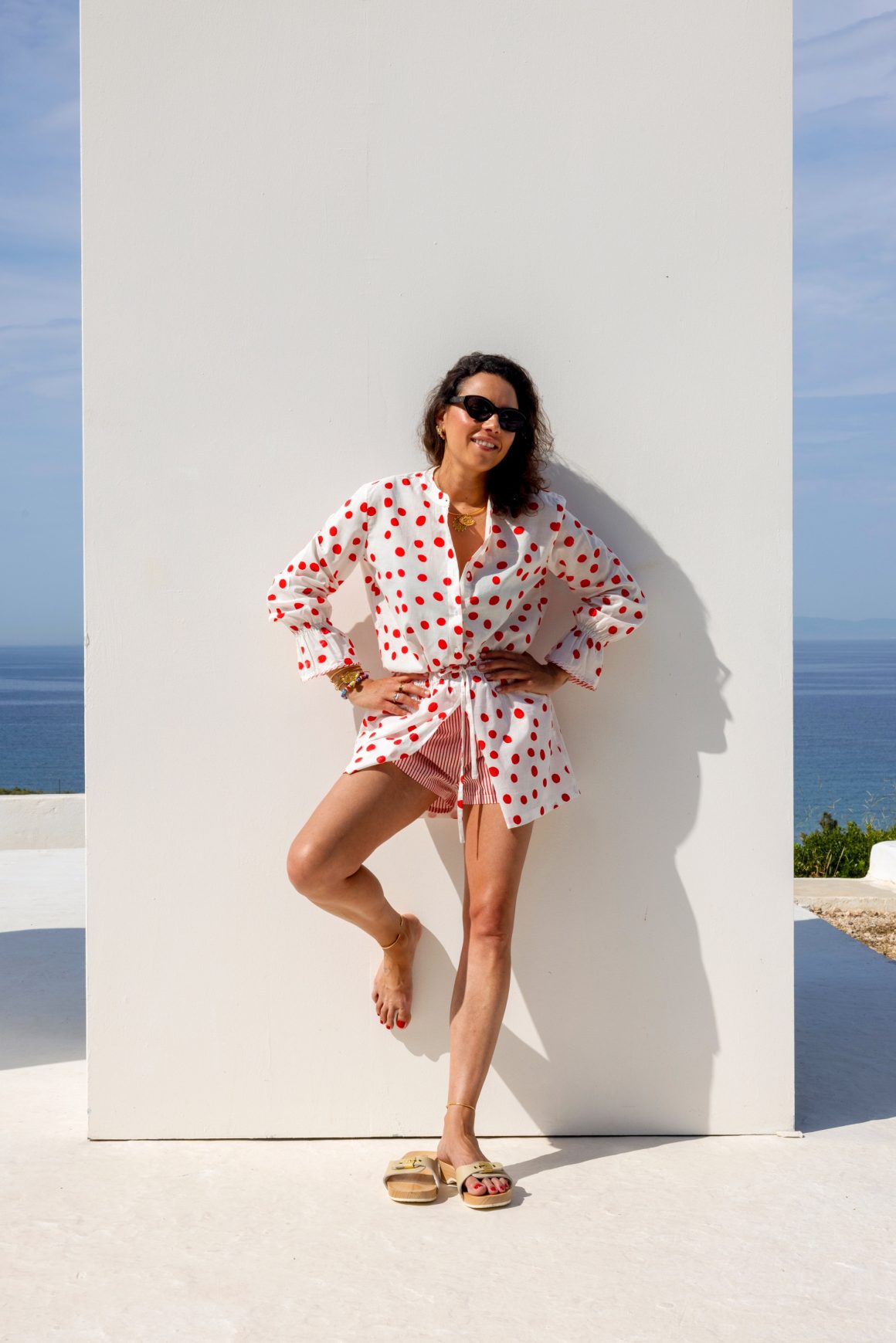
I SEA YOU, our new islandwear collection, is a step towards a more complete concept, while I continue to experiment and explore new collaborations as they come along.
At the same time, I want to return more deeply to the purely artistic side of my work. I have never considered the brand and art to be two separate worlds. One feeds the other.
What are your non-negotiable values?
Good manners, respect, freedom and, above all, honesty. I hate lies.
Are we what we choose?
To a very large extent, yes. What is interesting is that at different stages of our lives, we might not choose the same things. Looking back, I think that is partly how each of us comes to understand ourselves.
What is the last thing you bought, and why did you choose it?
The Sunday newspaper, which I buy every Sunday, winter and summer, trying to stay informed beyond my phone.
What is the best book you’ve read recently?
The Wisdom of Insecurity by Alan W. Watts.
What is one object you would never want to part with?
My motorbike—a red 1965 Honda Chally.
In another life, what would you like to have been?
A gardener or horticulturist. I think I have already found what I will devote myself to when I “retire”.
Three places you love returning to, and why?
A little in defiance of the times, and perhaps because lately I have felt an increasing need for privacy, I will simply say this: in the world we live in today, I don’t think we should advertise everything we love and enjoy.
Give us your own definition of beauty.
Beauty is something that makes you stop for a moment without knowing exactly why.
For me, beauty is the exact opposite of perfection.
What do you consider authentic nowadays?
Something is authentic when it doesn’t desperately try to prove that it is authentic.
A person who does well what they know how to do without thinking about how they will present themselves. A shop that didn’t change itself because fashion changed. An island that still has a winter.
Today, when almost everything can be staged, authenticity, for me, is anything that has a real life behind the image.