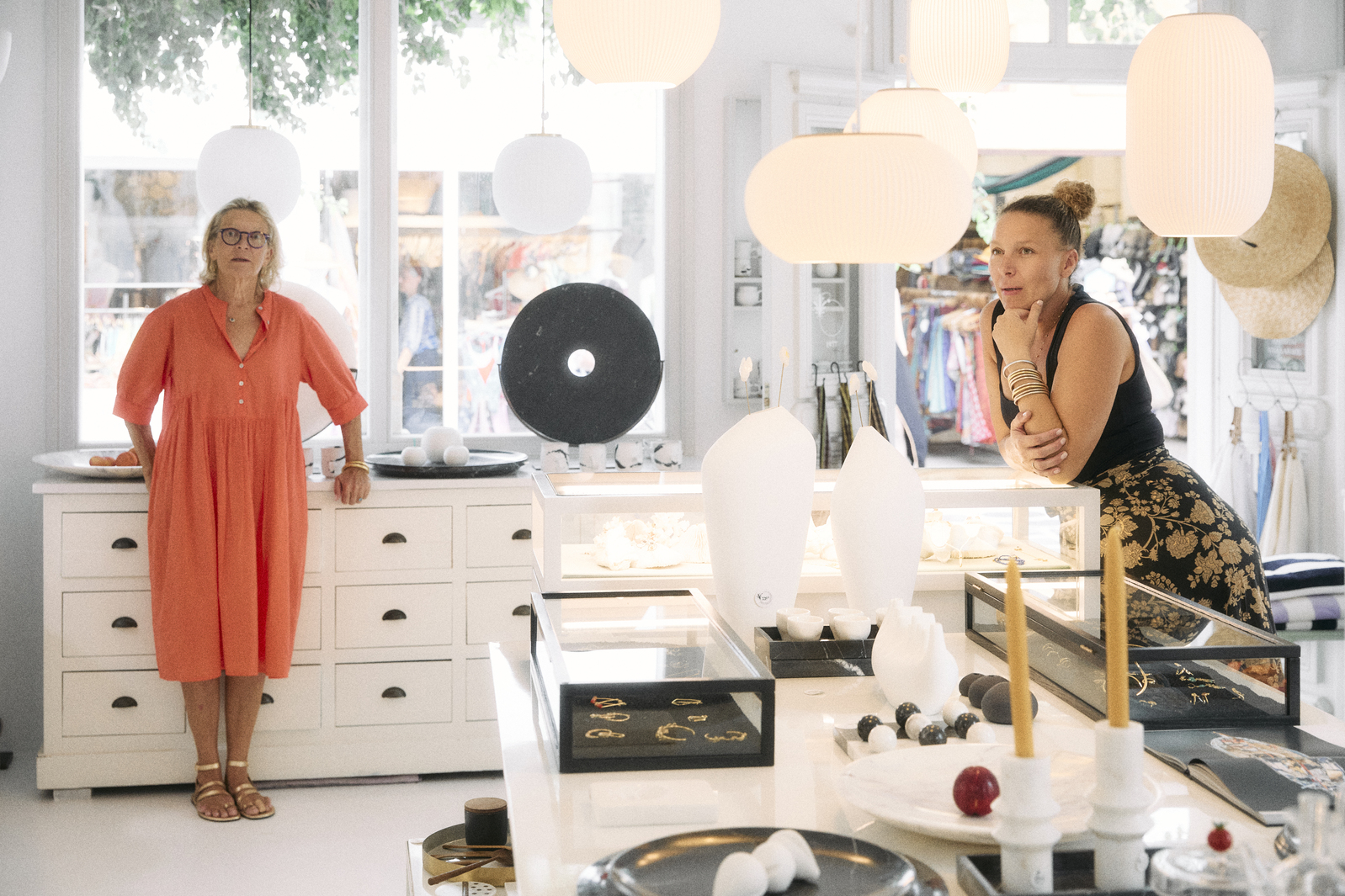
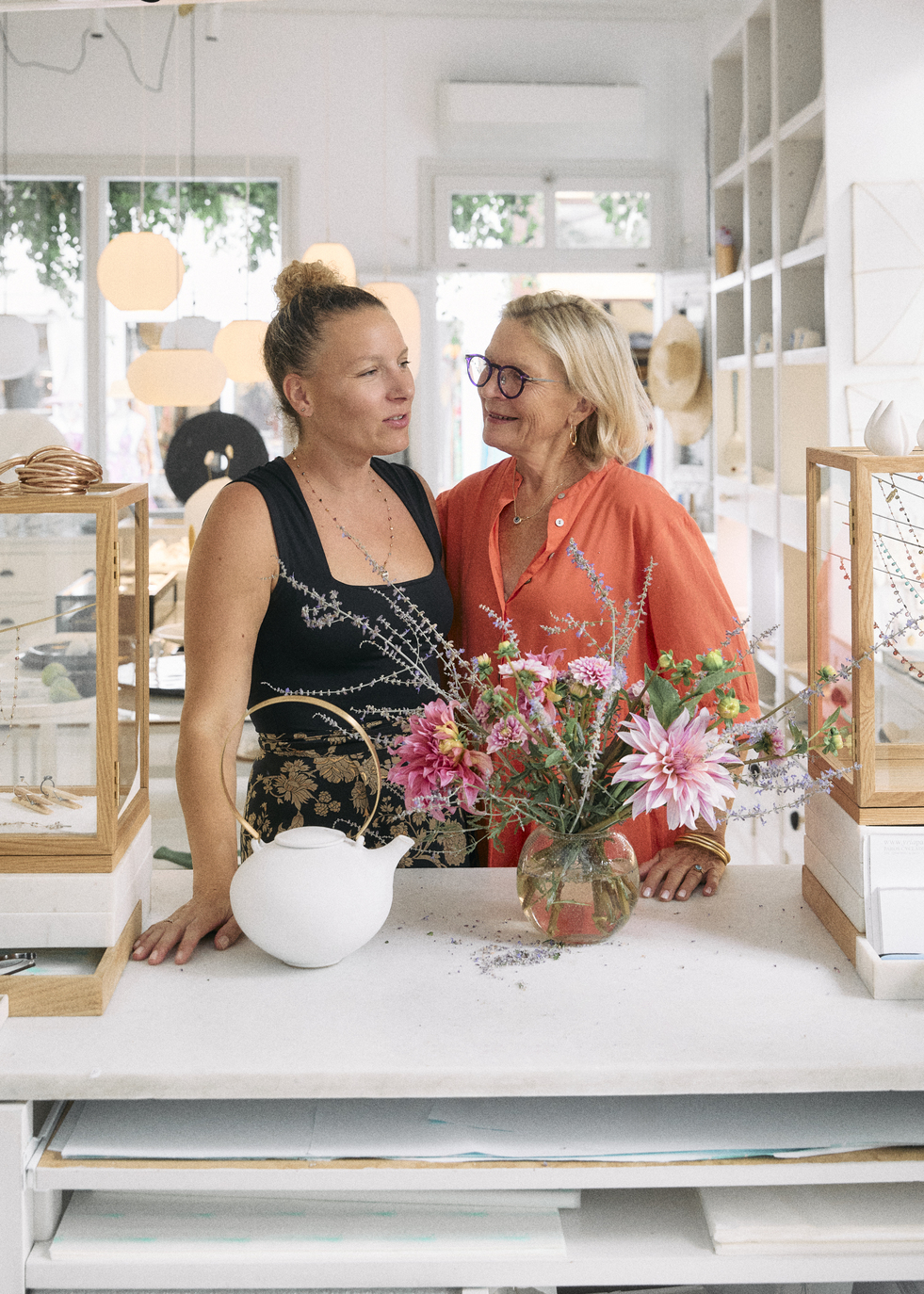
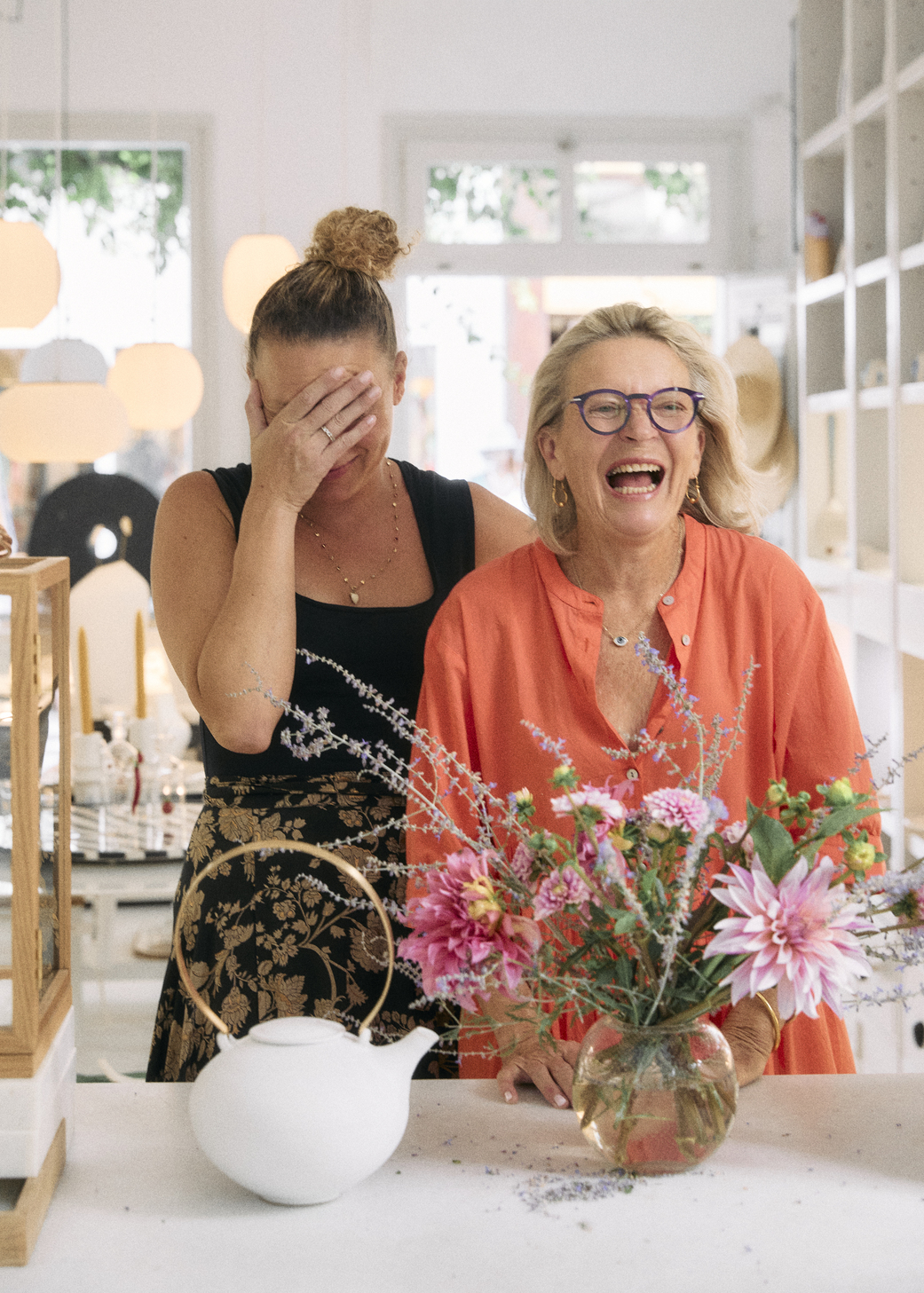
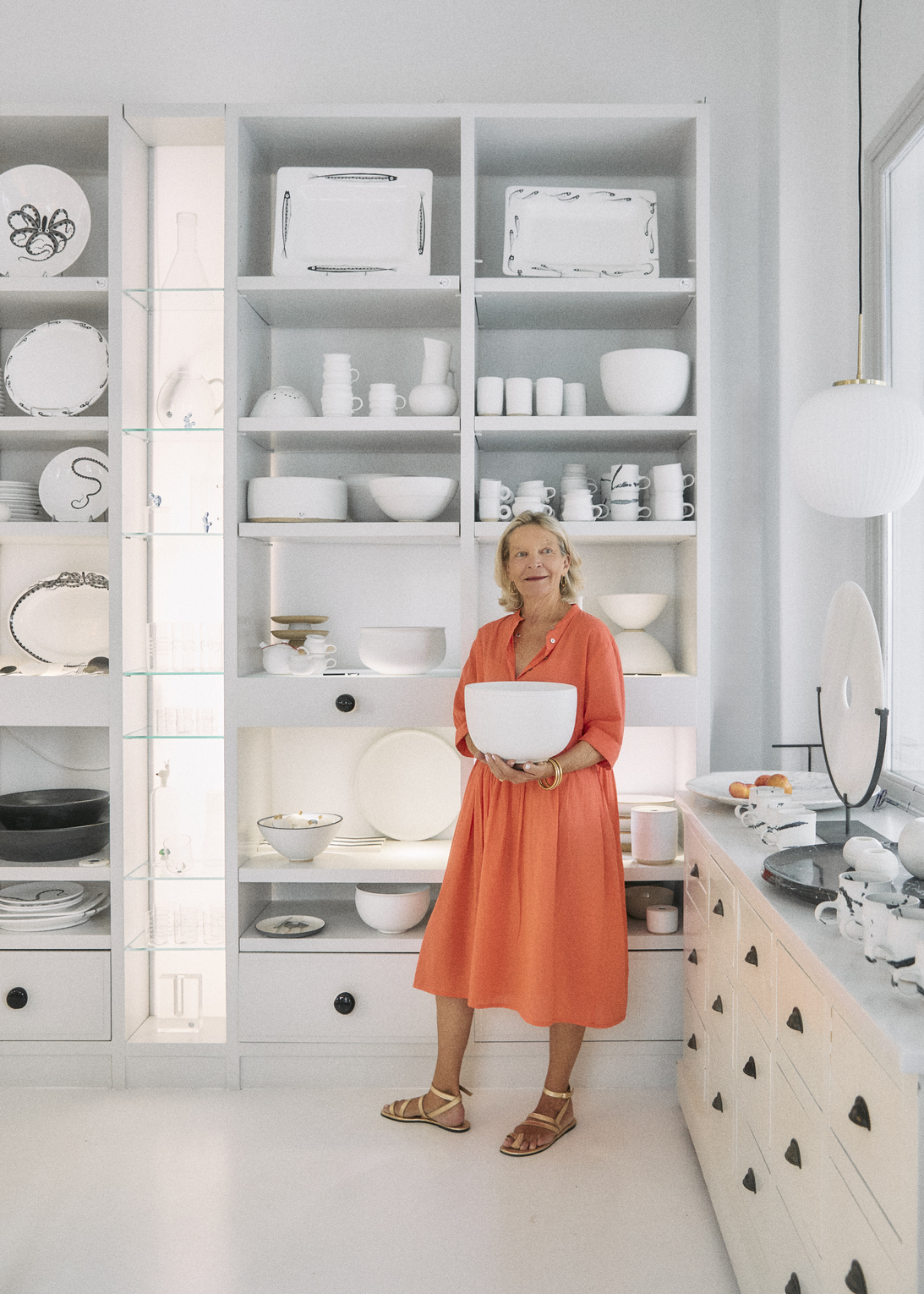
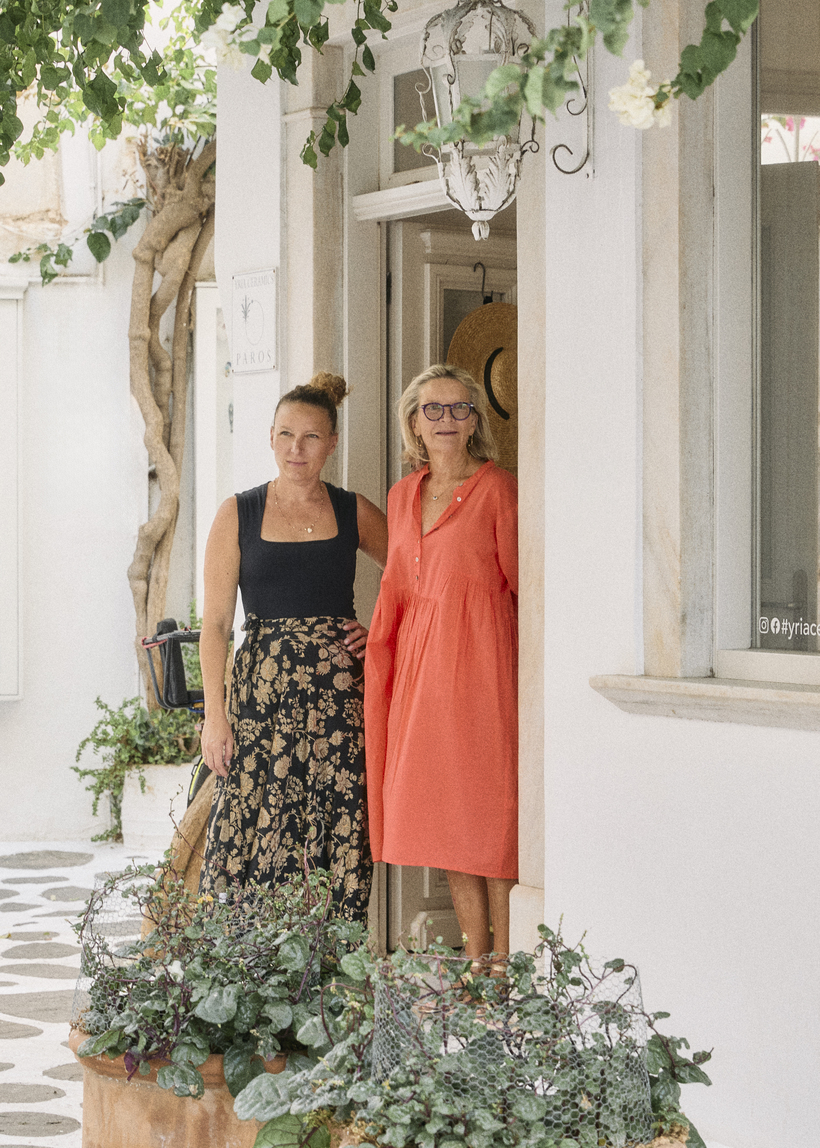
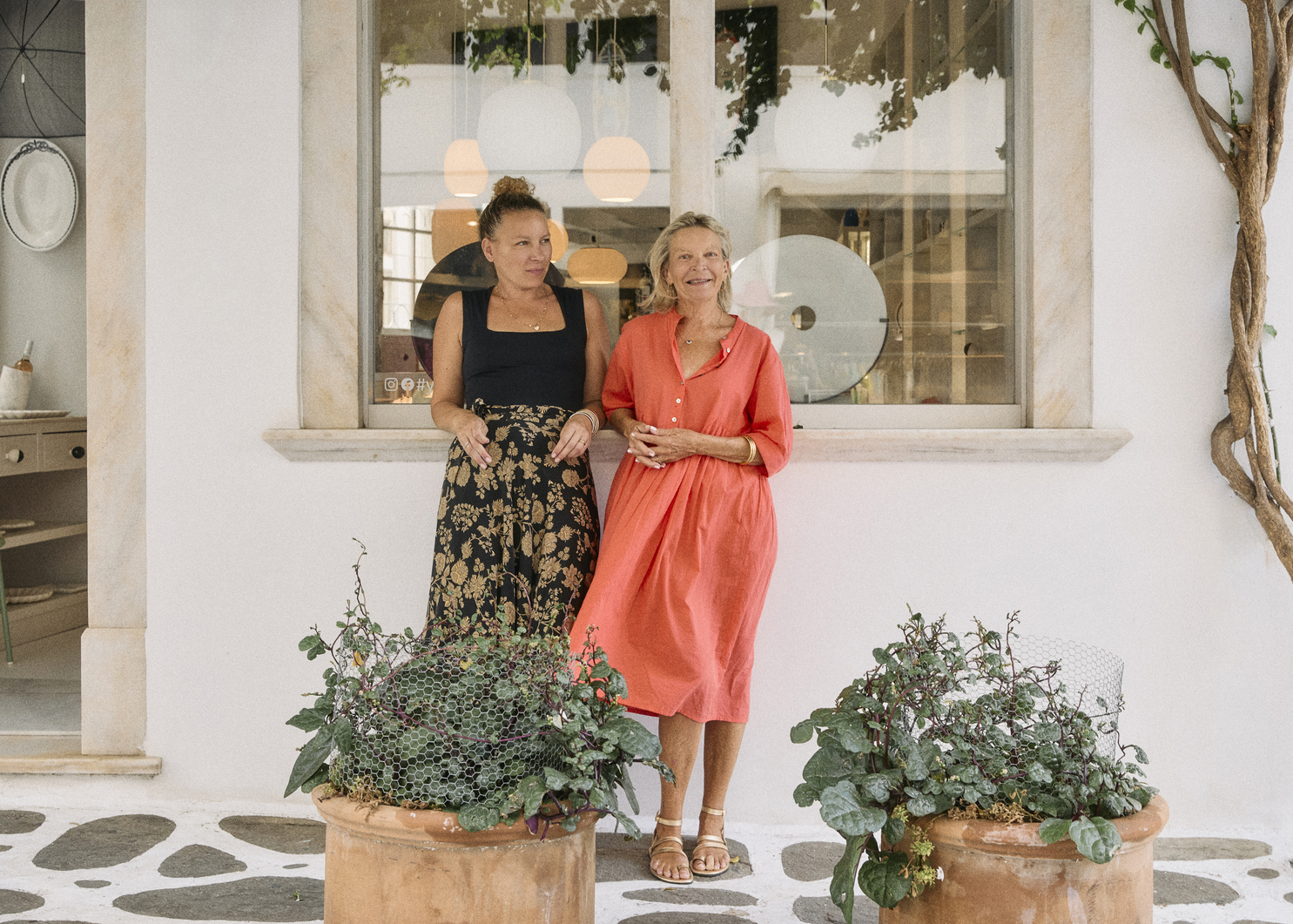
Monique, tell us about your lifestory, how your creative path in ceramics was born and evolved over time, and how you eventually found your way to Paros and developed a connection between your work and the island

Growing up in New England, I was always making things with my hands. The defining moment came when I was sixteen years old and watched someone throwing pots on a wheel at a craft fair. It was magical, and in that moment I knew ceramics would become my life’s work.

I went on to study ceramic technology, chemistry, kiln building, and ceramic techniques before travelling to Paros in 1977 to attend the Aegean Center for the Fine Arts. My stay was supposed to last two months.
I am still here.

What began as a short educational experience became the foundation of my life. Together with the father of my children, and with the help of a small government grant, we founded Yria Ceramics. We were young, passionate, and determined to build something meaningful through our work.

Over the years, my relationship with ceramics has continued to evolve. The technical knowledge I acquired as a student was only the beginning. Even after nearly fifty years, I remain curious and eager to learn. Last year, for example, I spent a month in South Korea studying with the master potter Kwak Kyungtae. Experiences like that remind me that remaining a student is one of the great privileges of a creative life.

Paros has been inseparable from this journey. The island welcomed us, inspired us, and gave us the opportunity to build both a life and a workshop. Much of what Yria Ceramics has become is rooted in the landscape, light, and spirit of this place. I feel profoundly grateful to the people of Paros and to the island itself for everything they have given me over the years.

You have created, together with your daughter Ramona, one of the most creative studios inspired by Greece. What are the defining elements of your work that make it truly unique?

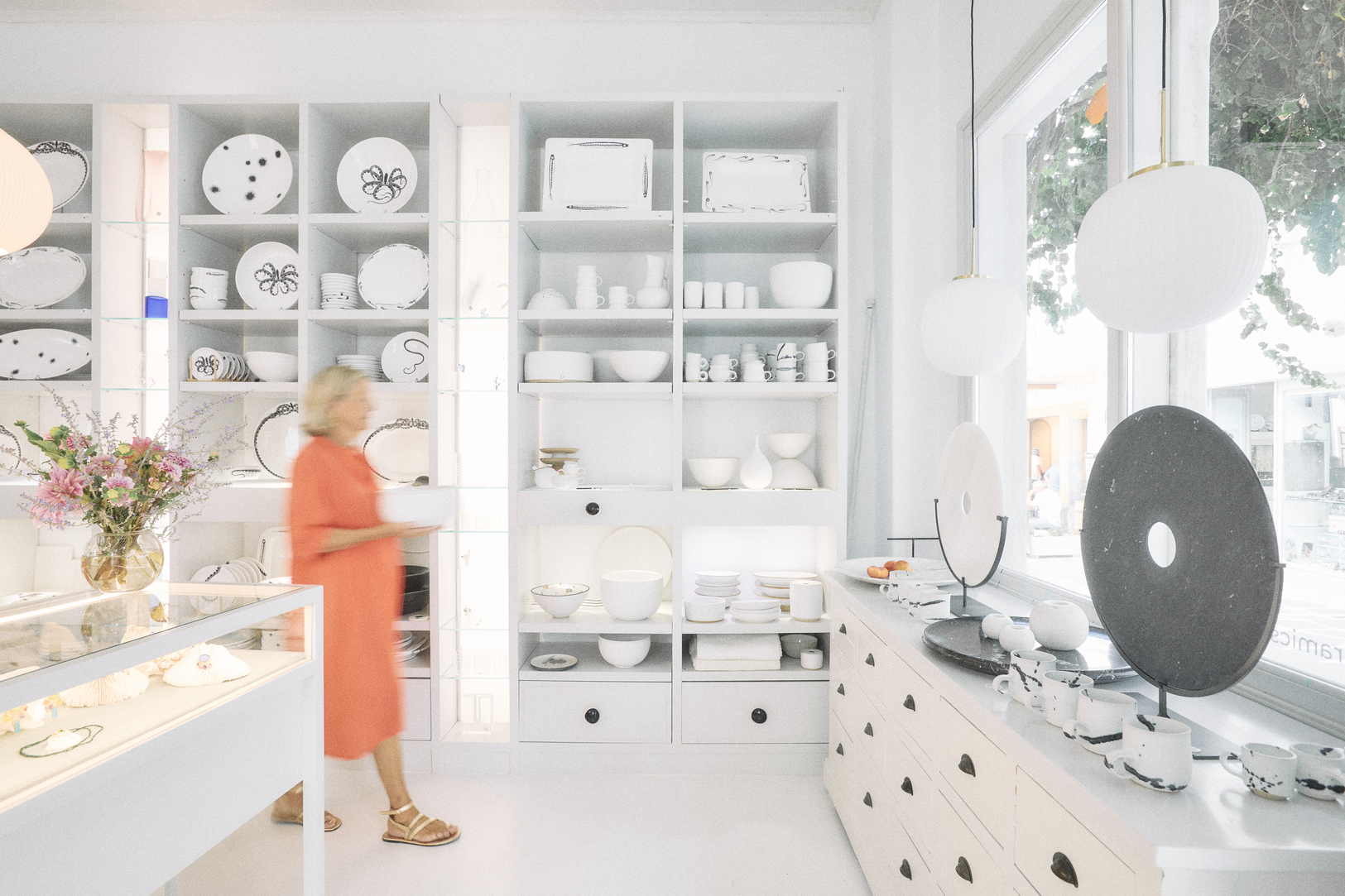
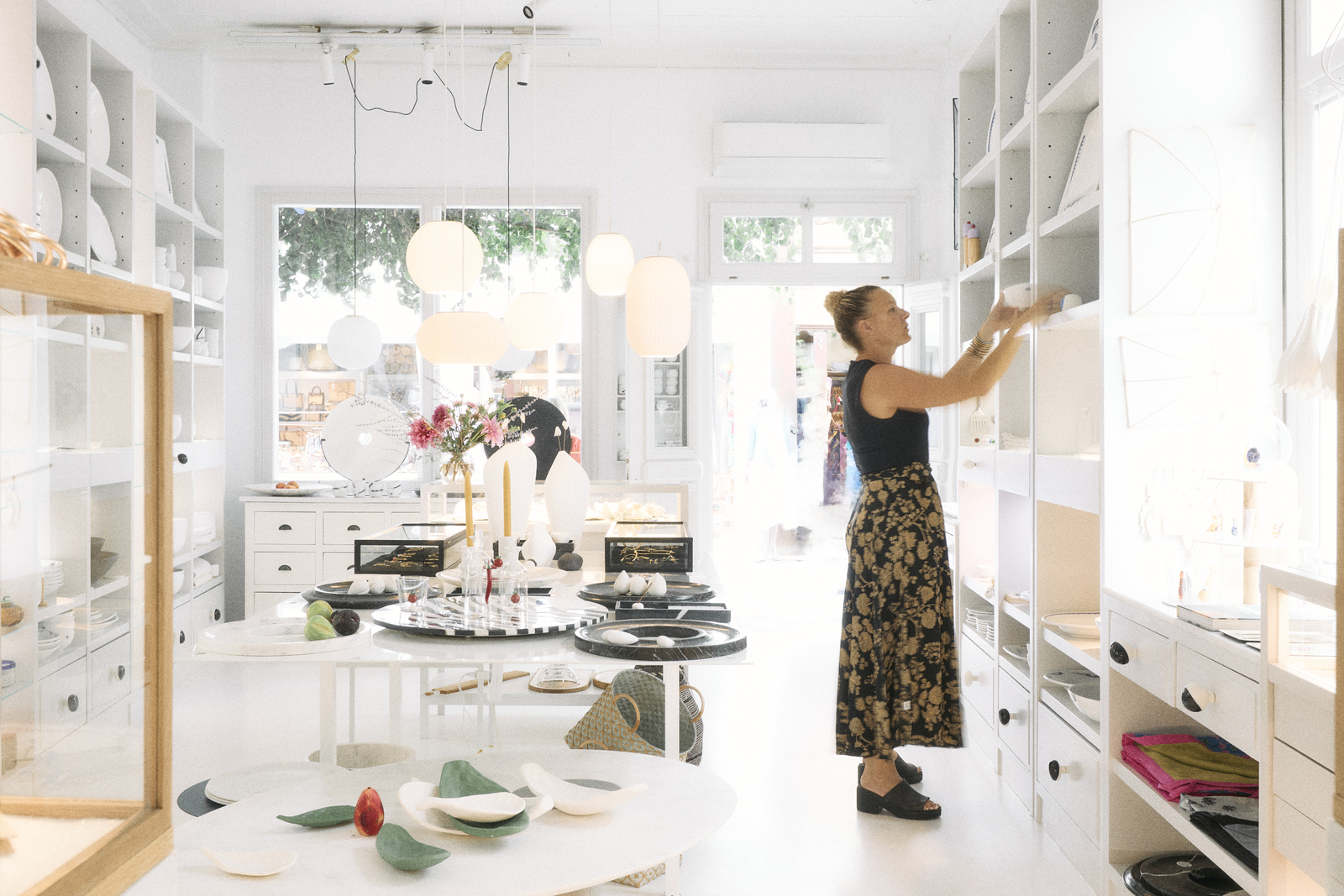
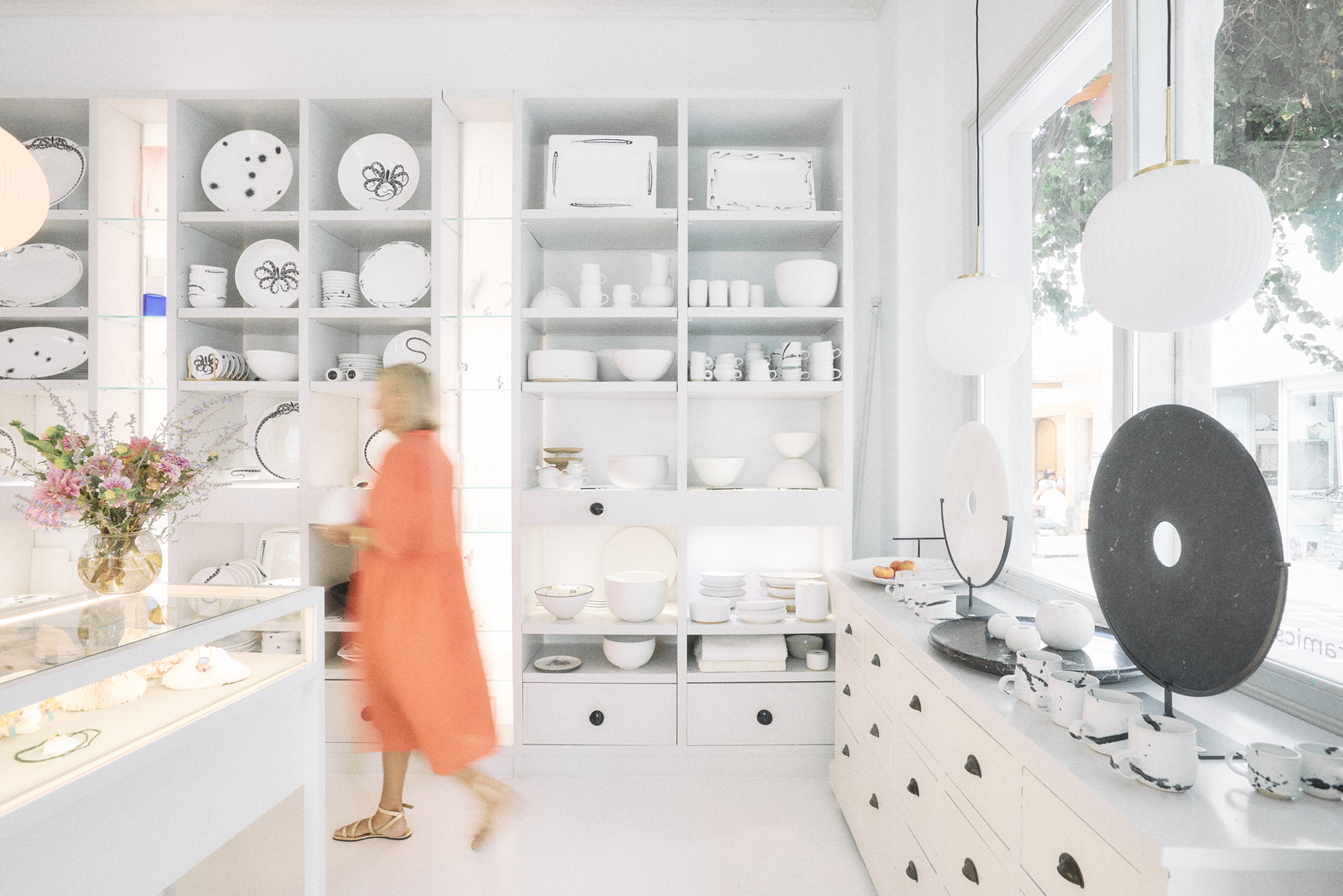
At its heart, Yria Ceramics is a story of continuity and evolution across generations.
My daughter Ramona’s creative journey began in the studio almost as soon as she could walk. She was sitting at the potter’s wheel by the age of six, surrounded by clay, kilns, tools, and the daily rhythm of making. Creativity was never something separate from life it was simply the environment in which she grew up.

She later studied Industrial Design, specializing in ceramics, at Central Saint Martins in London. By the age of sixteen, she already had one foot firmly in the business, but she returned with her own vision, skills, and ambitions. Today she is a master mould maker and has developed her own porcelain collections within Yria Ceramics, creating bespoke wedding and baptism favours for celebrations throughout Greece.

While my work has always been rooted in the wheel-thrown vessel earthy, functional, and closely connected to traditional ceramic practice Ramona approaches ceramics from a different perspective. Her work is highly design-driven, often custom-made for individual clients and produced in carefully developed series. She has brought a contemporary design language and a new way of thinking to the studio, expanding what Yria Ceramics can be.

One of the great joys of my life has been watching her take a leading role in the business. In many ways, the tables have turned. I used to be her teacher; now I often feel I am her assistant and I mean that as the highest compliment.
What makes me especially proud is that she has never tried to imitate either my work or her father’s. Instead, she has respected the foundations that were built before her while creating a distinct creative identity of her own. That balance between continuity and evolution is, I believe, what keeps a creative business alive.

Today, Yria Ceramics is no longer simply my story it is our story. And if we are fortunate, perhaps one day it will become the story of a third generation as well. Ramona’s five-year-old twins are already spending time in the studio, just as she once did, and who knows? Perhaps the next chapter is already quietly taking shape

This year marks 49 years of Yria Ceramics. How do you feel about reaching this milestone, how are you celebrating it, and what is the next chapter for Yria Ceramics?

Reaching 49 years of Yria Ceramics fills me with a deep sense of gratitude. When we founded the studio, we were young, passionate, and focused on the next firing, the next season, the next challenge. We never imagined we were building something that would still be here nearly five decades later.

What gives me the greatest satisfaction is not the longevity itself, but the people, relationships, and experiences that have shaped the journey. Through ceramics, I have had the privilege of meeting extraordinary people, learning from different cultures, and spending a lifetime doing work that I genuinely love.
Rather than looking back, I find myself looking forward. Seeing Ramona take a leading role in the business and bring her own vision to Yria Ceramics is perhaps the most meaningful milestone of all. It gives me confidence that the studio will continue to evolve while remaining true to its roots.

As for celebrating, I think the best celebration is simply continuing to do what we love every day. Of course, we will mark the occasion with family, friends, and the many people who have supported us over the years, because Yria Ceramics would never have existed without them.
The next step is the same as it has always been: to remain curious, to keep learning, and to continue creating. After 49 years, I still feel excited by the possibilities of clay, and I hope that feeling never disappears.

What are the gifts that maturity has given you?

Maturity has taught me that our actions and decisions gradually become our story. I have learned that with vision, perseverance, and hard work, we can achieve far more than we imagine.
It has also taught me patience. Many worthwhile things take time to grow a business, a craft, a family, or a life. Looking back, I feel grateful not only for what I have achieved, but for everything I learned along the way.
Most importantly, maturity has taught me to remain curious. Even after all these years, I still believe there is always something new to discover.

In what ways do you feel your aesthetic has evolved over the years?

My aesthetic continues to evolve in the same way it always has through curiosity, practice, hard work, and remaining open to new ideas.
After nearly fifty years working with clay, I still feel there is so much to learn. Every experience, every journey, every conversation with another artist has the potential to influence the way I see form, proportion, texture, and function. My recent time in South Korea is a perfect example. Even after decades of experience, I returned home inspired and with a fresh perspective.
At the same time, I believe it is important to remain true to one’s own journey. Evolution does not mean abandoning what came before; it means building upon it. My work continues to change, but it is always rooted in the same values that first drew me to ceramics: simplicity, honesty of form, craftsmanship, and a deep respect for the material itself.

How does your work resonate with an international audience, and how does this differ from the way it is received in Greece?

From the very beginning, we were fortunate that visitors from all over the world discovered our studio on Paros , collected our work, and carried it home with them. Over the years, our ceramics have travelled much further than we ever imagined.
One thing I have noticed is that in many countries there is a particularly strong appreciation for craftsmanship and the handmade object. In places such as Japan and South Korea, for example, there is a deep cultural respect for the maker, the process, and the beauty of an object shaped by human hands. It is something I greatly admire.

Greece has a different relationship with craft. While there is certainly appreciation for handmade work, it is not always expressed in the same way. Greece has such a rich artistic and cultural heritage that contemporary craft exists within a very broad creative landscape. Encouragingly, I believe there is a growing appreciation for craftsmanship, especially among younger generations who increasingly value authenticity, quality, and the story behind an object.

What has always touched me most, whether in Greece or abroad, is when someone connects emotionally with a piece. The greatest compliment is knowing that an object made in our studio becomes part of another person’s daily life and carries meaning for them long after they have left Paros.

Who are the designers closest to your heart, and what is it about their work that resonates with you?

Two of my favourite designers are Philippe Starck and Gio Ponti. What I admire most is that both combine a wonderful sense of humour with great seriousness. There is wit in the way they think, in the objects they create, and in the worlds they imagine, yet their work never loses sight of function. To me, that balance between playfulness and purpose is one of the highest achievements in design

Are we what we choose?

I would think so. We may not always be free to choose our circumstances, but we are free to choose what we pay attention to, what we value, and what we surround ourselves with. Over time, those choices become our story.

What is the last thing you bought, and what made you choose it?

The object I would never want to part with is a moon jar I brought back from South Korea.
Last November, I spent a month there studying ceramic techniques with the master potter Kwak Kyungtae in his studio . At the end of my stay, I purchased one of his large Moon Jars and carried it home to Greece by hand.
What I brought home, however, was much more than a ceramic vessel. The jar has become a container of memories: long hours in the studio, conversations that transcended language, moments of discovery, and a deeper understanding of a ceramic tradition I have responded to and respected for many years.
It is an object I treasure not for its value, but for everything it represents: curiosity, learning, friendship, and the privilege of continuing to grow through one’s craft.

What is the best book you’ve read recently?

One of my favourite books is The Hare with Amber Eyes by Edmund de Waal.
De Waal is not only a gifted writer but also one of the most renowned contemporary ceramic artists working today. Perhaps that is one reason the book resonated so deeply with me. He understands the power of objects and the stories they carry through time.
The book follows the journey of a collection of 264 Japanese netsuke inherited by his family and, through these small objects, traces a remarkable history spanning generations, countries, cultures, and historical upheavals. It is a book about art, memory, loss, survival, and the enduring connection between people and the objects they cherish.

As a ceramic artist, I was particularly moved by the idea that handmade objects can become silent witnesses to history. We often think we are making pots, but sometimes we are creating future memories. De Waal captures that beautifully.
If there is one lesson I have learned through more than fifty years of working with clay, it is that curiosity keeps both artists and people alive. It guided me from New England to Paros, continues to take me across the world in search of knowledge, and inspires me to keep learning every day. For the journey, the people, and the opportunities that came with it, I feel profoundly grateful.

Author