What is your life story and the highlights of your creative journey?

People and places have shaped me the most. 

Leaving Brussels at 21 was definitely the first step. I moved to Edinburgh looking for a place where I could find myself, where I could feel more aligned and pursue what I truly wanted to do at the time: writing, painting, and acting. I had no idea back then that, in order to find yourself when you are that young, you first need to get lost. Really lost. So I did lose my way, I experimented, and tried things — though looking back, I perhaps wish I had done so with less worry and more carefreeness. 

I’m grateful I did, in fact, tried on lives like dresses, to paraphrase Sylvia Plath. Because now I can choose this one wholeheartedly. Knowingly too. 

Moving to Brighton marked a shift from that space of confusion to a more gentle sanctuary, where I began piecing together a slower, more intentional life. It anchored me and allowed me to be braver. 

Ultimately, my journey has been shaped less by professional milestones and far more by places and people. It is about the environments I chose to step into and the individuals I met along the way who inspired me. 

They gave me permission, or sometimes a metaphorical slap in the face, to wake up and actually do the things I wanted to do. Because sometimes, it is that simple. They made me realise that although I had built a gorgeous life and a beautiful community in Hove, I wasn’t actually living the life I had dreamed of as a child. And as it turns out, I still very much want to live that life. So I left Hove for continental Europe and made the boldest choice so far: prioritise my creativity. 

The story behind discovering a creative perspective in painting and the arts. How did the initial idea emerge, and how has it taken shape over time?

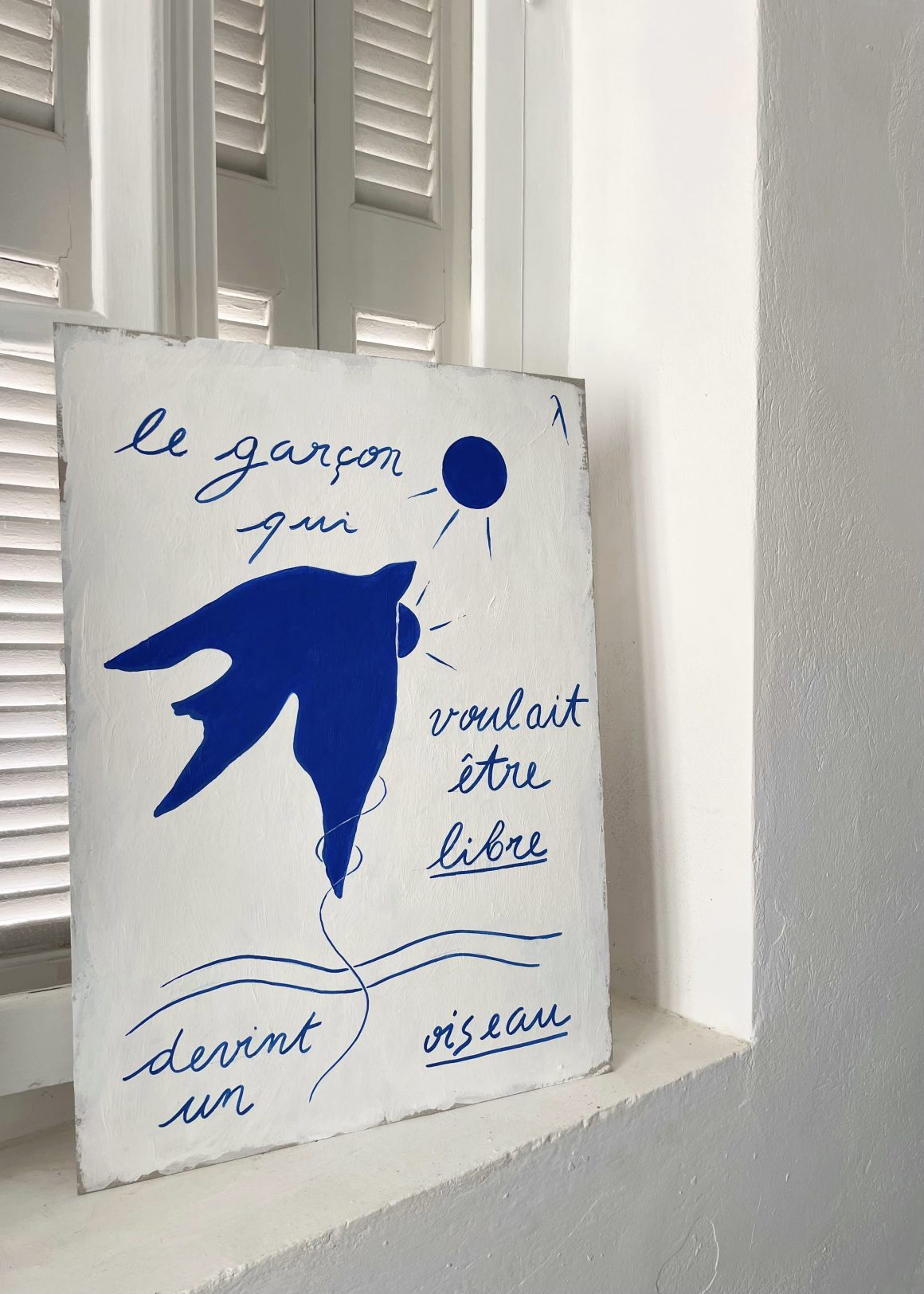
I have been writing and drawing for as long as I can remember. As a child, I taught myself with the Taschen books, getting a new artist each month. It was all about refining this way of expressing myself and going deeper in that expression. Recently, it has been less about going deep and more about going free.

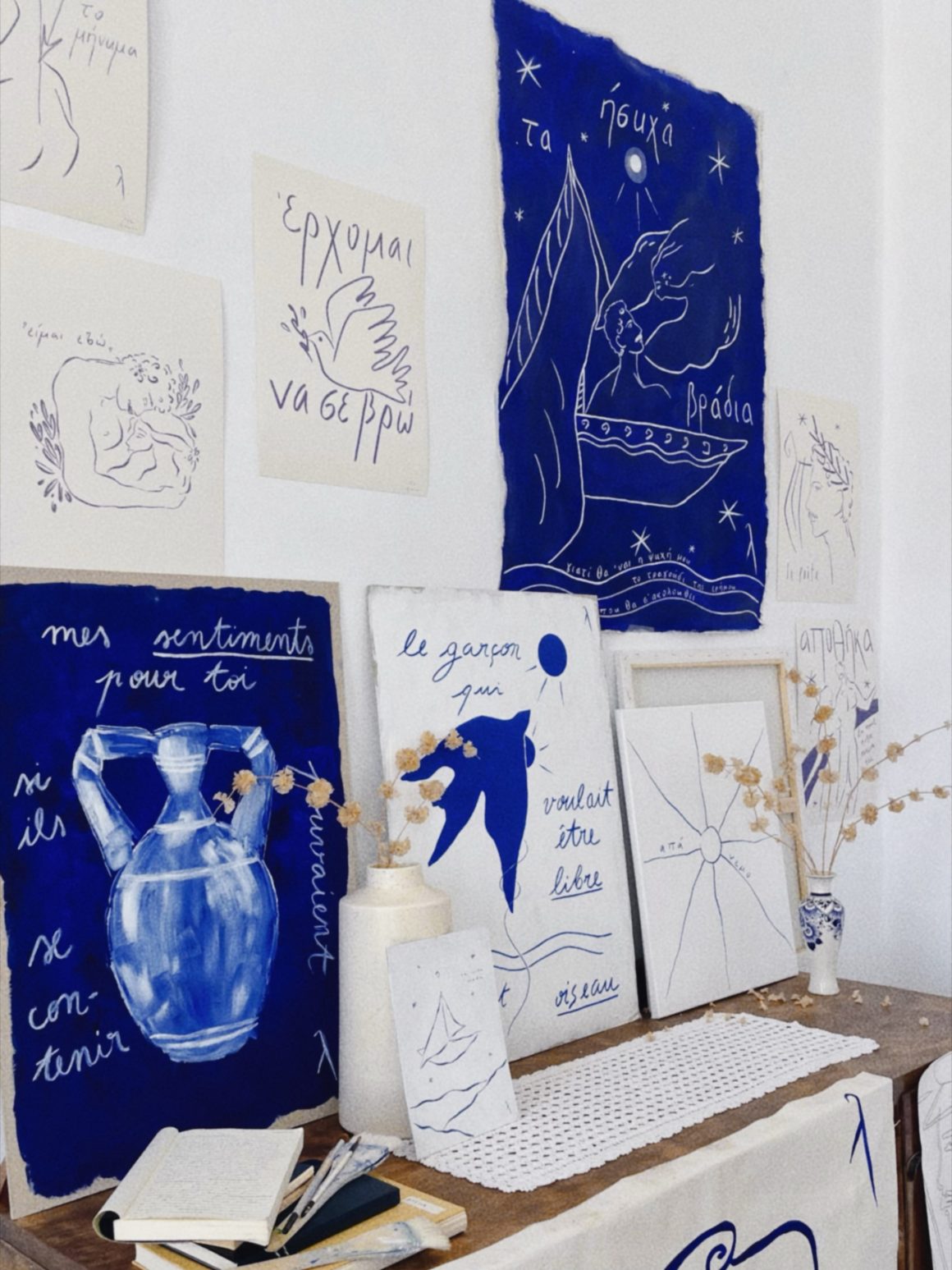
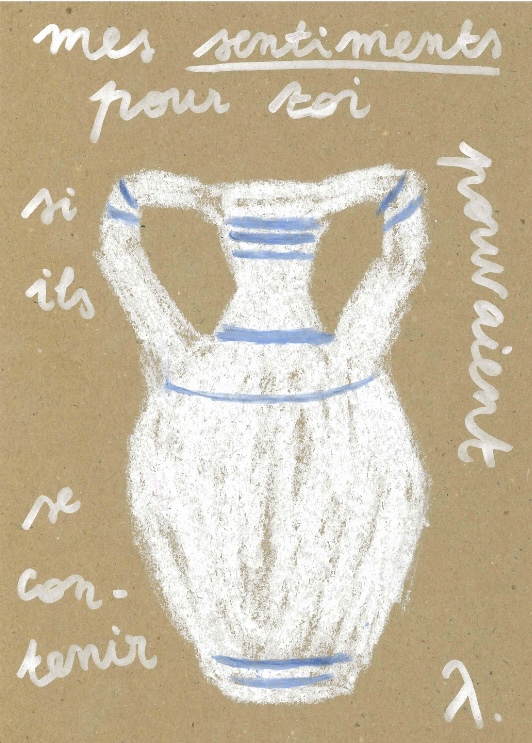
Until a year and a half ago, I was working in publishing, in London, and I had never prioritised art as a career. It is only this year, upon finishing a collection of drawings that later shaped to be The Messenger, that I got offered to exhibit them for a month in Brussels. My perspective changed then, when I saw my work outside of my paintings, outside of my room, interacting with people. 

Your work possesses a distinct sensitivity, reflecting a uniquely personal form of expression. Where do you draw your inspiration from, and how do you feel your aesthetic is evolving?

I paint what I feel and what is true to me. There’s very little intellectualisation in my process. If I do not paint, write or take photos, my sensitivity may turn against me — it festers somehow and becomes this monster of raw emotion. Art was never something intellectual to me, unless I’m the observer. Then I do love the fame of connections. Though I like to move away from interpretation. Susan Sontag best said it here: To interpret is to impoverish, to deplete the world—in order to set up a shadow world of ‘meanings.

I would love to think that people perceive my art as sensitive and personal because they can feel it comes from experience and truth — my own, of course. 

My friend Lida who founded The Paddocks Gallery in Volos sent me to an island in May with these words: slow down and create for yourself. In that moment, she became my own art oracle. She’s the first person I met with such a strong career in the arts, and her advice (that felt more like a loving command), gave me permission to just go and paint, regardless of anyone else. 

I’ve been given a lot of advice by various artists on curating my projects, giving it tons of thoughts… Lida’s words prevailed: she took away all fluff, all pretension too, and send me to paint something true, rather than something catered. 

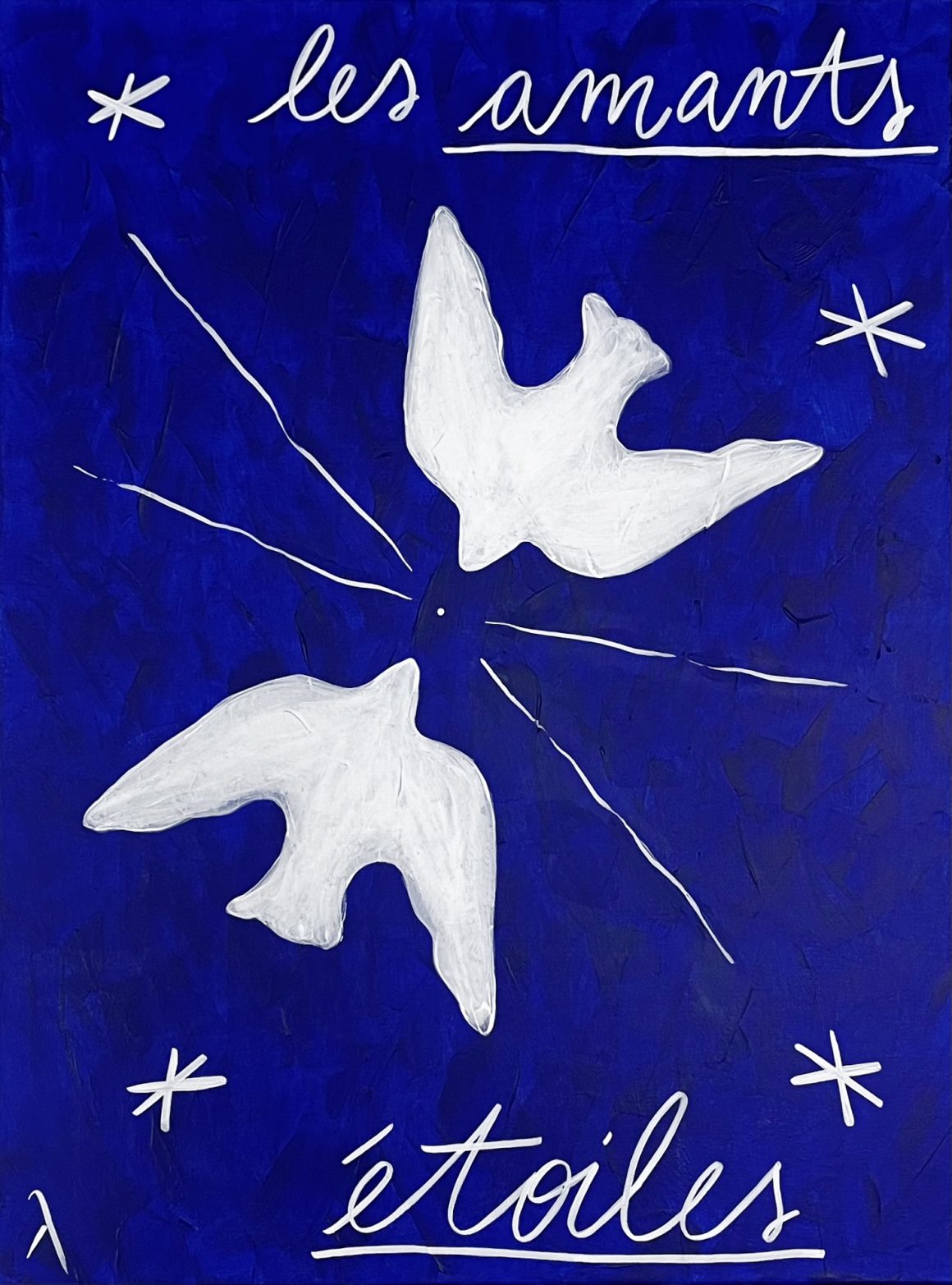
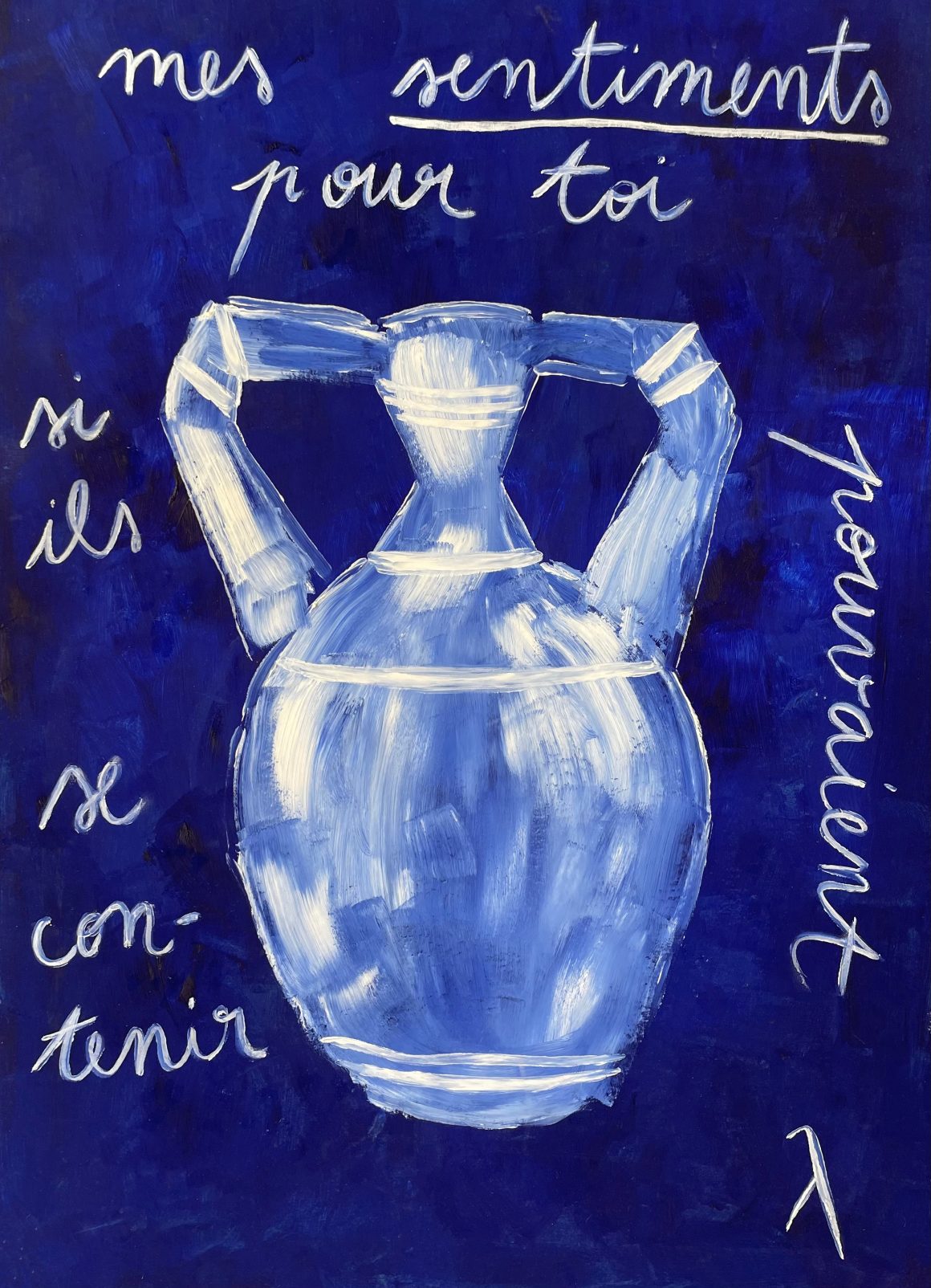
My work used to be so detailed and intricate. I found it visually pleasing, but you could sense the control and lack of freedom in it. I’ve always wanted to paint like Matisse and Chagall — find my own lively expression. They gave me permission to let my trait slip and loosen. 

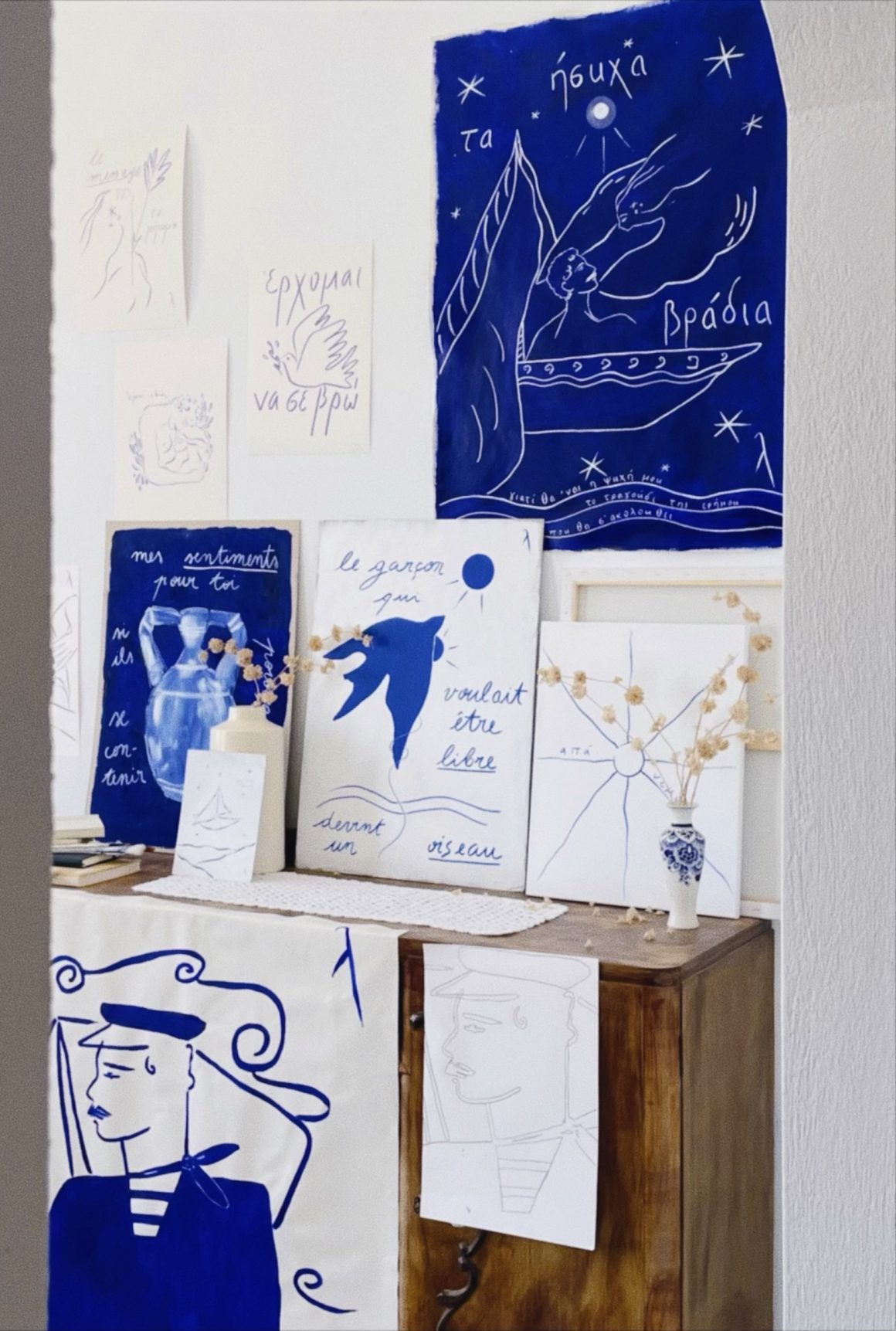
And that’s what happened for the last two months. My emotions seemed to welcome that new way of creating without thought, and it all came out of me quite quickly. In a week, all canvases were done. Then I spent the rest of the time writing and taking photos. 


What do you consider to be your greatest personal or artistic achievements?

Probably managing to free myself from some kind of control, in my art and in life — which is an ongoing and very intentional process. I also do love being the friend who gathers everyone around a homemade meal. 

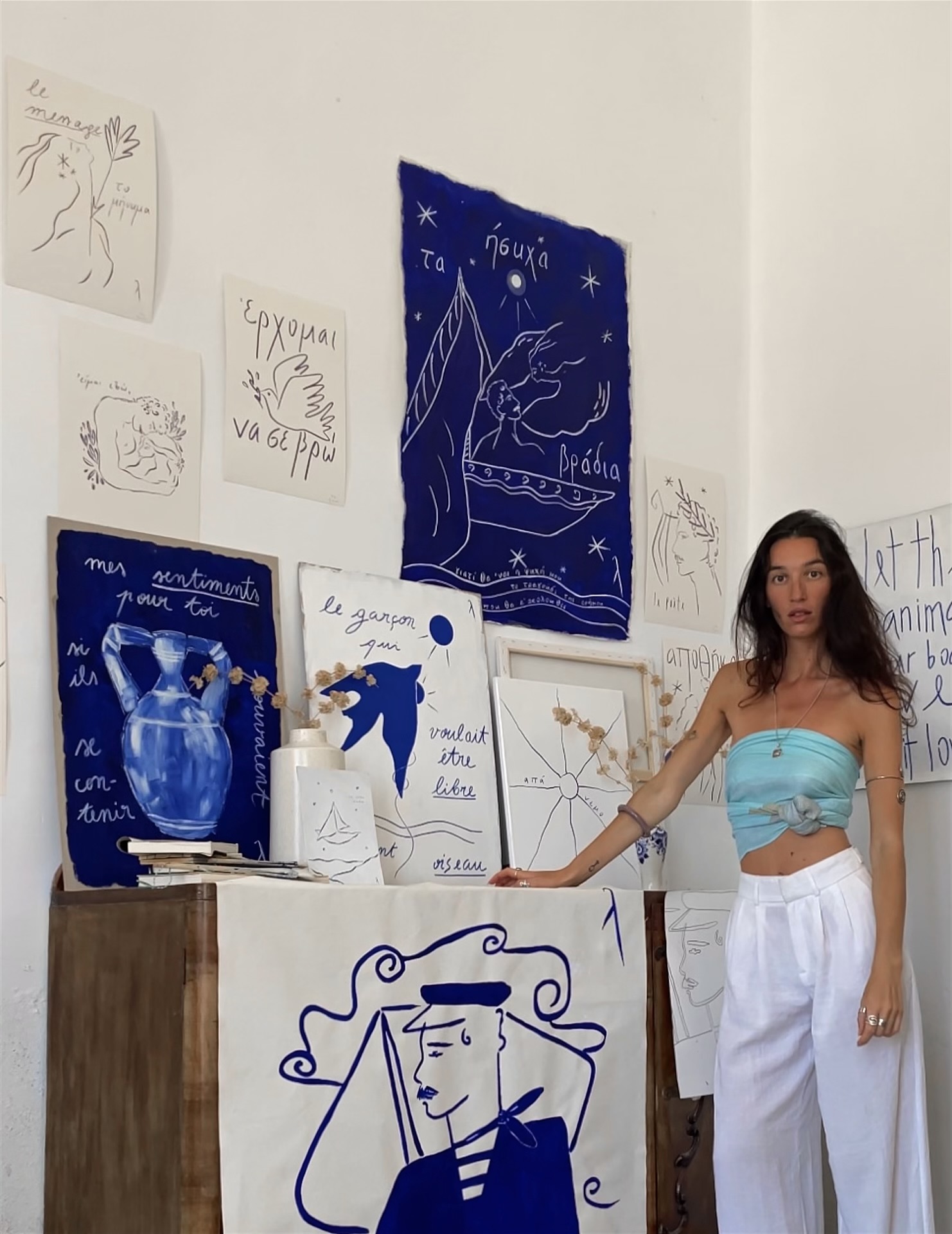
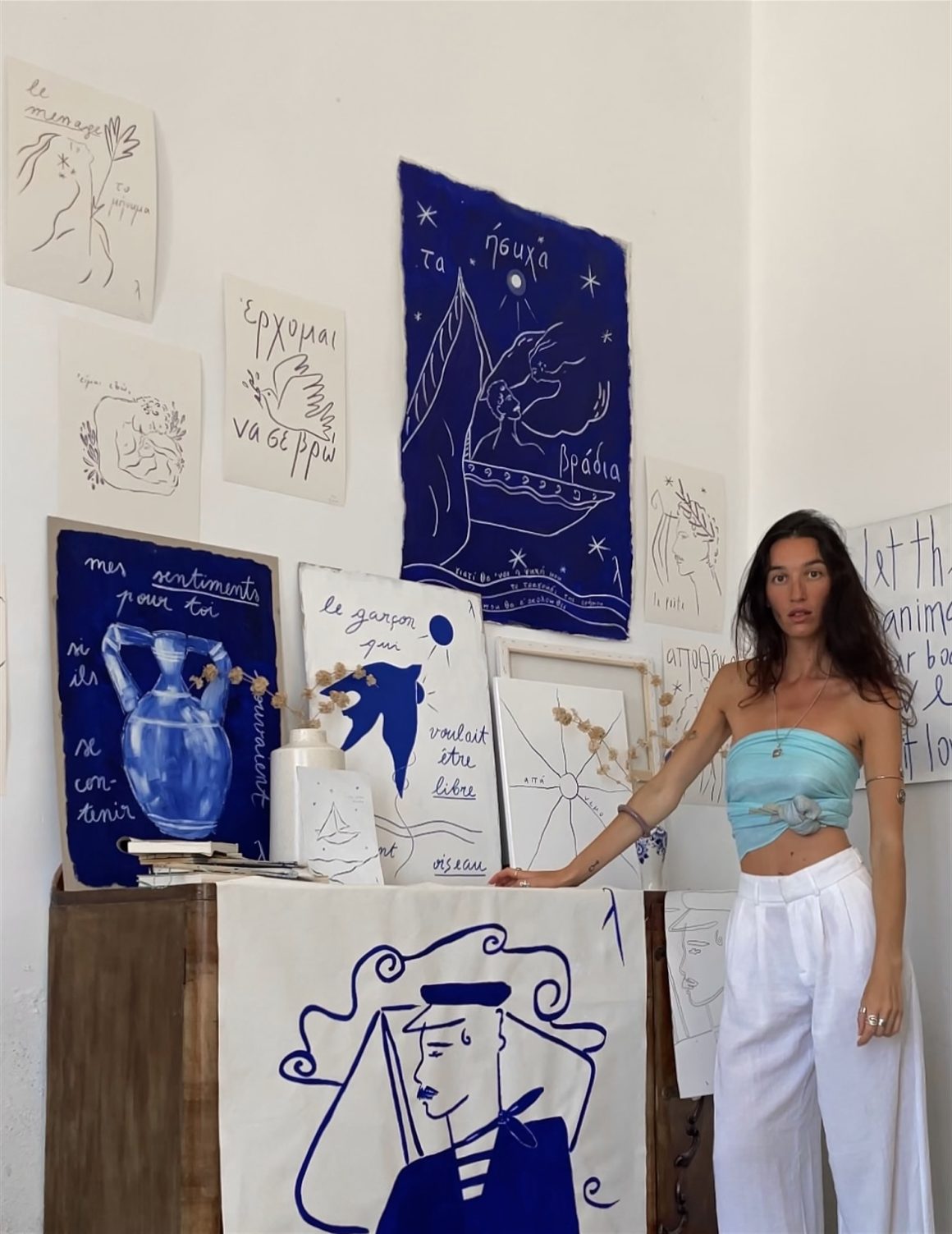
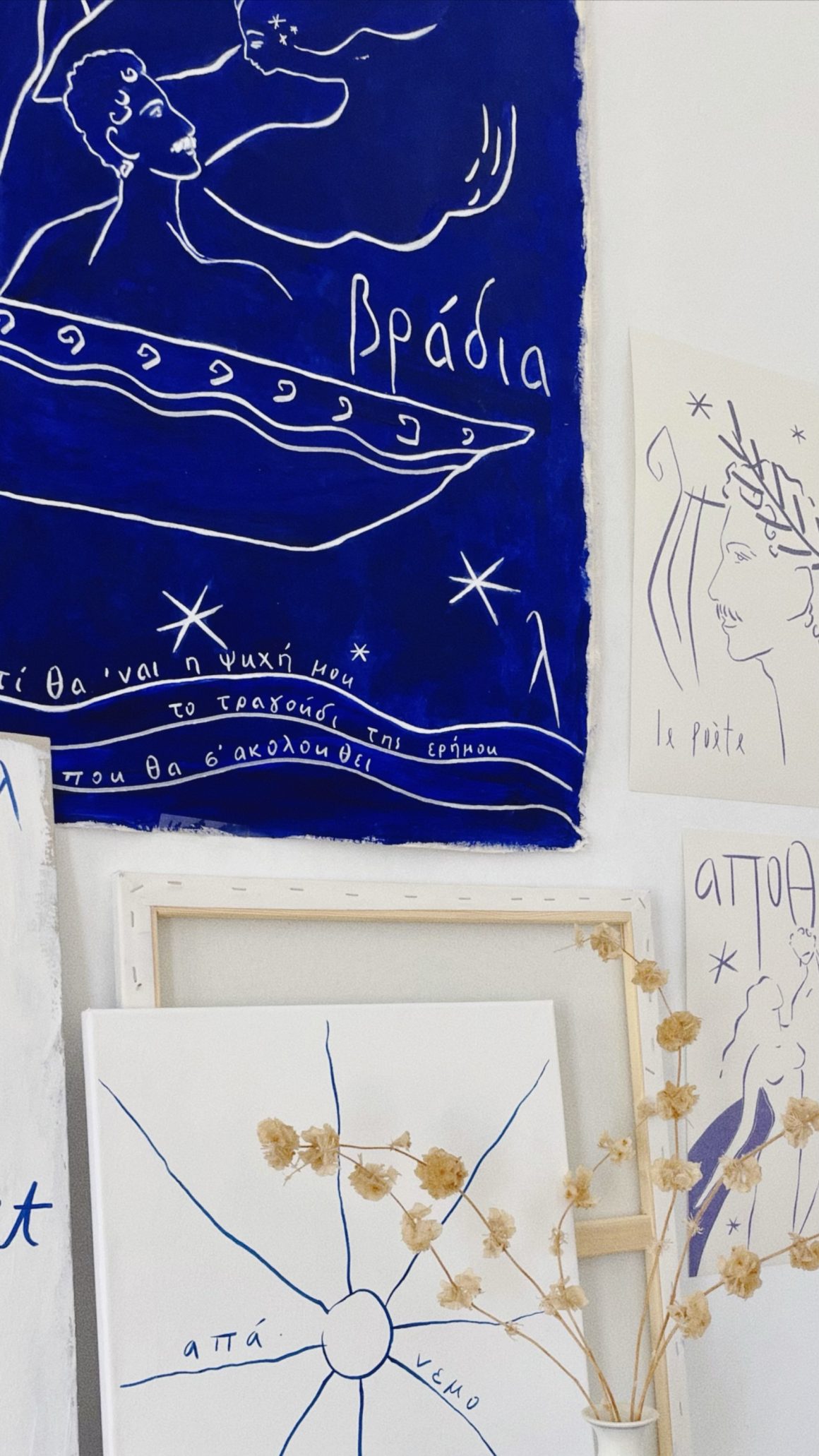
Then there is ” Tα ήσυχα βράδια”
, my favourite painting so far. It’s funny because once I finished it, I couldn’t have been less enthusiastic about it. Too childish, too raw, too silly. Now, I see it as pure, authentic and soft. It’s probably my favourite for the story it tells too. Inspired by the encounter of both Arleta’s song and my own story, when I began to paint, I imagined the woman as this spirit flying around the man as his guardian. Looking at it now, she resembles the sirens. Perhaps there’s something to be said about the misinterpretation of feminine monstrosity here too. 

What narrative does your new body of work carry, and what lies in your immediate plans? 

It’s a love story, very simply. A moment in time that I didn’t want to see end. Only a few days that were sacred to me, and that I needed to honour — by giving those feelings not only shape, but a place where to exist outside of myself too. 

As for my immediate plans, I’m currently between Athens, Brussels and the island, moving towards Greece more permanently as I keep travelling around. Ideally, I would love to exhibit the full body of The Messenger in Greece, to see all of my work in the same room. I have received offers for my original paintings but I am holding on to them until I see them all together as the narrative they represent to me. 

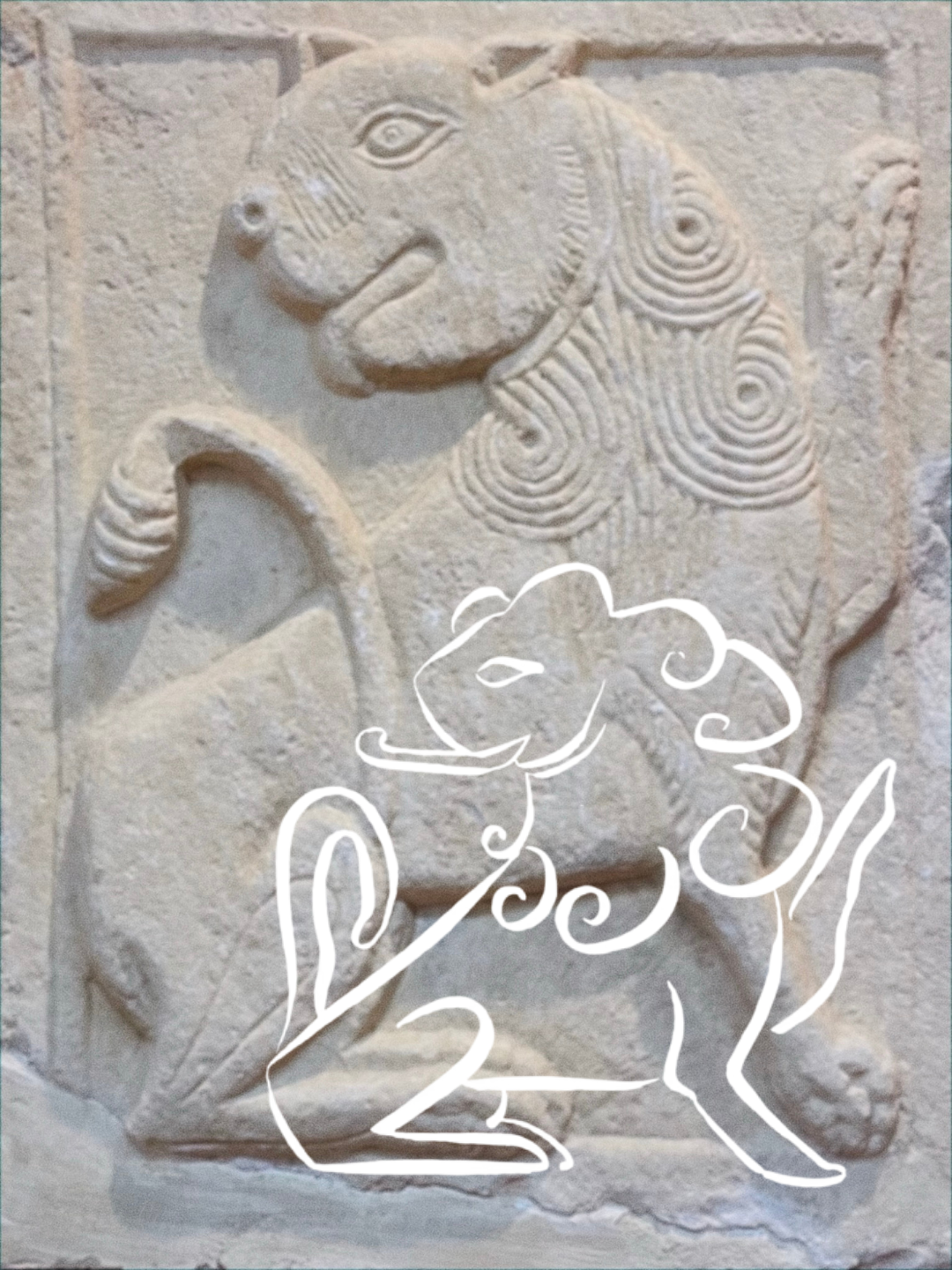
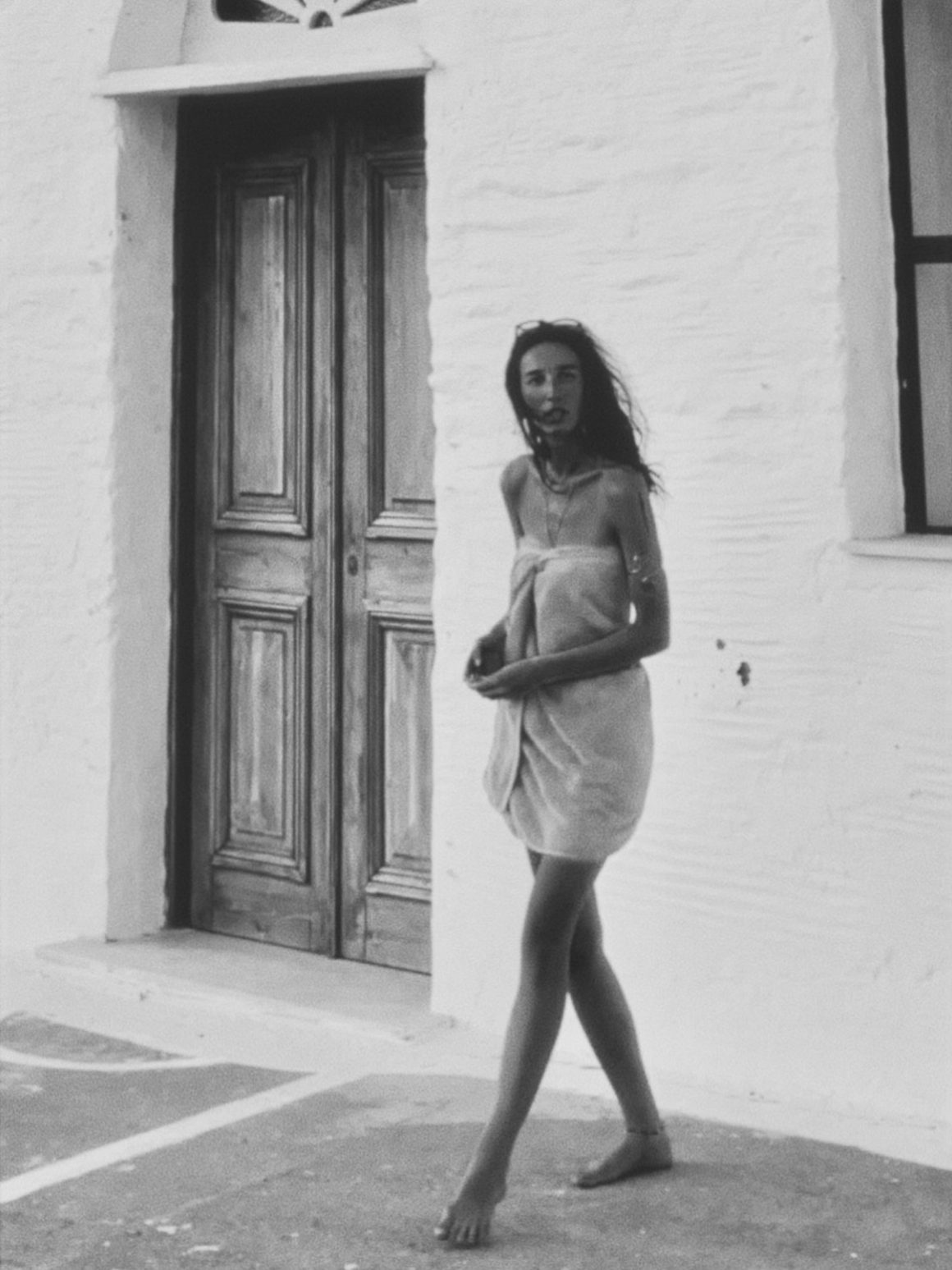
You visually intervene on photographs to create dreamlike scenes. What inspired this approach, and how does your process evolve? Tell us a story.

I love your use of the word ‘scenes’ for it is exactly that. It’s part of a film that only exists in my mind. 

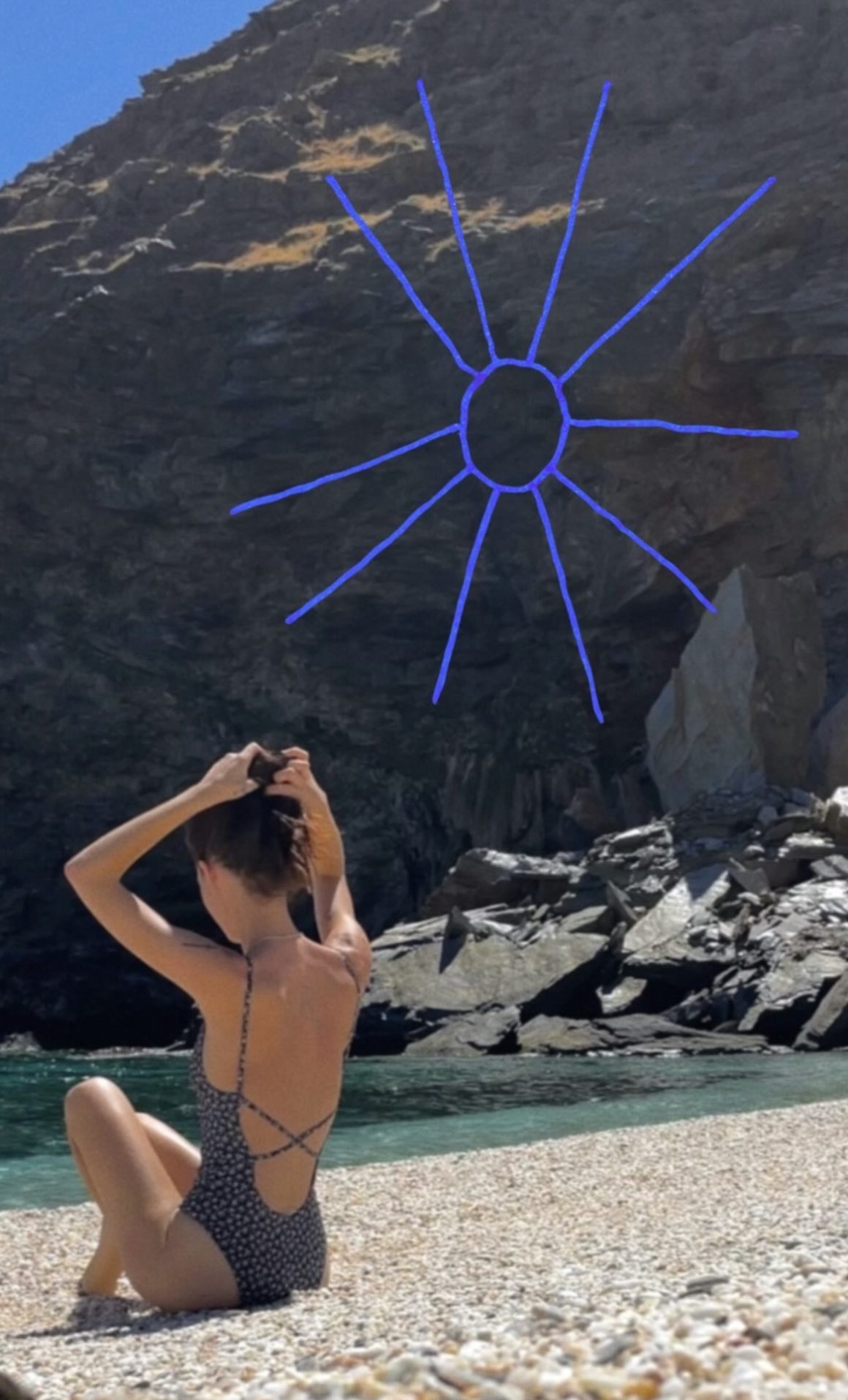
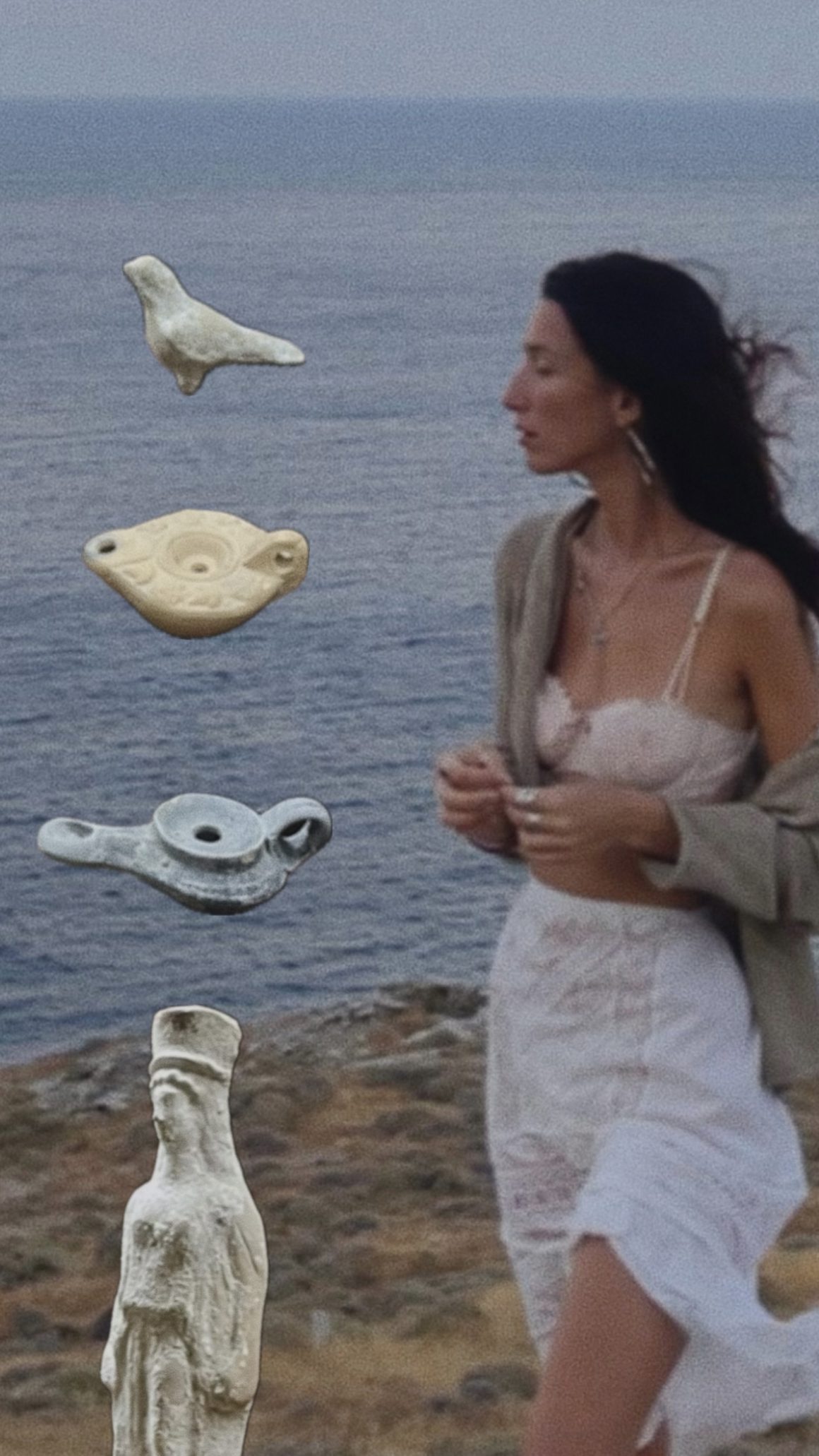
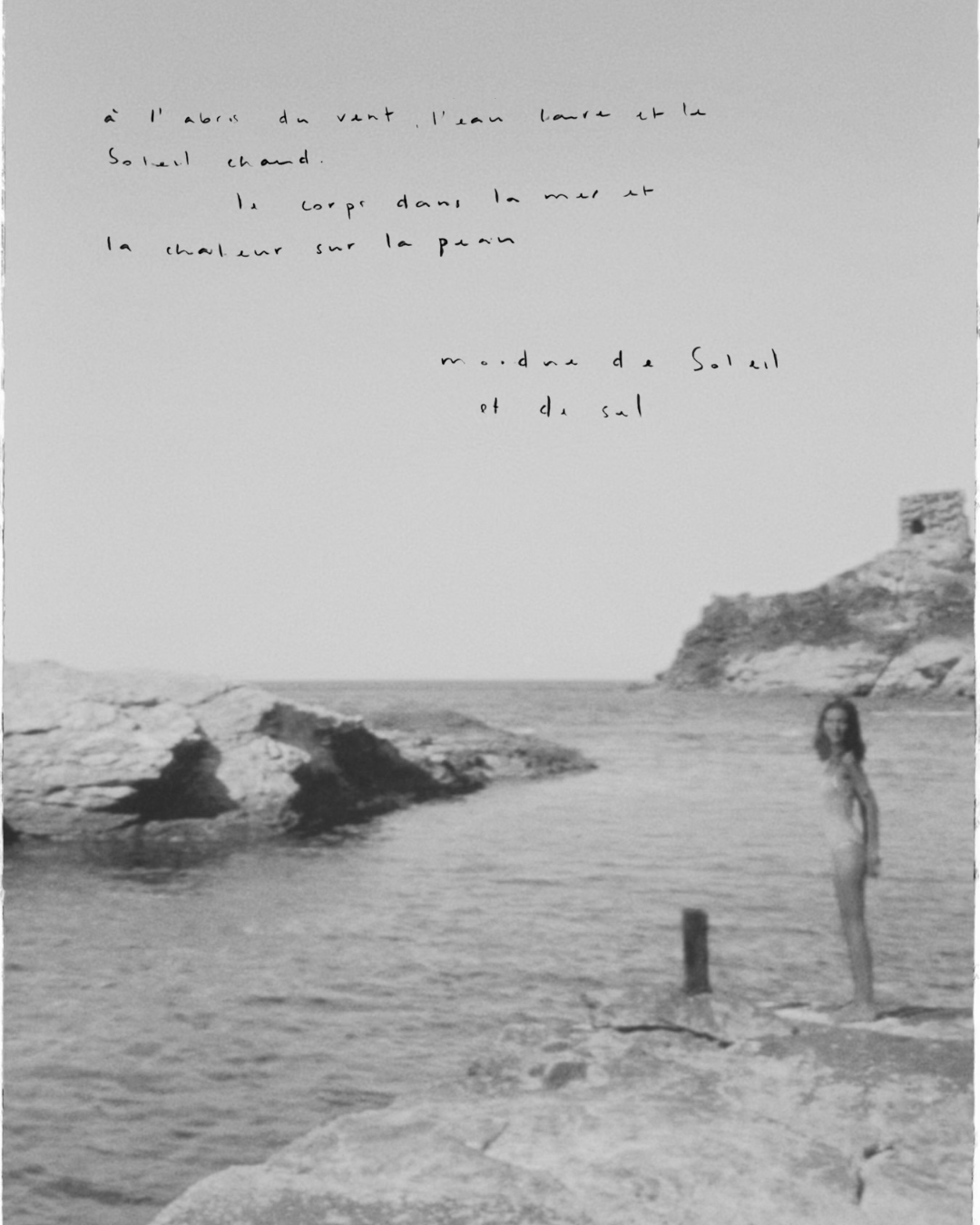
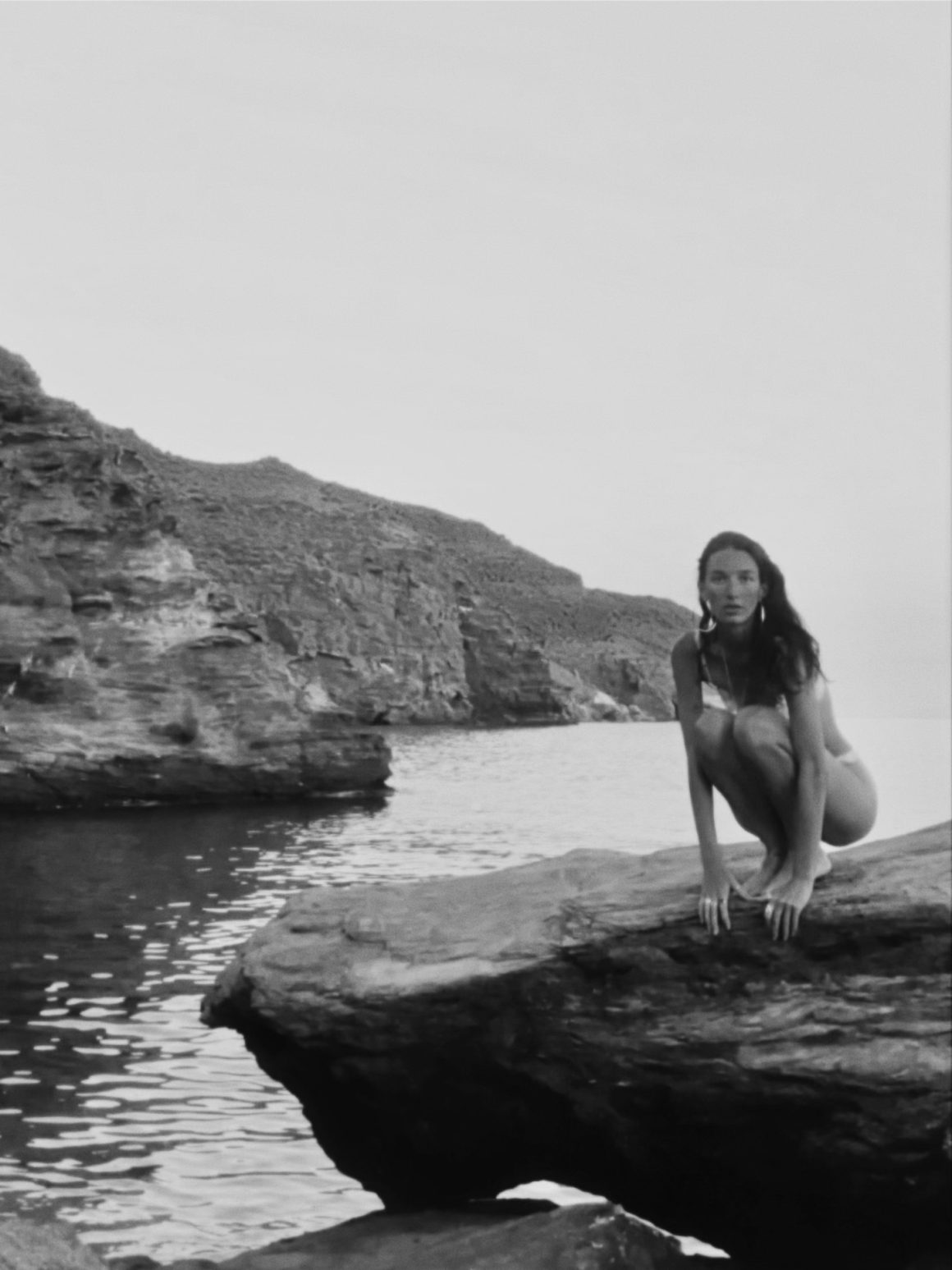
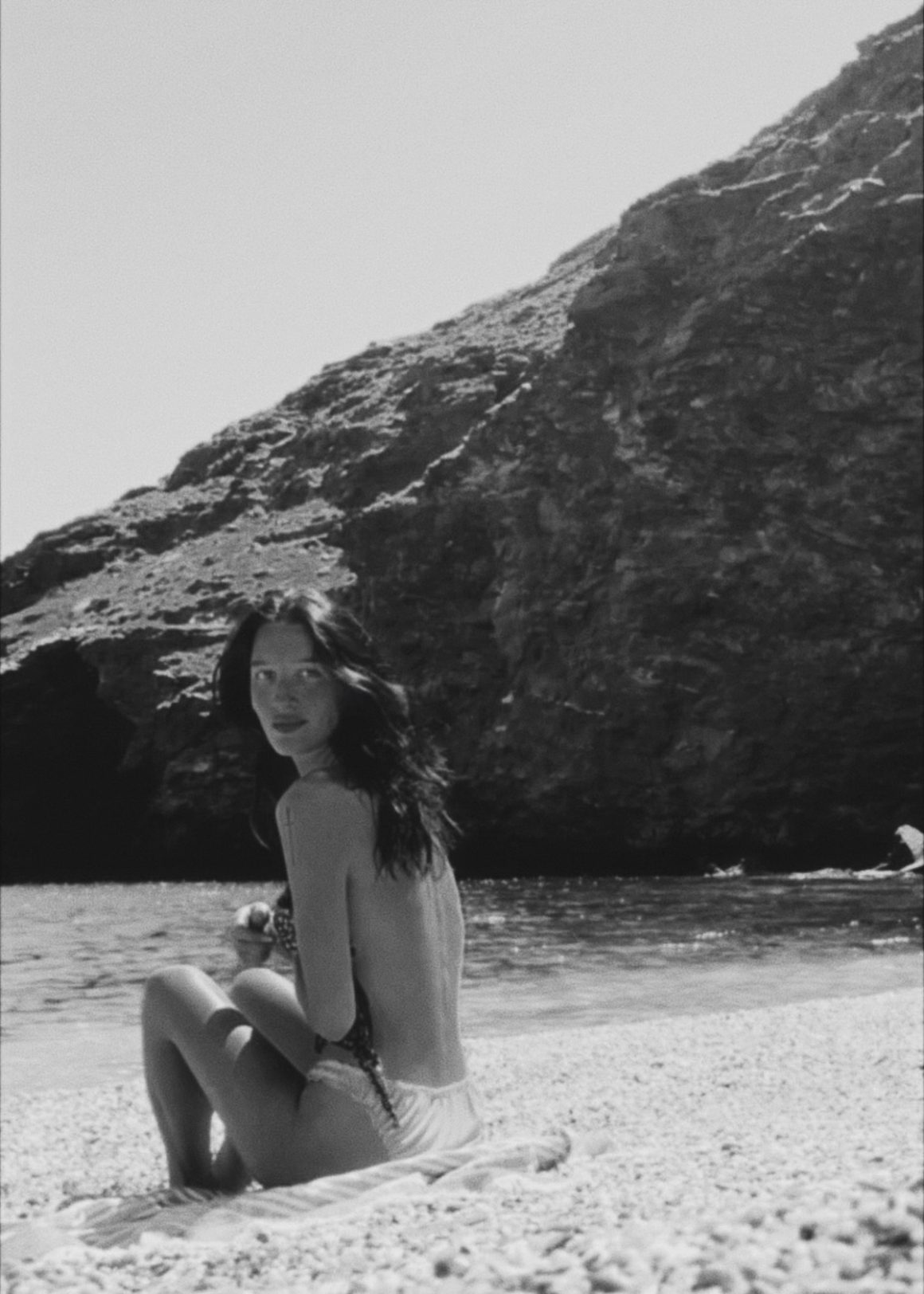
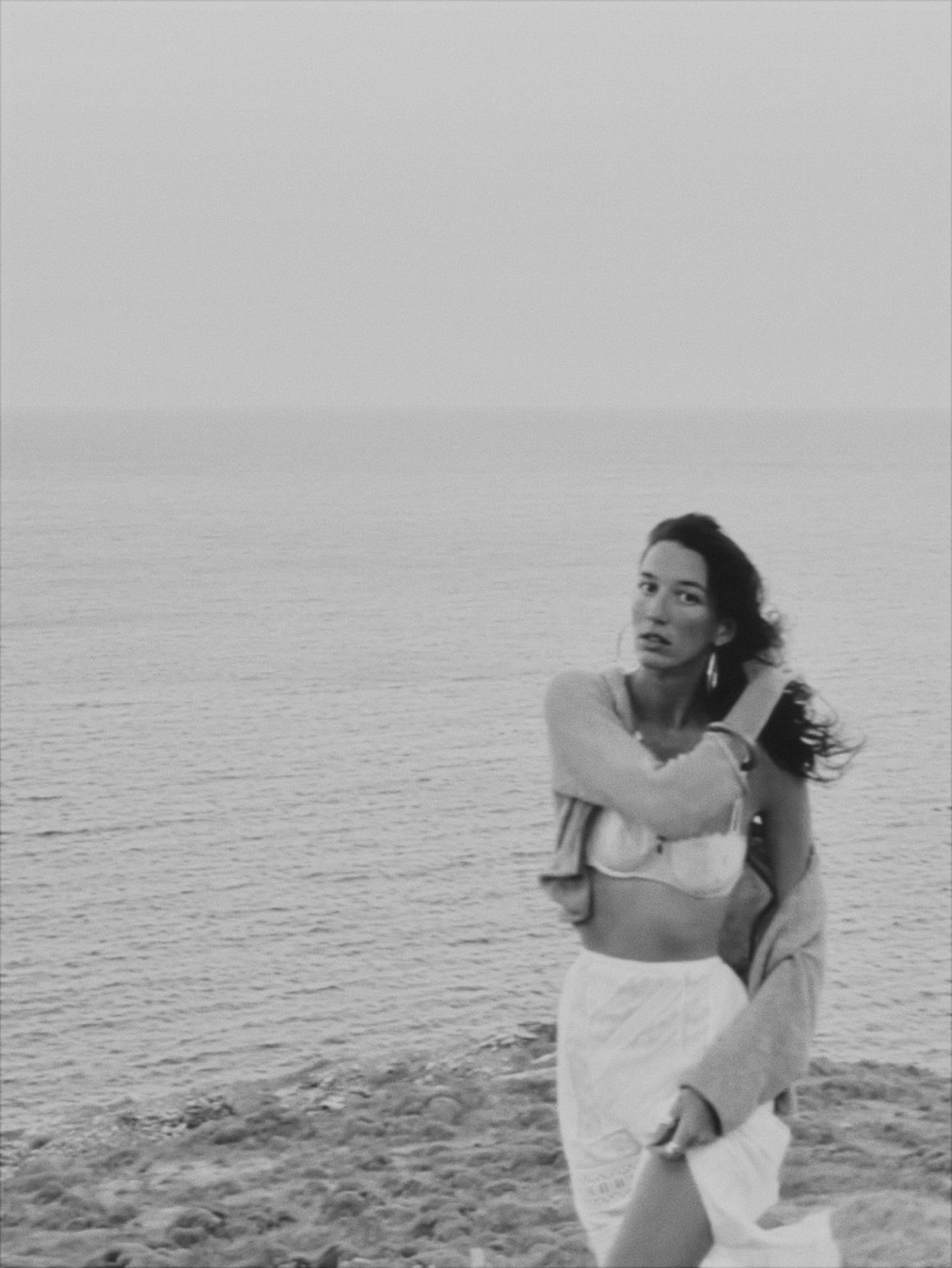
Mid June this summer, I was sitting on a rock facing the sea at the feet of a very quiet town. Only the movement of the waves and the birds coexisted. I stood still, and I remember feeling sad and grateful at the same time. Both grieving and welcoming. So I put my camera down on the rock, lucky for the lack of wind, and started walking on the edge, between stone and water, my ears in the sea so I wouldn’t hear when the photo was being taken.

The photo that came out is blurry, and, unexpectedly, I’m actually facing the camera as if ready to jump. Half daring, half resigned. It seems I’m barely there, about to appear or disappear. Perhaps I take photos like I paint, through feeling — sense and stories come later. 

Which colours are you drawn to, and why?

Blue. I opened my heart and it was blue.

What are the non-negotiable values in your artistic practice? 

For my art to be true. I believe we can sense what is true, it’s our animal nature. What interests me most in art is that — truth of feeling. When you speak several languages, you learn that some are better than others at expressing certain things. To me, art is what translates best what perhaps should not, in fact, be expressed into words at all. Some attempts of wording can confine and misrepresent in their lack of abstraction. 

I’d rather paint something that lacks technique but feels genuine. That, to me, is good. The art that moves me most is the one that had to come out of the artist — when someone had no choice but to create this, to bring it outside of themselves. Frida Kahlo and Hilma af Klint feel like great examples of this. 

What is your connection to Greece, which places do you cherish most here, and why?

I’m French and Greek, and came to Greece every year growing up until I was 25. Last year I came back after those five years away and something opened in me. I felt closest to myself and creating came easily. That’s how I knew I had to be here. 

What do you love doing most?

What a wide question… on my page you will see Joan Didion, Clarice Lispector, Mary Oliver who I adore to read and even study — but I do love a good cosy witchy book too. 

A Sunday morning market, playing with Colette (my black cat), and making anything with my hands. I do dance a lot too — whenever sad, anxious or preoccupied… dance. Like time, movement heals everything. 

I love playing in the woods too, climbing, hanging from branches, jumping from a tree to another… 

Long aimless walks with my camera in new places. 

How has your philosophy on Art evolved over time, and what holds particular value for you today?

I’m not sure I have a philosophy on art but what comes to me is this: an ongoing infinite conversation with yourself, the world and the people around you. Art as a connector — it feels like this liminal space in which everything can coexist and speak to itself — and each other. 

I’d say never assume anything is fixed which calls to humility and flexibility. Art is an alchemist. And we can only flow with its unpredictability. 

What would be your dream creative project?

To work with other creatives! I’ve been isolating myself in order to tell The Messenger story, but now I would love to connect and create something in a group — a film, an atelier…

I would love to host a surrealist dinner party à la Marx Ernst. Gather all artists that feel called to it, create the most fantastic world and invite people to be weird, fun and creative together. I believe we all want to be kids and surrealist did just that. 

What does the Greek summer mean to you?

Freedom and simplicity. I need very little in my Greek summers. The sun, the sea, the people from the village, fresh foods… unfortunately this simple life is becoming a luxury to many. 

Which designers hold a special place in your heart, and why do you choose them?

Sarah Nicole Squizzato who founded the brand Móno Ena in Athens is incredible. I met her at the Athens Jazz Festival and immediately fell in love with her pieces. To be fair, I fell in love with her clothes first, and met her then. Her unique mix of lines and textures makes for exquisite fits that honour every each body type. I have my eyes on a corset and a skirt from hers. Designers who adore women are still very much here, and we love to see it. 

Jodie who founded Palmworks Studio — if Venus were to emerge from the sea again, she’d be wearing Jodie’s ethereal creations.

Ella Beth Thompson and her woven magic — another woman who makes everything with her hands. I’m impatiently waiting for the Paloma hat to make its grand return.

Liv & Dom — the dreamlike duo of ceramist and painter twins. My new home won’t feel whole without of one their plates. 

Vasiliki Verousi from Hydra Edition — whatever this woman puts together, be it an event, an ephemeral shop or an atelier, is pure wholesome magic. 

Are we defined by what we choose?

I feel like we should order some wine and open a three hours conversation on this one. 

Choices tell you a lot about someone. It would feel intransigeant to define a person solely on their choices, although it will give you a lot of insight on their (strength of) character. However, I strive to soften my perspective by seeing ‘choice’ as a greater indicator of chance, education, privilege and circumstances. 

I resonate more with the sentence in that order: what we choose will eventually define us. 

What was the last item you bought, and why did you choose it?

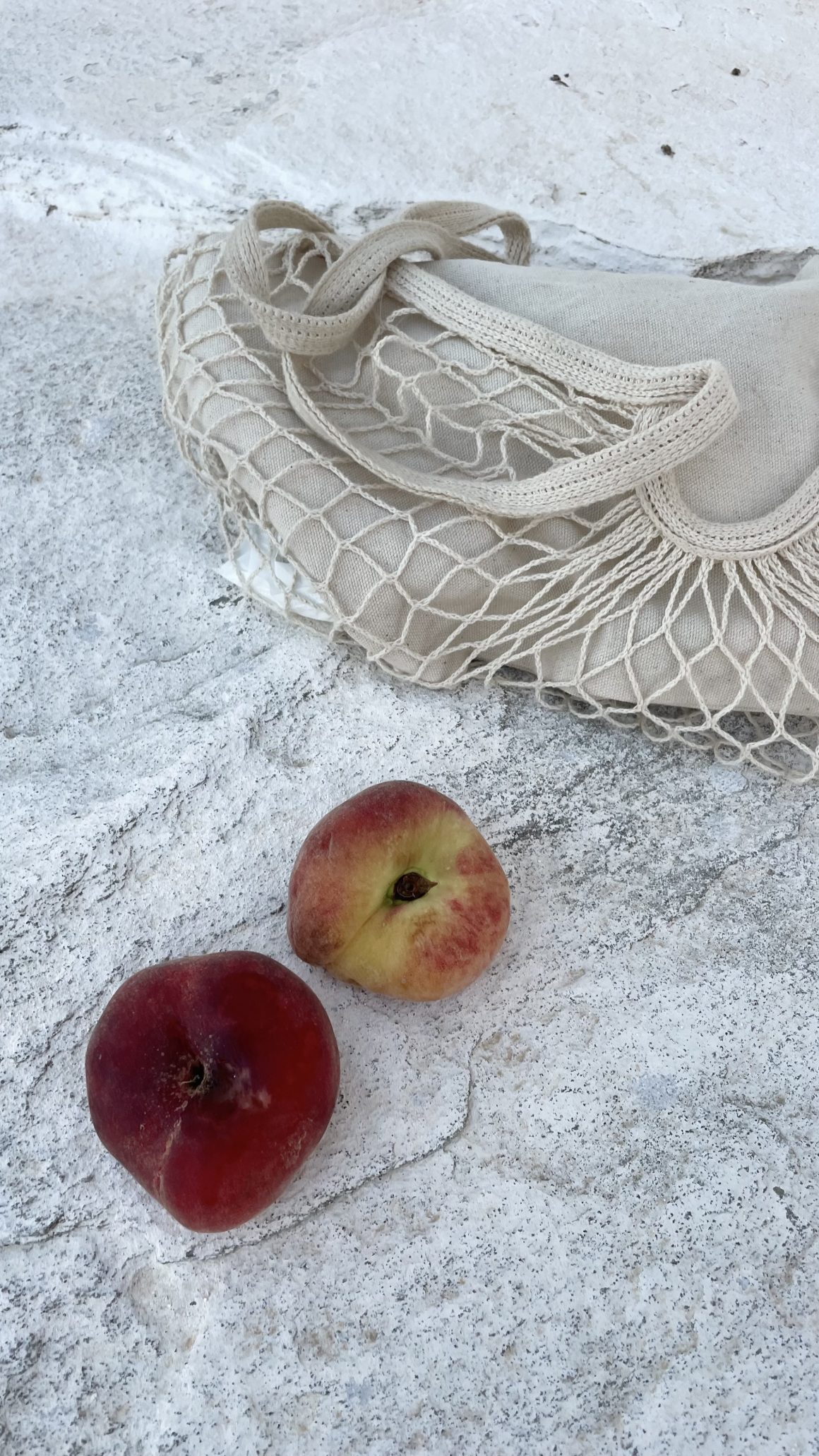
A crochet bag at a vintage shop in Brussels. I am obsessed with all things crochet and this bag had the perfect fit for my book and notebook. It was obviously handmade but i don’t know whose grandma to thank here.

What is the best book you have read recently? 

Humanise, by Thomas Heatherwick

Which single object could you never part with?

My necklace that I wear every day with my Athena medallion gifted by my dad when I was younger, and the shell I purchase on my first trip to Madrid with my friends, at 19. It’s become a talisman. 


Who is an artist you adore, whose work you would love to own?

There are three: Sarah B Solanet, Viktoria Nianou and Charlotte Nieuwenhuys.

Hanging a Fassianos or a Chagall in my bedroom would probably end me and send me straight to heaven.

If anyone wishes to, it’s my birthday on the 23rd. 

In another life, what would you like to be?

A shaman.

Name three places you love returning to, and why.

Hove: my friends from the last five years are all there. It was my home for so long. I miss my Hove flat with its little kitchen and all the dinners I used to host. It felt like a Ghibli kind of life. 

Scotland, wherever Lizzie and her wild horses are: we take long walks in the highlands, discuss her documentary, my writing, a lot of silence and being with the animals.

Greece: and I won’t choose a single spot. Knowing I’m in Greece is enough for me to breathe and move differently, more freely.

Bonus: my body. That’s where the noise stops and I enjoy life most. 

Are Art and creation a path to becoming better human beings?

Most definitely. We are all creative beings and I believe the world would be a healthier place if we were all allowed to express ourselves. I think we are here to experience life and make art out of it, as an ever ending mirror. But some of us have perverted this right by deflecting it. It molded as our world’s greatest diseases: colonialism, capitalism, patriarchy… we live in the reality of bigger systems that actively do not want humans to be healthy nor happy. 

In that reality, art remains one of the most potent revolutions. 

Tell us a story you will never forget.

Three years ago, I was living in Brighton and at the time feeling a little outside of myself. One day I stumbled upon the book by Anastasia Miari, Giagia, and it made me rediscover the dishes I used to make with my own giagia. 

A year ago in Brussels, I meet a new friend who tells me about his island, his adoptive giagia. He shows me a photo, I draw her as I fall in love with the lack of smile on her lips — it’s all in her eyes. She feels familiar. As it turns out, she was one of the giagiades in the book whose dish I cooked in my Hove kitchen. 

Three years later, my dear friend Quentin invites me on his island and I get adopted myself by his sweetest giagia. She didn’t let me cook with her though, because ‘I don’t know’ (of course), but I got to enjoy many of her recipes with her beautiful family.

Life and its interwoven miracles.

How do you envision yourself ten years from now?

In my house on an island with an artist residency. 

I paint, I write, I travel to Athens, Brussels and Paris still. Italy often. But I come back to my little home by the sea to create. 

I would love to have put something into place as well to encourage and support young artists.

Which museum and artwork stole your heart?

Alekos Fassianos museum and its use of colours. 

Vergina and its burial grounds. There is something that happens within me every time I walk down these steps, deeper into the earth and silence. 

What is your personal definition of beauty?

Liveliness. 

Have you ever designed anything for a home collection, and if not, what would you create?

I have many sketches for ceramic vases and plates — perhaps a collaboration to come in the future.

What do you consider truly authentic?

True vulnerability. What we feel uncomfortable to share but share anyway. Nothing to do with staged or performed intimacy, things that are intimate yet easy to say. Vulnerability comes from the discomfort of being seen — and there is nothing more uncontrollably authentic than taking that leap. 

If you were to design something specifically for TheAuthentics.gr, what would it be?

Definitely a silk scarf collection; something light, playful, and timeless. 

Author