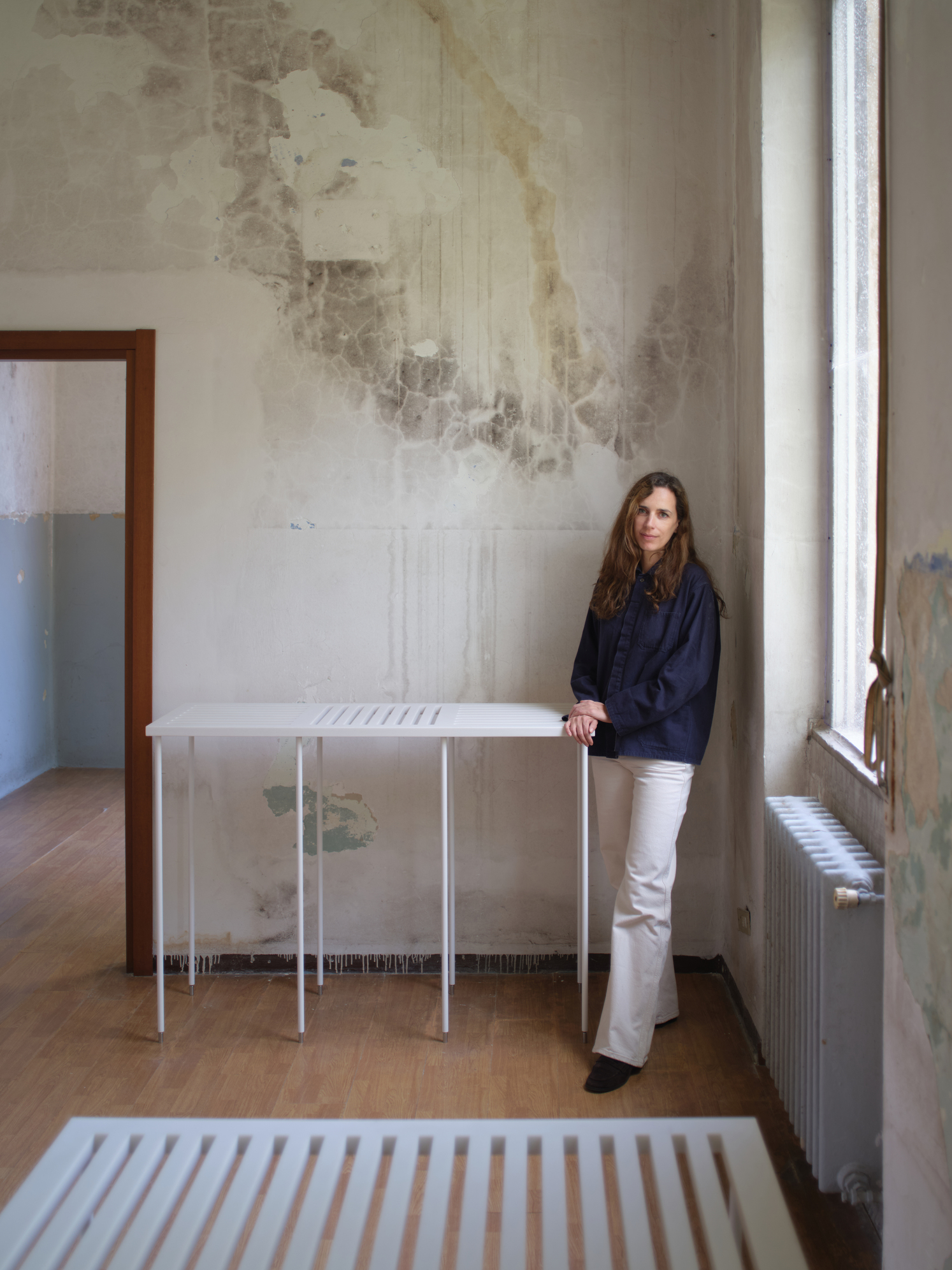
Υour creative journey and which achievements you hold closest to your heart.

Honestly, I don’t tend to think in terms of “achievements.” I genuinely love what I do and the process behind it — collaborating with people, craftsmen, clients, and partners. I simply try to evolve through the work itself. If something truly has value, I think time is ultimately what proves it.

That said, I do feel proud of certain projects, such as Tetris House, for the clarity of form and intention we managed to preserve within highly complex environments and difficult conditions. That is something that gives me real satisfaction: finding solutions to complex three-dimensional problems. They feel like puzzles to me — and I genuinely enjoy them.

What do architecture and design mean to you, and how do you approach them through the way you work and create? What do you consider your most important accomplishments in these fields?

Architecture is a way of thinking, as cliché as that may sound. It is a way of organizing relationships between space, movement, light, proportions, and materials.

I’m interested in the idea that the same logic can exist across all scales, from a building to a small object. Ultimately, what interests me most is creating spaces and conditions that genuinely improve the experience of everyday life and touch people on a deeply emotional, almost subconscious level.

To me, a true accomplishment is when a project becomes timeless. A small example is a particularly meaningful invitation we recently received: one of our residences will be included in an international publication dedicated to iconic Mediterranean homes, alongside works such as Can Lis by Jørn Utzon and E-1027 by Eileen Gray. The feeling that a project can endure and exist meaningfully through time is perhaps the greatest form of recognition.

Tell us about your recent participation in Milan Design Week. What did you create, where was it presented, and how did the Architectural Fragments come to life?

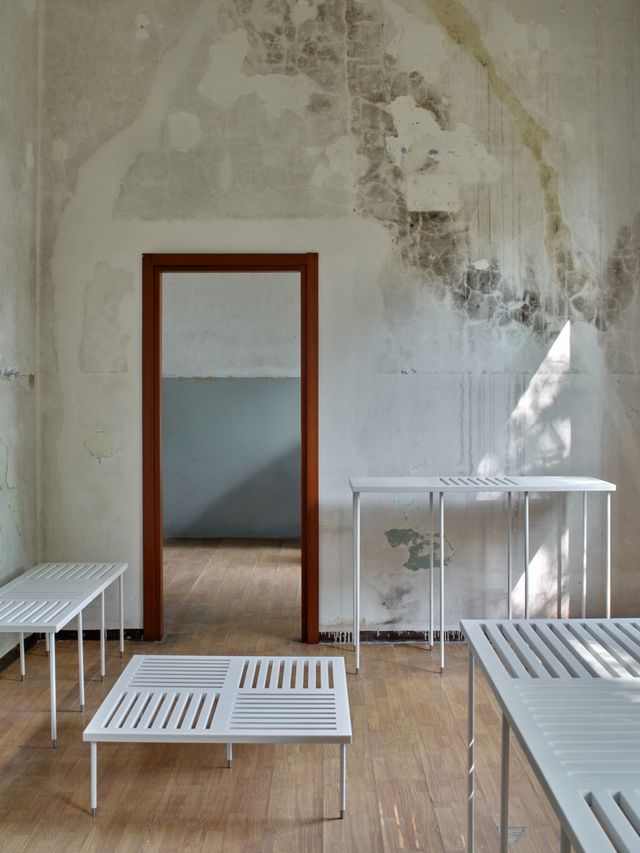
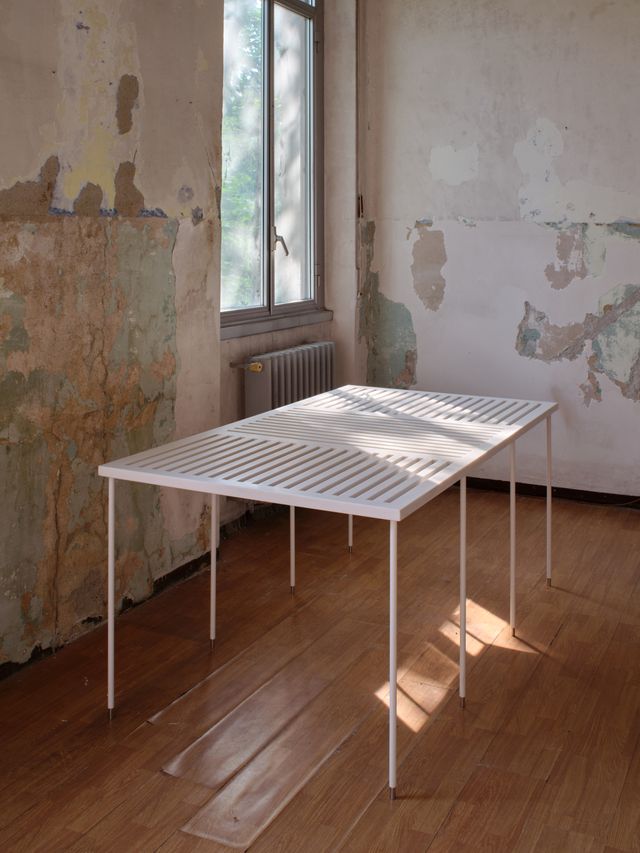
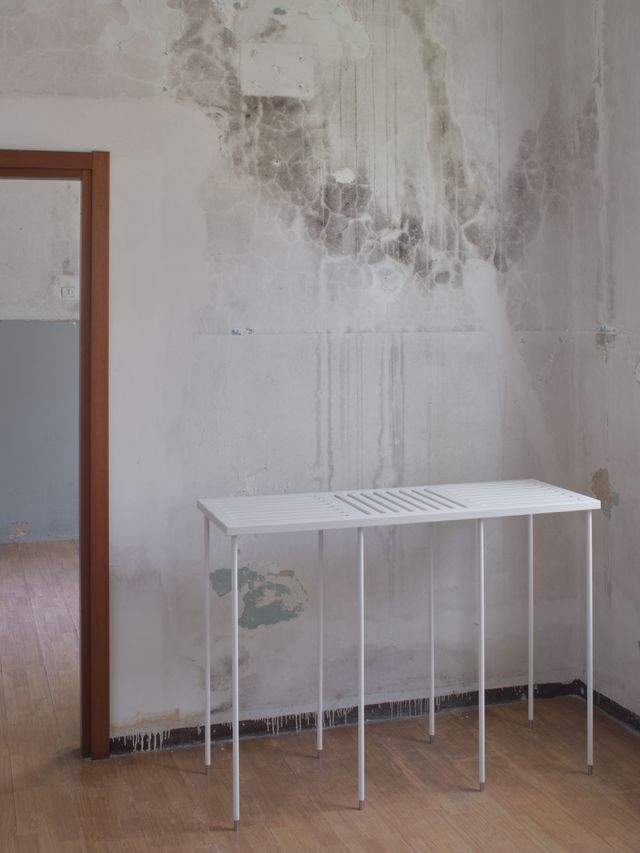
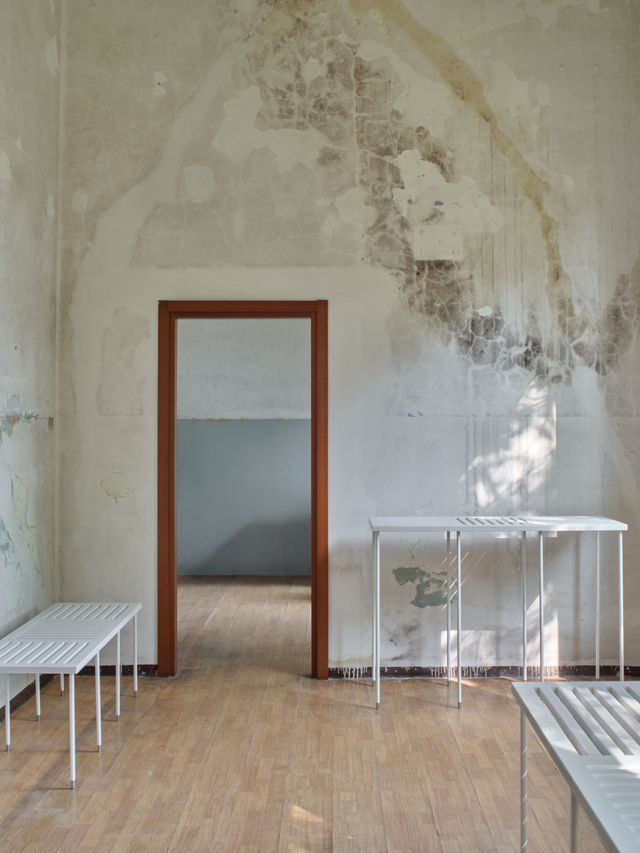
In Milan, I presented the first complete series of marble works titled Architectural Fragments at Alcova. Alcova is an exhibition that began eleven years ago and each year occupies buildings of historical and architectural significance, many of which open to the public for the first time. It has now become known as one of the platforms showcasing some of the most interesting projects — a mix of established names and emerging voices.

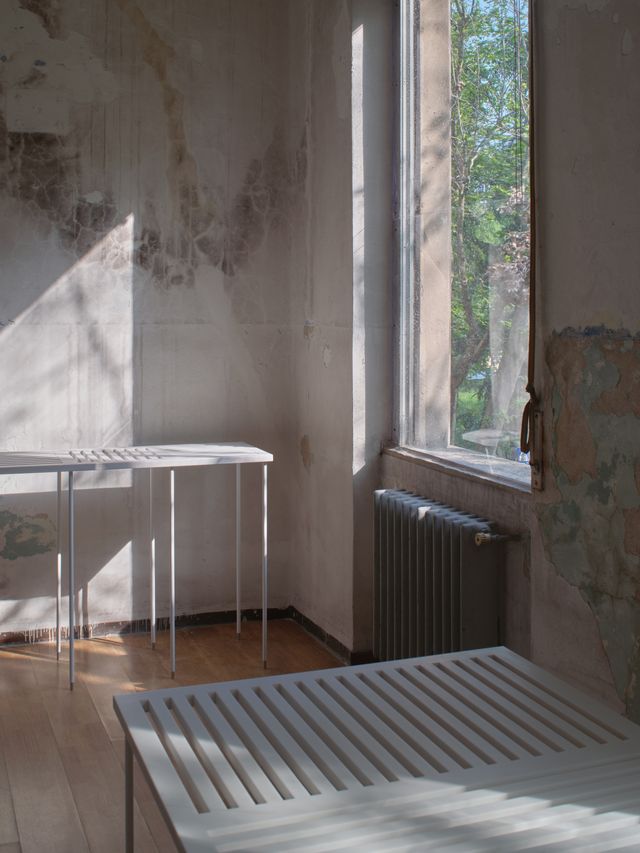
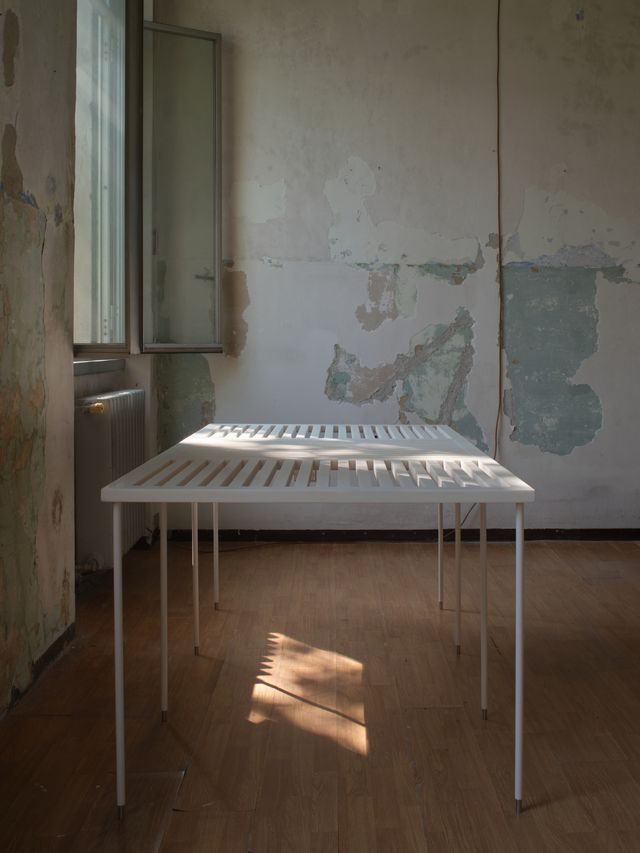
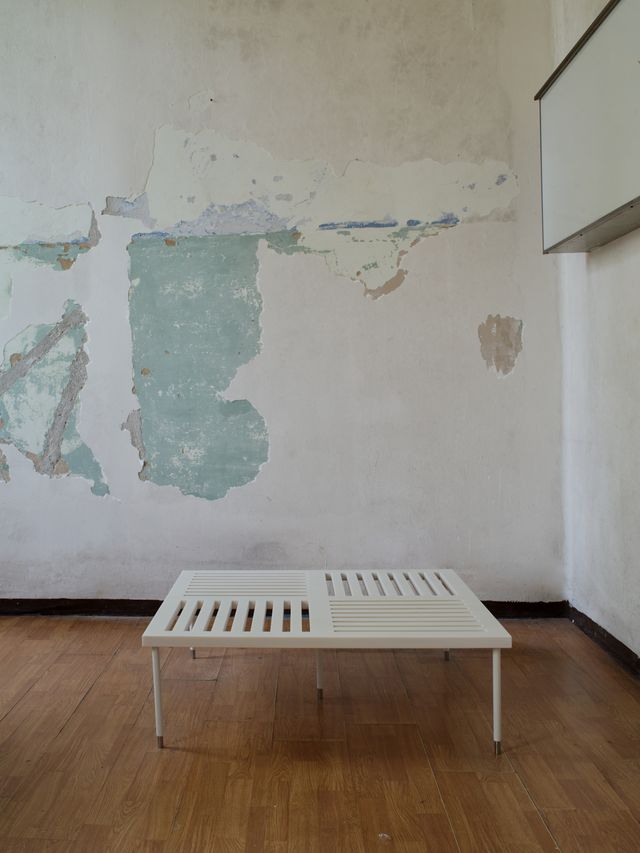
The pieces exist somewhere between object and architectural gesture. They can certainly be used, but I’m equally interested in their presence as spatial elements.

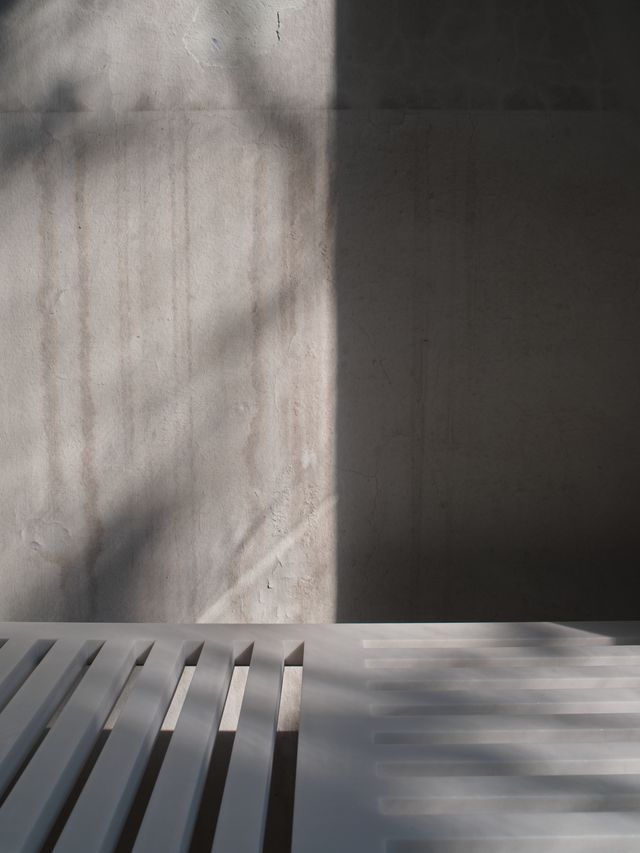
I was drawn to the idea of marble not as mass, but as structure — and to the possibility that such a heavy material could acquire a sense of lightness and permeability. I wanted to work with a material deeply familiar to me and test its limits both structurally and morphologically, because for me those two qualities are often inseparable.

Architectural Fragments also emerged from a desire to design something rooted in a certain Greekness that could speak outward to the world — rather than the other way around. Since our earliest projects, whenever we were asked to also design the furniture, I felt there was a gap between the traditional “taverna chair” and Scandinavian design. I wanted to create something connected to place while still feeling contemporary. Marble is part of our architectural memory and material culture, and it’s also a material very familiar to me, so beginning there felt completely natural.

What was the international audience’s reaction to your work? How important is it for you to experience people’s responses firsthand during an event like this?

What was particularly interesting was that people didn’t approach the pieces merely as design objects. There was a more immediate, almost physical reaction to their scale, weight, delicacy, and sense of balance.

That direct interaction is incredibly important because it helps you understand how a work truly functions within space. Also, we constantly found ourselves saying in every possible language, “it’s marble,” which probably meant that this tension between heaviness and lightness was actually working.

What place do you think design holds today, and what kind of feedback do you receive from the public? Does it receive the appreciation it deserves?

Design is not something abstract; it is something that responds to a need in a new way. Someone revisits a “problem” and offers a fresh solution. That is good design. And good design is something everyone can feel, even if they cannot fully analyze its components. In that sense, yes, I believe good design is eventually appreciated, sooner or later.

What have been the brightest moments of your journey so far, and what has become non-negotiable for you?

I don’t know if I would call them “bright moments,” but I deeply value the encounters and kind words from people I genuinely admire in the field. Recently, Wendy Goodman, who has written about design and interiors for decades for Curbed and New York Magazine, included us among her selections from Milan Design Week. That meant a great deal to us because she is a voice with real weight and longevity.

What is non-negotiable for me is working in environments where there is trust, collaboration, and a shared vision.

Tell us about the collaborations you’ve had and how they have evolved over time.

The most meaningful collaborations for me are the ones that gradually evolve into a genuine exchange of thoughts and ideas — and sometimes even real friendships.

I remember one particular project where we initially began by designing a house, and eventually ended up designing almost everything. Every year we added something new: a piece of furniture, an object, a detail. At one point, we even designed terrazzo furniture together with the craftsman who had originally created the floors of the house.

Do you love contemporary architecture more, or are you more fascinated by the architectural gems of the past?

In a way, I envy the lost freedom of architecture from the past. You look at certain works today and realize they simply could not be built anymore for many different reasons.

At the same time, I draw inspiration from projects of every kind and era, from antiquity to the present day. Whenever I travel, I am always searching for architecture — from an ancient temple to the latest work by an architect I admire.

What do you love and dislike about the field you work in?

What I struggle with is the excessive fragmentation of roles and the lack of a clear vision. I often feel that coherence and meaningful thinking get lost along the way. I miss the freshness of a clear position and intention behind what is being created.

Who is the architect or designer closest to your heart, and why?

I have many. But for the sake of brevity, I’ll mention the first two that come to mind. Peter Zumthor, for the intensity and silence of his spaces — he is truly an extraordinary creator — and also Marcel Meili, who was my professor and mentor and deeply influenced the way I think about architecture.

What would be a dream project for you?

I would love to design an important cultural space or a boutique hotel in close collaboration with its owner — perhaps even a cinema. I’m interested in architecture that can meaningfully improve people’s experience and daily life, regardless of scale.

An exhibition you will never forget.

If I had to choose one, I would say an exhibition of early works by Franz West that I saw last year in Zurich at Eva Presenhuber. He is an artist I have followed since my student years.

Beyond the works themselves, I was deeply moved by the way he worked: openly, collectively, through dialogue and exchange. He had created a circle of friends and artists around his studio and used that process as a tool for learning and evolution.

Three places you always love returning to, and why.

The walkways and the Church of Saint Dimitrios by Dimitris Pikionis in Athens, because I am always moved by architecture that manages to enter the realm of timelessness.

The Cyclades, because in some way they feel like home to me. I spend a large part of my time there, both professionally and personally, and I almost obsessively collect photographic archives that continuously serve as a source of inspiration.

Kyoto and Japan more generally, because I admire the way people there devote themselves completely to what they choose to do. The delicacy of gestures, the sense of proportion, the sensitivity, and the dedication to tradition and craftsmanship deeply move me. I was especially touched by the home of Kawai Kanjiro and the enormous kiln in his courtyard, which neighboring families used collectively. It is a culture that allows you to pursue your interests almost obsessively.

Give us your own definition of beauty.

To me, beauty is something we understand before we are even able to explain why.

If I try to analyze it, it has more to do with precision and intensity than with appearance. It is the moment when something feels inevitable, as though it could not possibly exist in any other way.

What do you consider authentic today?

I think authenticity is when someone begins from a genuine inner necessity and carries within them a meaningful reason for what they do.

If you were to create something for TheAuthentics, what would it be?

Perhaps a small space or object that functions more as an experience than as a product. Something existing somewhere between construction, materiality, and atmosphere.

ARP -Architecture Research Practice

ARP –Architecture Research Practice is an architecture studio based in Athens, working across residential, hospitality, and cultural projects. The practice designs and delivers built architecture while simultaneously developing research-driven work acrossobjects and installations. This parallel line of inquiry informs the studio’s broader practice, reinforcing a continuous dialogue between making, use, and experience. ARP’s approach is grounded in close engagement with site, context, and construction. Each project begins with careful observation and analysis, allowing architectural ideas to emerge through material, structure, proportion, and light. The studio prioritises clarity, spatial precision, and a strong relationship between architecture and its environment.

Argyro Pouliovali

Argyro Pouliovali is a Greek architect, designer, and writer. She founded ARP –Architecture Research Practice in 2014, an Athens-based practice working across scales, from buildings to objects and installations. Her work is defined by a consistent focus on material intelligence, proportion, and spatial clarity.

Architectural Fragments presents a series of marble pieces where stone is treated as a spatial element, testing the limits of the material.The work originates from architectural thinking and translates construction logic into object scale. Marble is treated as structure rather than mass: material is selectively removed under constraint, calibrating the relationship between surface and space.The subtraction is calibrated against the remaining material, the legibility of the surface, and its extension into space through light.Carved from a fixed thickness of solid Thassos marble, selected for its density and luminosity, and paired with precise metal supports, the pieces are defined by permeability and perceived lightness.Situated between furniture and architecture, the pieces can be used or simply encountered. Each element functions as a fragment of a larger spatial system.At Alcova, the fragments introduce a quiet architectural order, where stone, structure, and light become the primary agents shaping space.


Author