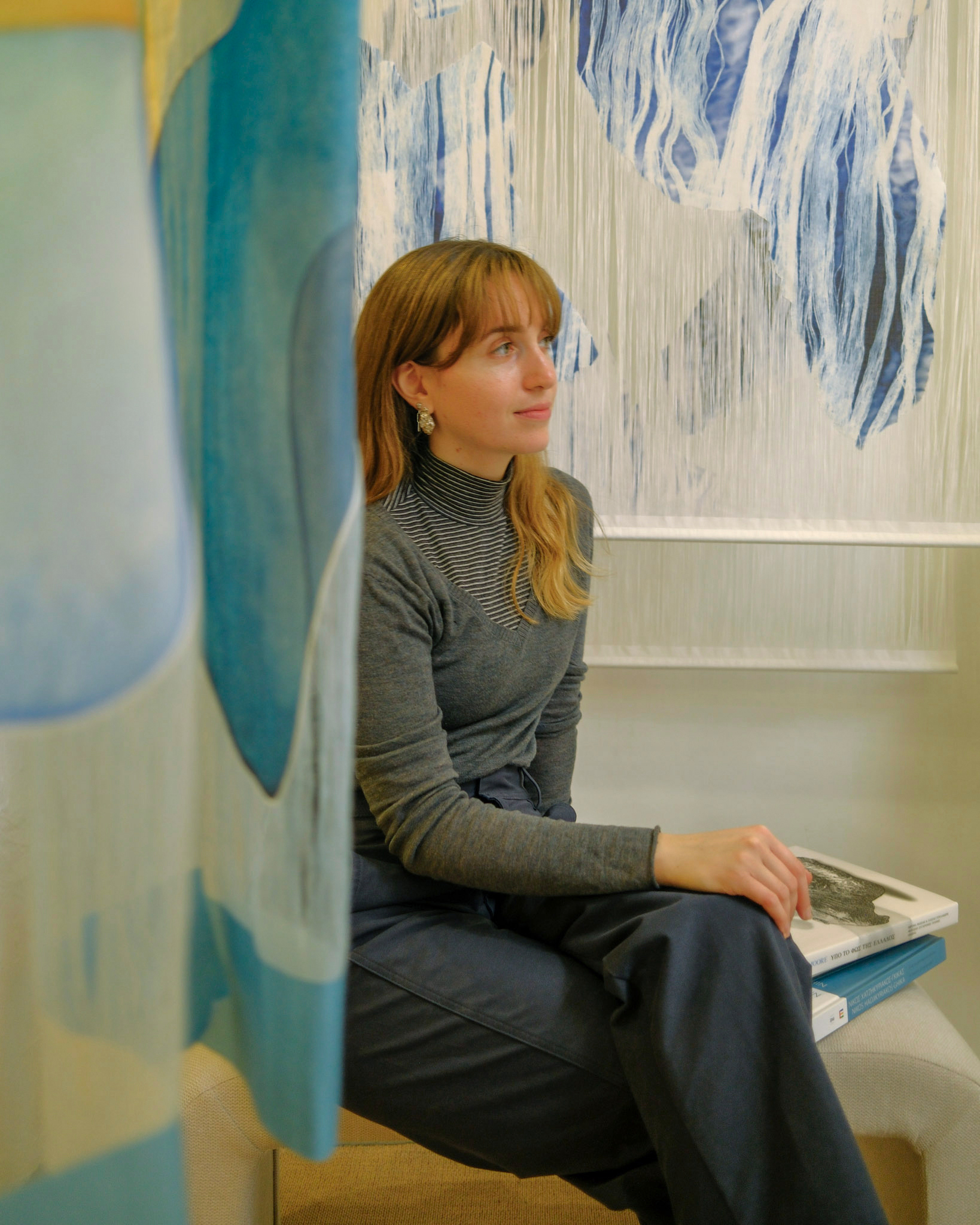
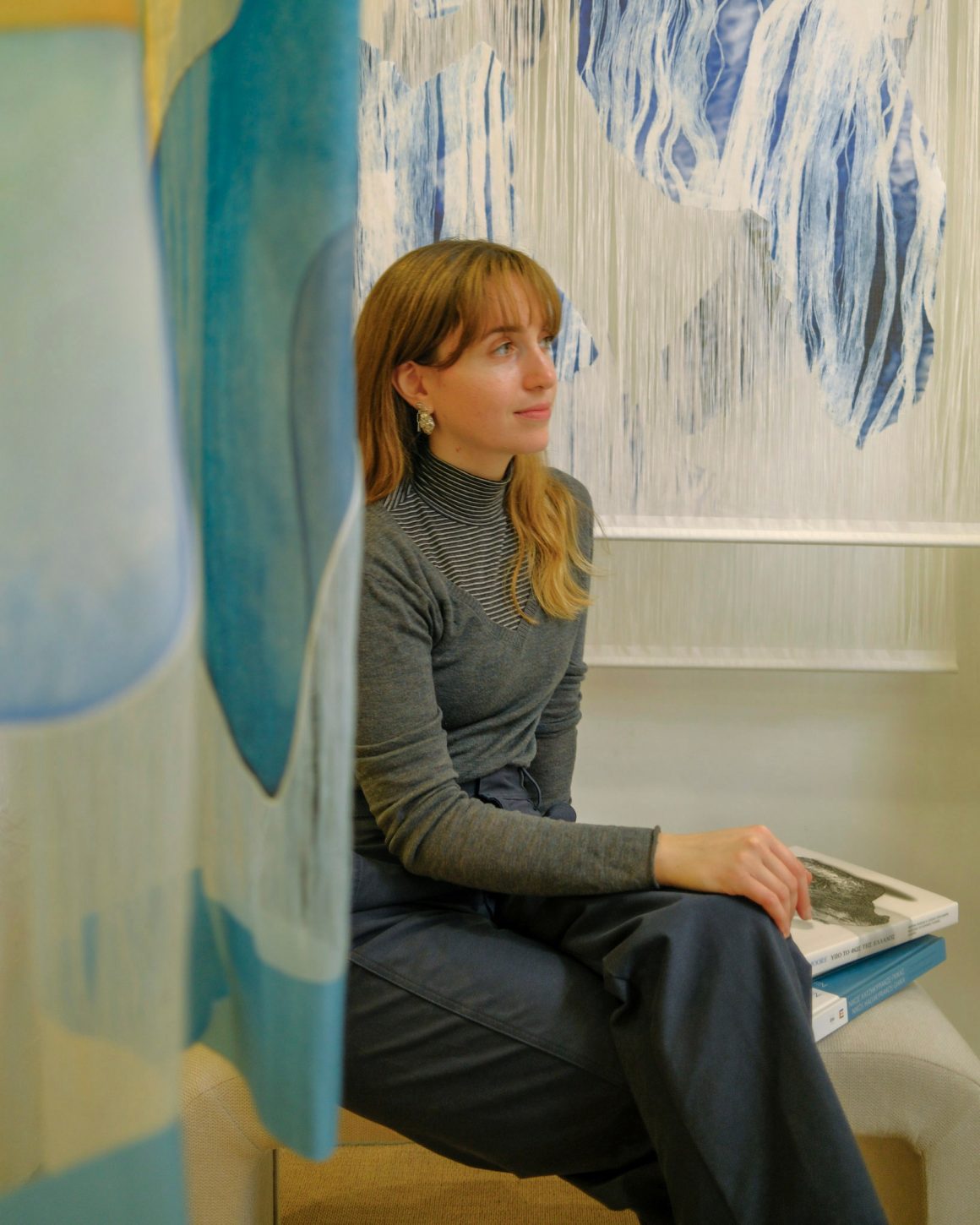
Tell us about your journey and the key milestones that have shaped it.

My relationship with textiles began early on, through an attraction to textures and material processes that I already had during my school years. This eventually led me to study textile design, where my direction started to take shape more consciously.

During my studies, one of my main aspirations was to have the opportunity to work alongside Iris van Herpen, in an environment where garments are approached almost sculpturally. Through a combination of coincidence and the right timing, this became a reality right after I graduated, with an internship at her atelier in Amsterdam, which later evolved into a full-time position.

This experience—and the people I met there—played a defining role in shaping my creative identity. Although the direction of my work had already begun to form during university, it was there that I acquired new tools and, most importantly, greater confidence in my choices and abilities.

Equally important, however, was the decision to leave in order to focus on my personal practice. From that point on, establishing my own studio, collaborating with other creatives, and presenting exhibitions and projects over the past three years have all been milestones that continue to shape my path.

How was the first idea born—the discovery of a creative perspective through textiles—and how has it evolved over time?

My studies focused on textile design with a specialization in embroidery, but I quickly realized that this was not the path that suited me. I began to approach textiles differently—experimenting, allowing the material to guide me and seeing where it could take me if given freedom. That’s when I discovered the vast range of applications textiles can have, as well as the unconventional techniques that can be integrated into them.

This inclination toward experimentation has become the core of my entire practice. Each work is a new test, an exploration of a technique I either already know or want to discover. If I had unlimited time, I would love to realize all the ideas I continuously document but haven’t yet had the chance to explore.

You create sculptural objects using thread and textile techniques. What do your works symbolize, what inspires you, and how does your work relate to Greek tradition?

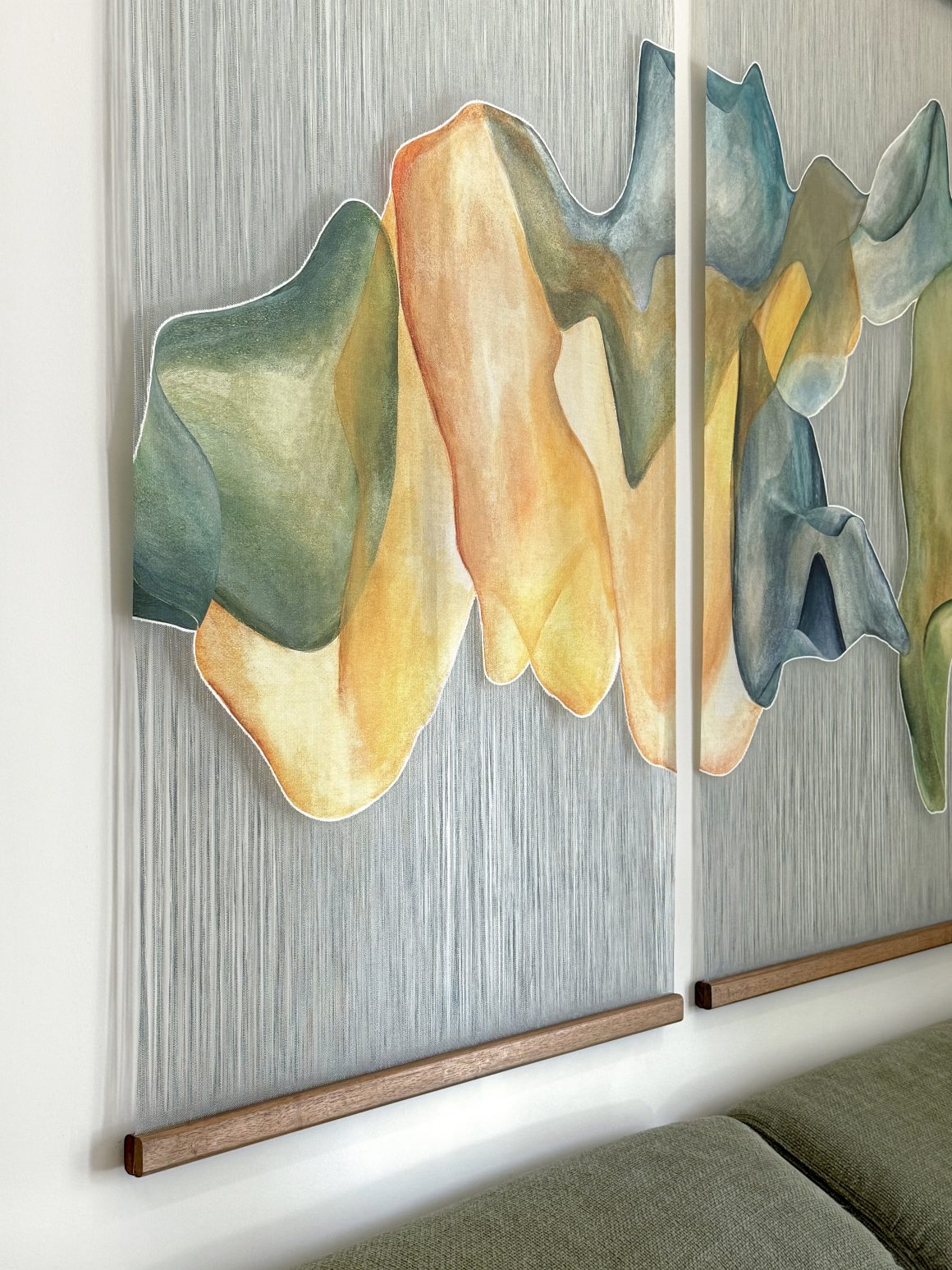
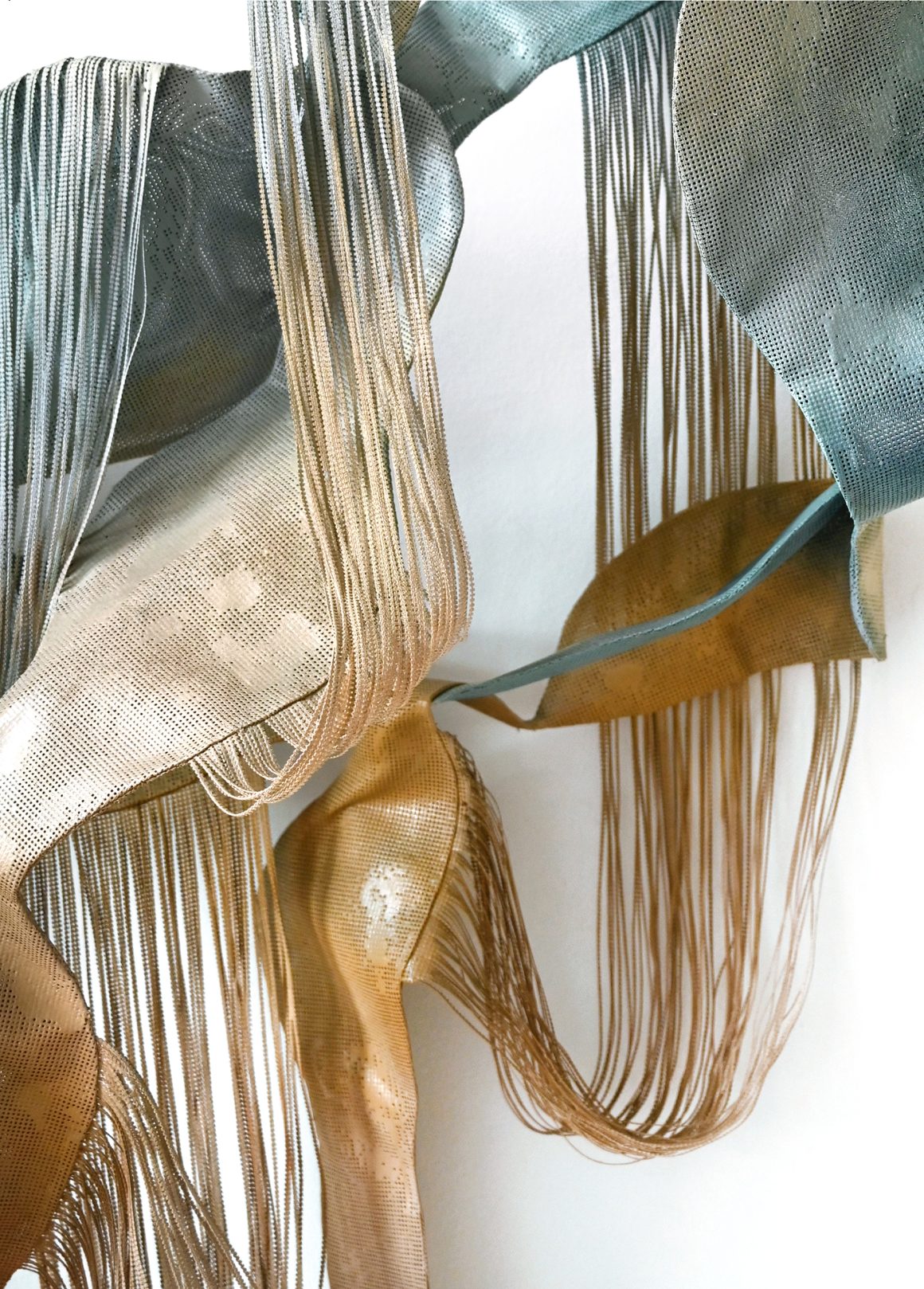
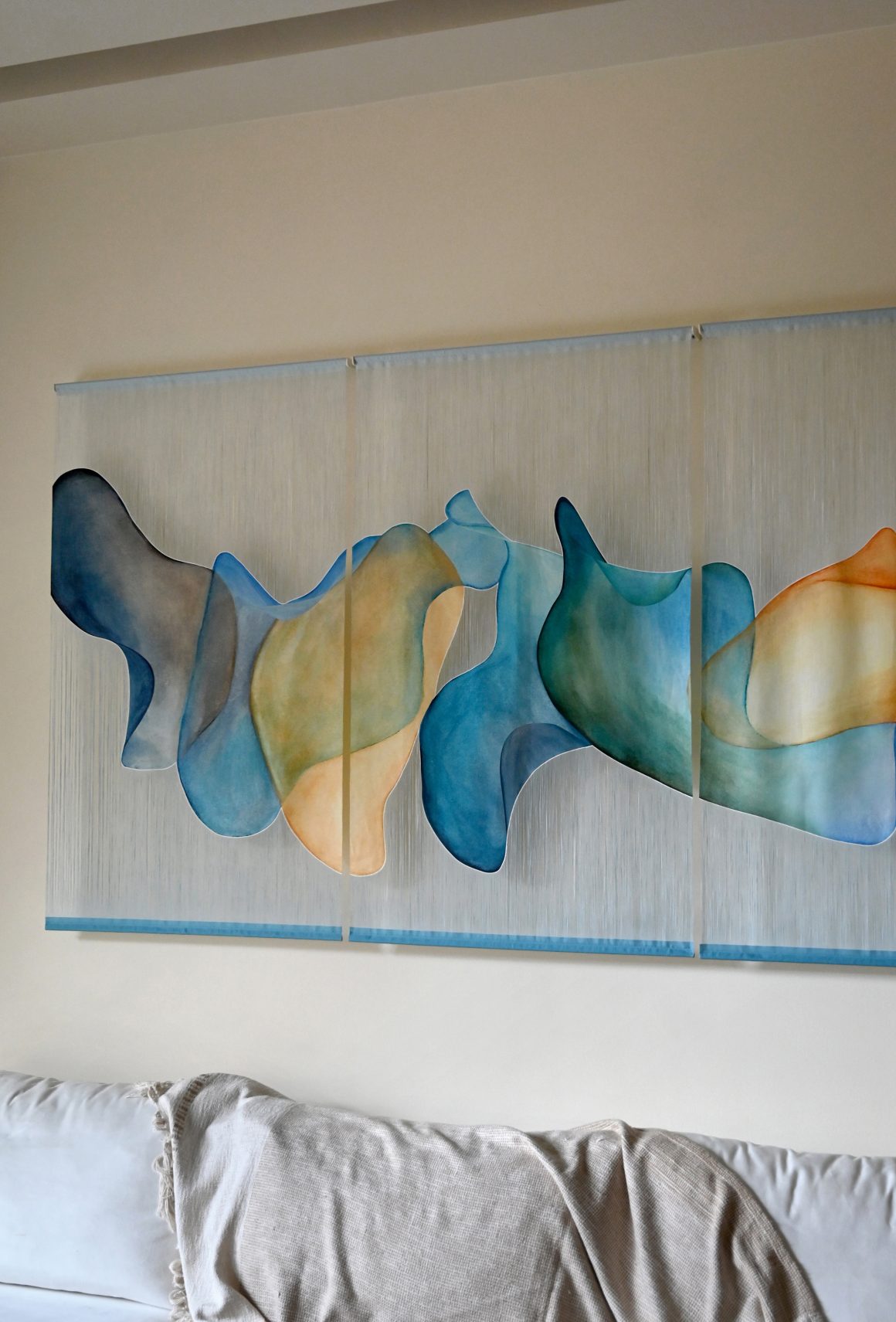
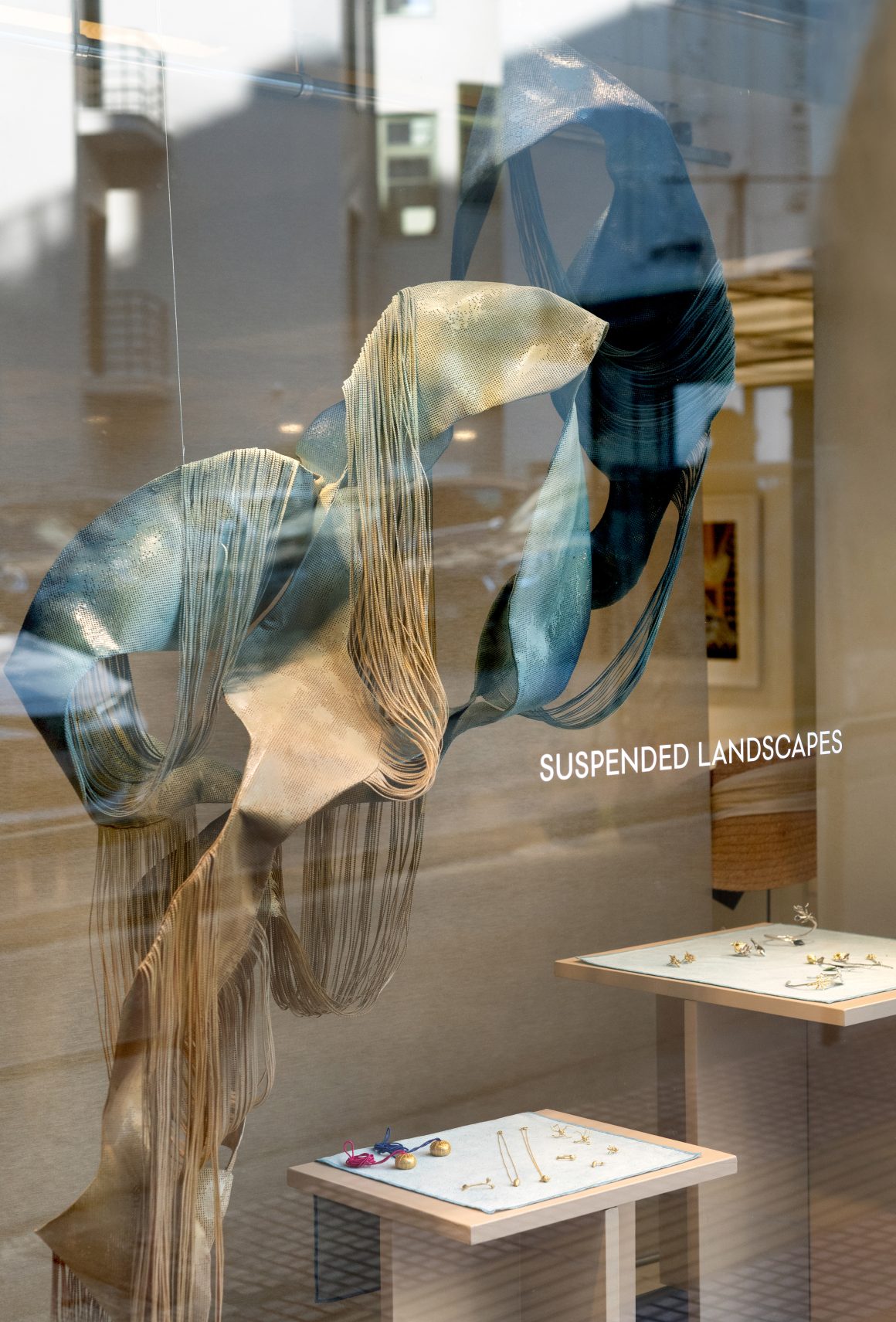
The sculptural forms of my work often have an organic character and suggest movement. I aim to use textile in a way that gives it sculptural presence and stability, while still preserving its permeability and liveliness. My inspiration often comes from elements of nature that I observe and photograph, which guide me both in form and texture. Materiality—and the exploration of it—is central to my practice, so each piece becomes a study of the relationship between stillness and movement.

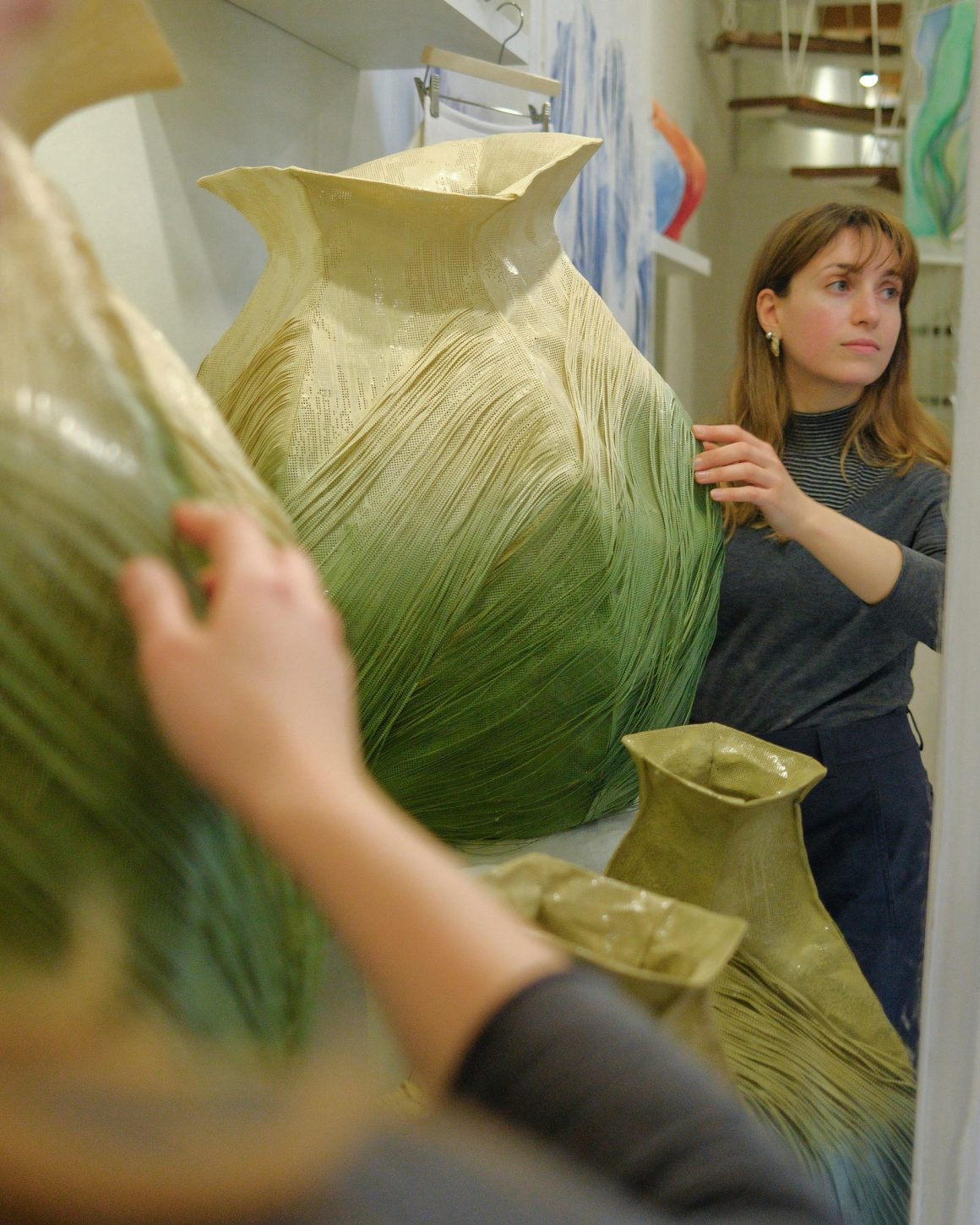
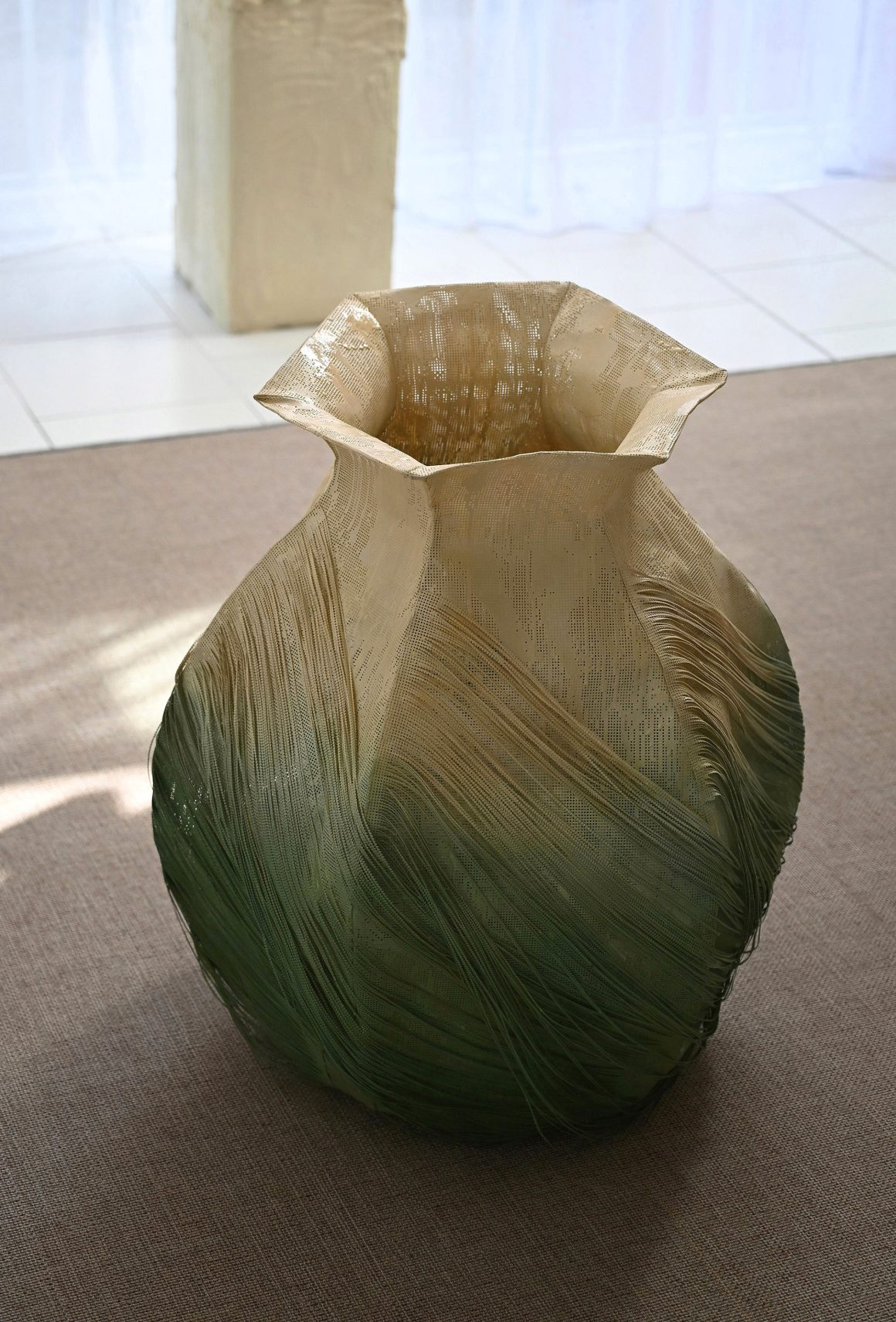
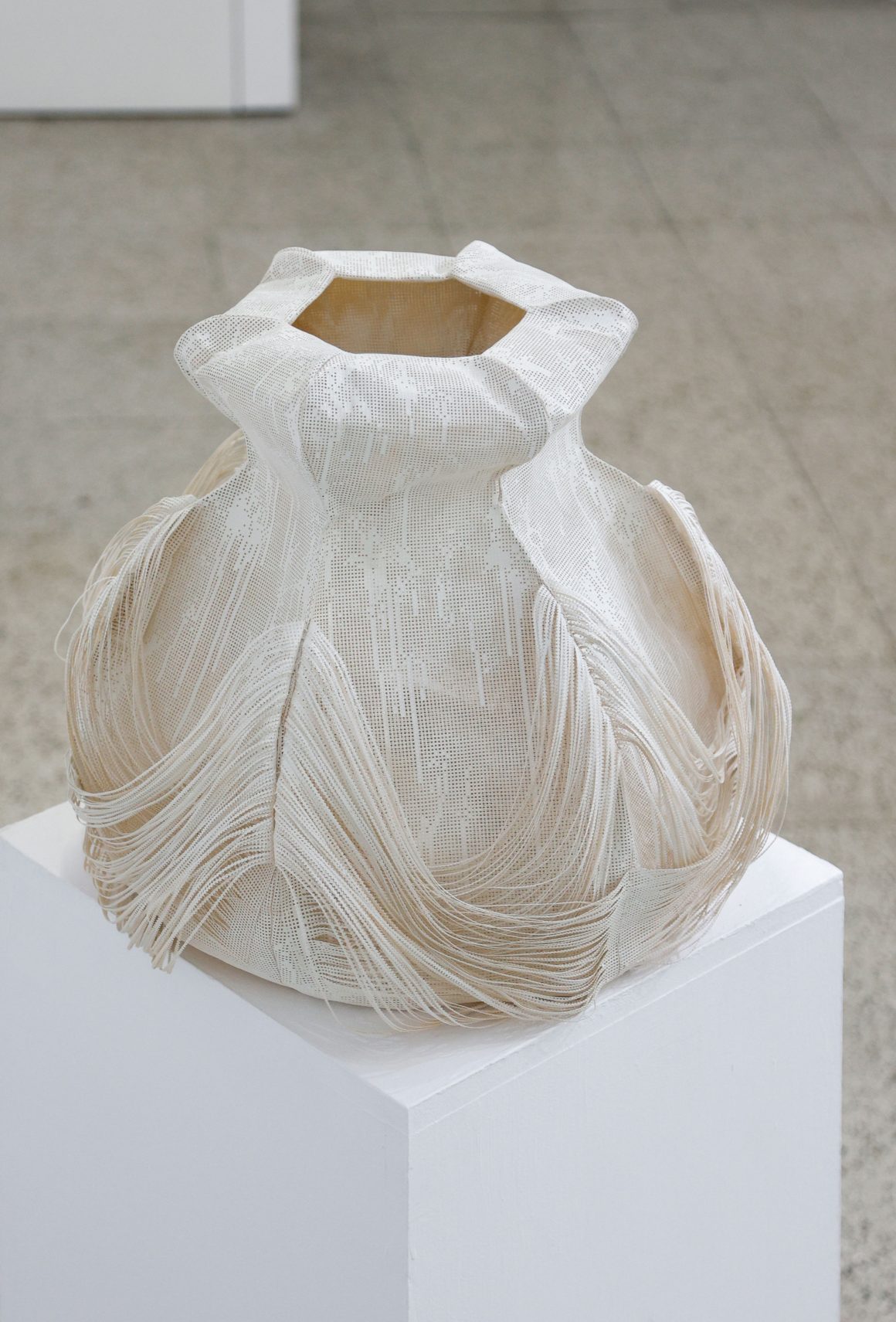
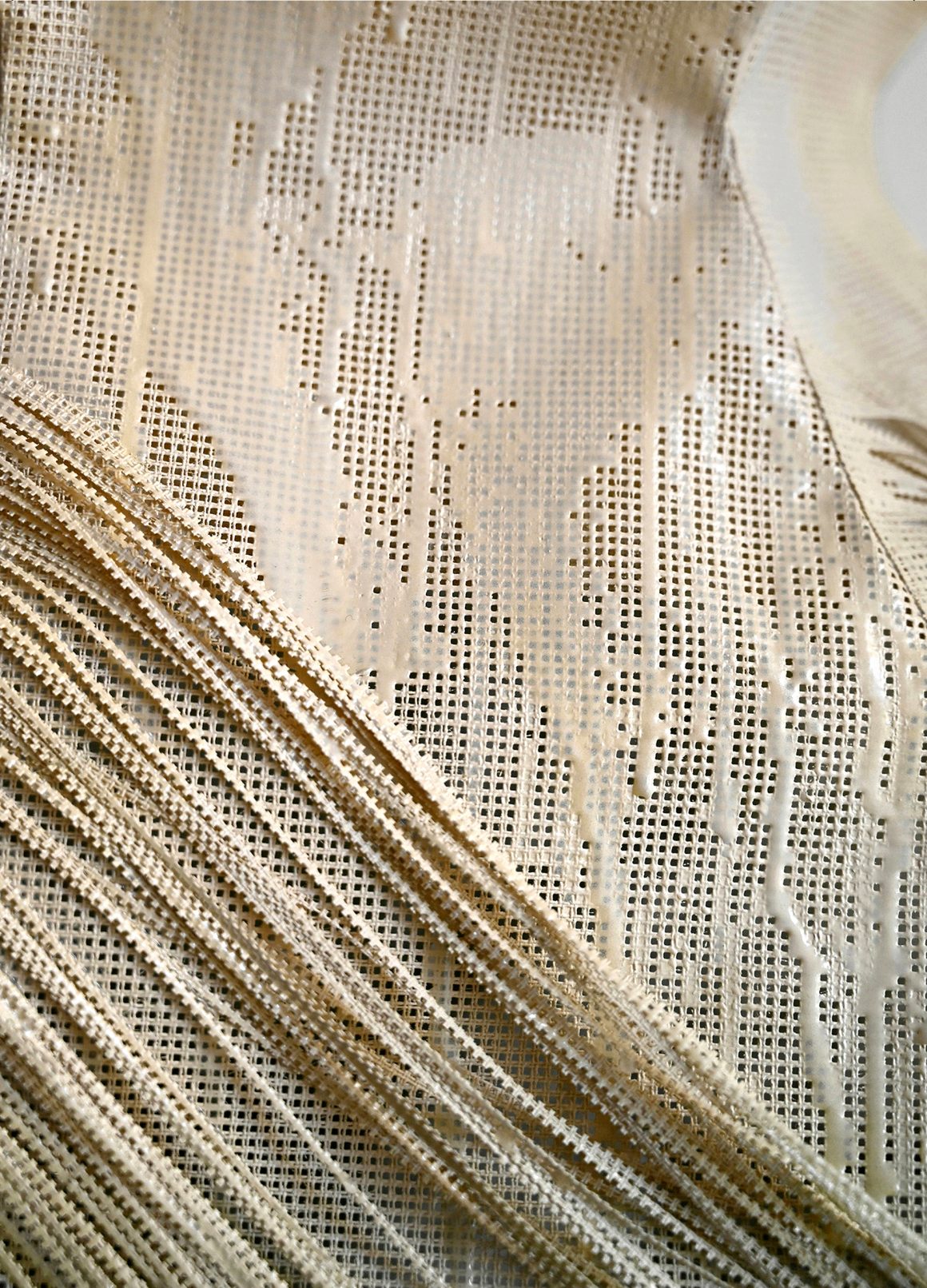
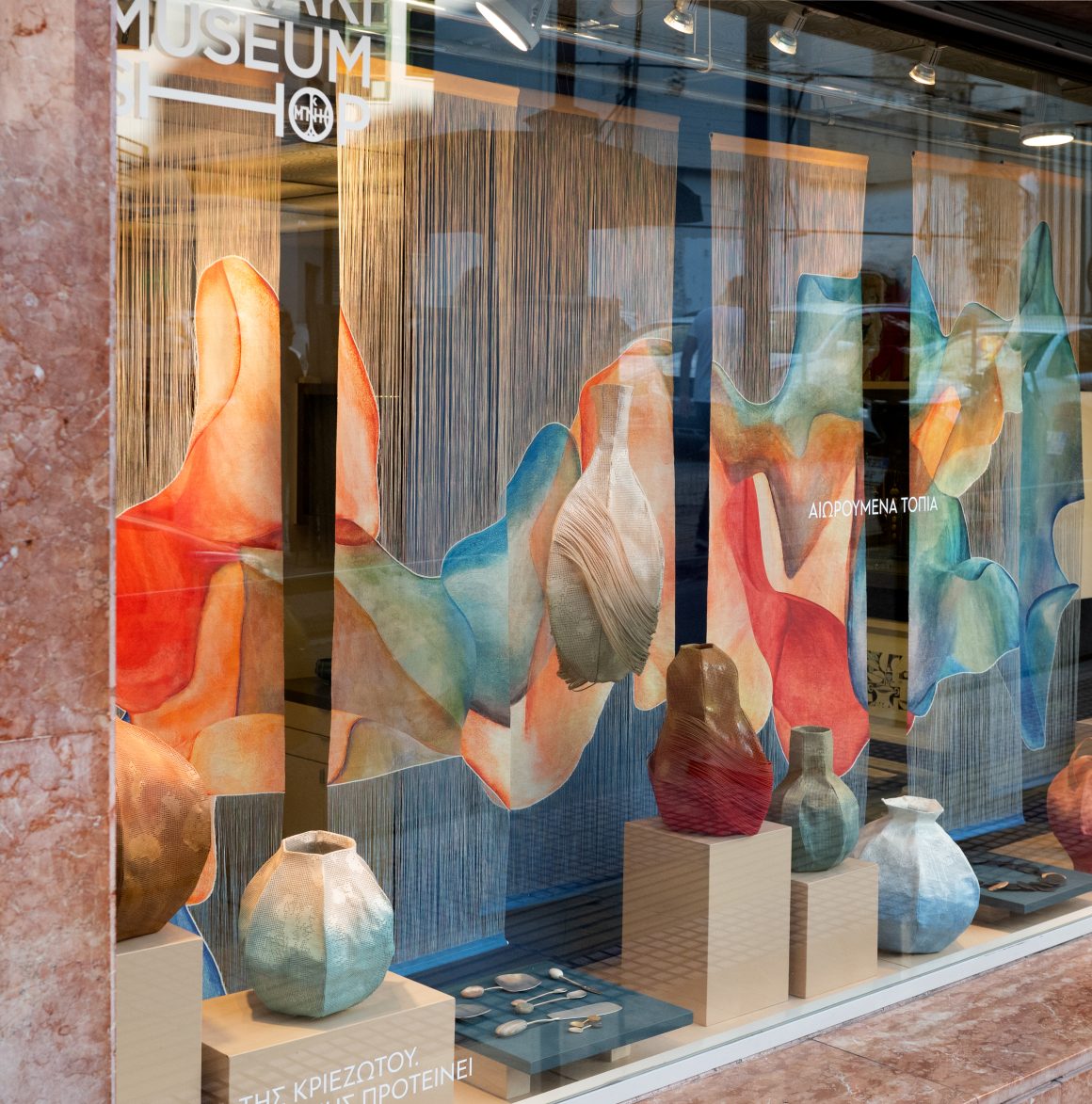
Beyond my abstract sculptures, I have also created a series of design objects resembling vessels, which I call kioupia. They are made from cross-stitch canvas and stem from a thought that has long concerned me: traditional textiles, embroideries, and weavings often end up hidden away in drawers, without showcasing their beauty. I wanted to give textile a reason to come to the forefront—to occupy space in the same way a ceramic object does.

What do you consider most important in your work in terms of how it makes you feel, and how does your aesthetic evolve?

My aesthetic is constantly evolving, and I can clearly see this in the forms of my work. Colors, shapes, and scale change, yet looking back I notice a thread that runs through everything—a shared language that remains. This gives me confidence in the direction of my work. I feel that it represents me and evolves alongside me.

There are also many elements from earlier works that I want to bring into the present and re-explore through the perspective I have today. This alone gives me a sense of security—the idea that concepts are not exhausted, they simply transform.

What kind of response do you receive from an international audience, and how different are the conditions in Greece?

So far, my interaction with an international audience has mainly come through artwork sales and commissions. Having lived abroad, I sometimes miss that direct connection with people from different countries. However, over the past year I’ve realized that being based in Athens is not limiting at all. The city has become increasingly multicultural and is beginning to resonate with visitors from abroad who have a strong interest in art.

What has extroversion offered you overall, and how does it influence your work?

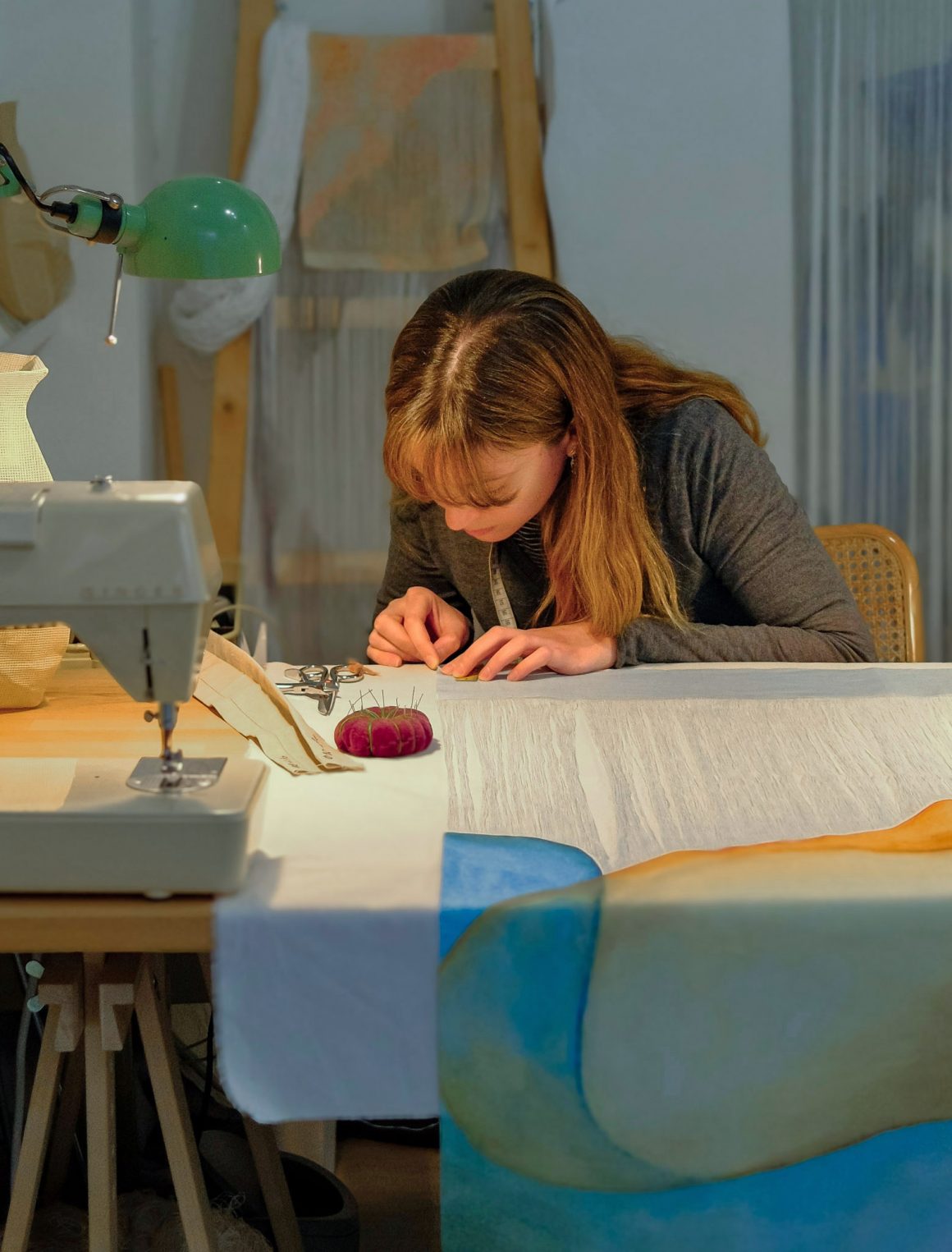
My safe zone is being in my studio with my linen curtains drawn—allowing light to pass through while keeping me protected within. I’ve never liked being observed while I work; it’s a vulnerable and deeply personal process. My techniques are also very time-consuming, so I often choose to dedicate my time there rather than to social interactions.

That said, balance is necessary. Extroversion helps in sharing my work, but more importantly, it gives me access to connecting with other creatives, which is essential for me.

What are your immediate plans?

At the moment, I’m focused on preparing for an exhibition I’ll be participating in this summer. I’m very excited about the collaboration that will emerge from it, but I’m also really looking forward to the work I’m currently developing, which takes a somewhat new approach in terms of installation compared to what I’ve done in the past.

What and who around you helps you move forward?

I feel very fortunate to be surrounded by people who believe in my potential. Personally, I can often be overwhelmed by doubt, but the people close to me bring me back with care and support. Some of my closest friendships are in other countries, which makes me want to travel constantly, but I’m grateful that distance has never prevented us from supporting one another.

What inspires your evolution as a creator? Tell us a story.

Something I really enjoy doing is keeping almost all my experiments and leftover materials, with the intention of revisiting them later. This comes from advice given by a professor during my studies, who encouraged me to look back at my earlier techniques and approach them with fresh eyes—because they are still mine, just brought into the present.

This has helped me a lot in moments when I felt blocked, because I realized that ideas are actually all around me in the studio. I even keep materials from intermediate stages—threads I’ve pulled, papers stained with ink—because I believe they can become the starting point for something new.

What would you like to create—a dream project?

At the moment, my dream project is anything on a much larger scale. I enjoy facing new construction challenges and finding ways to realize ideas I haven’t tested before. I’m particularly interested in collaborating with architects and consultants on large-scale projects, in spaces where I might not have imagined my work being placed. Every space has its own particularities, and that’s exactly what draws me in.

What are the non-negotiable values in your work?

Creativity—although a broad concept—is what I want to always define my work. It’s the driving force that makes me want to engage with textiles. I often say that I feel happiest in my studio, surrounded by my work, because it feels like all my thoughts exist there in three-dimensional form. The non-negotiable value for me is that my work remains true to who I am and to what genuinely expresses me.

What do you consider authentic today?

Something that is not created for online attention—something that comes purely from passion and love for making. I think this is becoming increasingly rare today. At the same time, I believe that for something to be truly authentic, there must be an understanding that nothing is entirely original. It may be innovative, but it always builds on prior research and knowledge.

An object you would never want to part with?

A cutter that had broken. By chance, I discovered that it works perfectly for one of my most characteristic techniques, in a way no other tool has managed to replicate. Whenever I’ve tried something similar, the result is never the same. That, in a way, reflects the essence of my work—that the most important tools and techniques are often discovered accidentally, not through deliberate searching.

Is art and creation a path to becoming better people?

It is certainly a way of bringing us closer to ourselves and helping us understand our thoughts. In that sense, it cultivates both the soul and the mind, which is why I believe that people engaged in art often have a stronger sense of human sensitivity. Being more observant of life and of the world around you nurtures exactly that.

A museum and a work that captured your heart

Two museums that have deeply inspired me are the Noguchi Museum in New York and the Louisiana Museum of Modern Art near Copenhagen. I wouldn’t single out a specific work—the atmosphere of both is what makes them so special. They are places where you feel that art and environment are in dialogue, that one cannot exist without the other.

Give us your own definition of beauty

For me, beauty often lies in color harmony and the uniqueness of textures. These are elements I constantly observe around me, and I’m fascinated by how unexpectedly I encounter them.

Photographer Maria Panagopoulou

Author