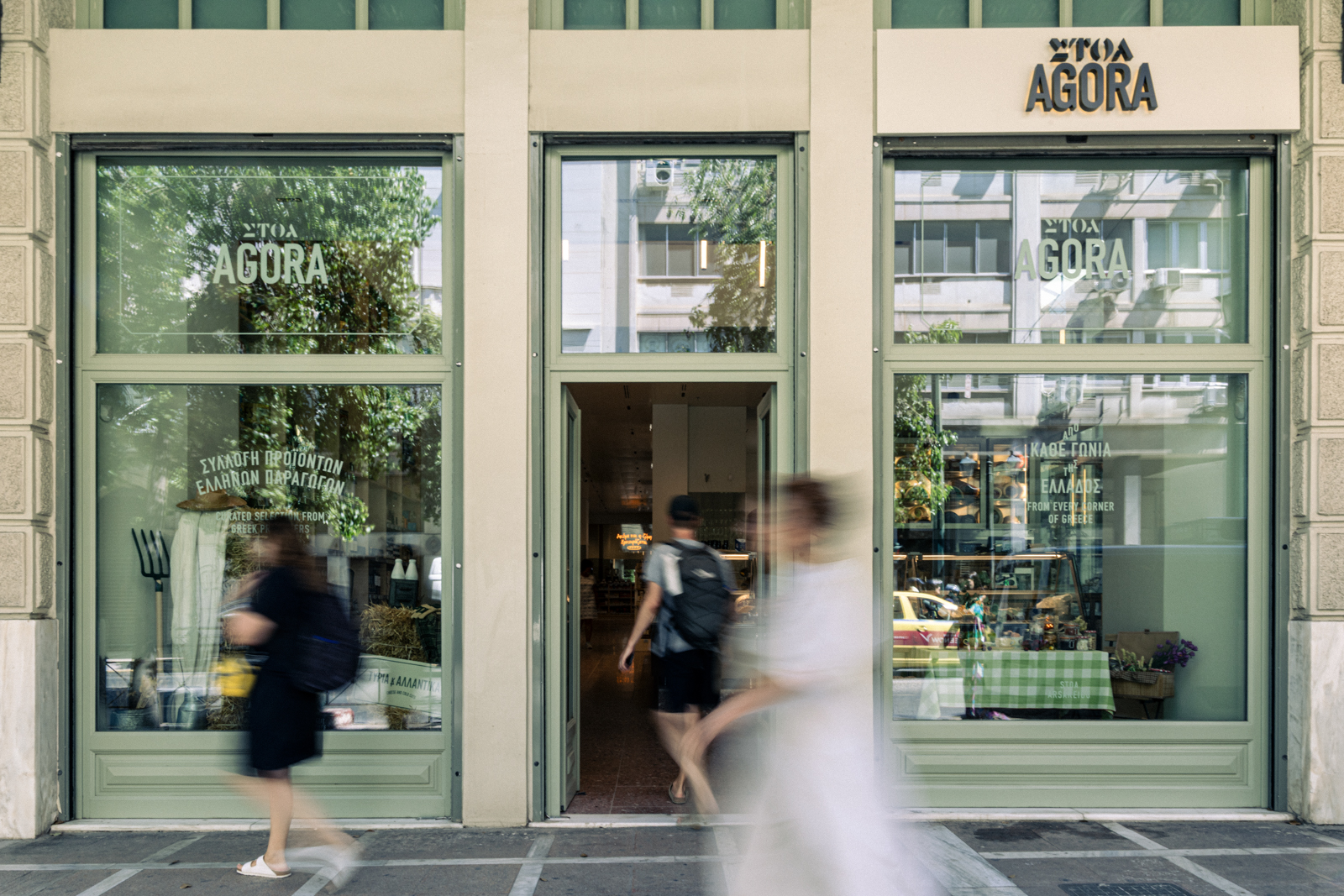
The Arsakeio Megaro, a landmark with almost two centuries of history at the intersection of Pesmazoglou and Stadiou Streets, with façades extending along Stadiou, Pesmazoglou, Arsaki and Panepistimiou, is being transformed by developer Legendary Food into a dynamic new destination centred around three pillars: gastronomy, culture and fashion retail.
The History of the Building
The Arsakeio Megaro is more than a building complex; it is a living symbol of the history of Greek education and architecture. Located in the heart of Athens and occupying an entire city block, its strategic position places it among the city’s most significant landmarks, alongside the Academy of Athens, the University and the National Library, forming part of the capital’s celebrated Neoclassical axis.
At the heart of the complex stands the Kafantzoglou Mansion on Panepistimiou Street, commissioned by the Hellenic Philological Society between 1846 and 1852 to fulfil its mission of educating women at the time. Designed by architect Lysandros Kafantoglou, it is considered one of the most important works of Athenian Neoclassicism and an outstanding example of 19th-century architecture. Crowning the building is a bust of the goddess Athena by sculptor Leonidas Drosis, a symbol of knowledge and wisdom.
It is also the only complex in Athens to bear the architectural imprint of three significant figures: Kafantoglou, Ernst Ziller and the Hellenic Philological Society itself.
At the beginning of the 20th century, the need for expansion led to the construction of the New Buildings, which were developed gradually between 1901 and 1911. Their façades draw on distinct architectural languages: the northern and eastern sides, facing Panepistimiou and Arsaki Streets, follow the restraint of Neoclassicism, while the southern and western façades, towards Stadiou and Pesmazoglou, display strong Baroque influences.
Ernst Ziller’s interventions introduced a series of elements that further strengthened the building’s architectural identity, including the distinctive metal-clad corner domes, ornate cornices, garlands and relief motifs incorporated into the rainwater downpipes. Particularly notable is the Stadiou façade, distinguished by its Ionic half-columns, marble cornices, three balconies with wrought-iron railings and metal canopy—hallmarks of Ziller’s architectural vocabulary.
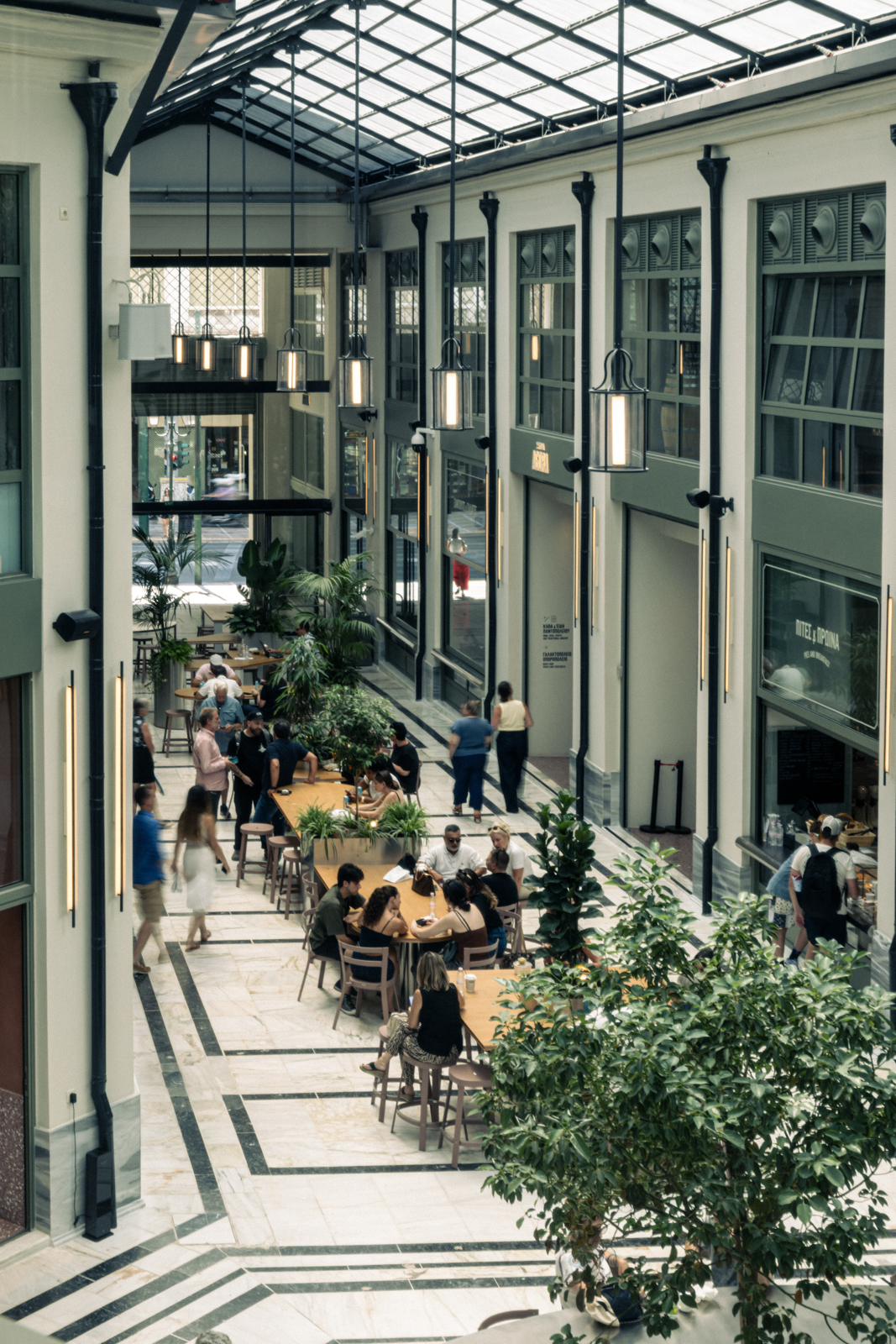
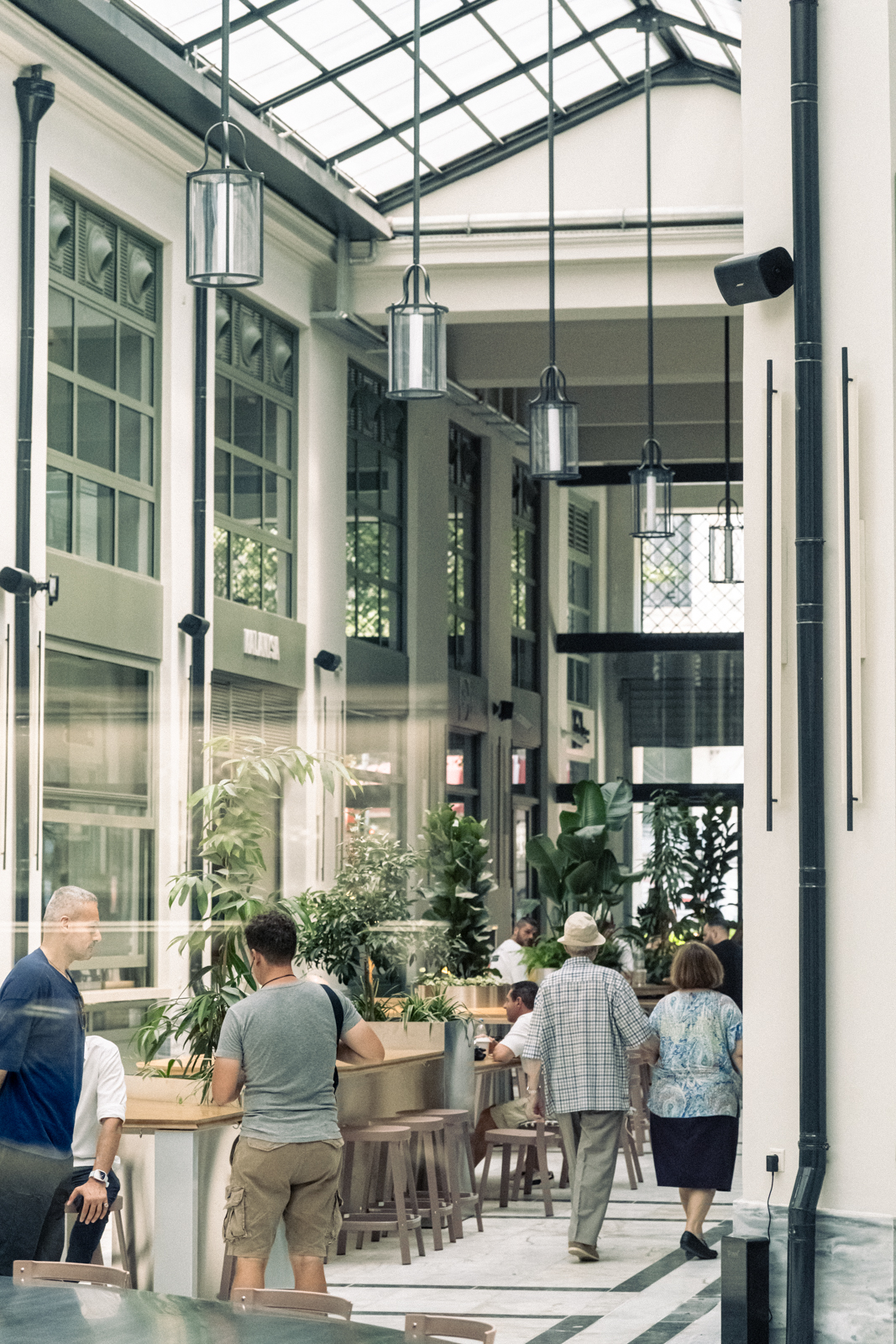
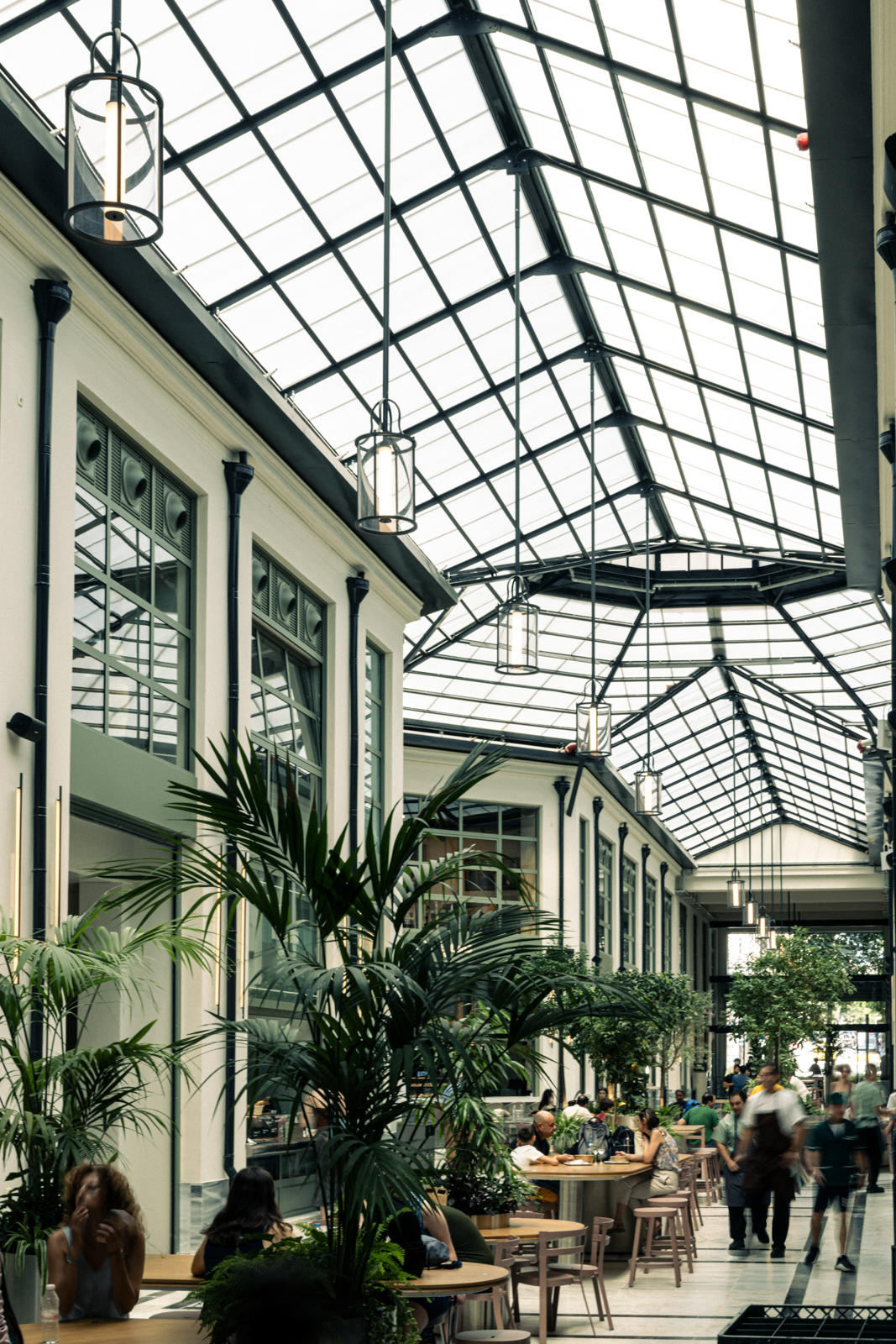
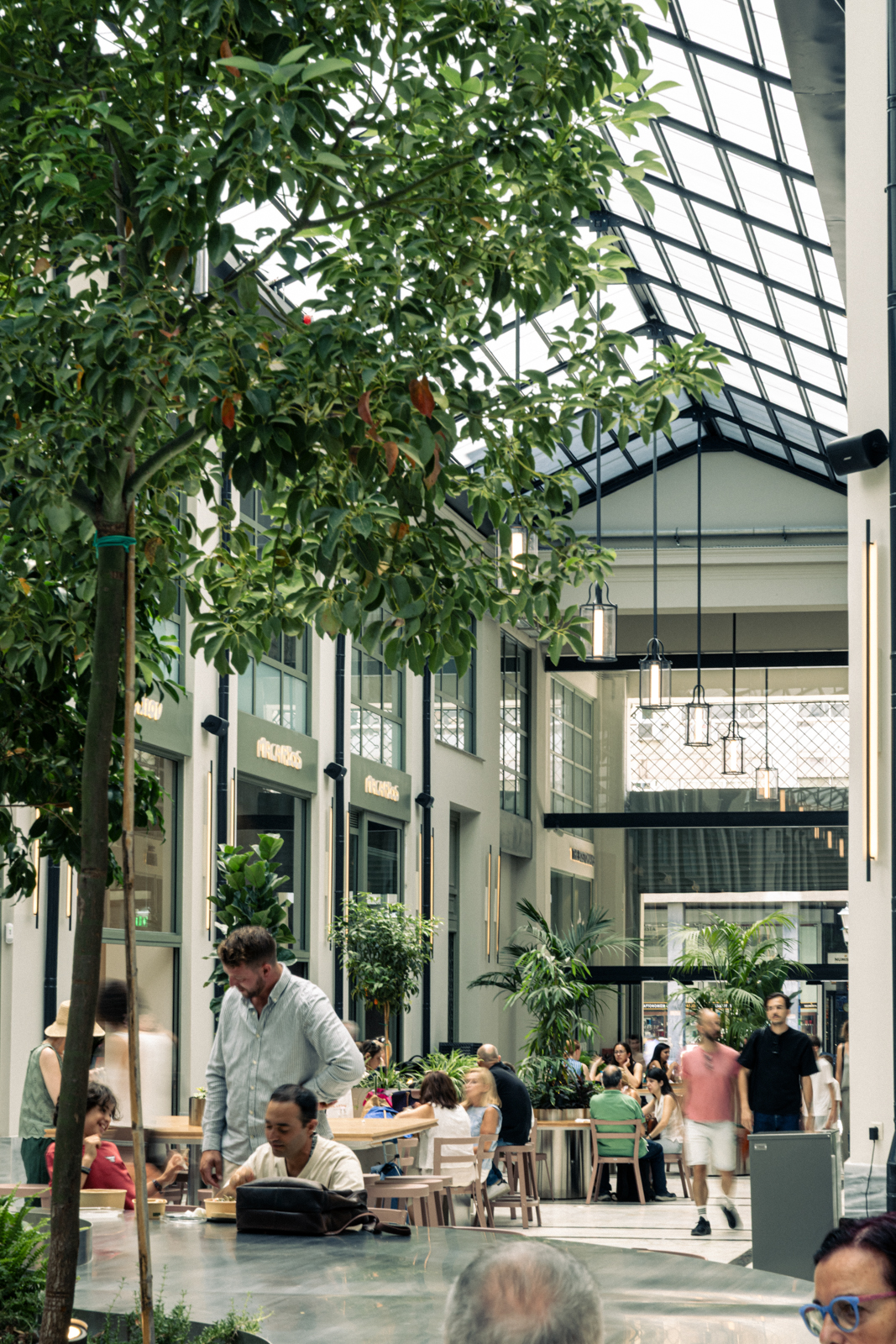
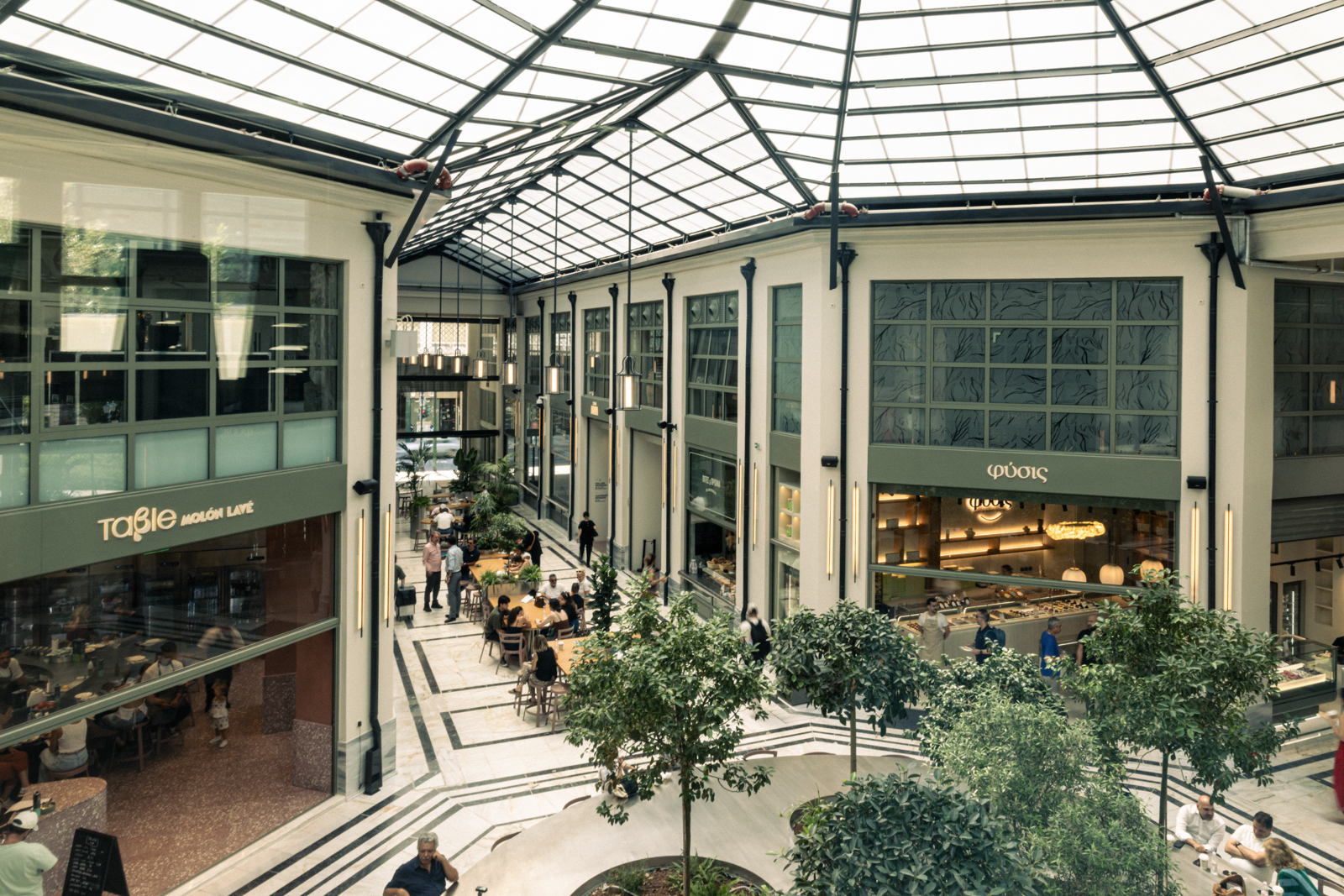
In 1907, the Arsakeio Arcade was constructed, becoming one of Athens’ earliest enclosed commercial passages, inspired by the covered shopping arcades of Paris. It initially housed bookshops, stationery stores and jewellers, establishing itself as one of the city centre’s most active commercial destinations. Its glass roof allows natural light to flood the interior, creating a sense of openness within the urban environment, while its monumental entrances from Panepistimiou and Stadiou reinforce the grandeur of the complex.
By its very nature, an arcade has always served as a place of connection and shelter, and this idea remains at the heart of the new vision: the creation of an ecosystem that brings people, products and cultures together.
Stadiou Street itself was once among the capital’s busiest and most commercially vibrant thoroughfares. A central objective of the redevelopment is to restore the street to something of its former vitality and prominence.
The complex housed the Arsakeia and Tositsia Schools until the early 1930s, when they relocated to Psychiko. In 1937, the “Orpheus” cinema-theatre was built in the courtyard. It was later demolished in the second half of the 1980s as part of the restoration of the mansion, and the Stoa tou Vivliou, or Book Arcade, was subsequently created in its place.
THE REDEVELOPMENT PROJECT
The revival of the complex, part of which is being undertaken by developer Legendary Food, is far more than a complex and demanding technical process. It represents an investment in the past, present and future of the city. It is a symbol that connects generations, history and culture, demonstrating that our architectural heritage belongs not only to the past, but also to future generations who will admire it and keep it alive. Through the restoration process, the complex will once again reclaim its former splendour, retaining its position as one of the capital’s most important architectural and historic landmarks.
Legendary Food approaches the redevelopment of this historic complex not as another commercial venture, but as a mission: to return an important part of Greece’s cultural heritage to the city in a way that honours the past while responding to the needs of the present.
Rather than creating a new destination from scratch, the company has chosen to embed its vision within the historic landmark itself. With complete respect for the original architectural footprint, later alterations made by tenants were removed, while careful research and technical precision were employed to identify and restore the original colours and materials. The frames, flooring and canopies were meticulously conserved, preserving the architectural character of the complex.
The restoration was complemented by a specialised lighting scheme, both exterior and interior, designed to highlight the architectural value of the complex throughout the day and night.
At the same time, targeted and discreet functional interventions were introduced. New window frames improve the building’s energy performance while respecting its historic palette, while an elevator has been installed to provide full accessibility, connecting the former Book Arcade with the rooftop.
Particular importance has been placed on the revival of the Arsakeio Arcade, which has the potential to reclaim its role as a cultural and commercial hub in the heart of Athens.
Inside the Arsakeio Arcade, the approach shifts. Legendary Food is not simply creating a conventional retail zone, but envisioning an integrated space for interaction. The layout encourages the different uses to connect with one another: shops open directly onto the arcade, dissolving the notion of an “interior” and strengthening a sense of unity and interaction. Communal tables and counters facilitate a more immediate, self-service style of dining, adapting to the different needs of visitors, whether they arrive in large groups, as couples or alone.
The transformation of the rooftop into an urban green oasis is another contemporary addition of significant environmental and social value, reflecting the project’s renewed commitment to sustainability. Nature is not treated as a decorative element, but as an organic part of the experience, inviting visitors to connect with the natural world without leaving the cultural heart of the city.
Sustainability is a key priority. A dedicated, model waste-management facility has been created, incorporating modern sorting processes and demonstrating Legendary Food’s commitment not only to aesthetic and functional renewal, but also to environmental responsibility.
THE THREE WINGS OF THE PROJECT
1. Gastronomy & Culture Wing — Arsakeio Arcade
Adapted to contemporary needs, STOA aims to offer meaningful entertainment while expanding the boundaries of central Athens, bringing the historic Stadiou axis back into the everyday life of the city.
Its ambition is to showcase Greek and Mediterranean culture not as a legacy of the past, but as a contemporary and relevant way of life, placing the rich produce and traditions of Greece at centre stage.
STOA operates as an ecosystem where gastronomy, retail, creativity, culture and education intersect within a single space, offering a multidimensional experience.
Panos Triantafyllopoulos, CEO of Legendary Food, says:
“By redeveloping a historic building in the heart of Athens, our aim is to create a living community, not simply a destination. The 17 partners working together under one roof demonstrate that, in Greece, added value is created through collaboration. It is the passion, creativity and team spirit of these people that transforms STOA into a place of genuine encounter.”
The concept is structured around five complementary pillars that come together to create a complete experience.
STOA GASTRONOMY
Nine distinct concepts present their creations in street-food format, giving everyone the opportunity to discover Greek and Mediterranean gastronomy through a spontaneous visit, creating a diverse culinary “tray” within STOA’s communal dining area. Three of the concepts also feature dedicated, full-service spaces, allowing the experience to adapt to each visitor’s time and mood.
The culture of the sea takes shape at CALANISA, created by chefs Thomas Matsa and Aristotelis Zervas, celebrating the richness of fishing traditions through contemporary interpretations. In the world of meat, APYS, with chef Giannis Liokas, takes the traditional souvlaki and uses the simplicity of the grill to bring people together, while paying tribute to Greek livestock farming and evoking a shared, authentic cultural memory.
The traditions of Greece are also celebrated at MACARIOS, where chef Panos Ioannidis draws on his expertise in handmade pasta, presenting it through authentic Greek recipes. At TABLE, chef Nikos Thomas transforms traditional Greek home cooking into an international experience, centred around MOLON LAVE extra virgin olive oil.
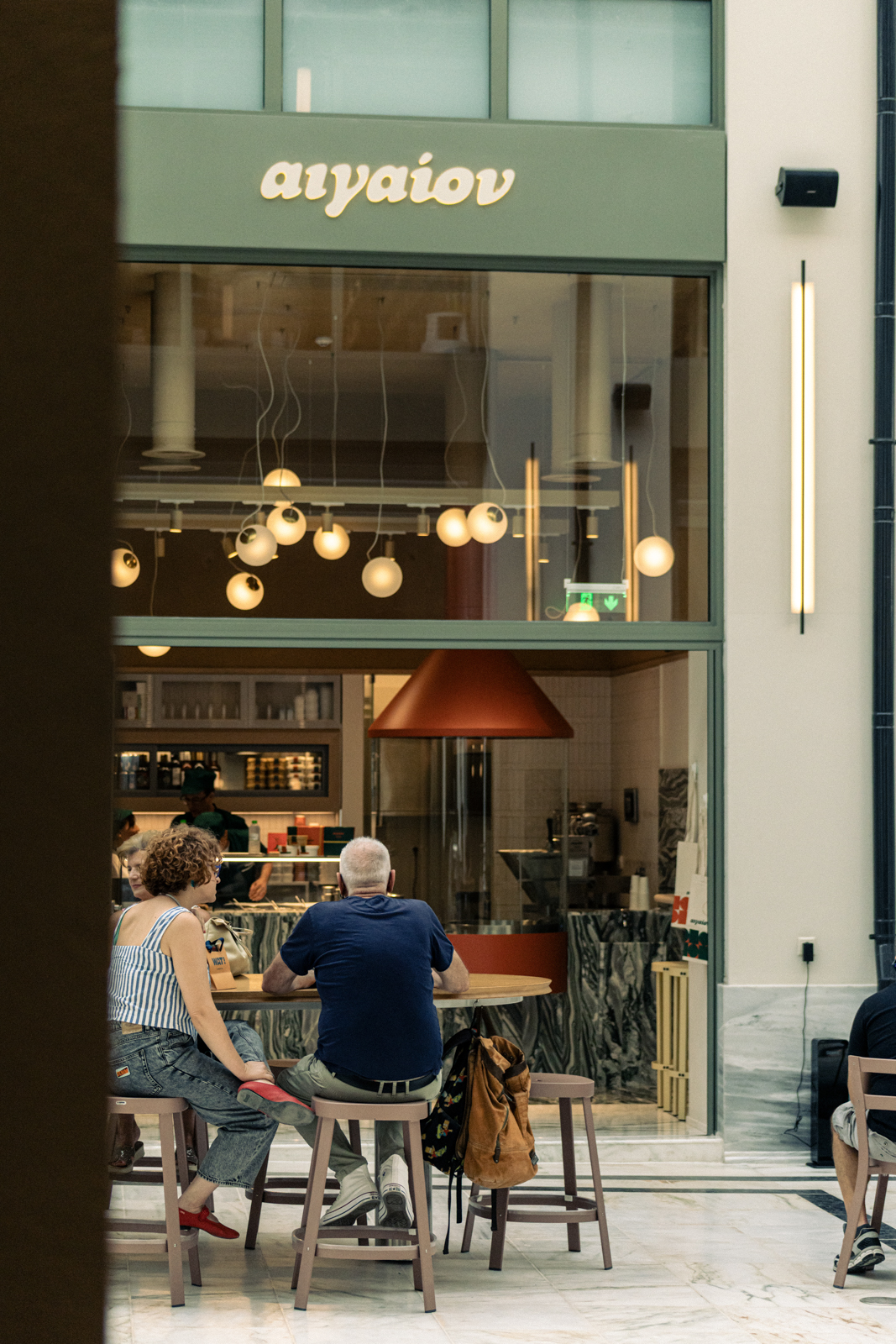
On the sweet side of STOA, the aroma of historic AIGAION loukoumades returns to the Panepistimiou neighbourhood, with the third generation of the Fylla family reviving an Athenian tradition that began in 1926. Nearby, at FYSIS, Greek identity is expressed through pure ingredients, the balance of the Mediterranean diet and an inclusive philosophy offering gluten-free and vegan options.
In the drinks offering, BOARDING PASS, by the team behind A for Athens, reinterprets classic cocktails through a distinctly Greek flavour profile, drawing on local spirits and herbs. DRUNKY GOAT turns an introduction to the Greek wine landscape into an experiential encounter with an effortless sense of humour, offering visitors the option to enjoy wines on site or take them home.
5 ALMONDS completes the experience with freshly roasted coffee, while focusing on nuts and dried fruits—fundamental elements of the Mediterranean diet—as well as handmade nut butters.
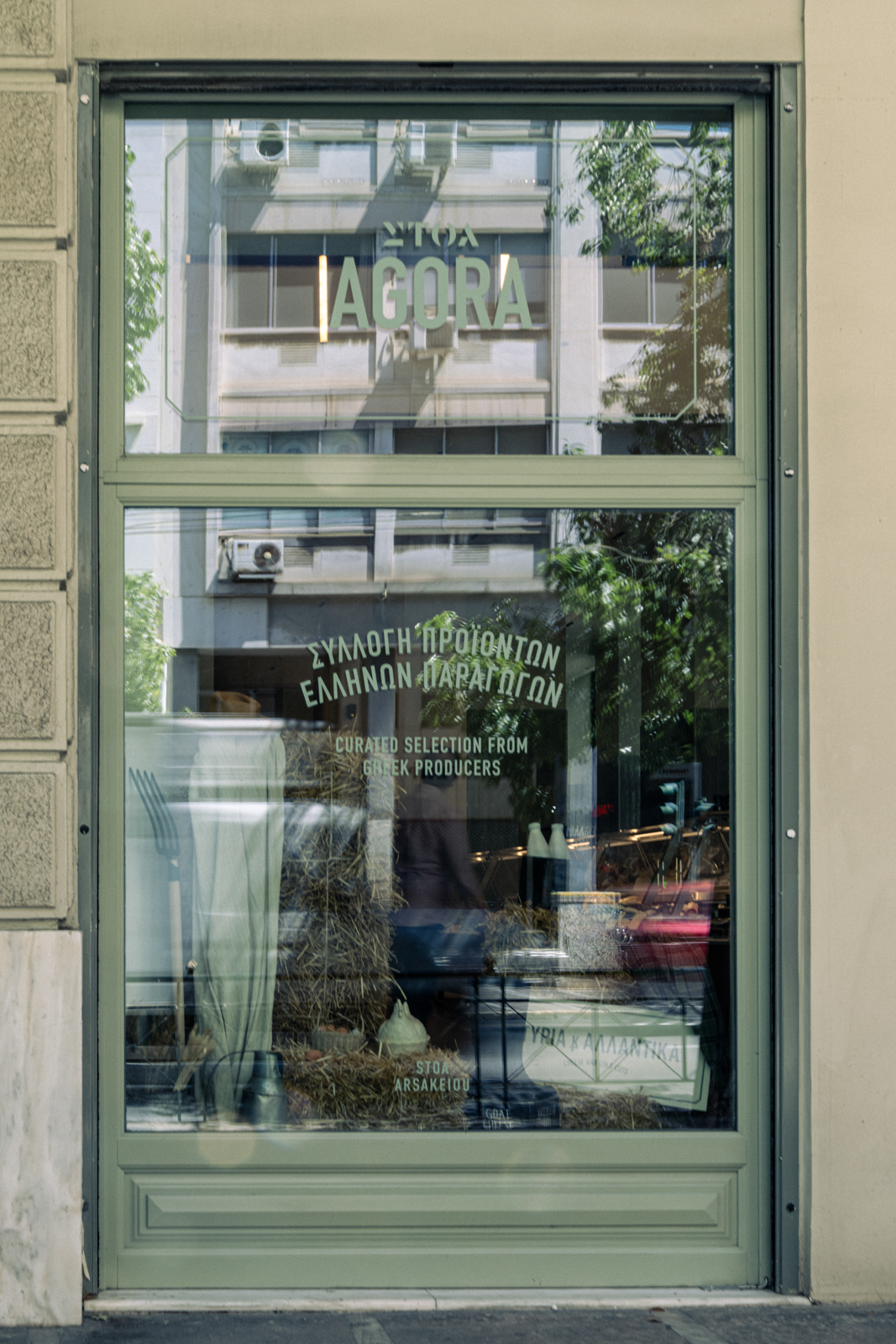
STOA AGORA
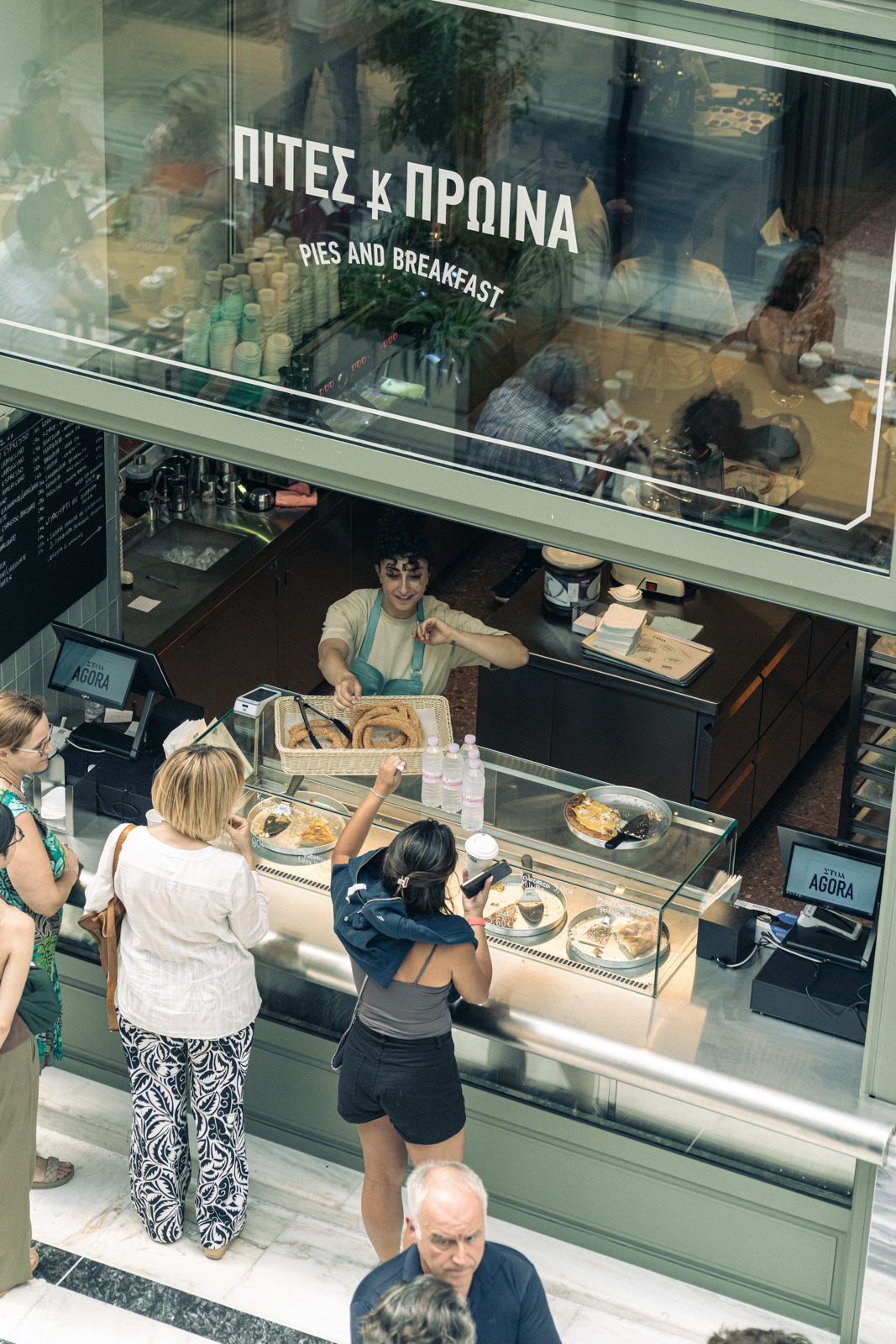
A new-generation Greek grocery store serves as a place where the treasures of the country’s land find a home in the heart of Athens, with more than 4,000 products sourced from over 300 producers from every corner of Greece. Here, every producer has a name and a story, and STOA AGORA takes on the role of telling it, allowing producers to continue creating with care and dedication.
The collection is curated by an experienced team led by Dimitris Ramphos. At the same time, ingredients come to life in the open kitchen, where Dimitris Lytras and his team prepare pies, sandwiches and breakfast dishes every day, using products directly from the store’s selection. It is an open and accessible experience for all, designed and curated by Michalis Tzimas.
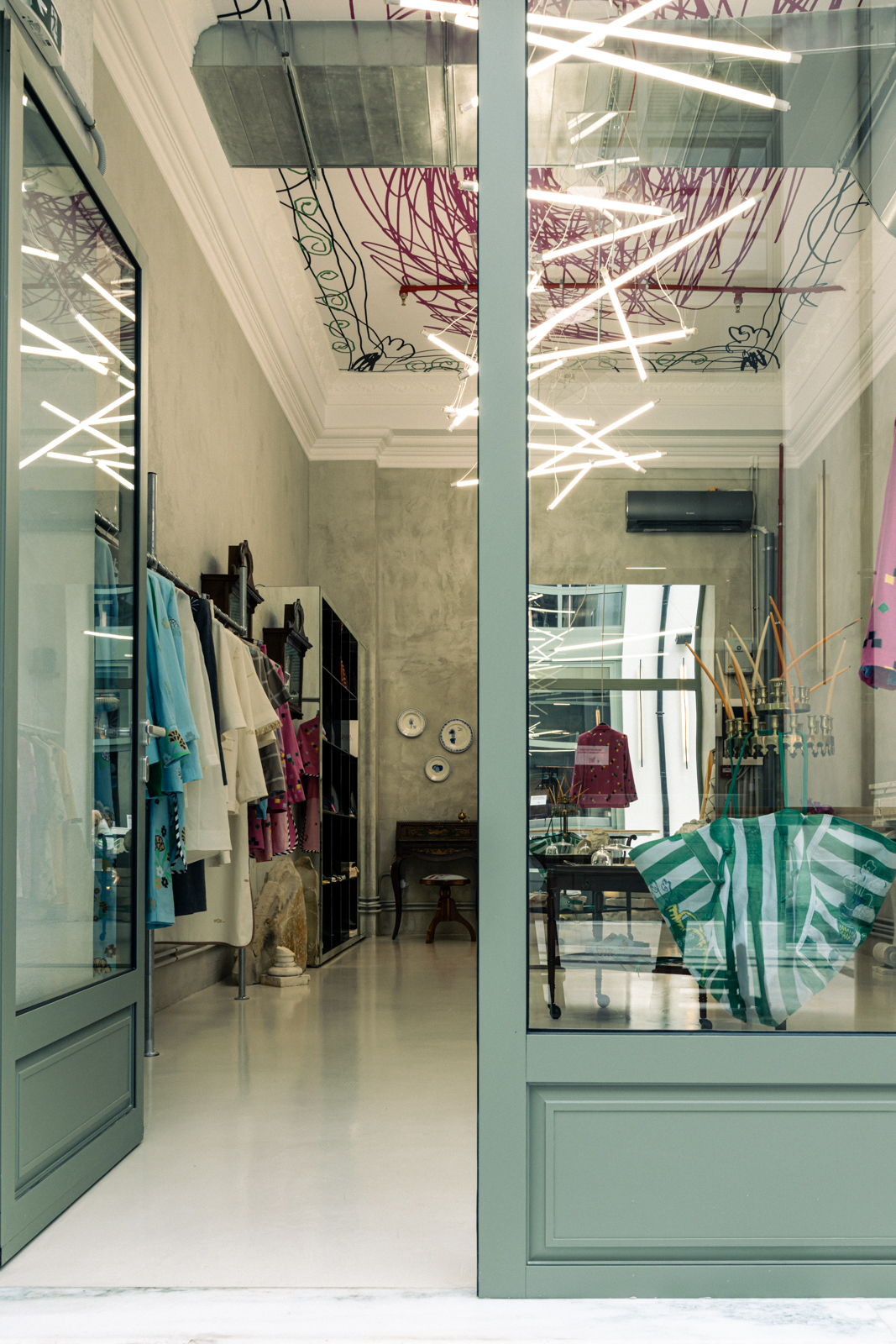
STOA CREATORS
Five concept stores showcase the creativity of contemporary Greece. At OBJECT N.9, craftsmanship and contemporary art come together. Lucia Thomopoulou and the team behind Galleria Spigolo select “objects of desire”, highlighting designers, makers and works distinguished by a strong aesthetic and compelling narrative identity.
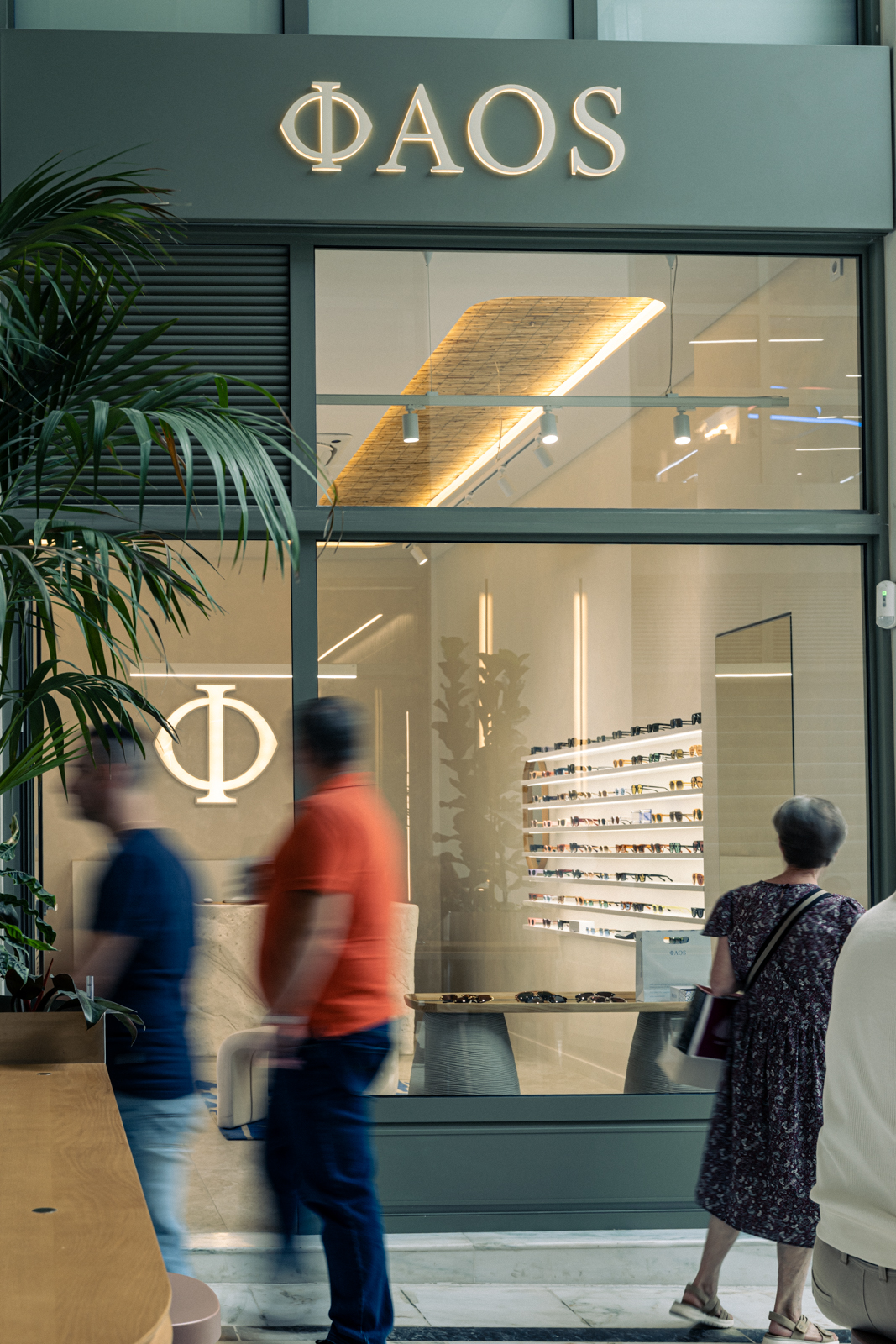
At FAOS, handmade eyewear created by the Avramis family, drawing on 30 years of experience, is produced in Greece and inspired by Mediterranean light, the Greek islands and mythology.
Nearby, MASTIC SPA creates cosmetics based on PDO Chios mastiha, preserving the heritage of the Sodi family, whose history dates back to 1875.
Under the creative direction of Marietta Karpathiou, ‘ERGON revives the traditional art of the loom, creating contemporary garments using Greek cotton.
At STOA’s concept pharmacy, the scientific expertise of the Bokaris family is translated into LABBOK, a line of organic, 100% vegan cosmetics, while the on-site laboratory produces personalised pharmaceutical and galenic preparations.
STOA CULTURE
STOA expands the cultural presence of the Karolos Koun Art Theatre and the Hellenic Philological Society’s Free University by creating STOA CULTURE, a new hub for artistic expression in the heart of the city.
Curated by the team behind elc, the new cultural venue launches with “Summer in the Atrium – Art in Progress”, hosting more than forty days of events spanning music, cinema, dance and theatre within the lush atrium.
The project also includes a recording studio and intimate tiny concerts, a business lounge, meeting room, café-bar, event spaces and areas dedicated to visual arts. In collaboration with publishing houses, the historic “Book Arcade” will also be revived through thematic exhibitions, talks, book presentations and sales.
STOA Culture aims to become a new meeting point and platform for both emerging and established artists and creators.
STOA EDUCATION
While the rest of STOA offers a multifaceted introduction to Greek and Mediterranean culture, a contemporary space dedicated exclusively to education is being created alongside it.
At LIDL HOUSE ATHENS, food becomes a vehicle for meaningful, hands-on knowledge about Greek gastronomy and sustainability. Lidl Hellas continues to actively support domestic production, promoting Greek products both in Greece and abroad, now also through this dedicated space, offering interactive experiences for all ages.
Resident Chef Demosthenes Balopoulos leads the culinary programme, ensuring both its gastronomic identity and technical excellence. Through contemporary content-production facilities and strategic collaborations with institutions and chefs, this pillar transforms the heritage of Greece’s land into accessible, practical knowledge.
2. CULTURE WING — PESMAZOGLOU
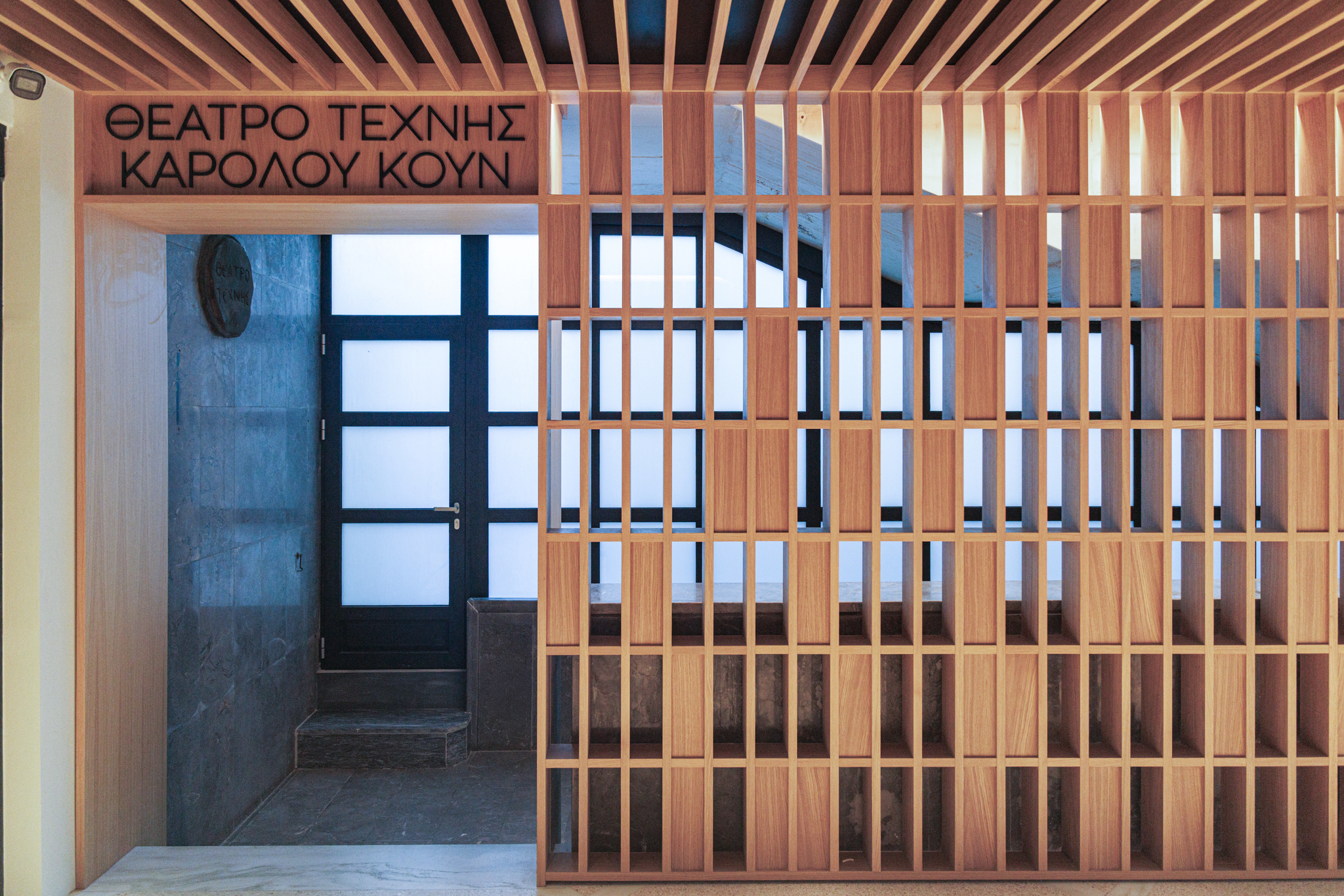
From the upgraded entrance, visitors gain access to the Karolos Koun Art Theatre and Europa Experience, which is already operating within the complex and offers an interactive introduction to the institutions of the European Union.
In the future, the Hellenic Philological Society plans to relaunch the Free University in the building’s lecture and arts spaces.
A. EUROPA EXPERIENCE COMES TO GREECE
Europa Experience opened its doors in 2025, offering visitors an interactive and innovative way to discover the history and workings of the European Parliament and the European Union, while following European developments in real time.
Through pioneering tools and multimedia experiences, visitors can explore how decisions concerning the challenges of our time are discussed and made. Admission to the interactive museum is free, while all Europa Experience visits are available in the European Union’s 24 official languages.
B. THE KAROLOS KOUN ART THEATRE: A CULTURAL LANDMARK
The Karolos Koun Art Theatre, which celebrates its 70th anniversary this year, continues to be a landmark of Athens’ cultural life. Legendary Food is investing in the aesthetic and functional upgrade of its entrance on Pesmazoglou Street, while close collaboration with the theatre’s artistic team is already underway.
New collaborations are being developed to connect the theatre with thematic activities across the wider complex, creating new cultural synergies and momentum.
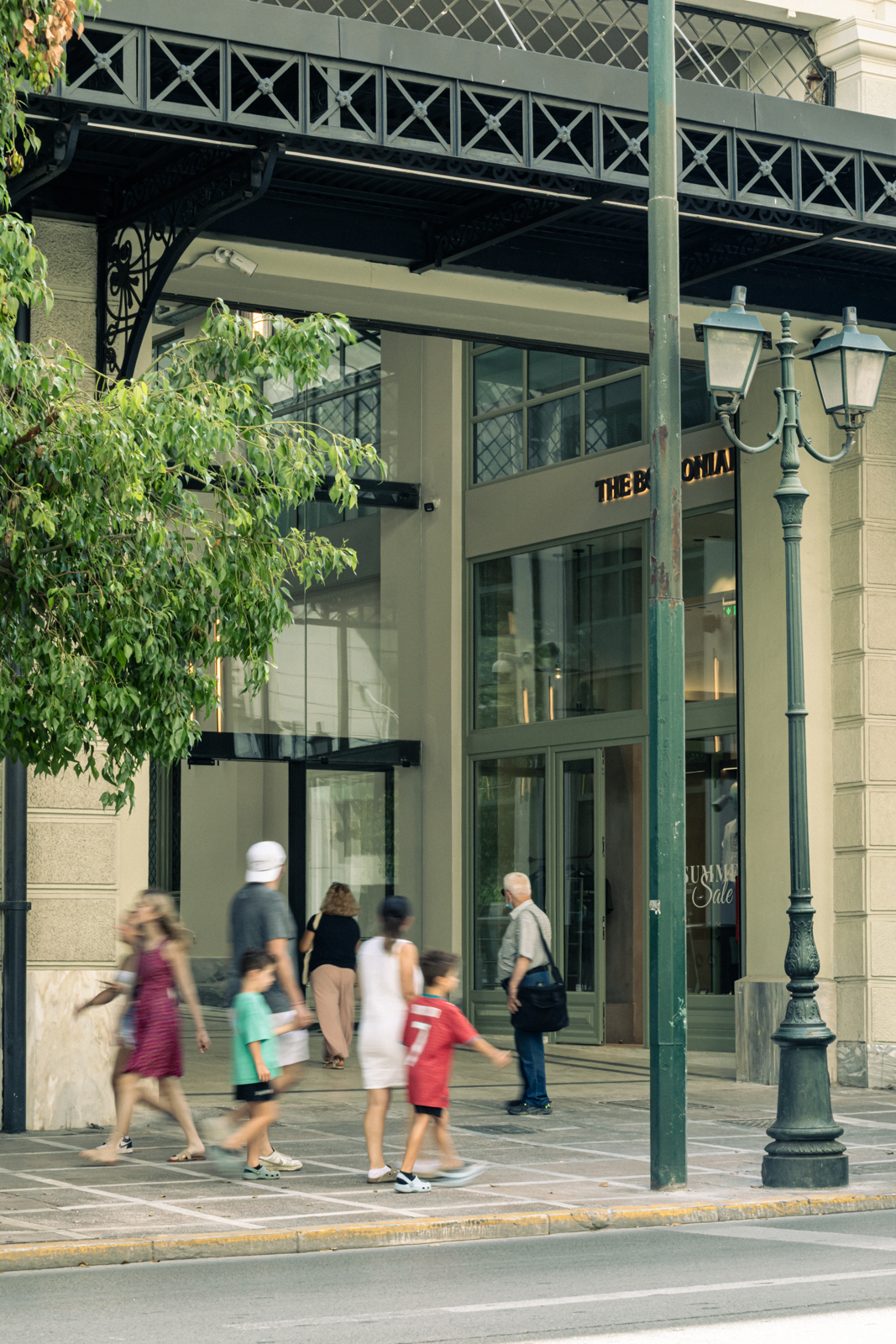
3. RETAIL WING — STADIOU
A return to the past, when the Arsakeio Mansion was alive with commercial activity, is taking shape through the Lacoste and The Bostonians stores, operated by Notos Com; the BSB store of the B&F Group; and the Nike store, operated by Italian group Percassi.
The stores are already open, offering visitors a comfortable and contemporary shopping experience.
LEGENDARY FOOD — THE DEVELOPER
The developer has leased 13,000 sq m of the complex’s total 25,000 sq m, undertaking a total investment of €20 million, excluding investments made by individual tenants.
The aim is to establish a new and dynamic landmark in the centre of Athens, combining commercial activity with culture, education and gastronomy. Once the works are completed, STOA is expected to welcome between 7,000 and 8,000 visitors per day, while the project is expected to create approximately 500 jobs.