On the anniversary of the birth and death of the Alexandrian poet Constantine P. Cavafy, the Onassis Foundation, in collaboration with the Municipality of Athens, invites residents, visitors, and passersby to sit beside Cavafy and “converse” with him—even briefly—while turning their gaze toward the city and its living urban fabric.

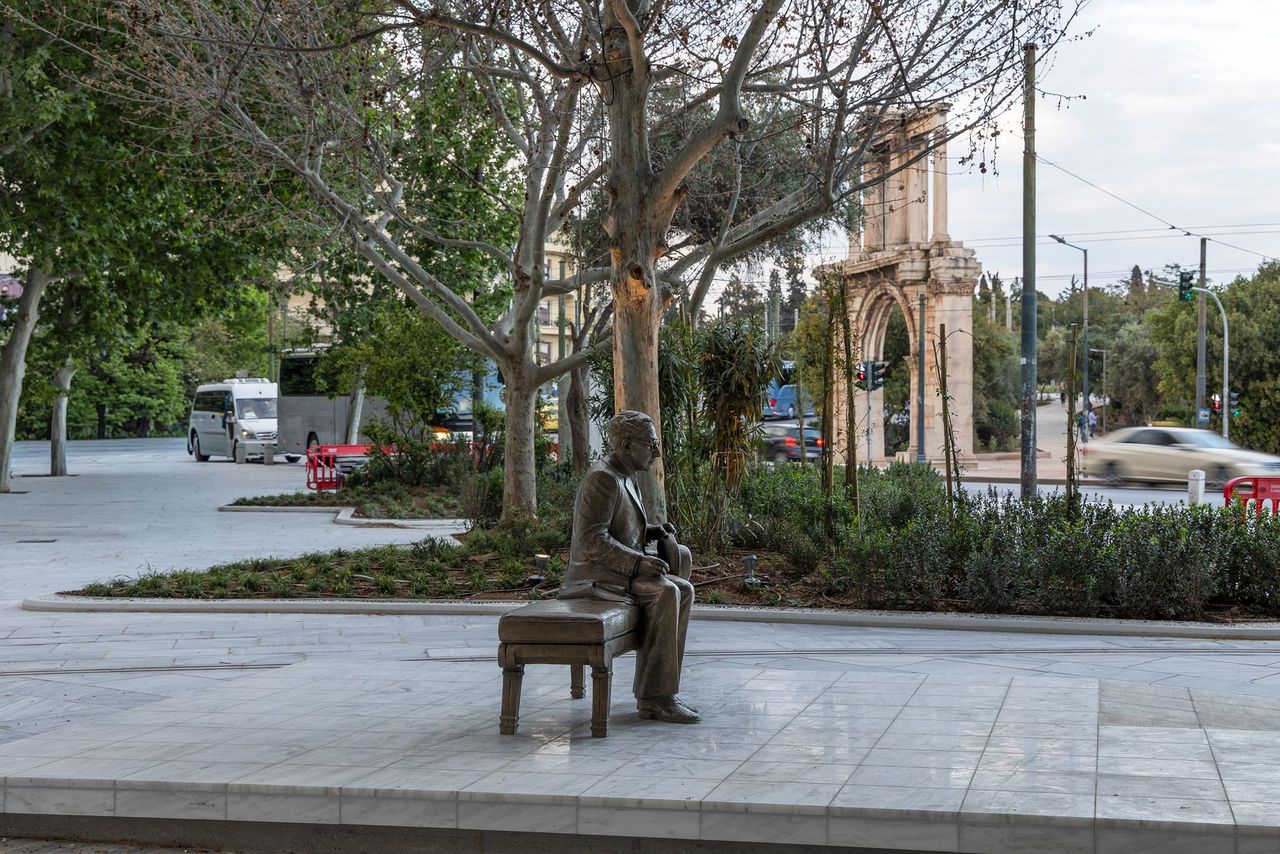
On April 28, the Onassis Foundation officially delivered the sculpture depicting C. P. Cavafy, created by sculptor Praxitelis Tzanoulinos, to the pedestrian street of Dionysiou Areopagitou Street, in front of the Onassis Library and Onassis Mandra.

This new landmark marks yet another “return” of Cavafy to Athens, following the opening of the Cavafy Archive in November 2023 by the Onassis Foundation. “I love Athens so very much,” Cavafy wrote in 1903—a city that always fascinated him. It was here that he sought recognition, where his writing was tested, and where he longed to be heard. Today, his voice resonates more strongly.

A sculpture that invites dialogue

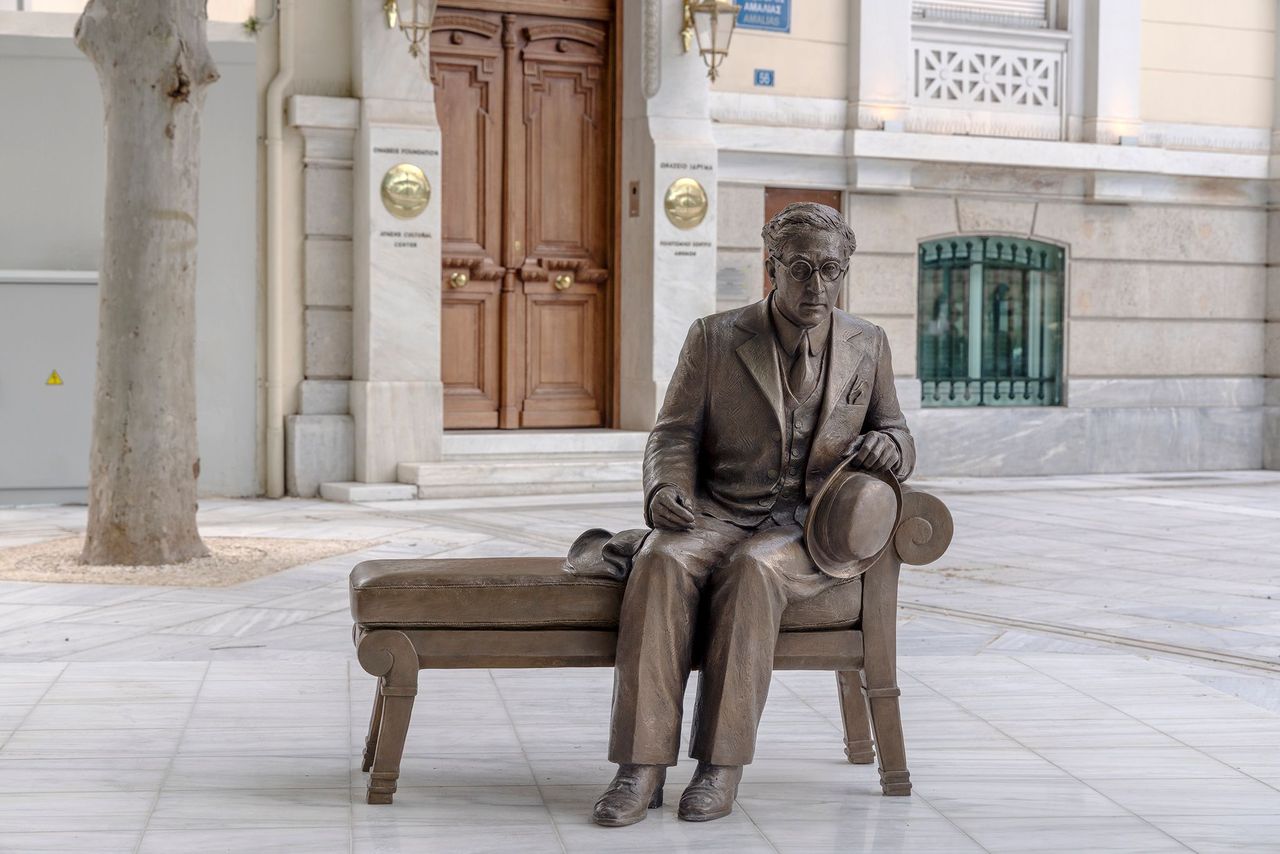
The sculpture of C. P. Cavafy, a donation from the Onassis Foundation to the Municipality of Athens, aims to integrate the poet organically into the urban fabric—not as a distant monument, but as a living presence within the city’s everyday life. Tzanoulinos’ proposal portrays Cavafy seated: a life-size bronze sculpture with a durable patina suitable for outdoor display, allowing visitors to sit beside him.

The sculpture is illuminated by acclaimed Greek lighting designer Eleftheria Deko, whose lighting study remains in constant dialogue with the surrounding environment.

Cavafy’s figure draws inspiration from a photograph in the Cavafy Archive depicting him reclining in his apartment on Lepsius Street 10 in Alexandria around 1930. Details such as his glasses were incorporated using modern 3D scanning and printing technologies, based on authentic objects.

The sculpture engages with history while belonging firmly to the present: a Cavafy not distant, but present—in gaze, posture, and the lived experience of public space. Through this work, Athens honors a major literary figure, continuing a European tradition that includes statues of Fernando Pessoa in Lisbon, James Joyce in Trieste, Hans Christian Andersen in Copenhagen, as well as monuments to Oscar Wilde in London, Federico García Lorca in Madrid, Franz Kafka in Prague, and Frédéric Chopin in Warsaw.

The Cavafy Archive in Athens

The Cavafy Archive on Frynichou Street in Plaka is more than a museum. It houses the poet’s personal archive, along with 966 books from his library, documents of his life and work, and contemporary artworks by internationally recognized artists—from Athens to New York. It is a living archive, continuously evolving.

Following the launch of its digital collection in March 2019, which made the archive freely accessible, the Onassis Foundation established a physical space dedicated to the poet, inaugurating the archive in November 2023. In December 2024, it expanded with two additional rooms, presenting more materials from his library, works by his contemporaries, and pieces by internationally acclaimed artists featured in the “Archive of Desire” festival in New York (April 28 – May 6, 2023).

The Cavafy House in Alexandria

In early 2022, the Onassis Foundation, in collaboration with the Hellenic Foundation for Culture, undertook the restoration of the Cavafy House in Alexandria. Since May 2024, the apartment where Cavafy lived most of his life and created many of his works has been restored and reconfigured to reflect its original appearance. It now serves as a cultural destination, illuminating the poet’s relationship with Alexandria and his enduring global impact.

Everyday life as a field of culture

The Cavafy sculpture is part of a broader strategy by the Onassis Foundation to intervene thoughtfully in public space. Through ongoing initiatives, the Foundation promotes a “culture of everyday life,” enhancing neighborhoods, parks, monuments, and public areas to create a more open, accessible, and sustainable city.

Working closely with the Municipality of Athens, it continues to implement projects that improve both functionality and aesthetics—encouraging residents to rediscover their city and engage more deeply with its cultural landscape.

Author