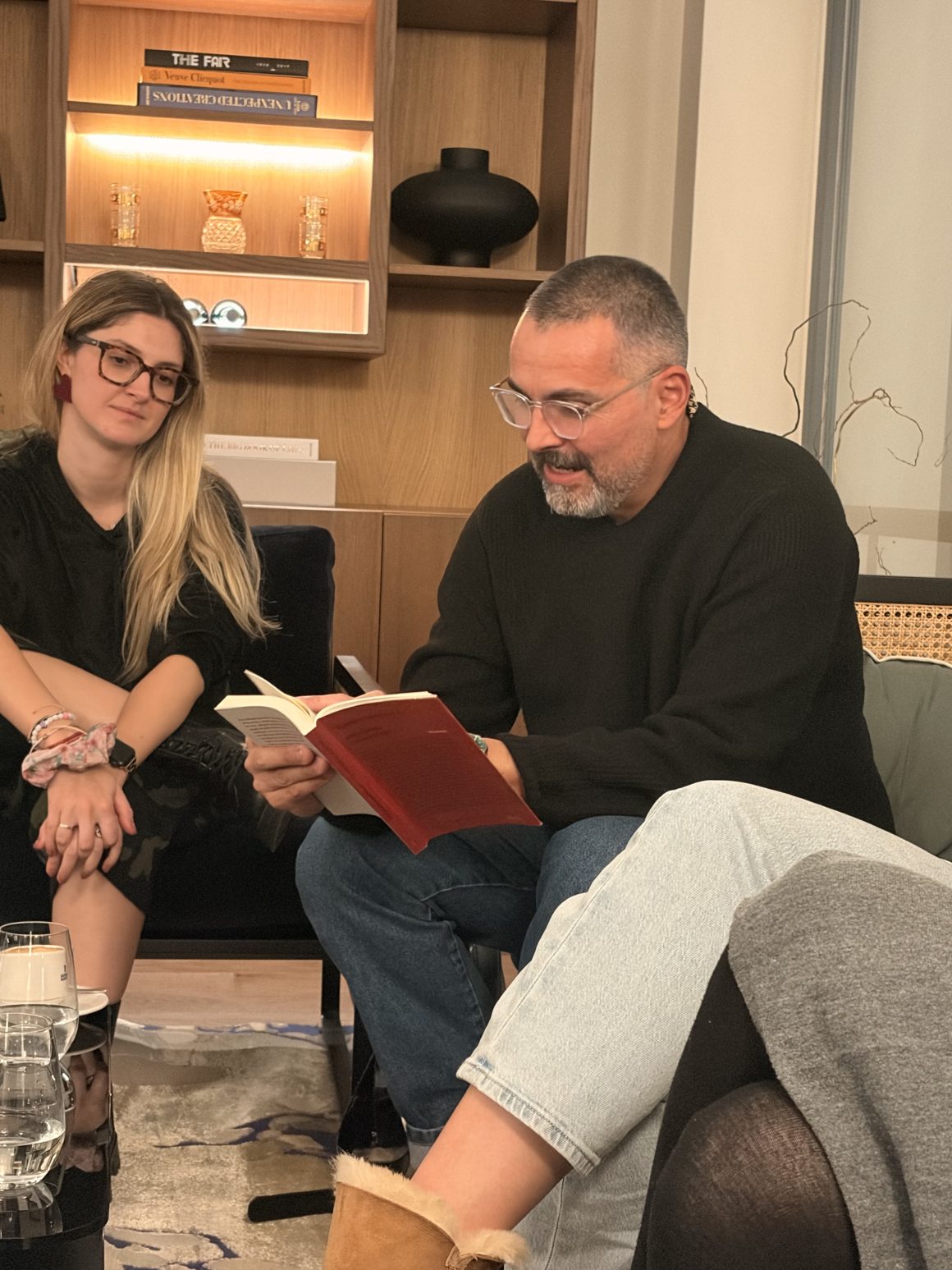
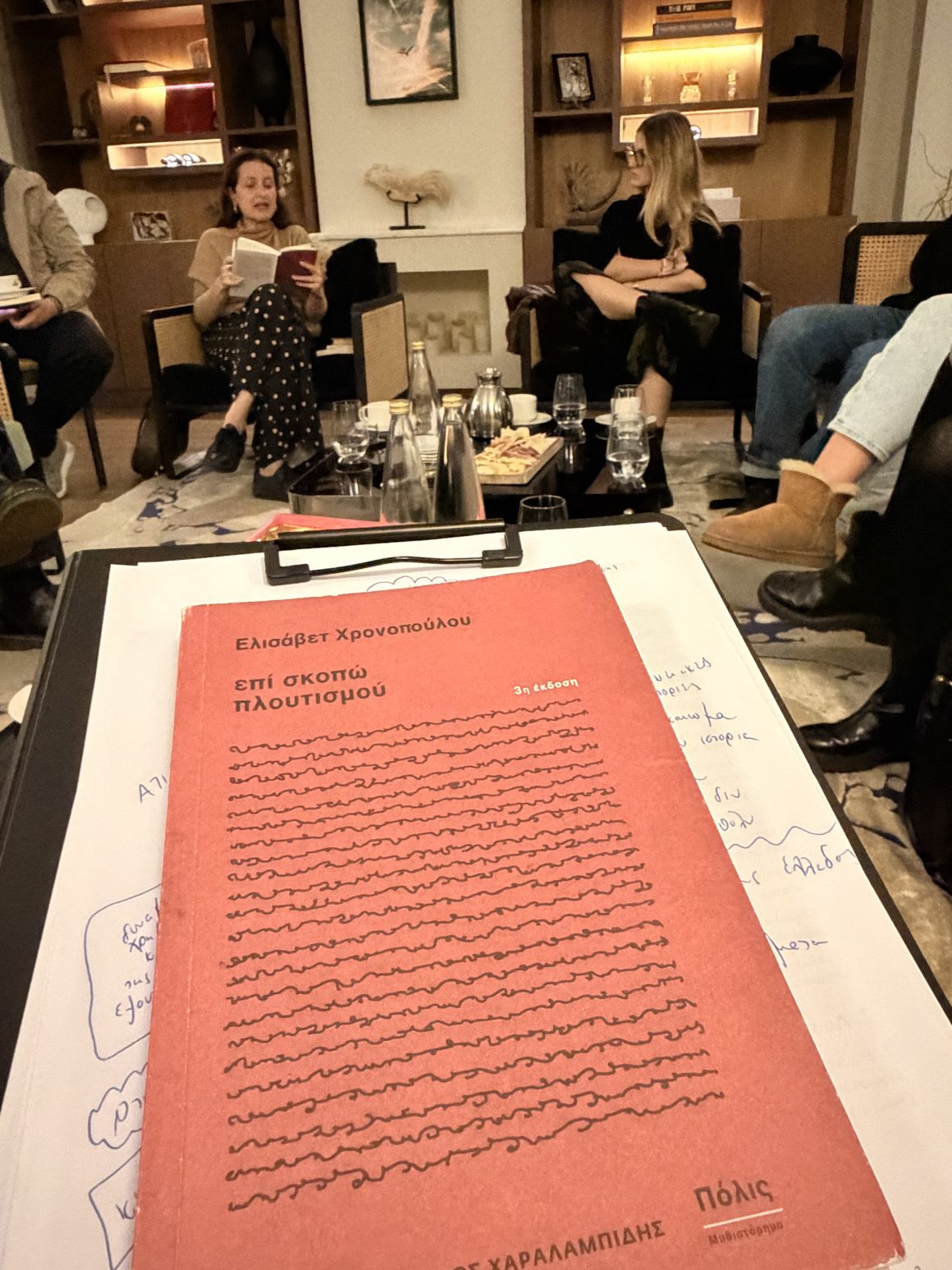
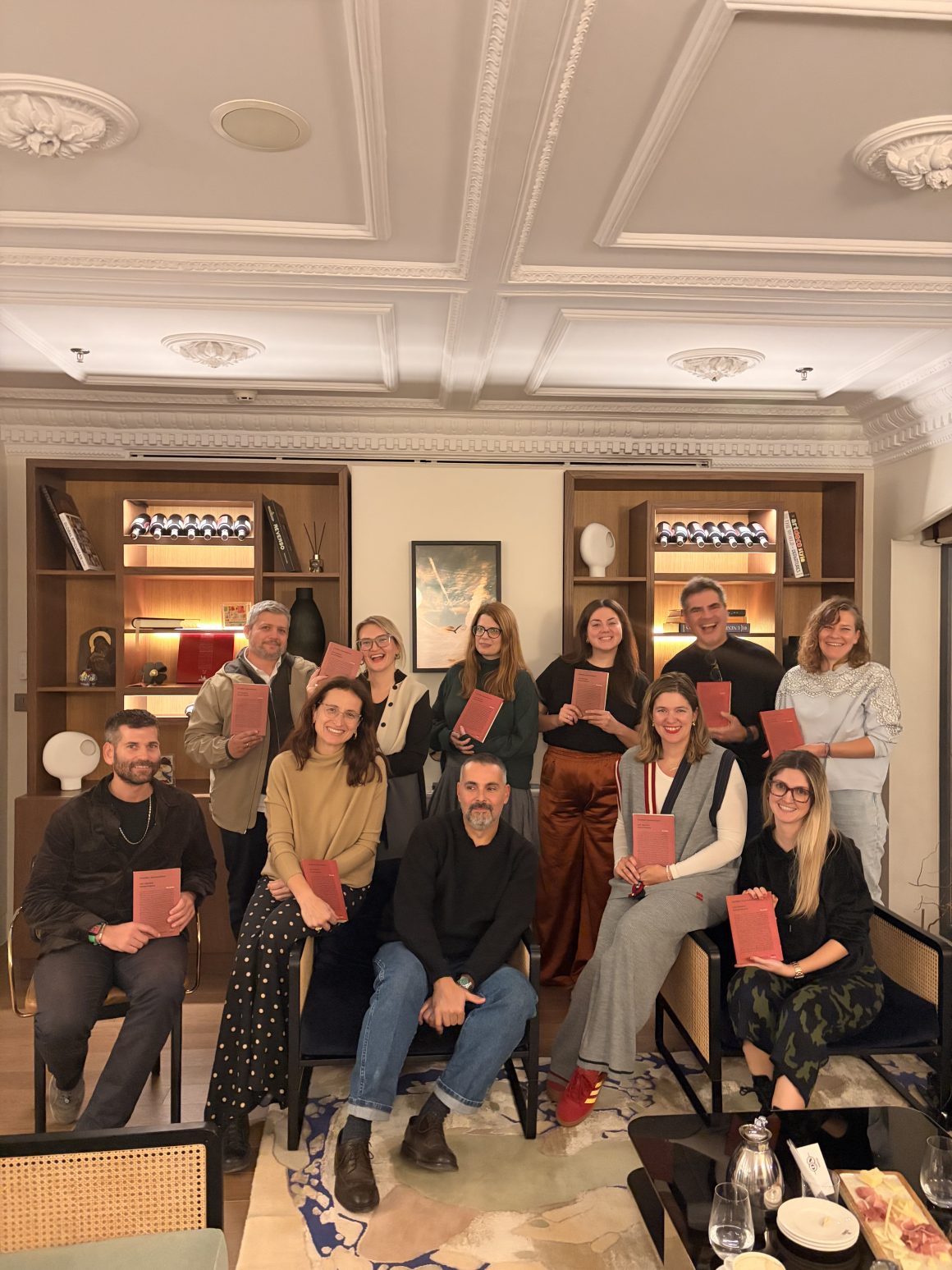
The second meeting of Bookmarks took place on the first Sunday of November, at six in the evening. This time, coffee was served, and all twelve members were present. Angelos, who had missed our first gathering, joined us, bringing the group together around the table: four men and eight women.

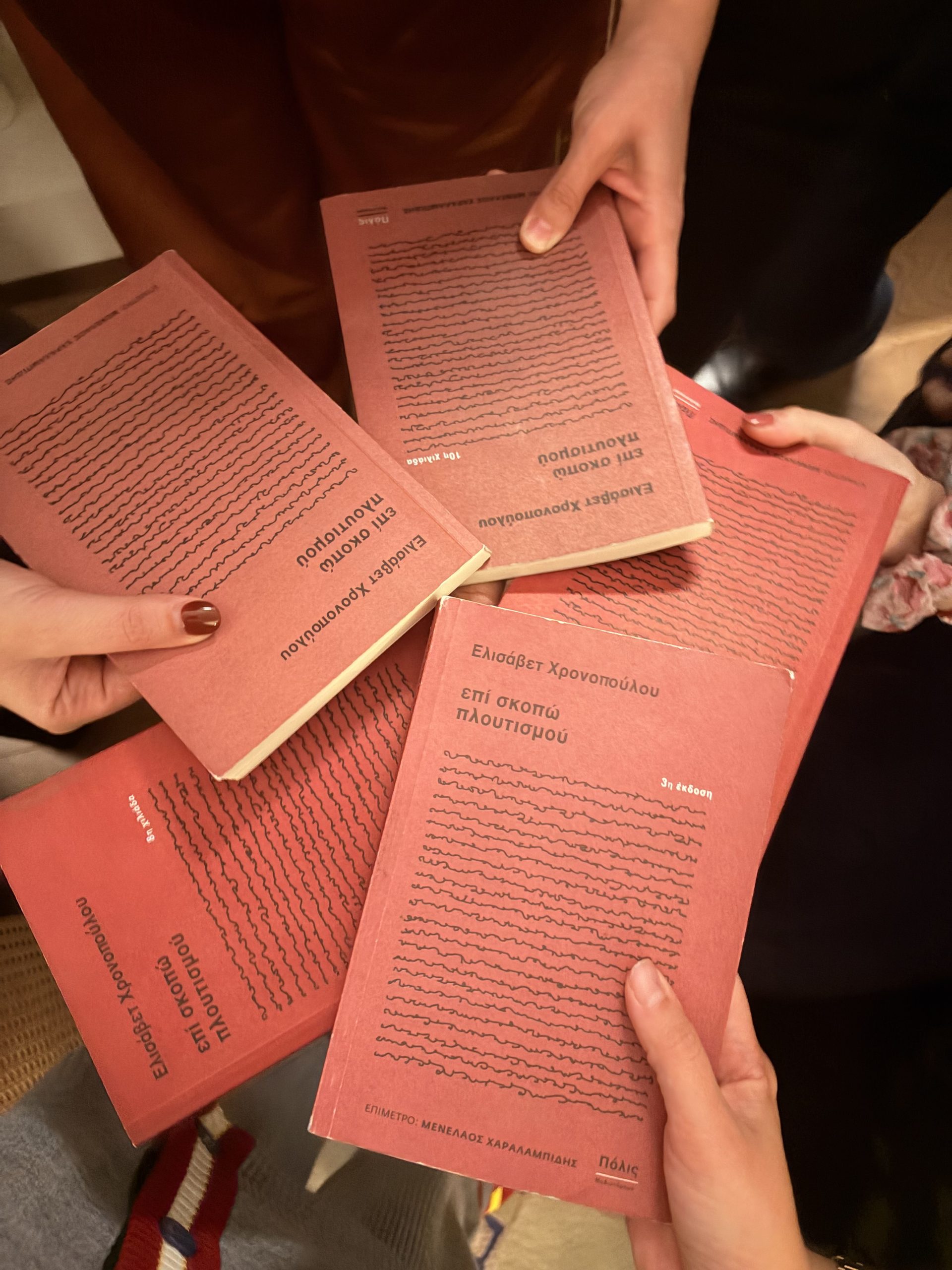
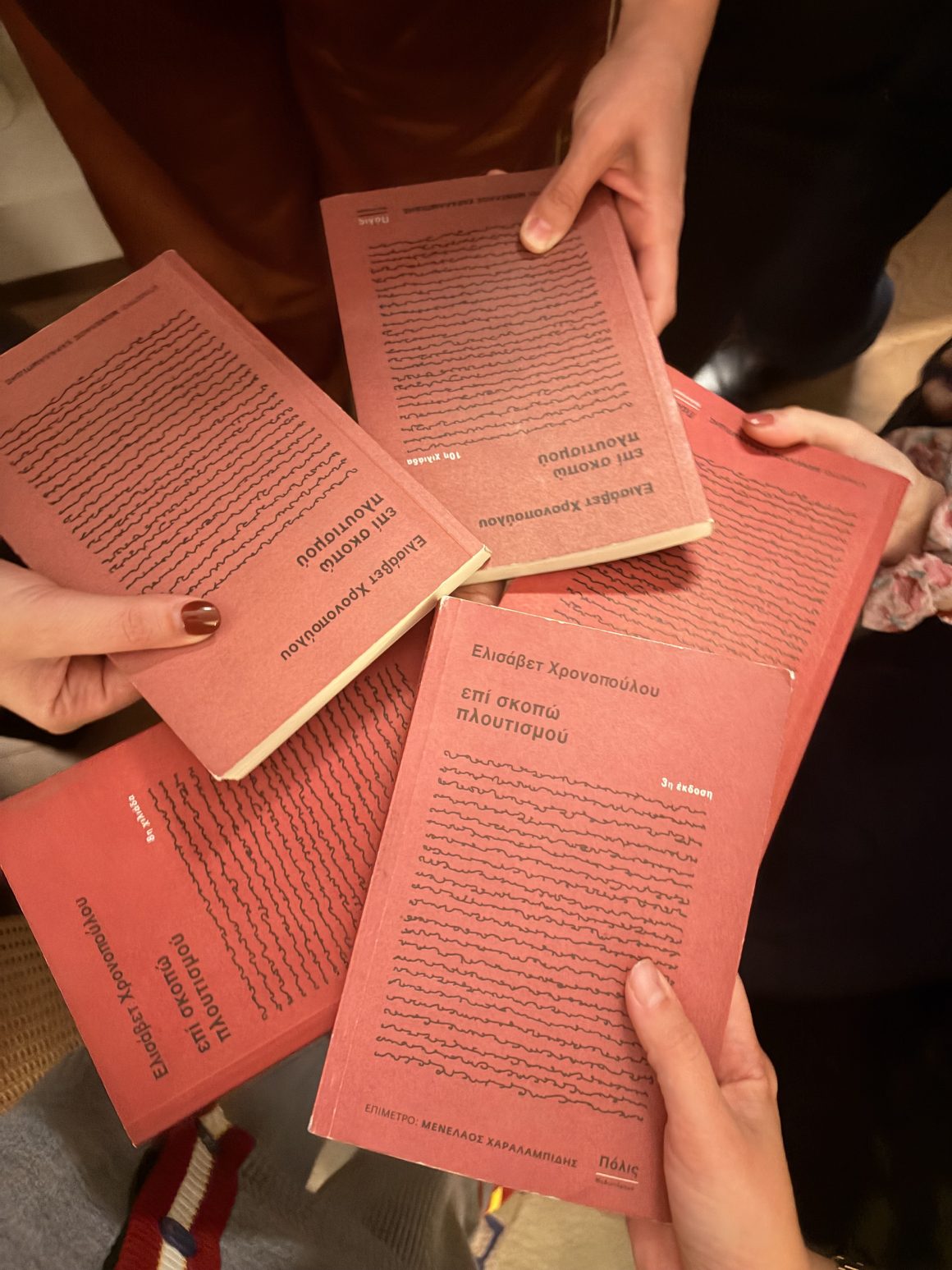
The book that brought us together was With Intent to Profit (Epi Skopo Ploutismou) by Elisavet Chronopoulou.

A few words about the plot, as presented on the back cover: A phone call from a public hospital, an unidentified deceased man, a will, an unexpected inheritance and a letter that brings an old story to light. One of those small stories that never made it into the pages of History. An unpunished crime, a wound that never healed, and an uprising against injustice that followed the dark path of vigilantism.

Eighty years later, the narrator comes face to face with a past he knew nothing about, yet had always been heir to. Because things that have happened do not cease to have happened simply because we remain unaware of them.

It was precisely this idea — the inheritance of memory — that became the focus of our discussion.

We spoke at length about family secrets, the kind that almost every family keeps, as well as the period between 1943 and 1945, a time when, as Angelos astutely observed, the roles people played and the reasons behind their actions remain somewhat blurred. Kostas shared some fascinating stories from his own family history, which resonated directly with the events in the book. Ilias agreed that the novel had touched him deeply, speaking to him on a personal level about both the history of the country and that of his own family.

Angelos told us that the book has already enjoyed considerable success in the Greek market, despite little in the way of advertising or promotion, with much of its popularity driven by word of mouth. And judging by our own group, perhaps with good reason: all twelve of us were thoroughly captivated by it.

The two legal professionals in our group, a judge and a lawyer, paid particular attention to the witness testimonies interwoven throughout the narrative. They appreciated the way these function as a literary device, bringing the story to life and adding another layer of depth. They also pointed out that a similar case could unfold even today, with testimonies and conflicting accounts of events influencing a court’s judgement.

We also discussed how many things were done at the time under the pretext of ideology, when the real motive was far more mundane: personal and financial gain. Katerina drew a contemporary parallel with Trump, prompting immediate agreement around the table. Perhaps the book’s title is ultimately far more timeless than we would like it to be.

Dimitris, as a writer, particularly admired Chronopoulou’s narrative technique. He focused on the way she gradually unfolds the story, almost as if she had gathered us all around her to recount something that had actually happened. Christina, meanwhile, drawing on her experience as a creative writing teacher, appreciated the book’s intertextuality, which nevertheless felt anything but like something produced to a creative writing workshop formula.

A considerable part of our discussion centred on the protagonist’s grandmother: her motives, her choices, whether we could justify or at least understand her, and how fully realised her character is. We also considered the length of the novel. Lina said she would have liked more; the book left her with a sense of something unfinished, as though there were still aspects of the story worth exploring.

Katerina made an observation with which we all agreed: Salikas had never come to terms with his sister’s death. By leaving his estate to the narrator, he was also passing on her memory — a memory he had carried throughout his life and which, in this way, he refused to let disappear.

Finally, we turned to the outstanding afterword by historian Menelaos Charalambidis, who raises a question extending far beyond the boundaries of this particular novel: what materials were used to build the Metapolitefsi and modern Greece? How much was left unspoken, how much forgotten, and how much continues to shape our present?

In fact, we even considered going together to hear him speak at the Athens Concert Hall, where he is due to discuss his book and issues directly related to the themes explored in With Intent to Profit.

In the end, all the Bookmarks agreed that they had loved With Intent to Profit and would recommend it wholeheartedly to absolutely everyone. Our advice: read it, and then go and ask your grandparents some difficult questions about the Occupation and the Civil War.

Next book: Flesh by David Szalay, the novel that won last year’s Booker Prize. We chose it just ahead of the announcement of this year’s winner, and I personally believe it will give us just as much to talk about.

Text by Ismini Tornivouka

Author