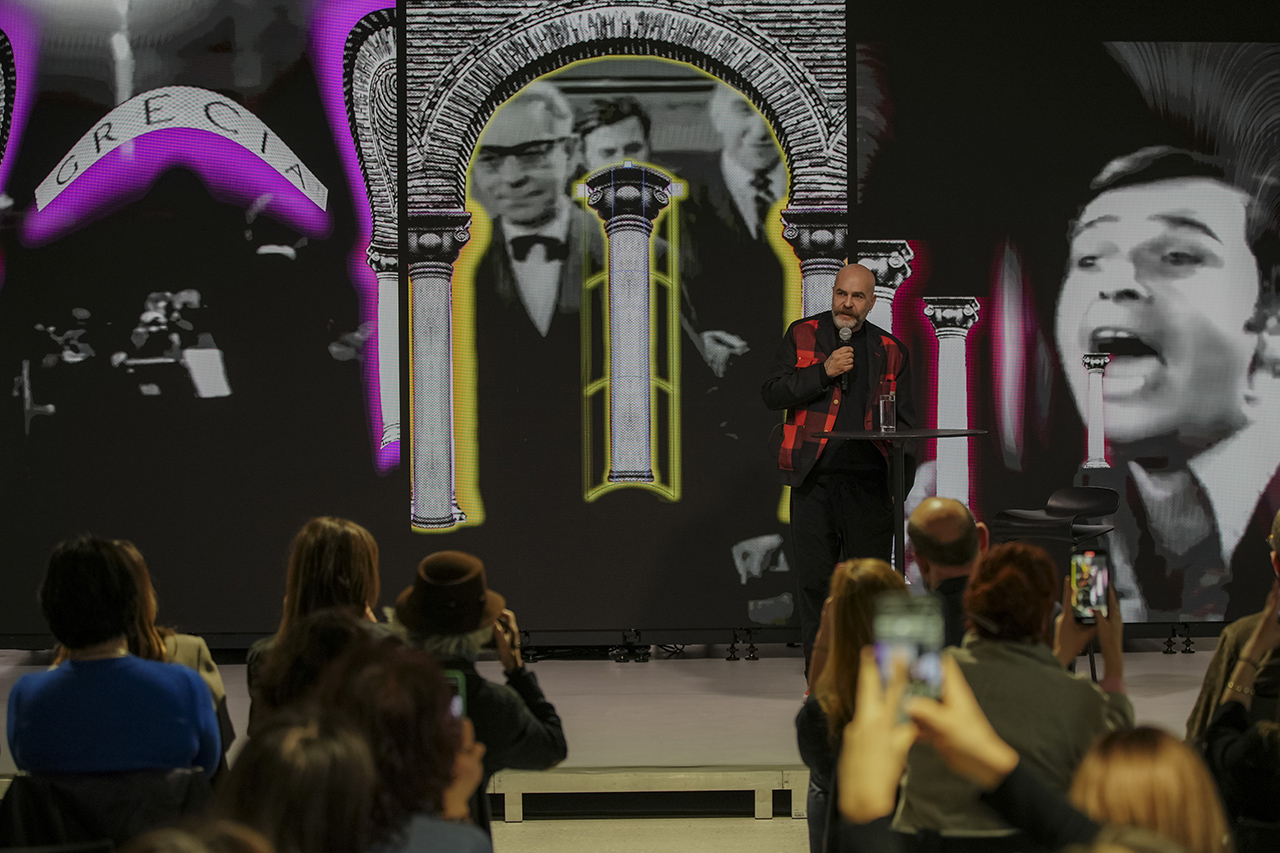
With a subversive spirit and a desire to provoke thought, Andreas Angelidakis presented, in his own way, what little he could reveal about his work Escape Room, which will represent Greece at the 61st International Art Exhibition – La Biennale di Venezia.

The Greek Pavilion at the Giardini in Venice is transformed into a contemporary Platonic Cave by Andreas Angelidakis, the visual artist and architect representing Greece with the work Escape Room, from May 9 to November 22, 2026.

The iconic Platonic allegory is reactivated as an immersive, inhabitable environment, situated within the era of post-truth and the rise of nationalist populism in the work of this internationally active creator. The Greek participation is curated by Giorgos Bekirakis.

The National Pavilions of the Giardini, as he himself notes, were designed to communicate the political beliefs of the governments that constructed them at that particular historical moment. Today, they stand as Frozen Fascist and/or Colonial Caves, trapped within an environment that has become associated with the examination of political choices and their consequences, as well as their subsequent transformation into art. Each Pavilion constitutes a mechanism of truth—much like the mechanisms in the allegory of Plato’s cave—which today evokes a Phantasmagoria of Global Trumpism: if we replace the Cave with the Screen, what remains is every manifestation of MAGA (Make America Great Again) as a staging of fascism in the year 2025.

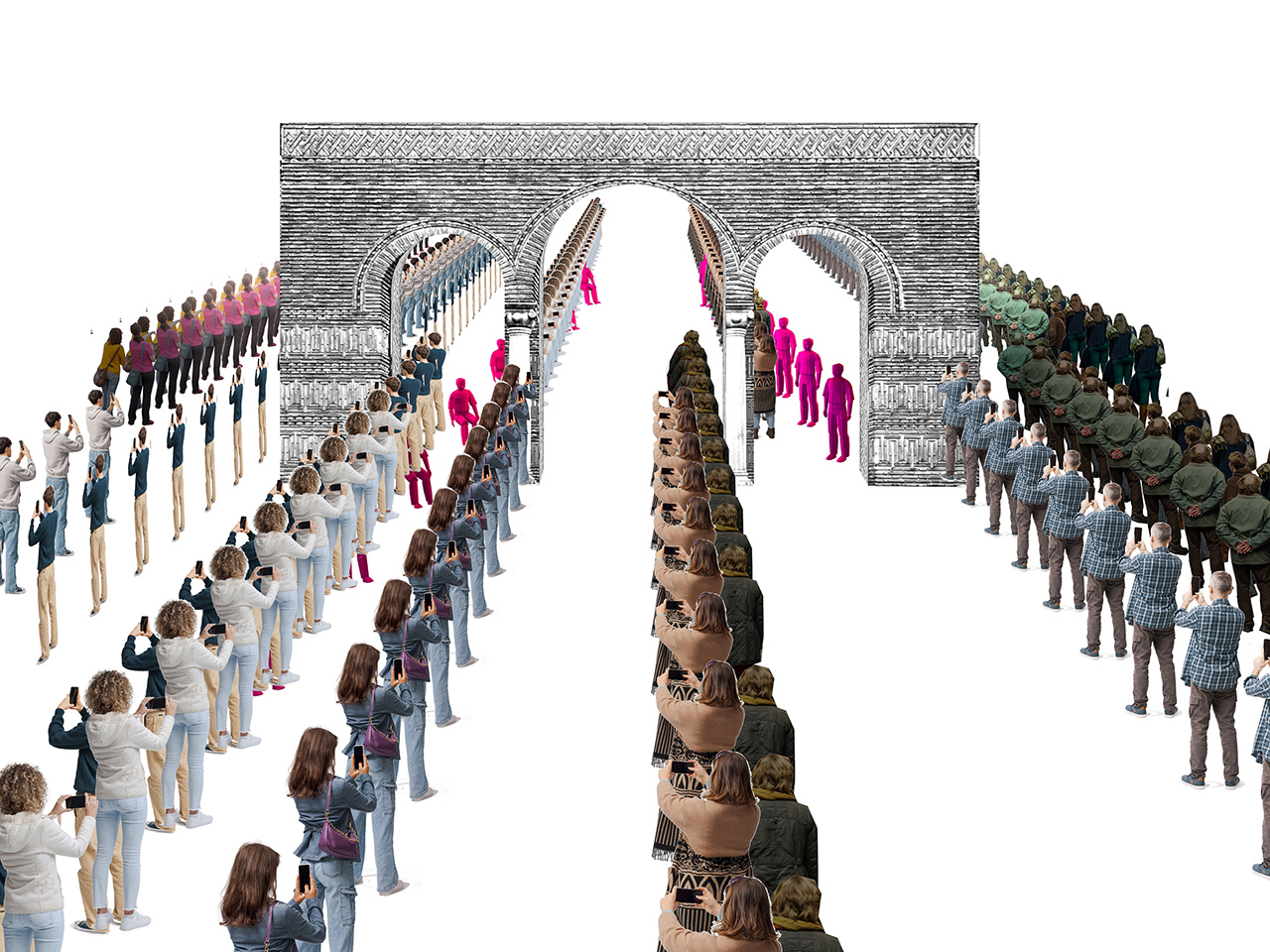
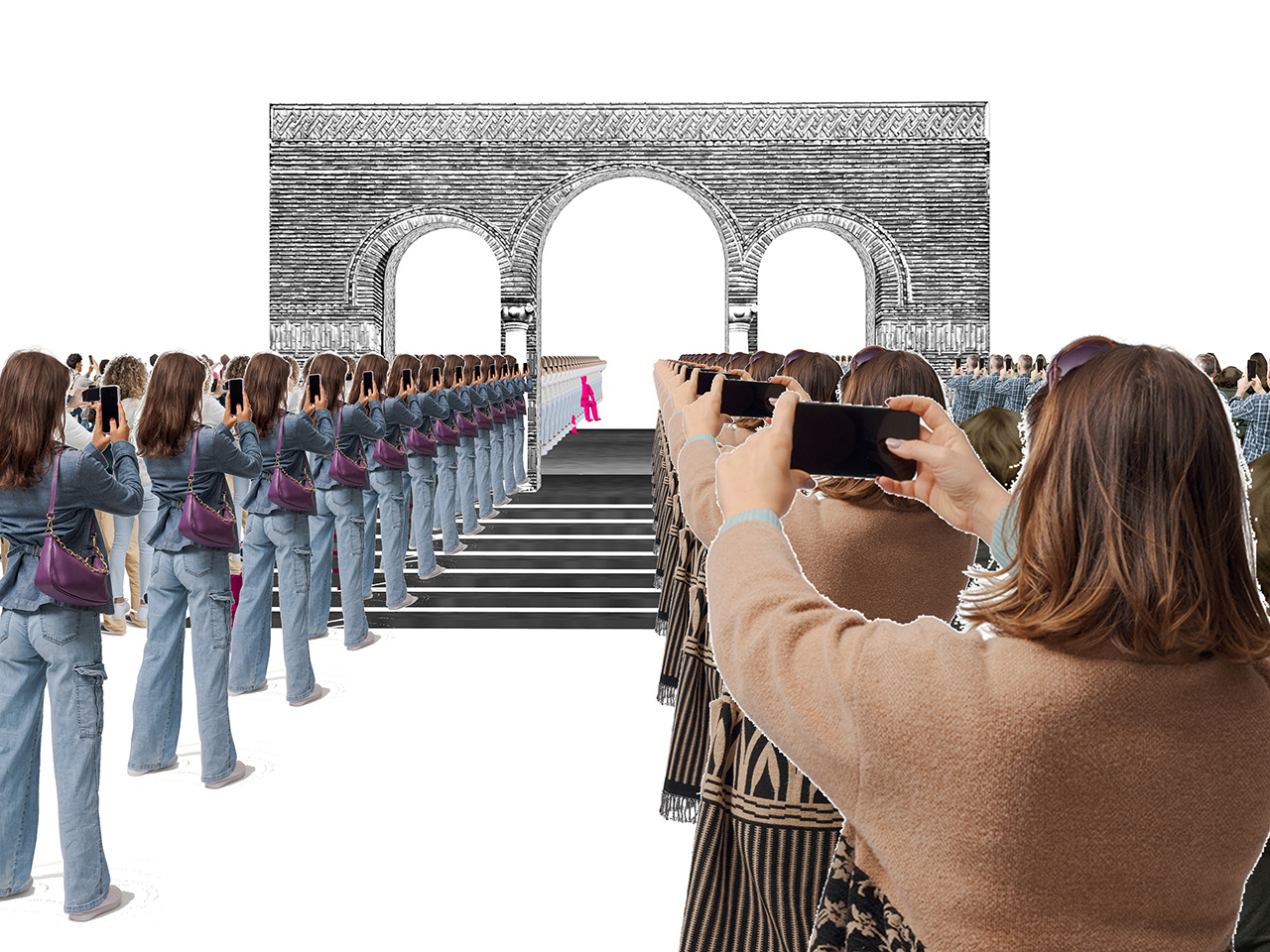
Angelidakis conceived the Greek Pavilion as an escape room, a leisure space embodying a reality that feels like a game, while on a symbolic level it carries the paradox of a building attempting to escape from its “self” and thus from its own history. Through a deep immersion into its own past, the Greek Pavilion encounters a “bathroom selfie,” where the mirror is permanently fixed at Year Zero (1934): the year the Nazis began persecuting homosexuals; the year Hitler and Mussolini met for the first time in Venice in the aftermath of their sweeping electoral victories; and the same year the Greek and Austrian Pavilions were inaugurated.


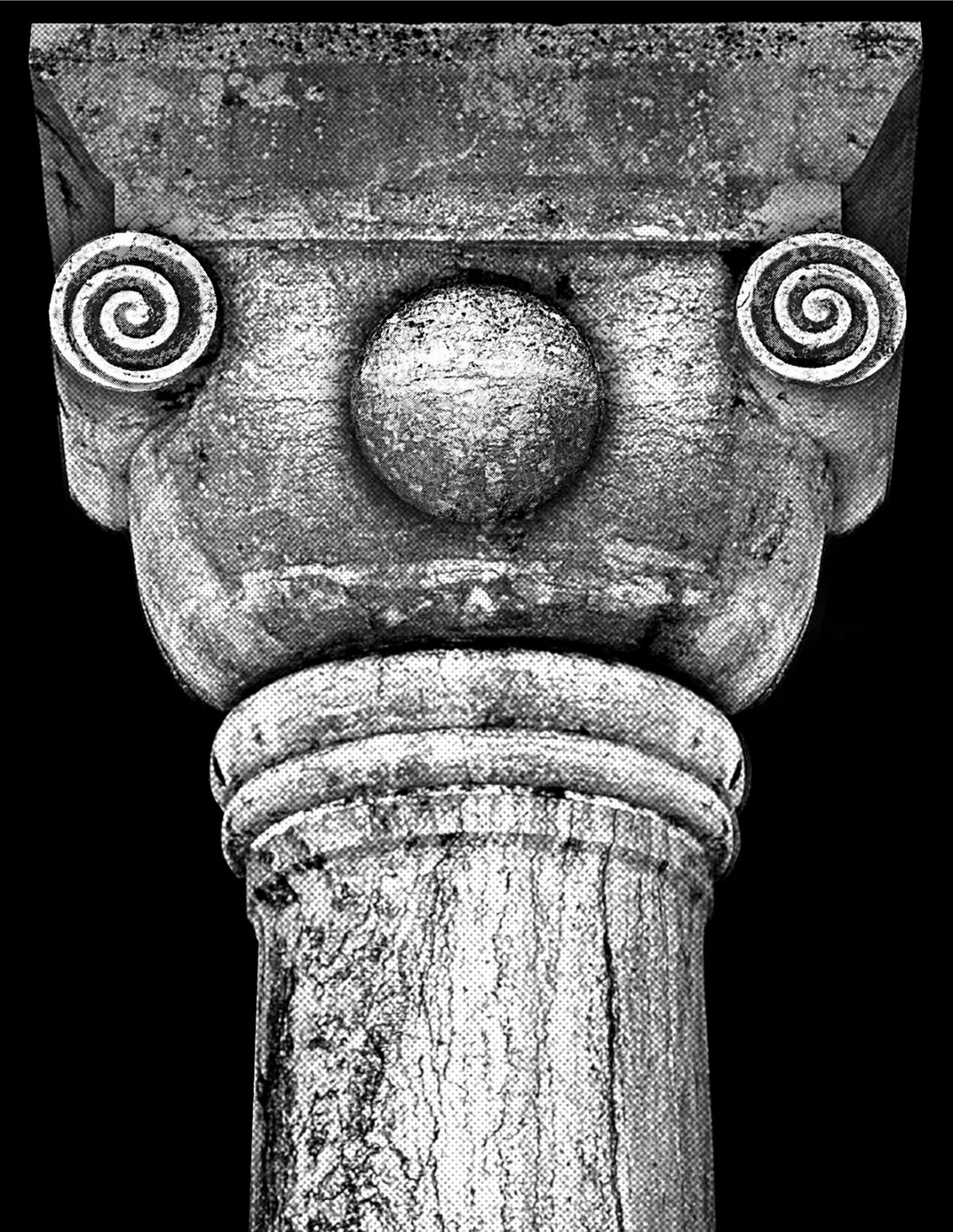
Study for an Escape Citizen (GRECIA), Andreas Angelidakis 2026
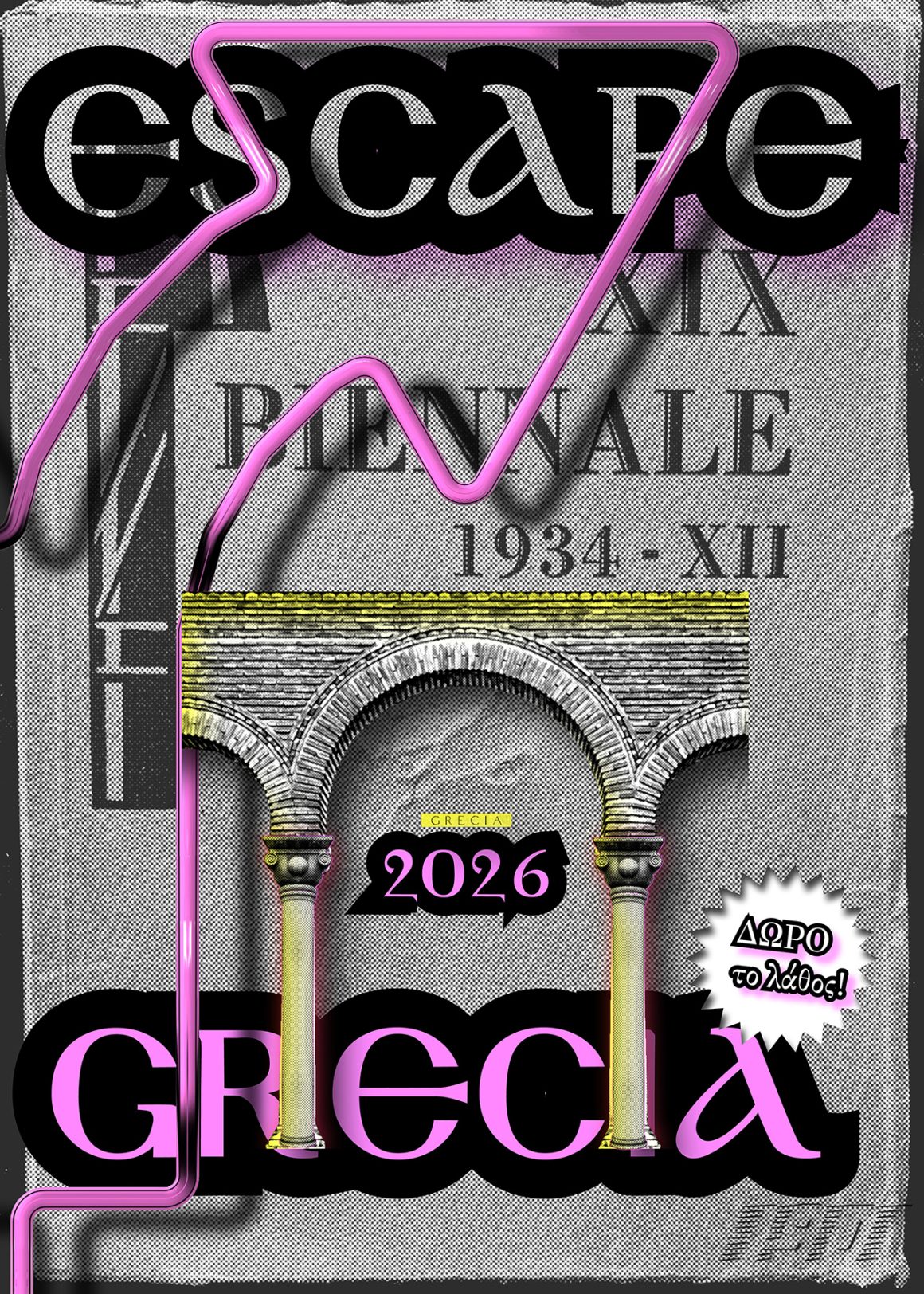
Study for an Escape Book (GRECIA), Andreas Angelidakis 2026
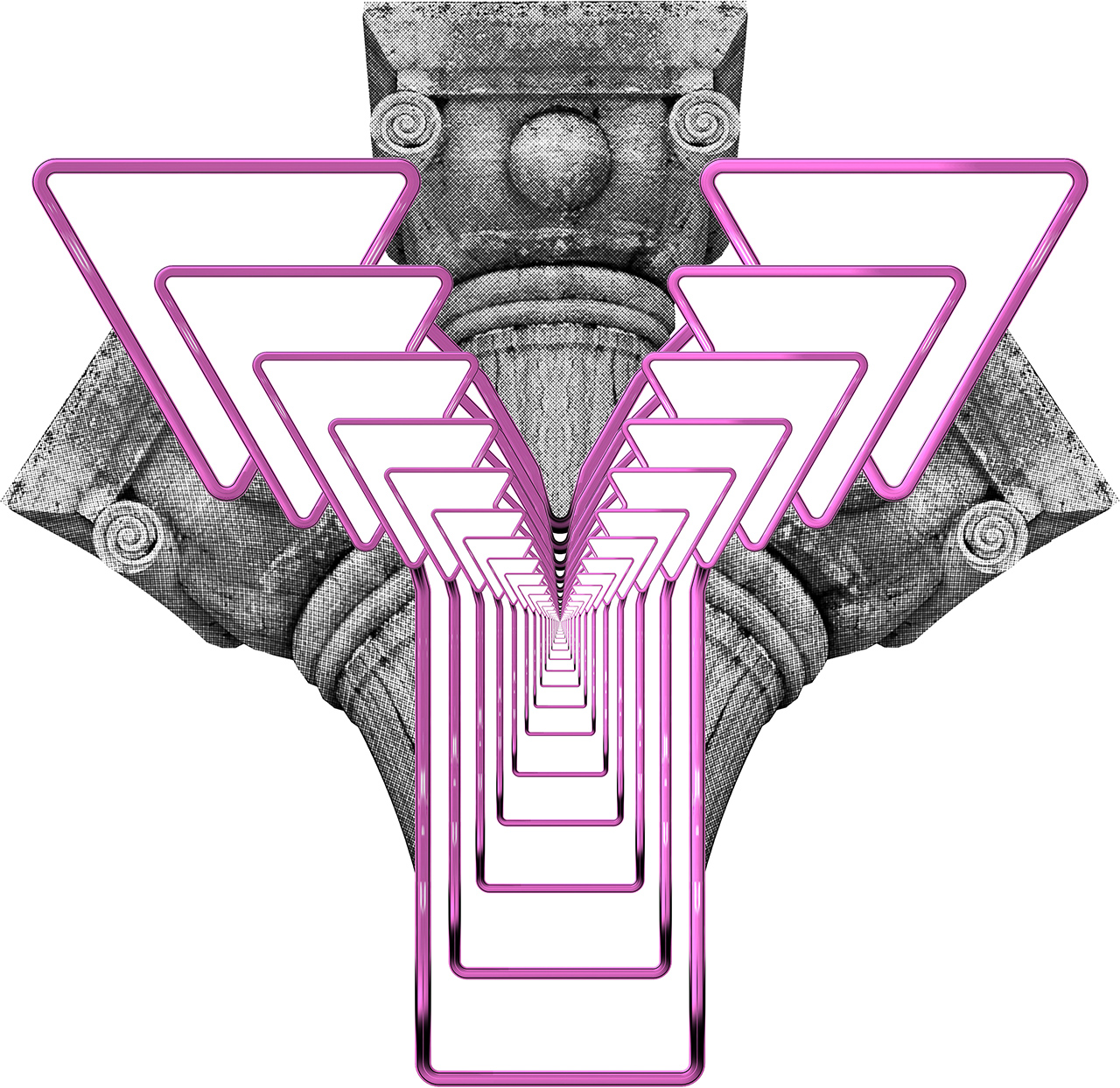
1+1=3, Andreas Angelidakis, 2026(1)

“Exploring the ‘life’ of the Pavilion in relation to the political climate of the time of its birth—namely fascism—Angelidakis traces historical developments in Greece and Italy through small stories and incidents connected to the space,” notes the curator of the Greek Pavilion “Escape Room,” Giorgos Bekirakis.

“The Pavilion is transformed into a capsule where historical versions of Greekness are placed alongside urban, lived expressions of it, recalling the tension between reality and cultural fixations. GRECIA is transformed into a psychoanalytic subject—a metaphor that reflects the spectrum of Greekness and its interdependence with authoritarianism. Its ‘queer’ body narrates the persistent enigmas between the past and contemporary versions of European identity. Angelidakis’s sculptures function as fragmentary elements, as traces that suggest the multiplicities that constitute a nationality and the stories that never became official History,” the curator further notes.

Andreas Angelidakis’s installations often approach History through shifts, distortions, reversals, and humor, staging alternative frameworks for interpreting reality, identity, and cultural memory. As a narrative vehicle, fiction consistently lies at the core of his methodology, while through the dynamics of queering and the destabilization of the mechanisms that define notions of truth and authenticity, he explores the architecture of our perception, culture in flux, and selfhood.

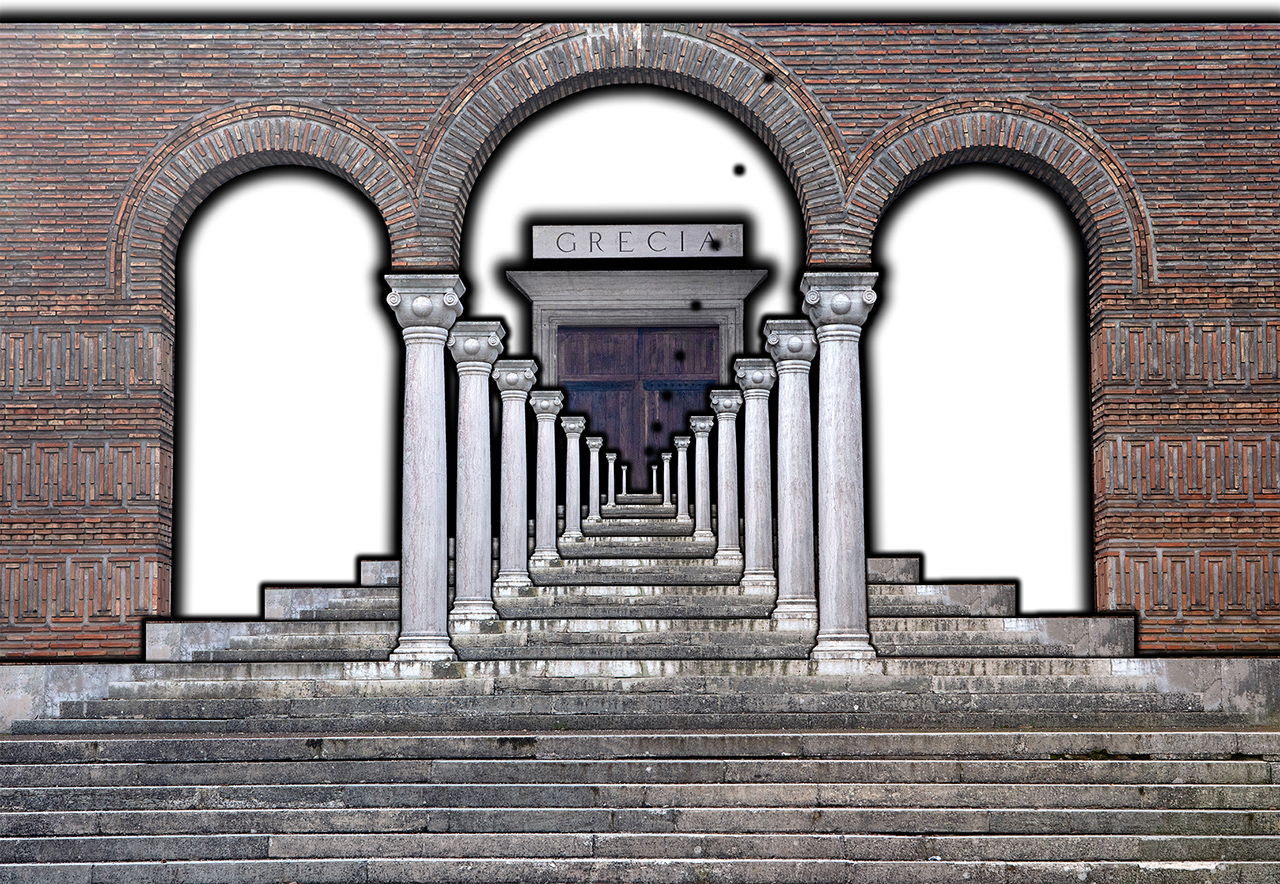
06 Study for an Escape Room (GRECIA), Andreas Angelidakis 2026(1)
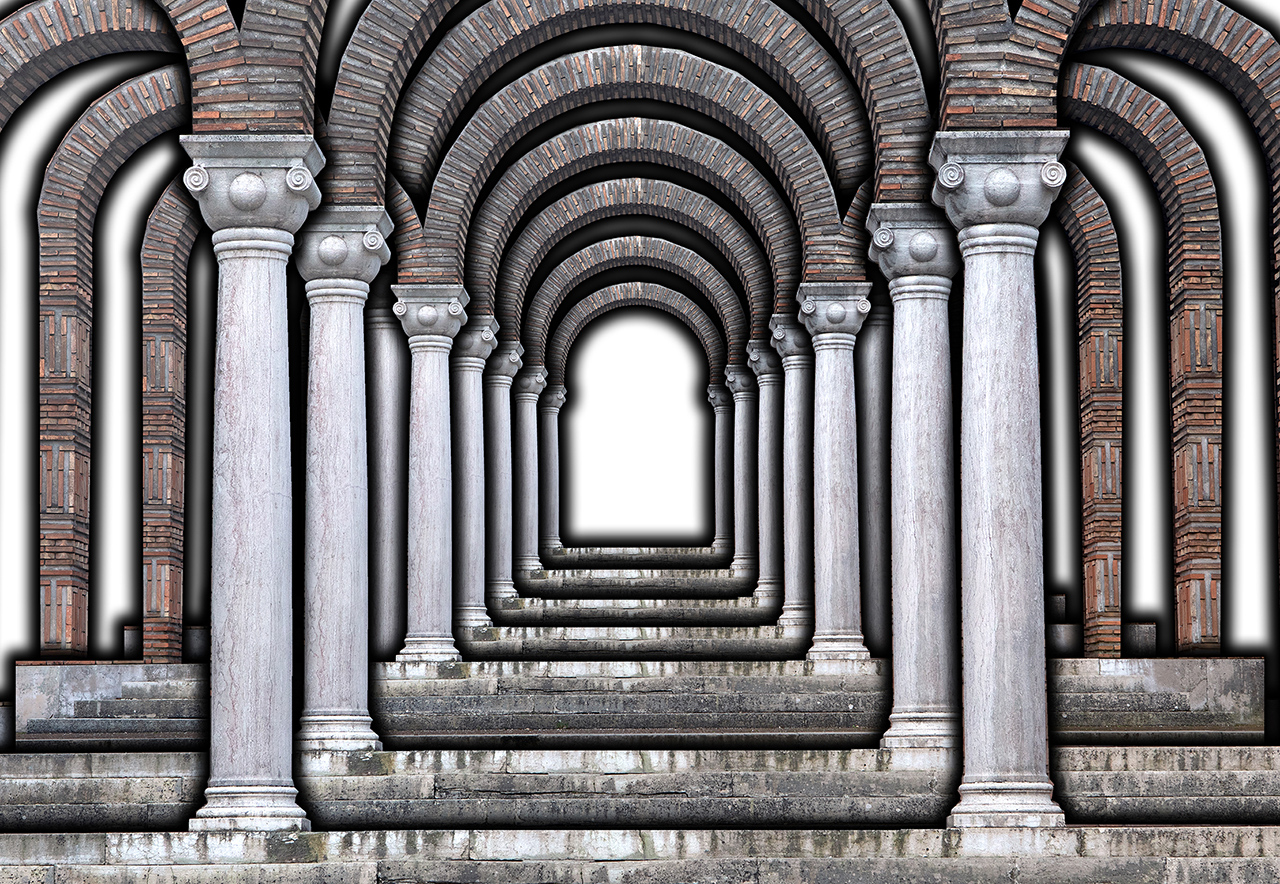
Study for an Escape Room (GRECIA), Andreas Angelidakis 2026
Study for an Escape Room (GRECIA), Andreas Angelidakis 2025 --

The Deputy Minister of Culture, responsible for Contemporary Culture, Iasonas Fotilas, states:

“I deeply believe in the right of art to clash. To question. To provoke. As a meaningful act, it is the only one that can still open cracks where everything seems smooth and regulated. The kind of conflict that matters is not self-referential, nor is it the fulfillment of an obligation within an expected repertoire of protest. It is the conflict that sees something specific, real, urgent, and refuses to reconcile with it uncritically. It points out, overturns, awakens. Greece’s participation in the 61st International Art Exhibition – La Biennale di Venezia moves in this spirit. It comes to pose questions—with boldness, precision, and art that has something to say and knows why it says it.”

Fani Tsatsia, General Director of the Metropolitan Organisation of Museums of Visual Arts of Thessaloniki (MOMus), notes:

“The Greek Pavilion at the Giardini, at the 61st International Art Exhibition – La Biennale di Venezia, has a long and particularly significant history, with a continuous presence since the 1930s. For more than nine decades, it has hosted important moments of contemporary Greek artistic production and today functions as a space for presenting proposals that engage with international artistic currents and contemporary social, political, and cultural issues. For 2026, Greece is represented by the artist Andreas Angelidakis with the installation ‘Escape Room,’ an interactive experiential setting that will be presented in the specially configured interior of the Greek Pavilion, curated by Giorgos Bekirakis. MOMus actively supports the preparation and realization of the Greek participation, strengthening the international visibility of contemporary Greek creation.”

Aphrodite Panagiotakou, Artistic Director and member of the Board of the Onassis Foundation, states:

“Our presence as a strategic supporter of ‘Escape Room’ relates to the continuity of our collaboration with Andreas Angelidakis, a creator who metabolizes Greekness and plays with stereotypes, creating a world where pretentiousness is absent and essence emerges. With this work, the national participation plays with its very definition. What does ‘national’ mean? And how do we participate in it? We look forward to this work, especially now that nationalism and populism are sweeping across contemporary democracies.”

The work “Escape Room” by Andreas Angelidakis is realized and exhibited at the Greek Pavilion in the 61st International Art Exhibition – La Biennale di Venezia with funding from the Hellenic Ministry of Culture. The National Commissioner is the Metropolitan Organisation of Museums of Visual Arts of Thessaloniki (MOMus).

Strategic supporter: Onassis Culture.

Additional supporters include EKOME (Hellenic Film and Audiovisual Center – Creative Greece) through the “Extroversion” program, Qualco Group, Qualco Foundation, National Bank of Greece, Ioannis and Maya Martinos, and Ioanna Martinou. The project is also supported by NEON Organization for Culture and Development, the Irene Y. Panagopoulos Collection, the Office for Contemporary Art Norway (OCA), Anastasia Tsoureka-Sarakaki, Perianth Hotel, Aliki Martinou, Giorgos Petrocheilos and Diamantis Xylas, Eirini Laimou, the Thessaloniki International Film Festival, “The Art of Life” company, ARCH, Polygreen Culture & Art Initiative (PCAI), Eleni Martinou, and Andreas Melas.

Official air travel sponsor: AEGEAN.

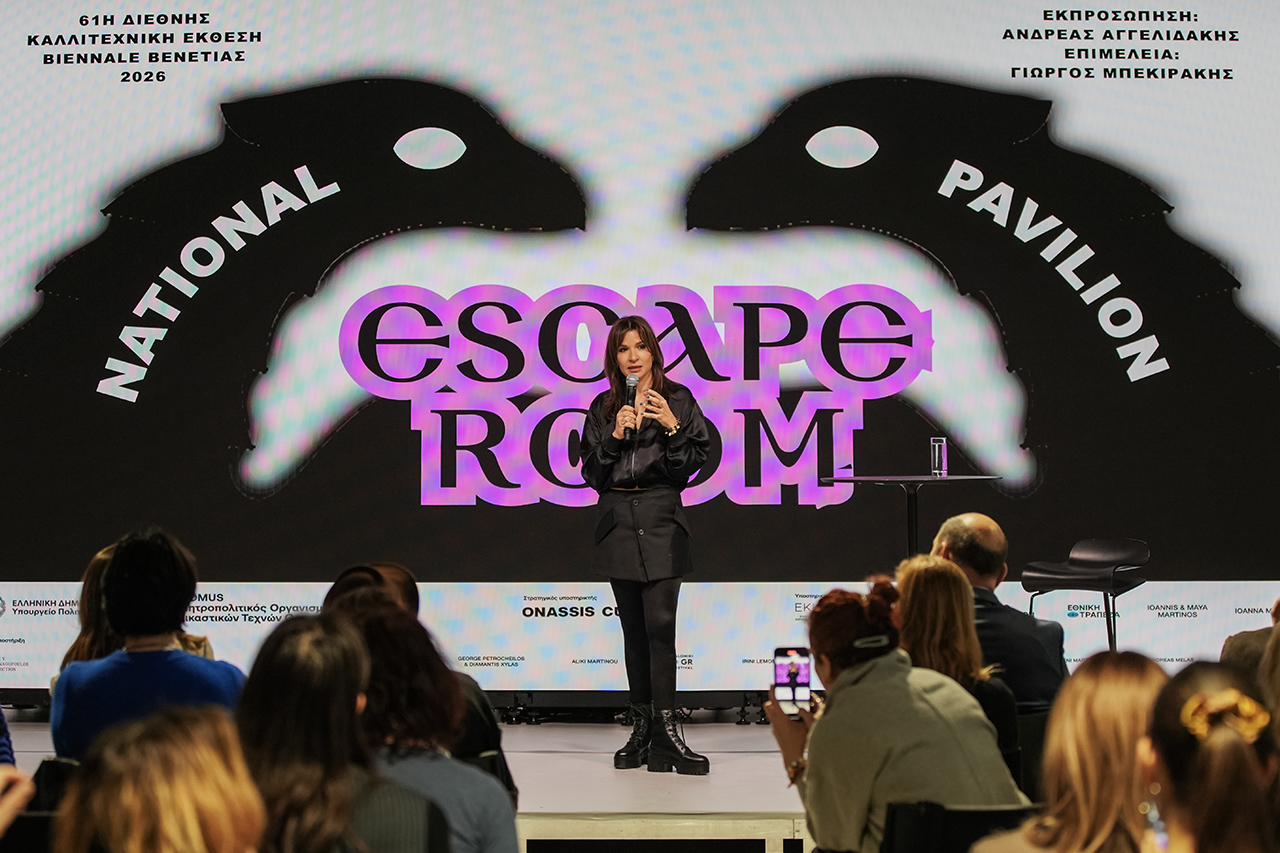
Aphrodite Panagiotakou, Artistic Director and member of the Board of the Onassis Foundation Photo: Andreas Simopoulos
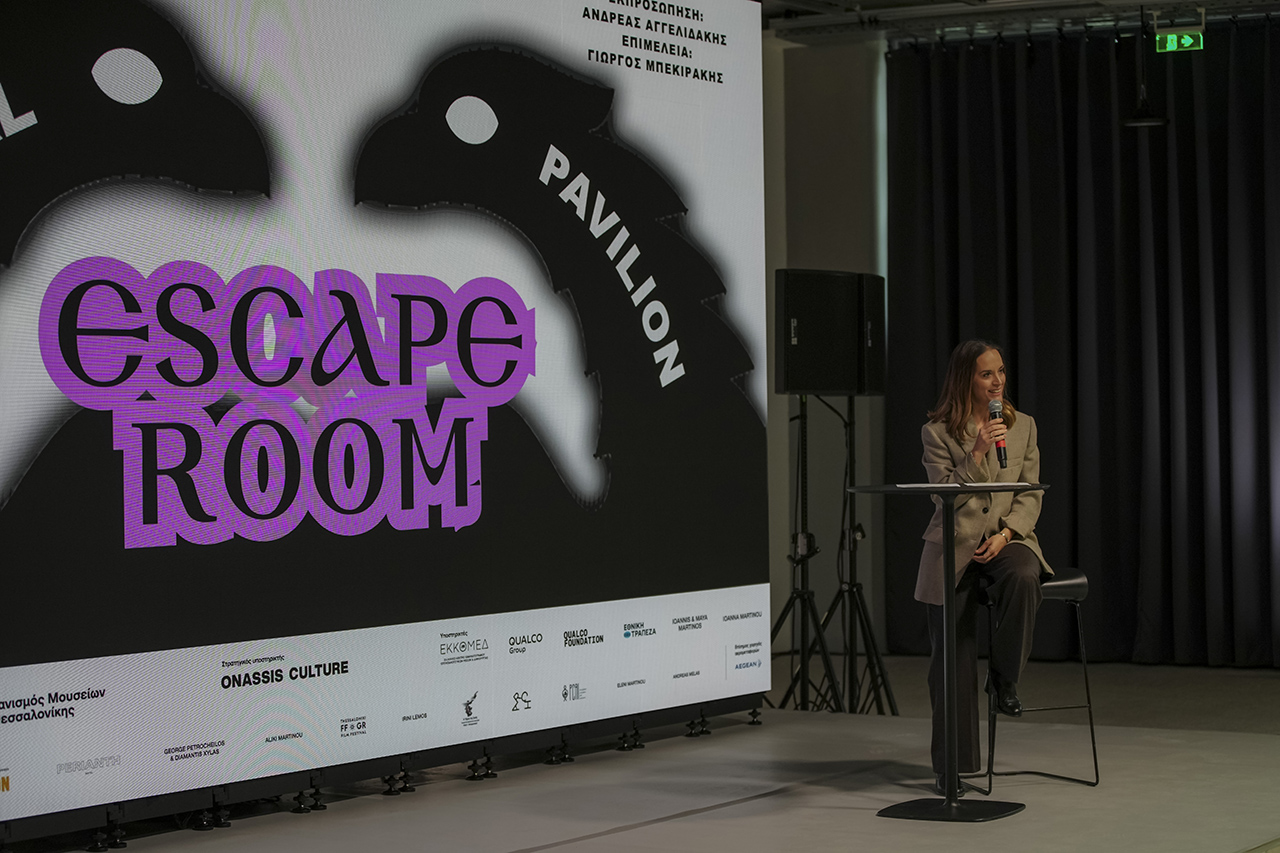
Fani Tsatsia, General Director of the Metropolitan Organisation of Museums of Visual Arts of Thessaloniki (MOMus) Photo: Andreas Simopoulos
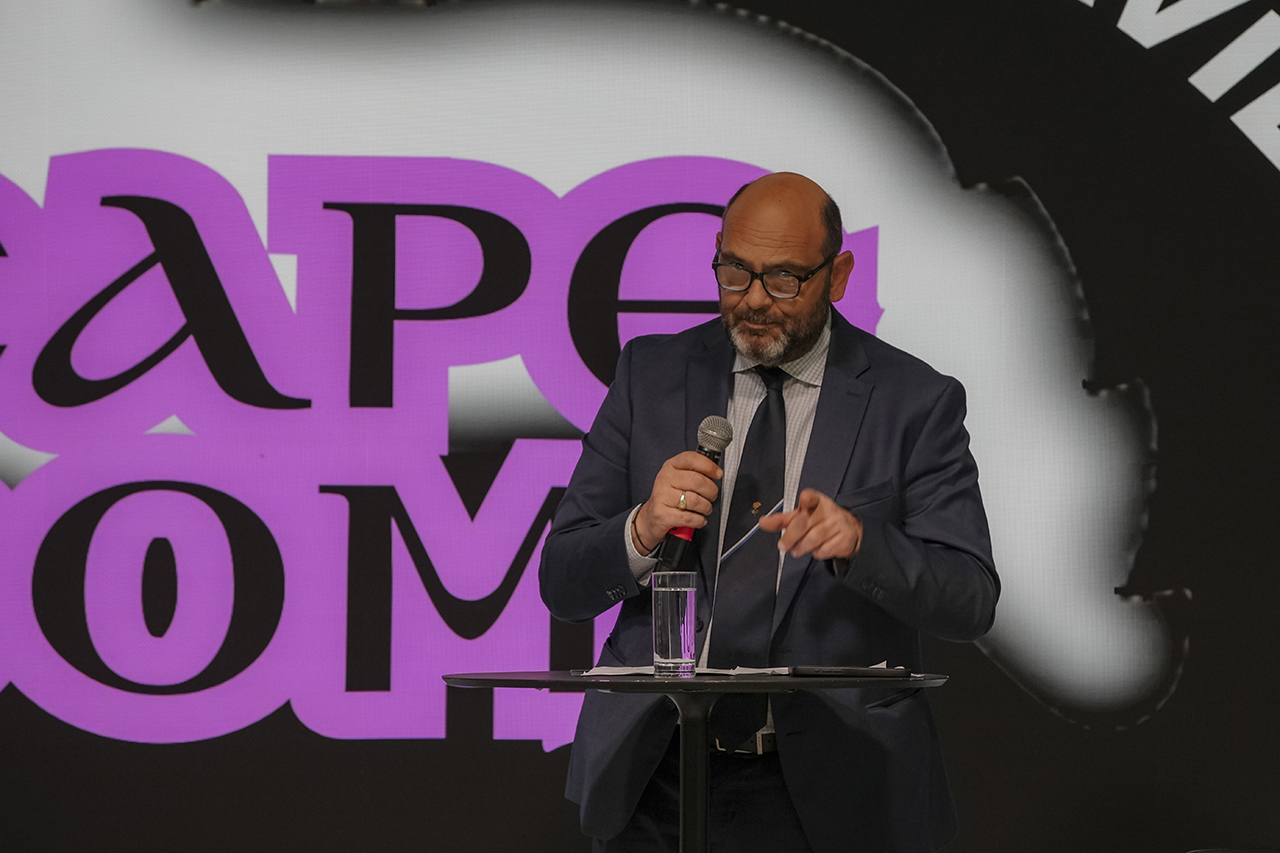
The Deputy Minister of Culture, responsible for Contemporary Culture, Iasonas Fotilas. Photo: Andreas Simopoulos
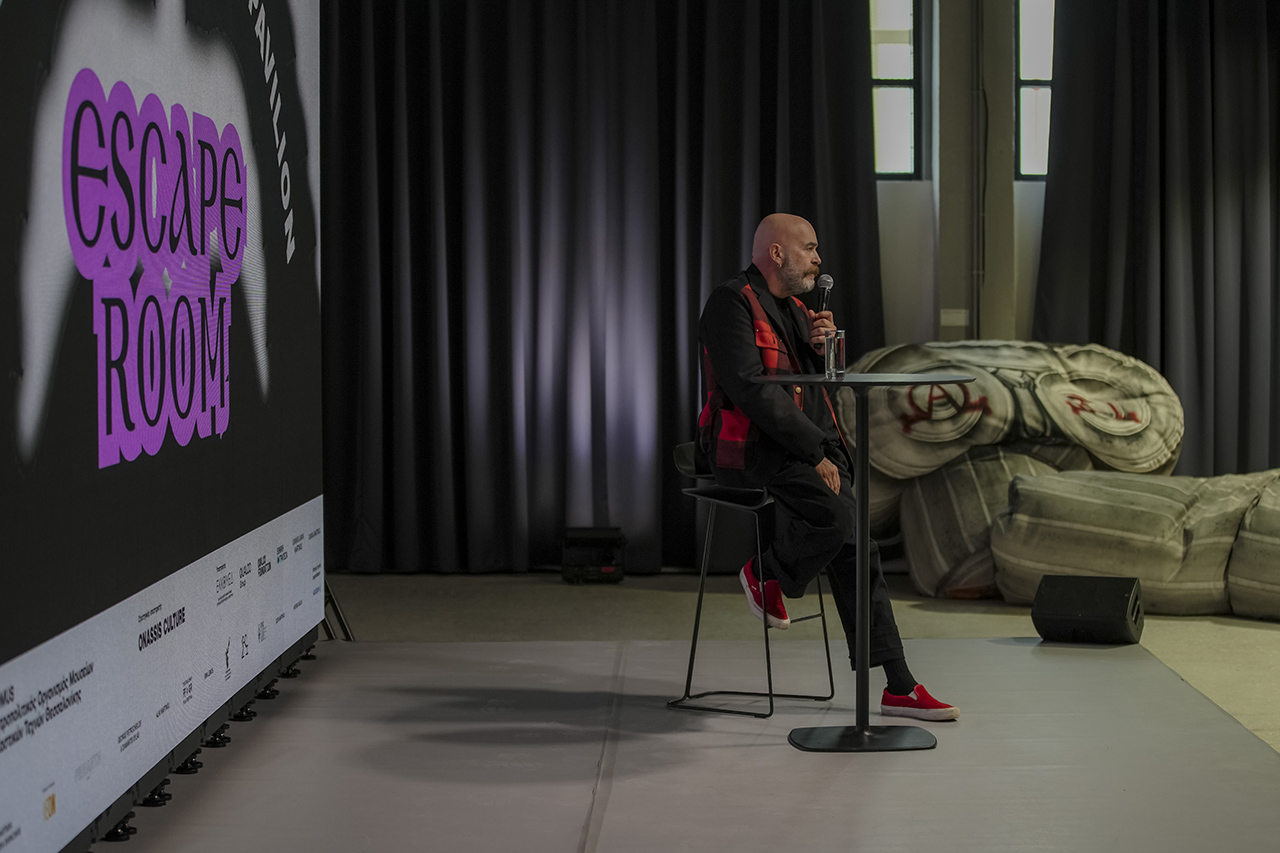
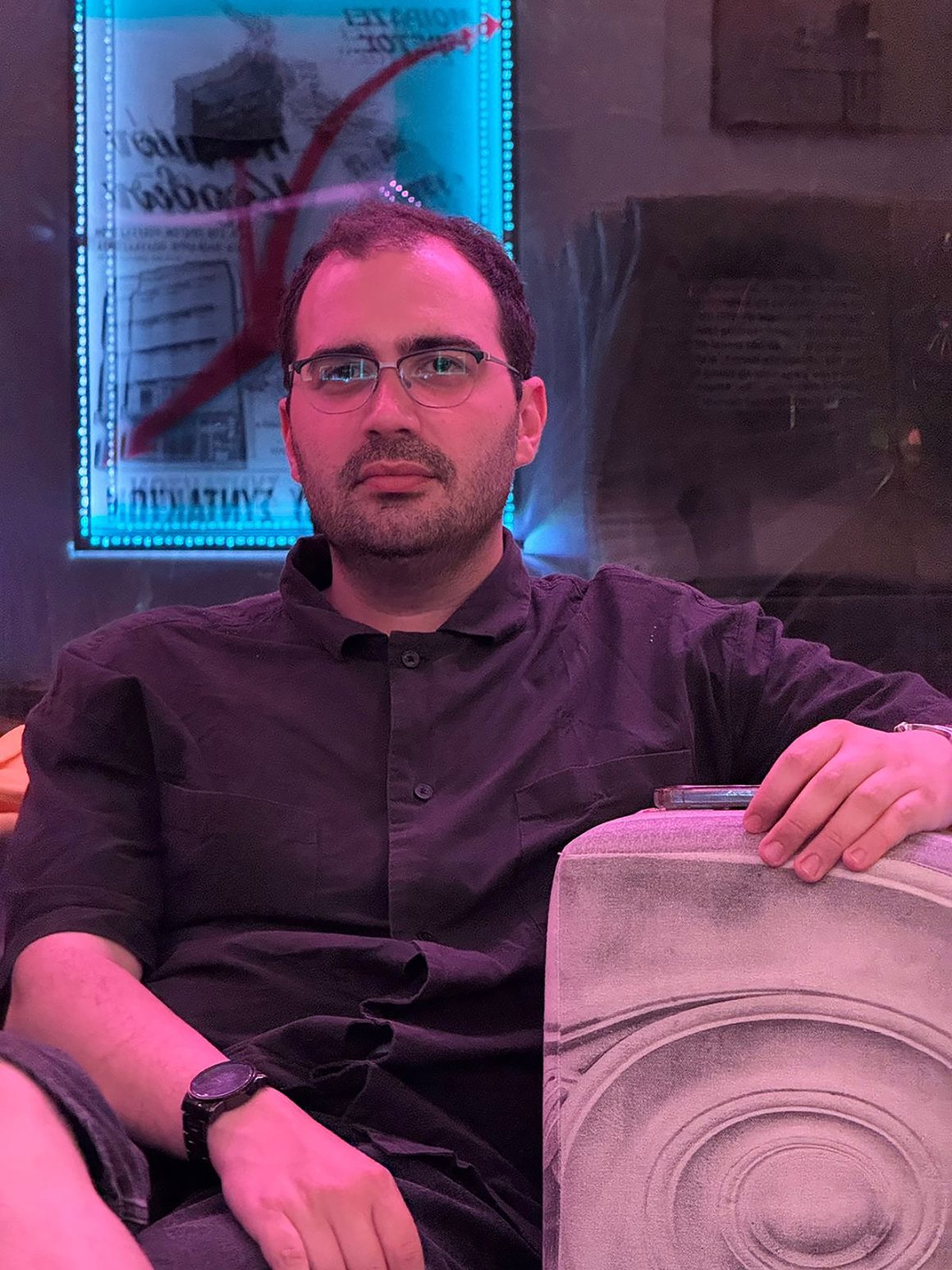
The visual artist and architect, creator of Escape Room, Andreas Angelidakis. Photo: Andreas Simopoulos

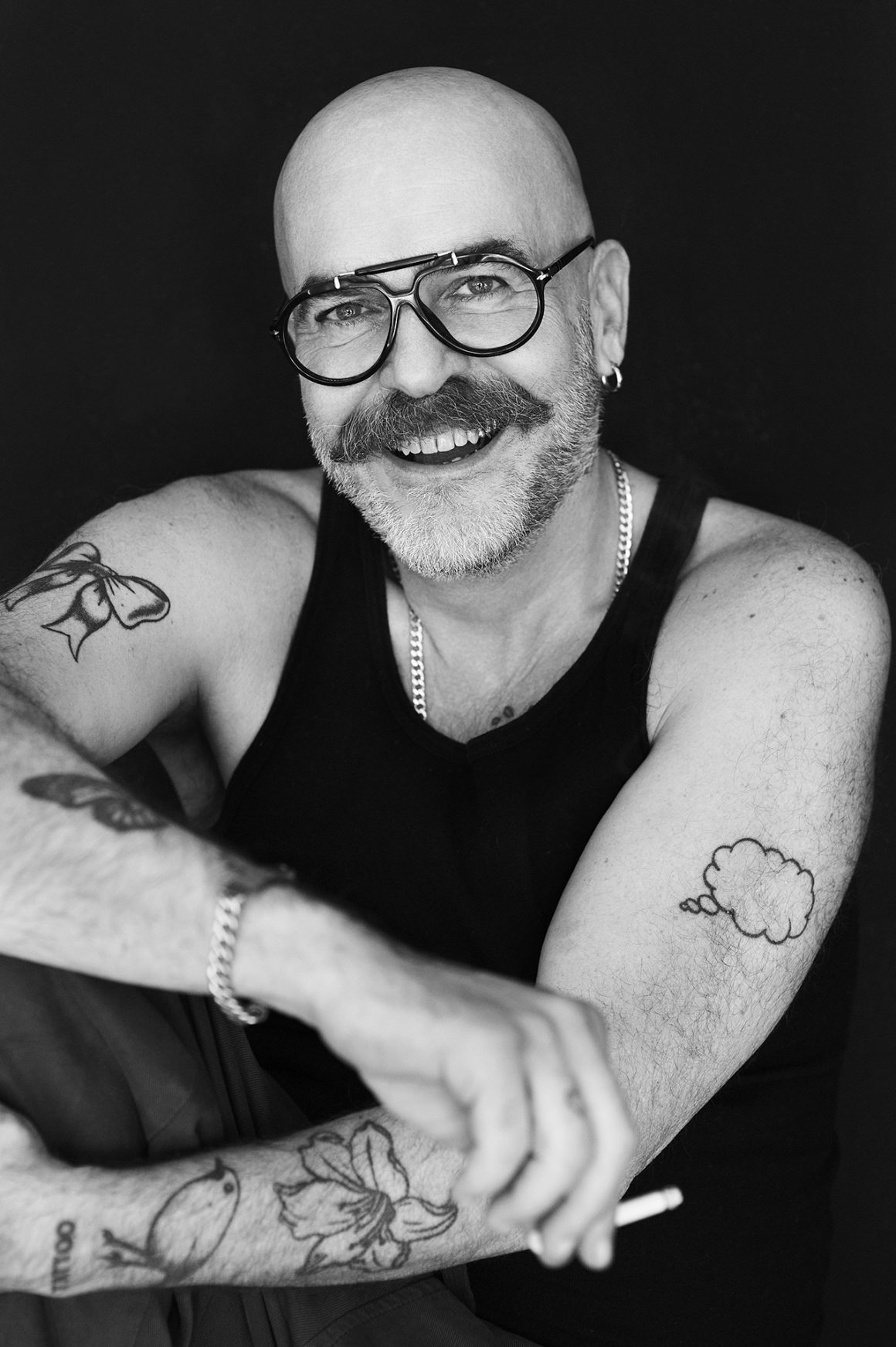
Andreas Angelidakis

Andreas Angelidakis (b. 1968, Athens) is an architect and artist of Greek and Norwegian descent based in Athens. He studied architecture at the Southern California Institute of Architecture in Los Angeles and later at Columbia University in New York. His artistic practice develops across a wide spectrum of interdisciplinary interests, spanning architecture, publishing, writing, design, and exhibition curation. His works often begin as digital simulations, exploring the ways the internet has altered perception and user behavior.

His work is characterized by the use of architectural signifiers and the creation of environments through which he renegotiates the relationship between viewer and work, highlighting the interaction of power, space, and infrastructure. Architecture in his practice functions as a vehicle for exploring identity, while the city of Athens and the concept of the ruin—whether ancient, contemporary, or digital—recur as central motifs. Both his installations and writings construct narrative environments that reconsider the boundaries between the real and the virtual, historical memory and fiction, sincerity and humor.

Angelidakis’s work has been presented at major international institutions, including the National Museum of Contemporary Art (Athens), the Onassis Foundation, documenta 14 (Athens and Kassel), the Museum of Contemporary Art Chicago, the Hayward Gallery, ETH Zurich, and the Louisiana Museum of Modern Art. His works are held in prominent collections worldwide, including the EMST, Onassis Foundation, Art Institute of Chicago, Nasjonalmuseet, as well as other public and private collections.

Giorgos Bekirakis

Giorgos Bekirakis lives and works in Athens. He studied Museology and Exhibition Design and completed postgraduate studies in Cultural and Film Studies at the National and Kapodistrian University of Athens. Since 2012, he has realized projects supported by cultural institutions such as the Hellenic Ministry of Culture, the NEON Organization for Culture and Development, the Onassis Foundation, and Eleusis European Capital of Culture 2023. In addition to his curatorial work, he regularly collaborates with artists on new visual art productions and with artistic platforms such as P.E.T. Projects, ΎΛΗ [matter] HYLE, Souzy Tros, and T.A.M.A.

His writings have been published in contexts such as Thanasis Totsikas’s solo exhibition “With Minerals and Track Threads” at Sylvia Kouvali Gallery (2025) and the catalog for the exhibition “Ephemeral Party” at Carco Parking in Athens (2025). He is the curator of the Greek participation in the 61st International Art Exhibition – La Biennale di Venezia, with artist Andreas Angelidakis.

Recent curatorial projects include “Institute of Post-Epicurean Garden” (Drosia, Attica, 2020–present), “Heather stays at 505” at Perianth Hotel (2021), “Prizing Eccentric Talents I–III” at P.E.T. Projects (2021–2024), “Performative Encounters” at ΎΛΗ [matter] HYLE (2021), “Oikonomia” at The Breeder Gallery (2023), “Mystery 110 Orpheus” as part of Eleusis European Capital of Culture (2024), and “ROOM505: LORE” at Perianth Hotel (2025). His curatorial work has been featured internationally in publications such as Artforum, Art in America, ArtReview, NERO Editions, and Artsy.

Andreas Angelidakis
Giorgos Bekirakis
Study for an Escape Room (GRECIA), Andreas Angelidakis 2026(1)

Author