First, tell us about the highlights of your career. What would you consider the key steps that have brought you to where you are today?
Luckily, I’ve always known that I wanted to design furniture.
I began my career in the 1980s while I was still studying at the École des Beaux-Arts. Those early pieces were bold, sculptural and unapologetically decorative at a time when minimalism dominated. They quickly attracted attention, and Thierry Mugler invited me to design jewellery for his collections. Collaborations with Christian Lacroix, Karl Lagerfeld and Yves Saint Laurent soon followed.
Working alongside such extraordinary fashion houses undoubtedly helped my work gain visibility, but above all it gave me the confidence to pursue my own creative path.
In 1992, I made my first exhibition of decorative objects at Liberty in London, which marked an important step towards a broader design practice. A few years later, in 1999, I opened my gallery in the Marais district of Paris, where I could present lightings, furniture and objects together in a single environment. For me, that dialogue between disciplines has always been essential.
Another decisive milestone came in 2004 with the opening of my workshops dedicated to cabinetmaking and bronze, just outside Paris. Having complete control over the making process allows me to pursue an uncompromising level of quality while continuously experimenting with materials and techniques.
How did design enter your life, and what is the story behind discovering your creative path? How did it begin, and how has it evolved over time?
I grew up just outside Paris in a town that had one extraordinary contemporary art centre where I spent countless hours as a child.
That was my real education. I learned by looking with a lot of attention and curiosity. Looking carefully, understanding, questioning. I discovered artists who profoundly shaped my visual culture—Malevich, Picasso, Mondrian, Gerrit Rietveld, Mies van der Rohe, Eileen Gray… They all taught me, in different ways, that simplicity is never simple.
I don’t think design entered my life at a particular moment. It has always been there. What has evolved over time is the way I express it—from jewellery to furniture, lighting, objects and interiors—but the same curiosity has always guided me.
In what ways do you feel your aesthetic has evolved?
When I first started designing jewellery, my work was often described as baroque and almost tribal. It stood apart from the understated aesthetics of the 1980s, embracing bold forms and generous volumes.
My aesthetic continues to evolve. Today, I find myself increasingly drawn to the purity of Gerrit Rietveld’s architecture and to the extraordinary refinement of Émile-Jacques Ruhlmann. Yet beyond any stylistic reference, what fascinates me most is timelessness.
What never changes is my obsession with craftsmanship. The harmony of proportions, the elegance of a line and the quality of execution matter far more than trends.
Jewellery taught me an invaluable lesson. Because everything happens on such a small scale, every detail counts. It became a laboratory for form, precision and balance. I still approach furniture in much the same way: I seek an immediate visual impact, but one that gradually reveals layers of complexity as you spend time with the piece.
I like objects that appear obvious at first glance, yet continue to surprise through their construction, their finishes and their subtle details.
What do you consider to be your most important achievements so far?
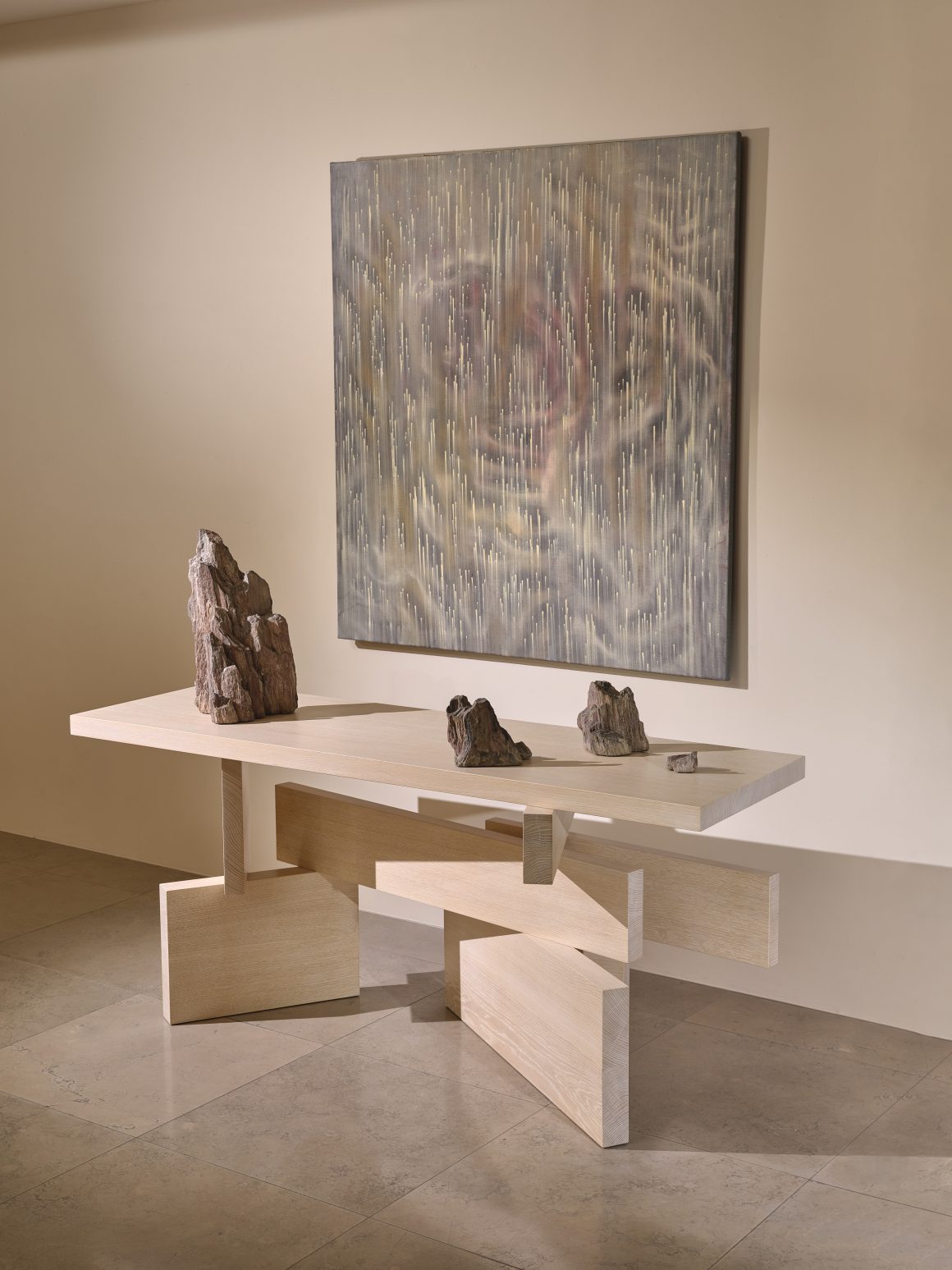
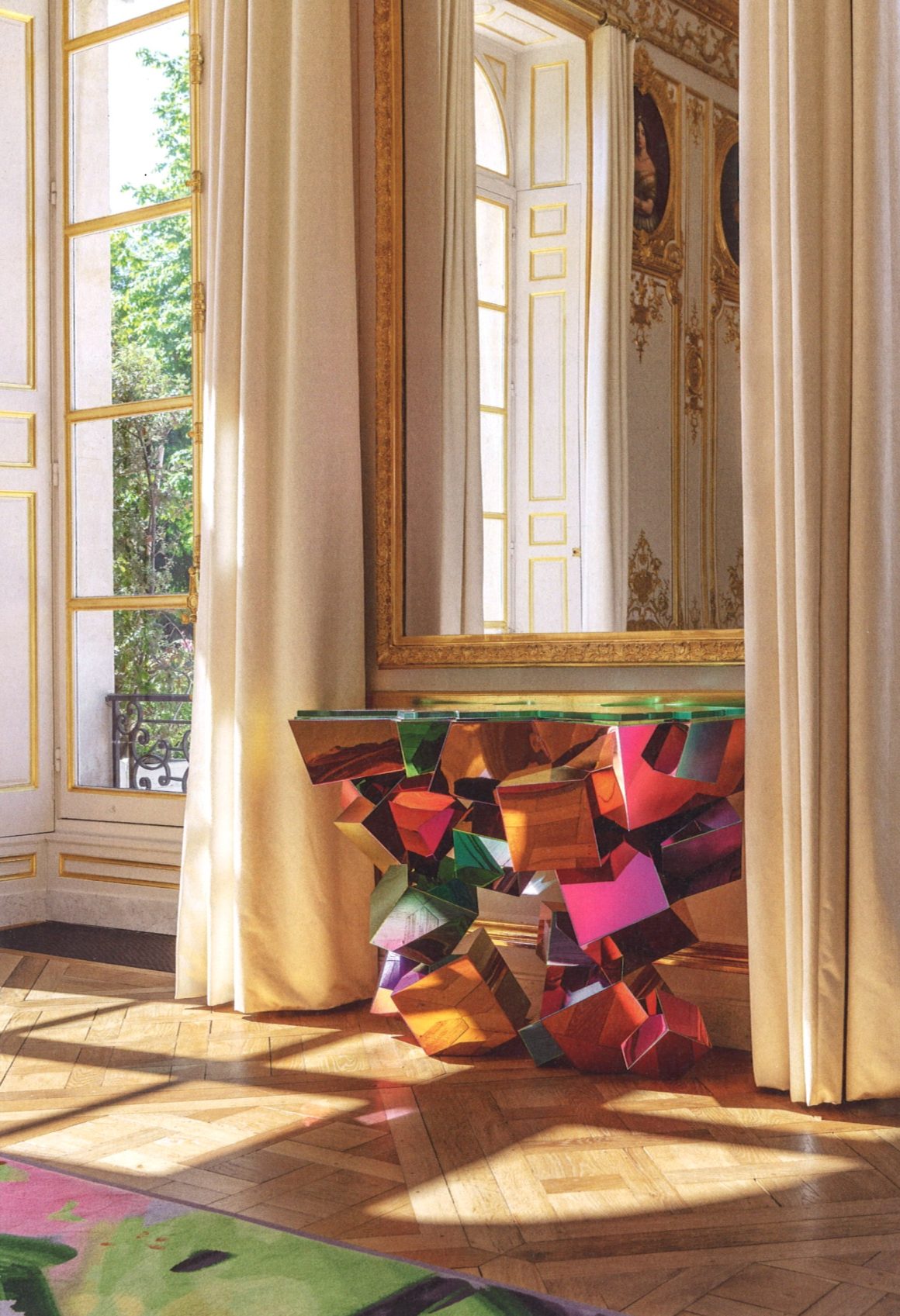
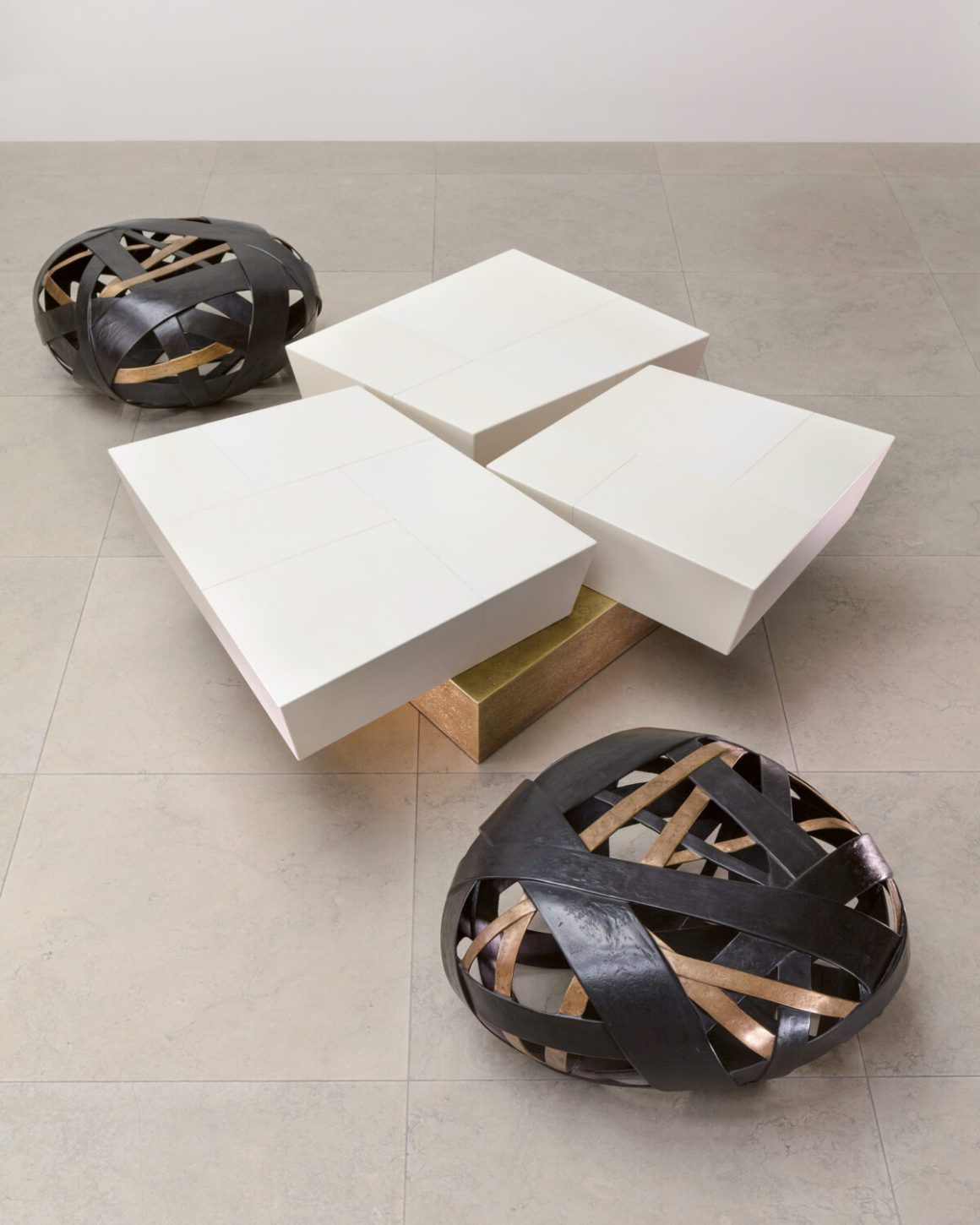
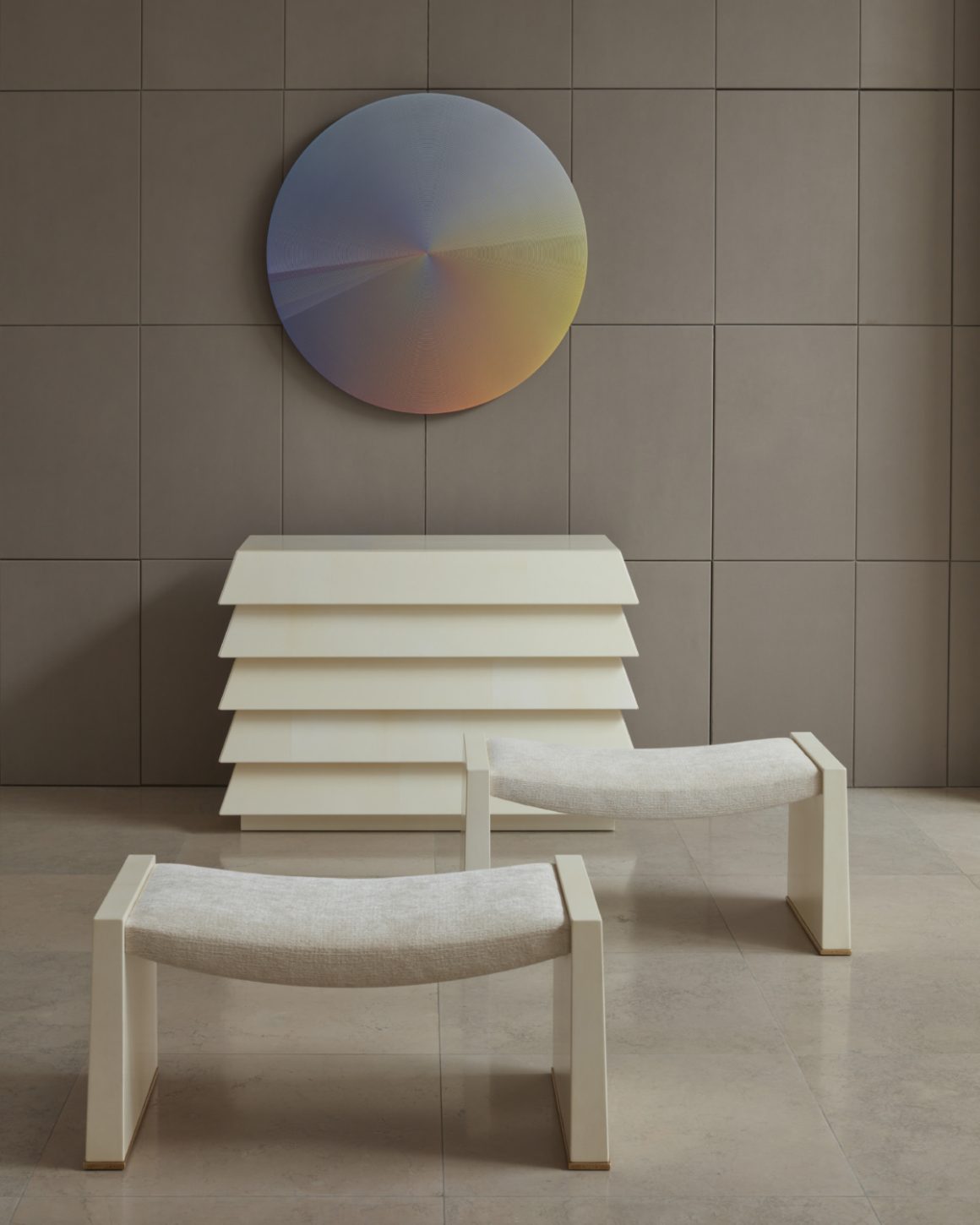
A Console Empilée, a Console Passage, a Console Anneaux, a Lampe Épine, the J’adore bottle for Dior…and the Élysée Palace.
Different stories, but the same curiosity for form, material and detail.
What are the core design principles that guide your work and that you consider non-negotiable?
Every piece begins with an idea, but it only becomes meaningful through its execution. The harmony of proportions, the precision of every joint, the elegance of a curve, the way light travels across a surface—these details are what ultimately define an object.
I often say that sophistication should appear natural and effortless.
I also believe deeply in slowness. Designing takes time. Making takes even longer. Having my own cabinetmaking and bronze workshops allows me to preserve that rhythm and to maintain complete control over every stage of production. In today’s world, I see this as a necessity, and a luxury.
What are the defining characteristics of contemporary design, and how do you think the international audience is being educated? What kind of feedback do you receive from your own audience?
We are living through an incredibly stimulating moment for design.
Contemporary design is remarkably diverse. Galleries, fairs, collectors and collaborations with architecture, fashion and contemporary art constantly enrich the conversation.
Personally, I have always chosen a different path. From the very beginning, I have worked through self-edited, limited handcrafted editions. It allows me to remain independent and to preserve a close relationship between the idea and its execution.
My audience is international, but I think what resonates most is not a particular style. It is the sincerity of the work. People recognise when an object has been conceived with care.
Do you follow a consistent methodology when approaching a project, or do you prefer to experiment?
Creating is a joyful process and every project begins with a sketch in one of my notebooks.
Drawing remains the most direct connection between an idea and the hand. If the idea survives that first stage, my team develops it digitally before we begin producing prototypes in the workshops. That is where the real dialogue starts—between the drawing, the material and the craftspeople.
We experiment constantly. Sometimes a piece evolves through dozens of subtle adjustments before reaching its final form.
Having our own workshops makes this process remarkably fluid. Ideas circulate quickly between the studio and the makers, allowing us to refine proportions, finishes and details almost organically.
Your sculptural approach makes your creations feel like pieces of art meant to be used and lived with. What kind of feedback do you receive from your clients?
I like to think of my pieces as works to live with.
They are certainly sculptural, but they are also designed to be integrated into everyday life. Function and emotion should never be opposed.
My collectors often tell me that the pieces reveal themselves gradually. They don’t give everything away at first glance. There is 2 steps discovery. Living with them allows new details, textures and relationships to emerge over time.
That idea of discovery is something I value enormously.
Tell us about your most recent projects and your plans for what’s next.
Currently working on my next production facility, alongside a number of ongoing residential projects.
Is it particularly challenging to design for a different cultural or geographical context?
Not really, i am anyway inspired by a lot of different culture.
What is it that makes an object or a piece of furniture transcend design and become iconic?
An iconic object is one that stays with you, that stay in your mind.
You may only see it once, but years later you can still picture it perfectly. It resists time because it has a strong logic.
For an object to become truly iconic, it has to touch something collective while remaining deeply personal. It must create an emotional connection.
Some of my own designs, such as the Ring Consoles, the Stacked Consoles or the J’adore bottle for Dior, have become recognizable over the years. I don’t think that happens by design. It simply happens when a piece continues to feel relevant long after it was created.
How differently do you approach designs for a private residence, and what type of projects do you most enjoy designing?
My pieces can coexist with many different styles and periods, so I don’t have a specific approach.
What materials are you most drawn to, and what philosophy underpins the design pieces you create?
I have never been interested in a single material. What fascinates me is the dialogue between them.
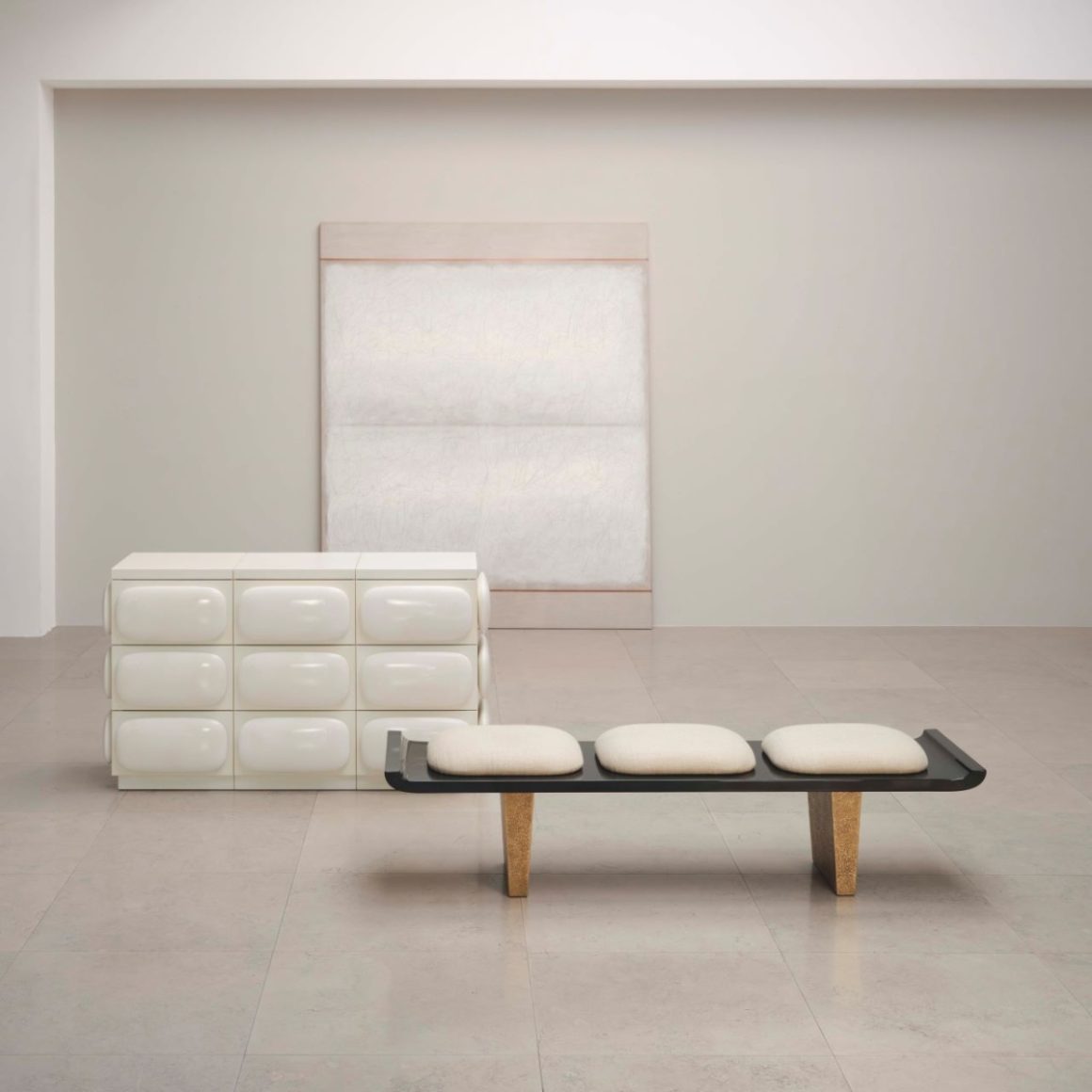
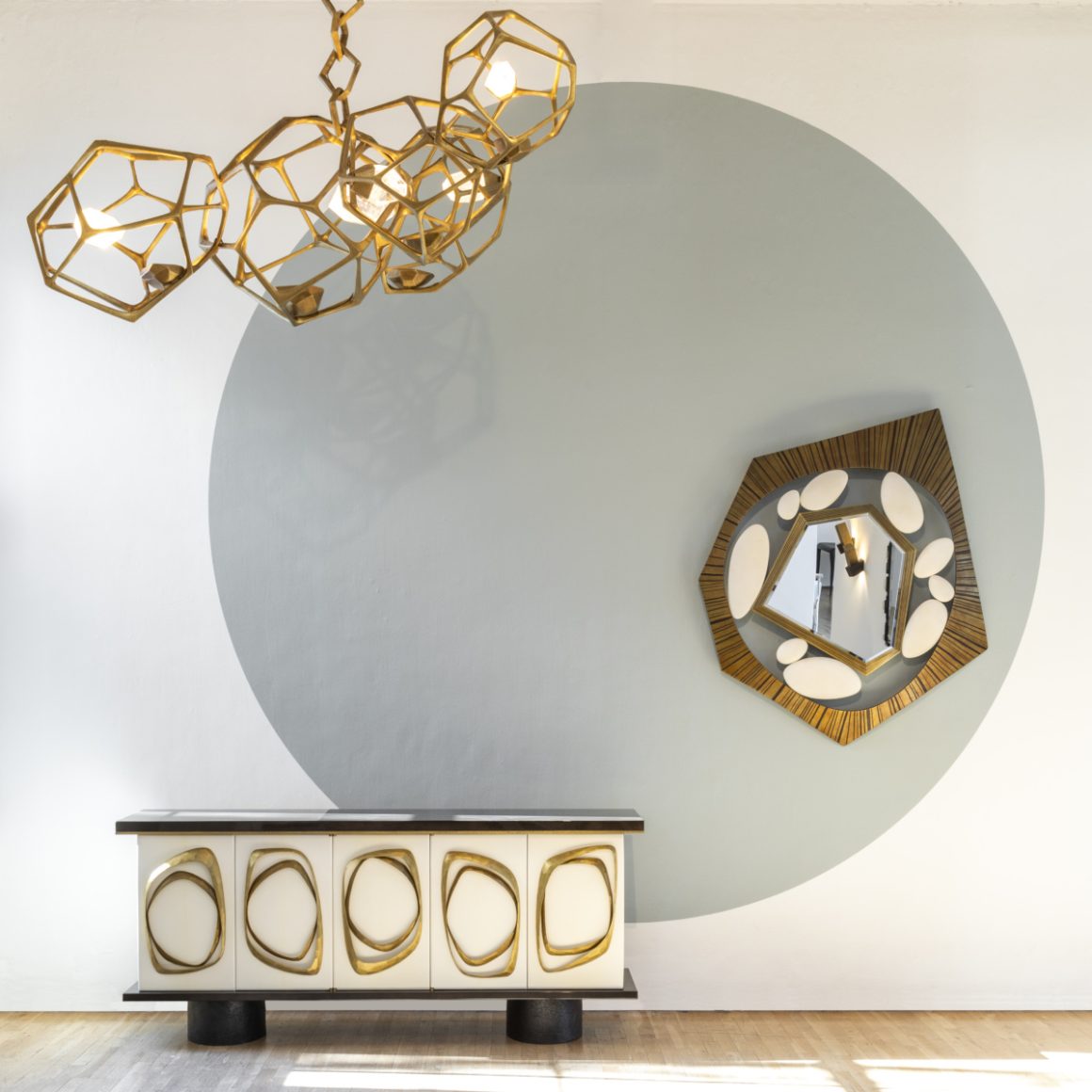
Textured bronze, deep lacquer, parchment, wood… each possesses its own character, its own way of reflecting light, ageing and responding to touch. Sometimes I deliberately combine materials that seem almost contradictory. Their contrasts create tension, and that tension gives an object its presence.
This is one of the reasons my workshops are so important. They are not simply places of production; they are laboratories of experimentation, where every material is constantly questioned, refined and rediscovered.
What is the first thing you observe when entering a space?
The proportions.
I instinctively look at how the volumes relate to one another, how the light moves through the space and how the architecture has been composed. Then I notice the materials, the furniture and the objects.
But ultimately, the most important element is always the people.
An interior only becomes meaningful when it reflects those who inhabit it. Design should never overshadow life; it should accompany it.
Do you believe a space should evolve and change over time, or do you prefer it to remain the same?
Some interiors possess such extraordinary balance that changing even a single element would diminish them.
Others are designed to evolve continuously, adapting to the lives of those who inhabit them.
Neither approach is better than the other. It is simply a question of lifestyle. The more precisely an interior has been conceived, the less flexible it naturally becomes. What matters is that the space remains true to the people who live there.
What advice would you give to someone designing their own space?
Look and learn.
Do you believe that creativity make us better people?
It depends on what we mean by creativity.
I don’t know whether it makes us better, but I am certain it makes life richer.
Think about music. A few notes are enough to transport us somewhere else. Design, art, architecture—they all have that same ability to change the way we feel, sometimes without us even realising it.
That, to me, is already something extraordinary.
Describe a dream project, or something you would love to design in the future.
I would love to design a buliding.
Do you have any connection with Greece?
Don’t we all?
Whether through philosophy, architecture, mythology or the very idea of beauty, Greece has shaped our collective imagination. In one way or another, we all carry a part of that heritage.
Your definition of beauty
Beauty is whatever creates emotion.
It can be found everywhere, provided we know how to look.
A Japanese garden, an eighteenth-century desk, a contemporary building or the grain of a piece of wood—beauty is not a style. It is a way of seeing, a sensibility of the eye.
What is authentic for you?
Authenticity begins with intention to remain faithful to your own vision.
It also lies in the collective commitment behind every piece we create. The people in my workshops share the same ambition: to make beautiful objects with honesty, precision and care.
That, to me, is authenticity.
About