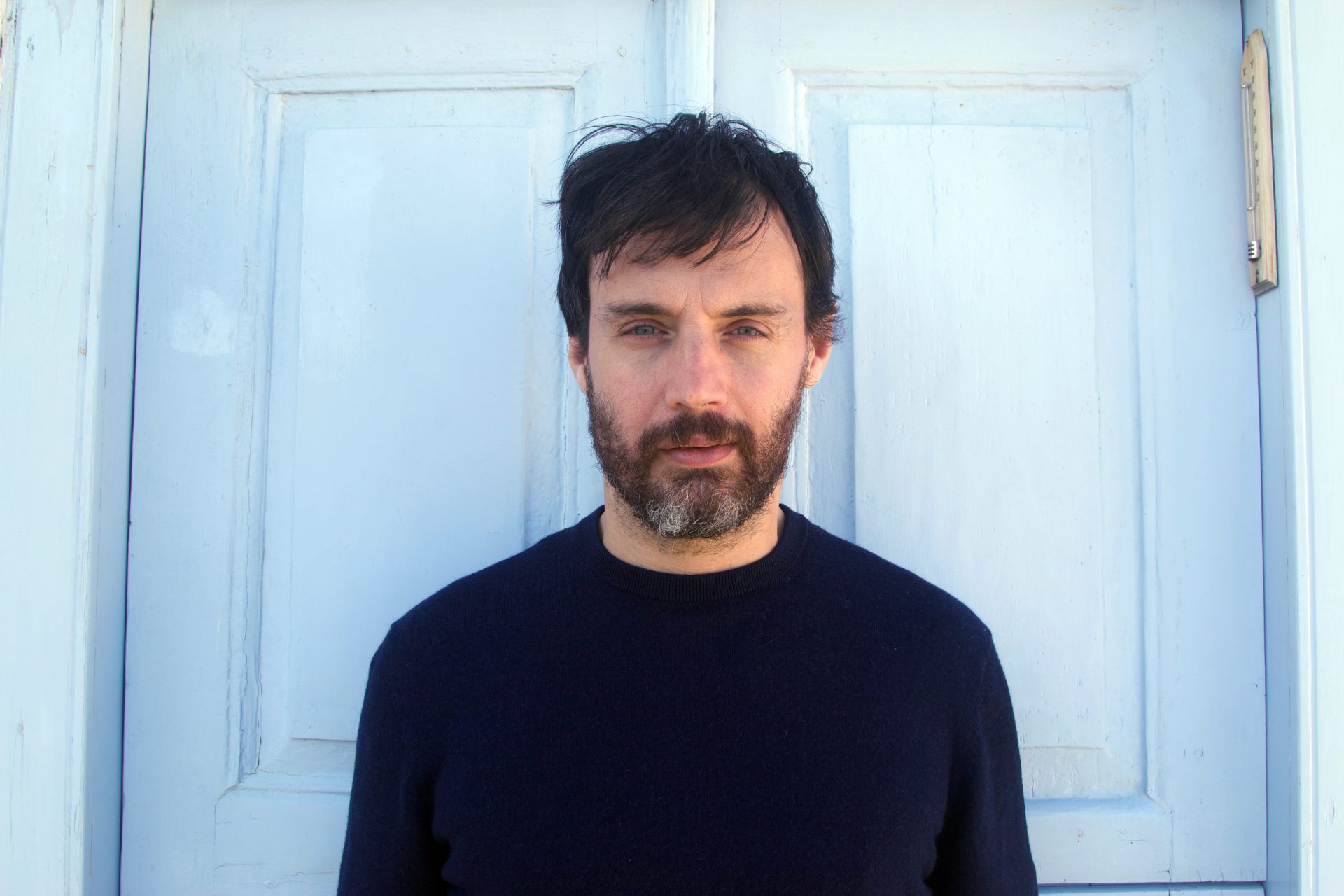
You have a unique gift for transporting us through your work into dreamlike worlds, setting us on a journey that feels as though it never ends, as you constantly invent new territories to explore. Tell us about your creative journey: how did these artistic voyages begin, and how did art become such an important axis in your life?
It began in the cabin of a ship, beneath the narrow light of a wall lamp, on my way back to Athens from Lesvos, where I had just eagerly completed my military service. Amid the ship’s deep hum, inside that profoundly dramatic room, as I was reclaiming the thread of self-determination, a pen-and-ink drawing spilled onto a sheet of paper. With its line, it tied together the knots in which my artistic steps would begin to unravel.
What are the highlights of your journey? Which do you consider the important steps that brought you to where you are today?
The suffocation of the Panhellenic examinations, which led me to the School of Fine Arts. The company of my first teacher, the painter and master of cinema billboard painting, Giorgos Kouzounis. The overwhelming revelation of the energetic dimension of existence, following meditation during my first stay at Osho’s ashram in India in 1998. The moment I experienced the sounds of psychedelic trance music with synaesthesia, at parties in the Costa Rican jungle. My decision to return to Greece to complete my studies, using art to reconcile my inner division between the duality of nature/paradise and city/hell. Manuel Schoch, who showed me what it means to be human and spirit at the same time. And my first solo exhibition, when I realised that I could put on the artist’s suit and take part in the social calling of being someone.
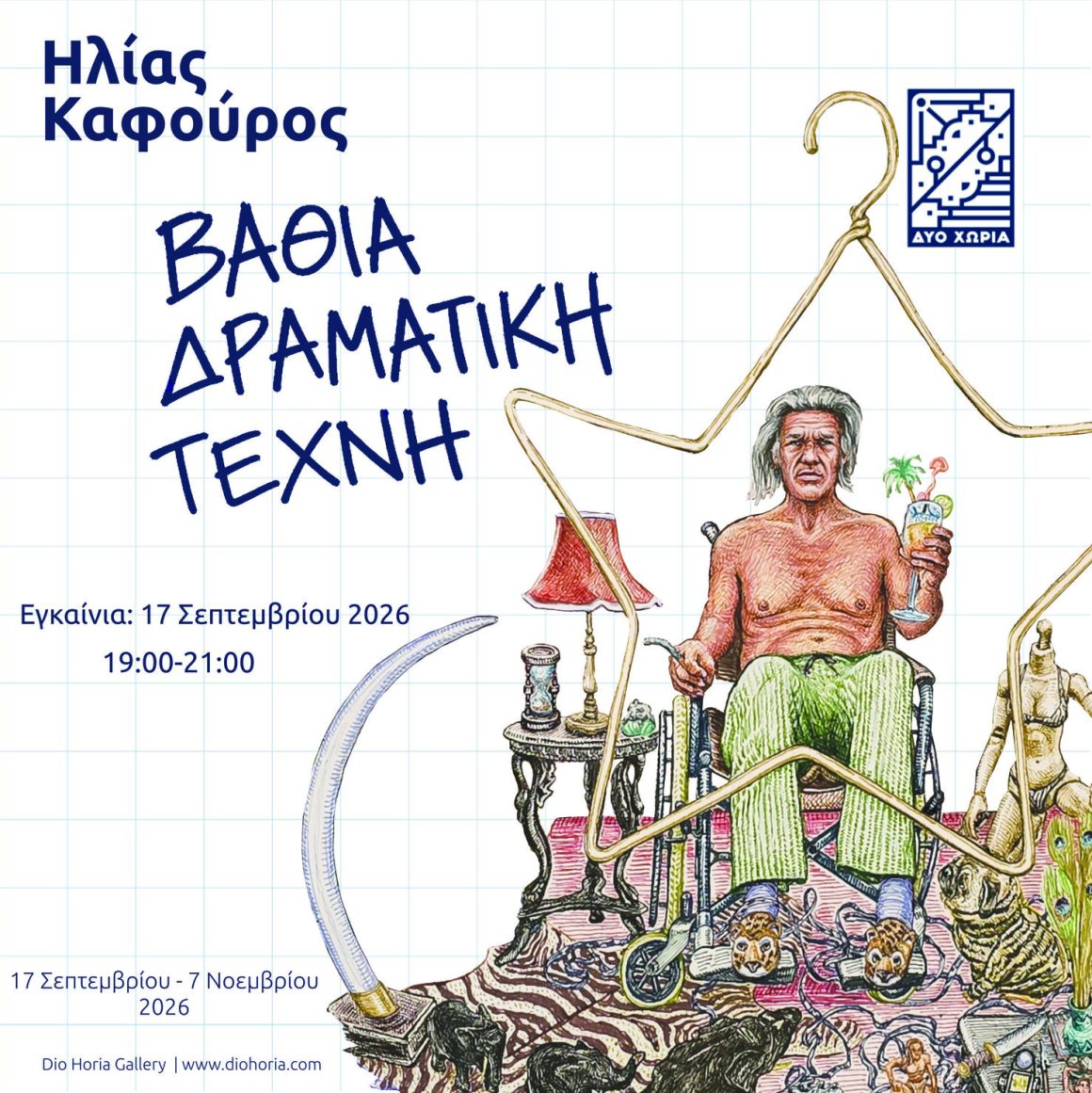
A new exhibition at Dio Horia, titled Deeply Dramatic Art. Is this an accumulation of the fruits of your artistic journey? Tell us about what we will see.
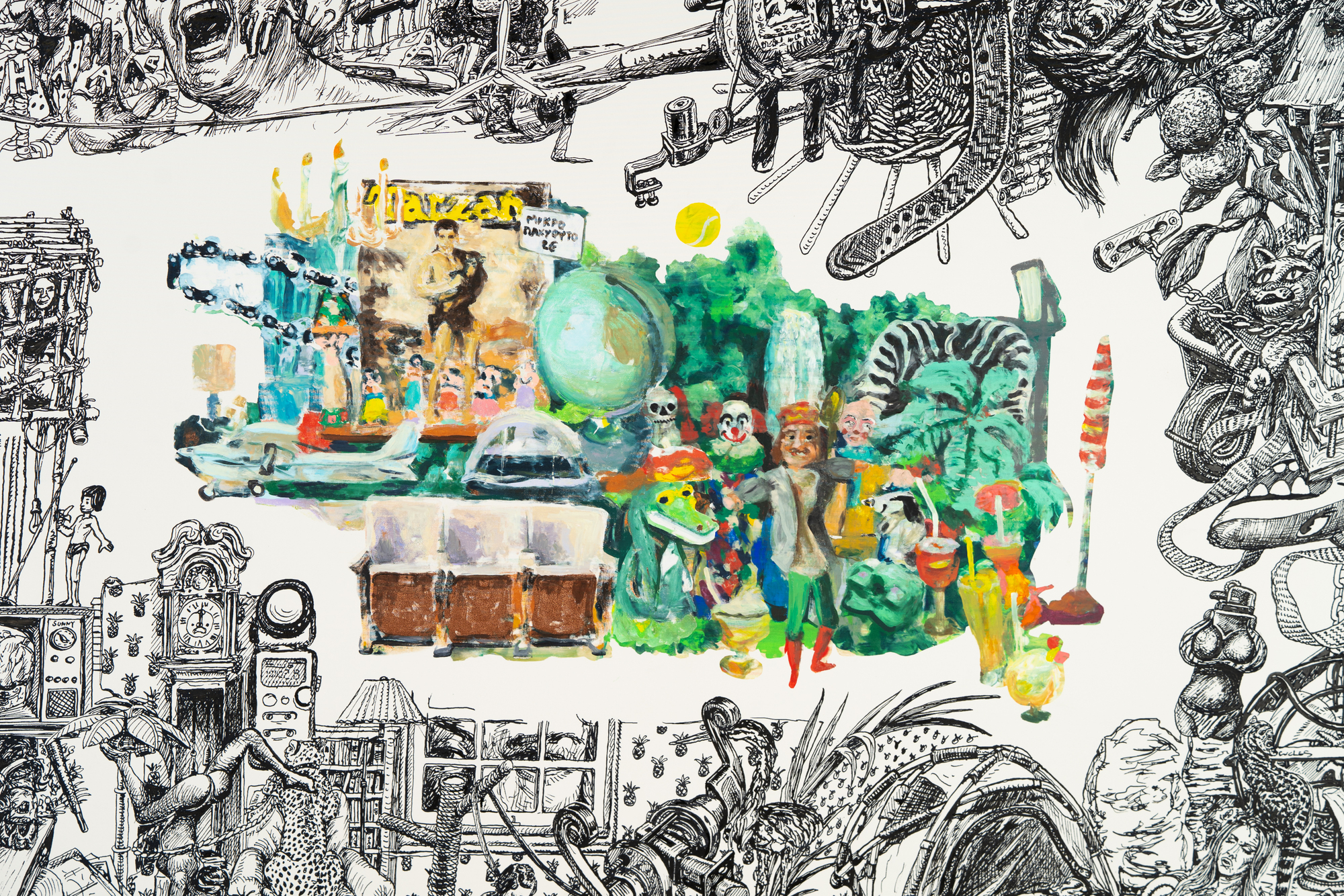
I may have mentioned this before. When I was young, I rarely drew. I was constantly making things, though. So whenever I watched a film at the cinema featuring a “hero”—Tarzan or Conan, for example—I would become so deeply immersed in his imaginary world that I then had to bring it back into my everyday life by constructing the corresponding weapons and costumes and searching for places that could approximate the film’s settings. The process of making and possessing these props was the point. I wanted to experience it, not narrate it.
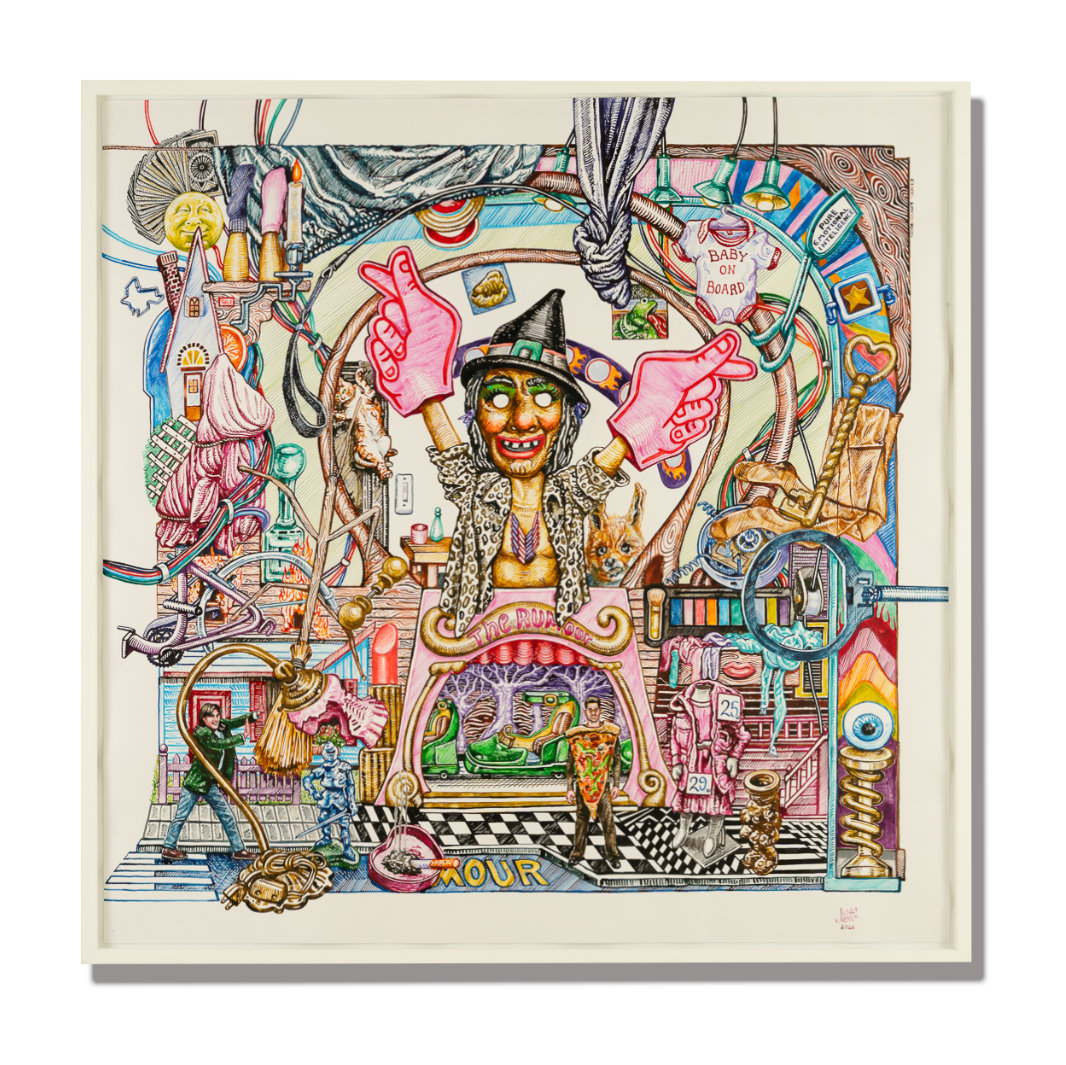
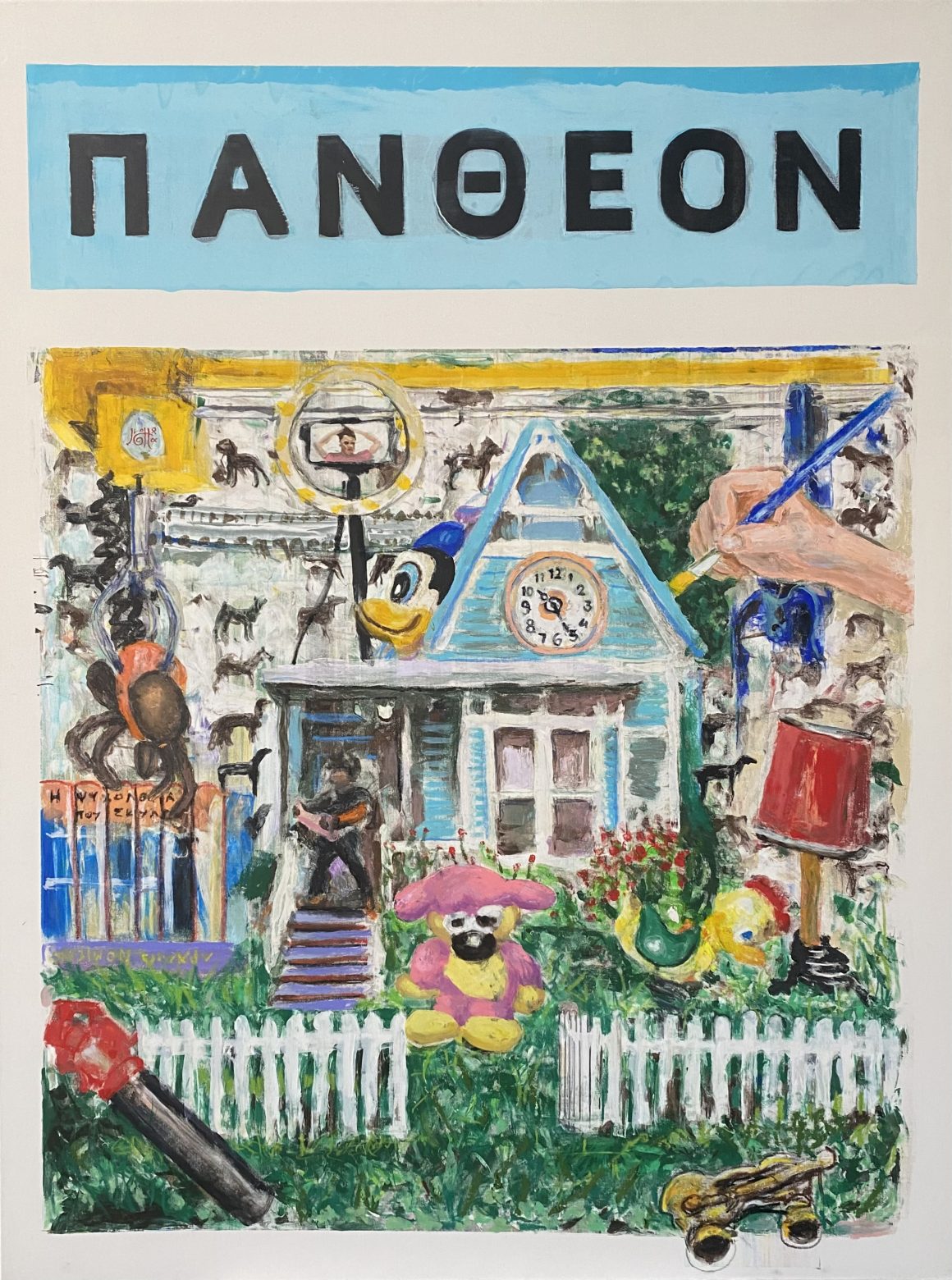
It is this imaginary embodiment, together with the notion of the pop-plastic mask and the impression of puppetry, the stage and the classical narrative of heroes—one that takes on psychological and political dimensions—that I wanted to explore in this exhibition. I use different materials and techniques that evoke the origins of storytelling passed from mouth to mouth, constantly changing and adapting to each individual storyteller.
Your art searches for the essence of things and refuses to settle for the surface. What are the new extensions of your work, and why has your art become Deeply Dramatic?
My art has always been dramatic, and this is because the narrative and composition in my works are based on the element of exaggeration.
Through exaggeration, the ecstatic dimension of the human being—which perhaps is no longer human—is mirrored and activated. Opposing elements, allegorical ones such as good and evil, coexist without ever being reconciled, constantly attempting to prevail in this conflict solely through the viewer’s perception, as the viewer, in human terms, tries to draw some kind of conclusion. In order to define essence and surface, a conclusion must first exist. It is a form of quantum entanglement. Every decision, every conclusion, constitutes a deeply dramatic process.
Your work possesses a particular combination of grace, sensitivity and rawness, nostalgia and a gaze towards the future—contradictions that fascinate and become food for thought. What touches your soul most deeply?
The fact that we are all together in this human experience, and that every attempt to isolate ourselves is destined to fail.
How do you experience evolution through your work? Is there anything you would change, or something you would ideally like to reach?
Evolution presupposes time. I don’t believe in evolution. I believe in getting creatively lost in whatever I am engaged with, and in losing track of time. There are quite a few things I would change and things I would ideally like to reach, and I find them as traces of future paths that have already been travelled or that will never be.
What do you consider your most important achievements?
For me, the most important thing is when someone who has lived with one of my works in their space for years shares, with joy and enthusiasm, the living relationship they still have with it—how that relationship continues to change dynamically.
Is art and creativity, in general, a path towards discovering what we truly desire and becoming better people?
That’s a beautiful way of putting it. I think it is a path towards discovering what we desire, if our desires are the results of the creative process. I wouldn’t say that we become better people. But creation can certainly keep people occupied who might otherwise have been worse.
Something we don’t know about you
I am annoyingly resistant to being told what to do.
A dream project
To have the works from one of my exhibitions displayed on billboards throughout Athens.
Three places you love returning to, and why
Wherever my wife and children are, 30 centimetres in front of my heart, and wherever I imagine works. The reason is the same in all three.
Give us your own definition of beauty.
Beauty is when our boundaries bend and we become one with whatever touches us.
What do you consider authentic today?
The unknown. Whatever is known has already been adapted.
Elias Kafouros
Deeply Dramatic Art
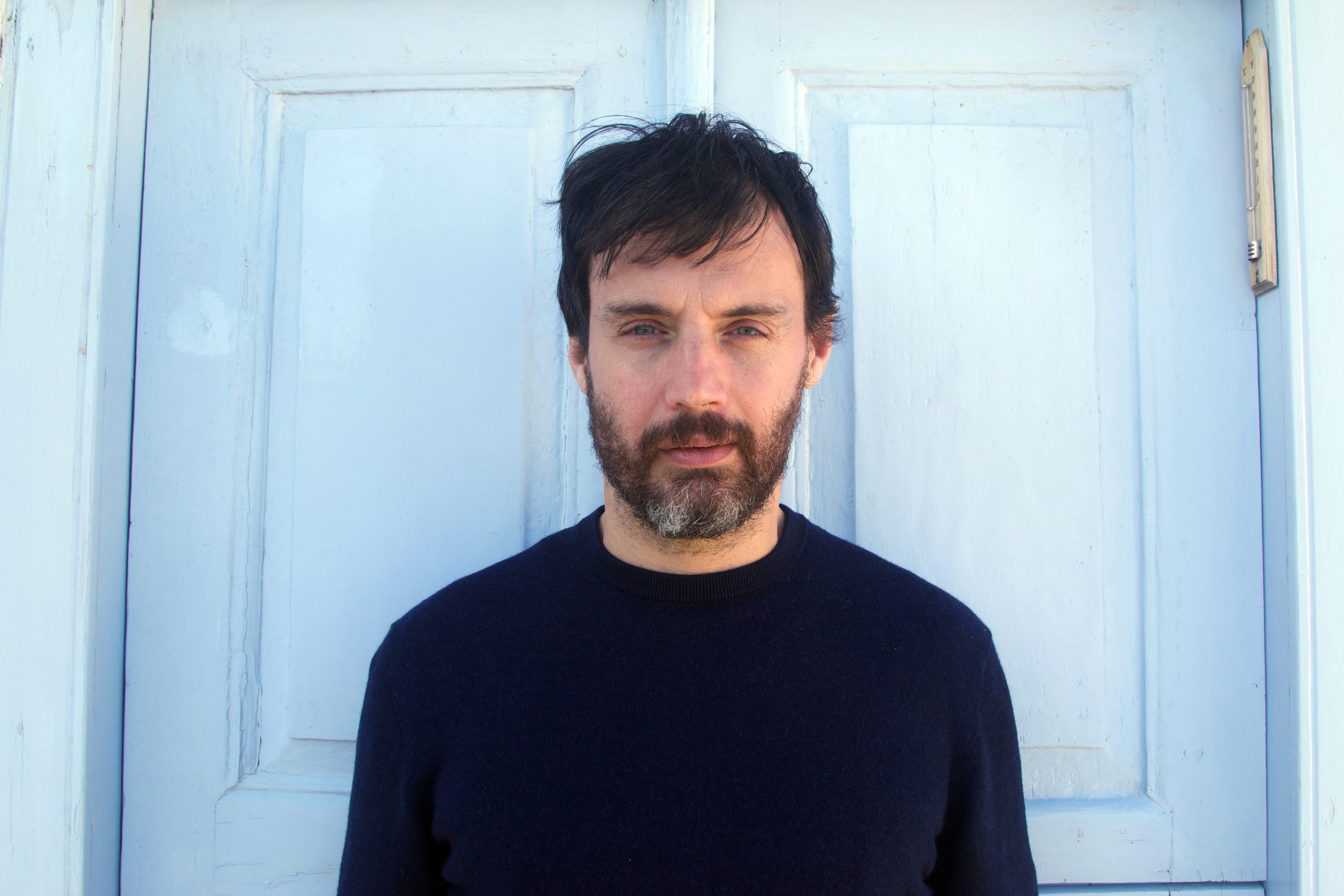
Elias Kafouros is a distinctive storyteller. For more than two decades, he has created dense, meticulously detailed worlds in which painting and drawing meet cinema, comics, animation, popular culture, and the ceaseless flow of images in contemporary life. Beneath the visual excess of his work lies a profoundly human anxiety: our need to transform chaos into narrative and, through it, to construct a version of the world we can bear.
Kafouros (b. 1978, Athens) studied painting at the Athens School of Fine Arts and animation at the School of Visual Arts in New York. Over the course of a practice spanning two decades, he has developed an instantly recognisable visual language. In 2013, he received a Fulbright Scholarship, while his long-standing collaboration with Hermès has carried his distinctive graphic universe beyond the boundaries of contemporary art.
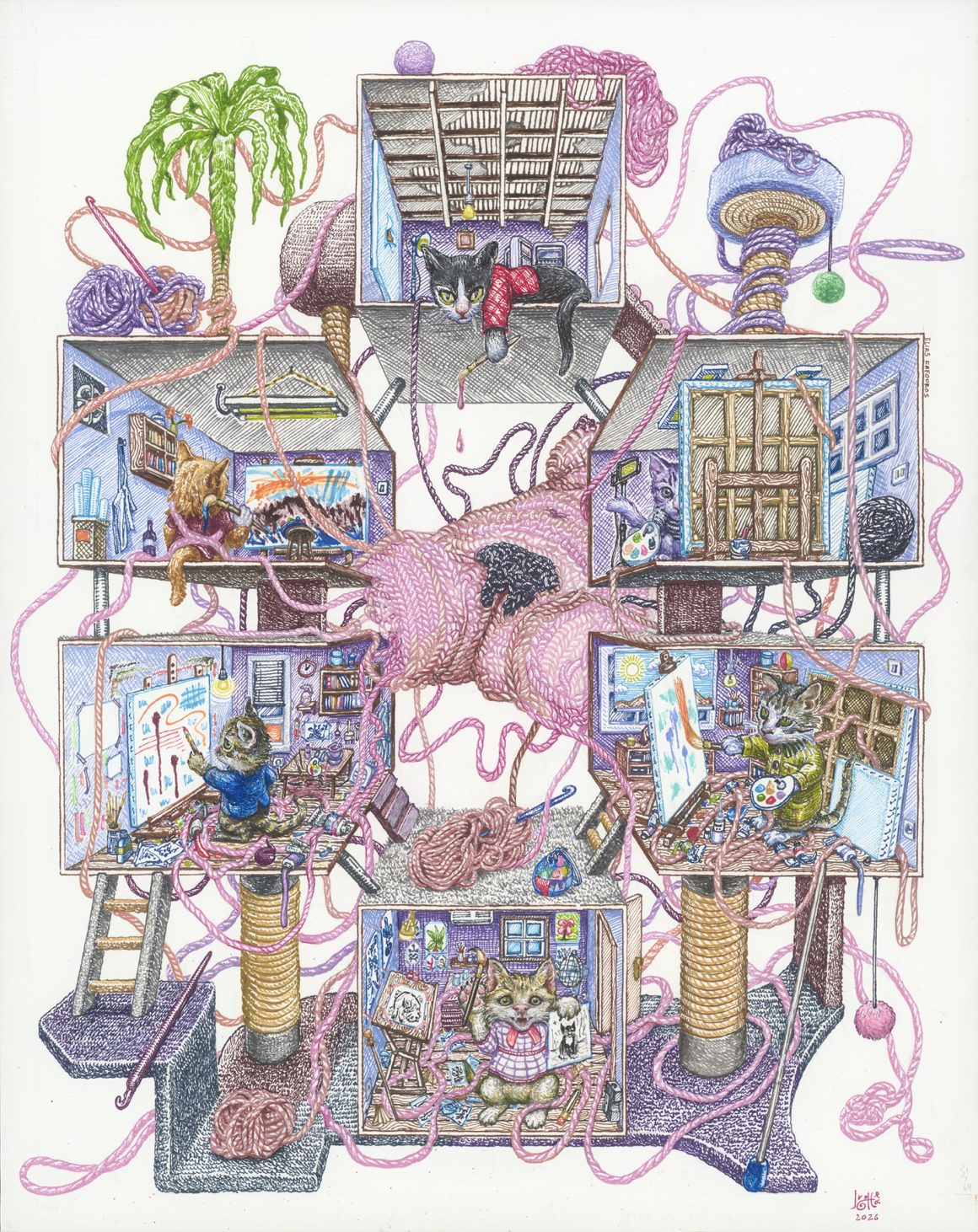
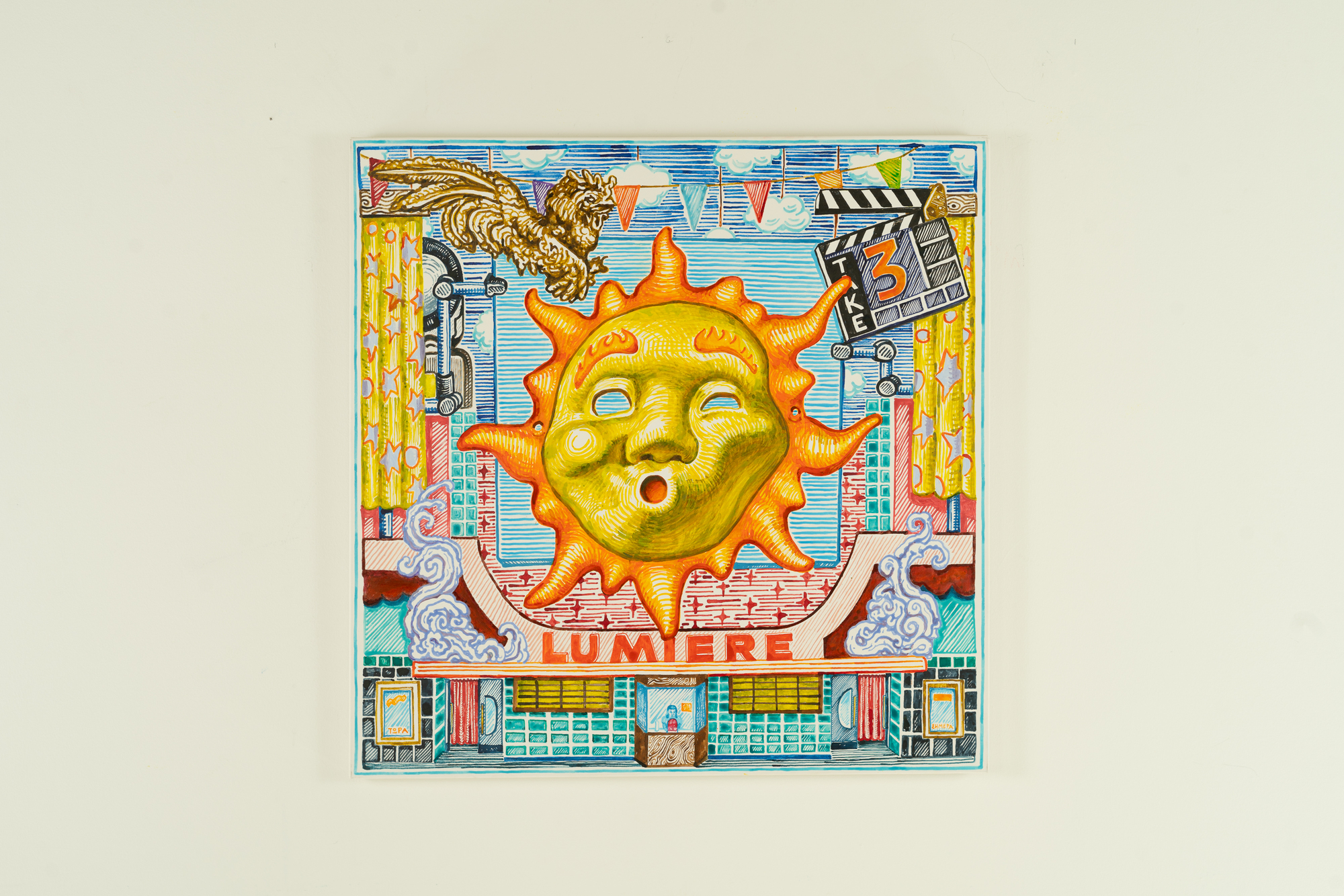
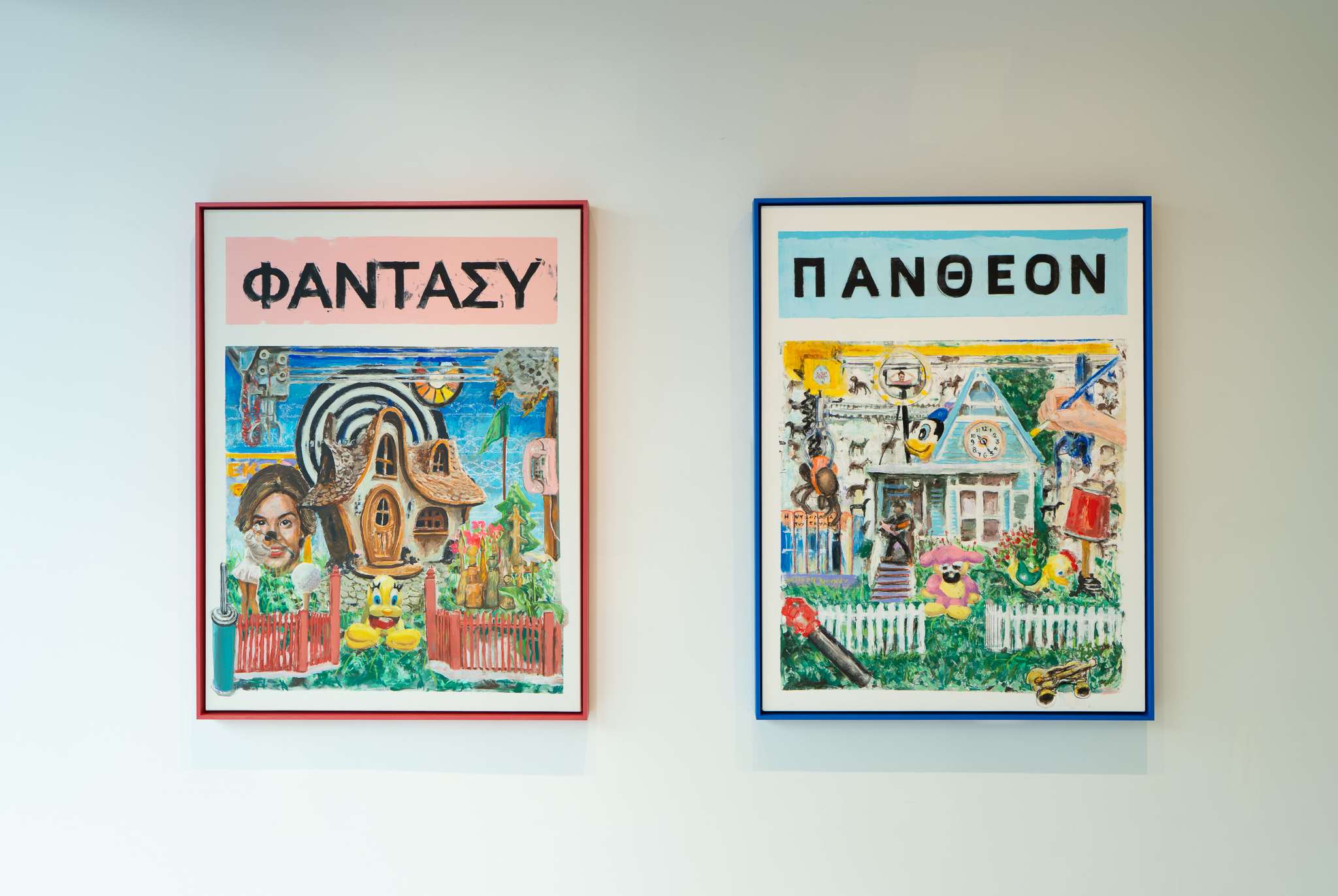
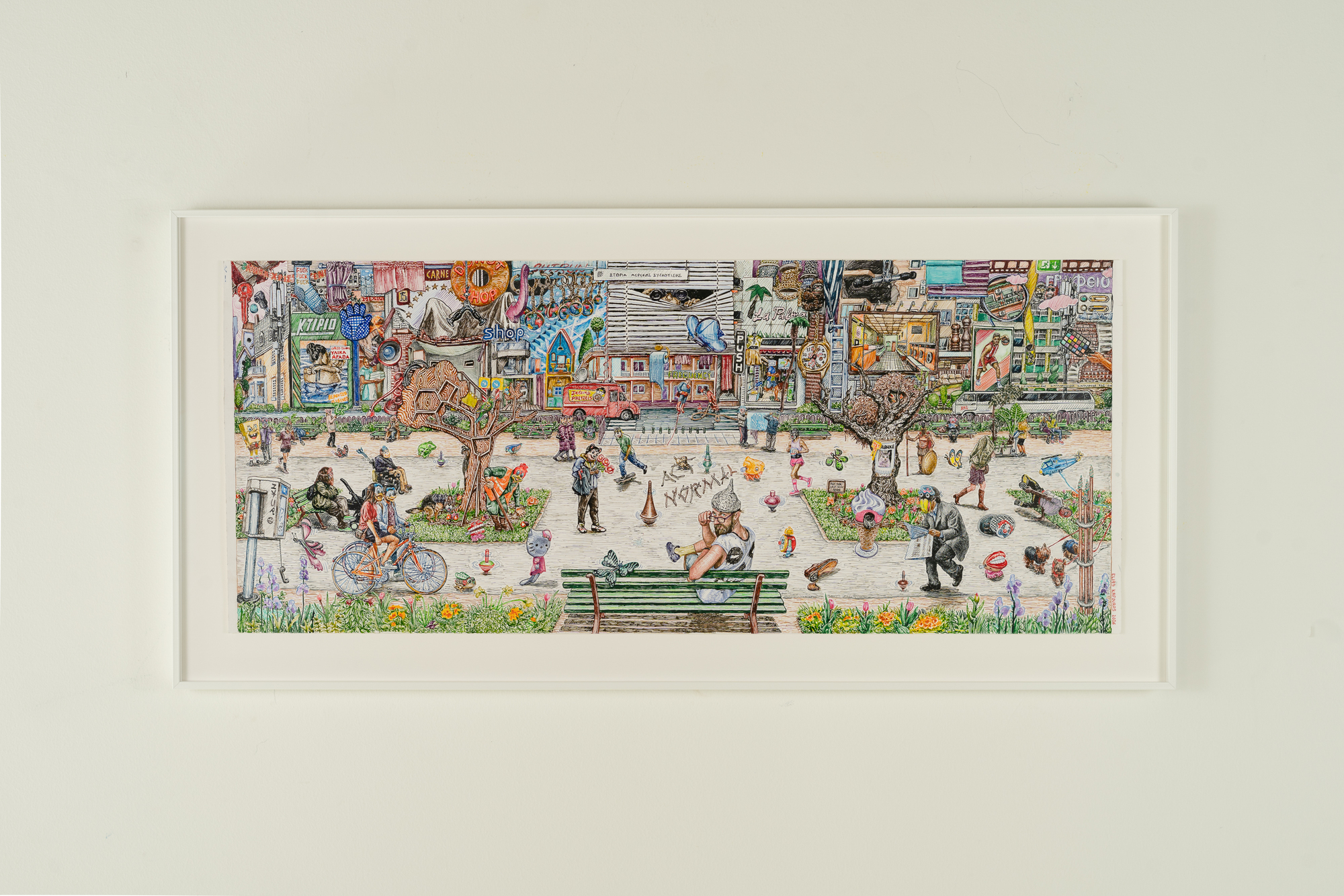
In Deeply Dramatic Art, Kafouros returns to the images he grew up with: comics and animation, heroic characters from cinema, and a visual universe thatshaped, from an early age, his understanding of the relationship between fantasy and reality and the ways in which they function. These are images that never fully managed to conceal their construction — you could see the set, the mask, the special effect — yet this did not make them any less realistic, not in terms of the stories they told, but in relation to the viewer’s own world. On the contrary, the illusion that transforms a film into lived experience required the active participation of the viewer’s imagination.
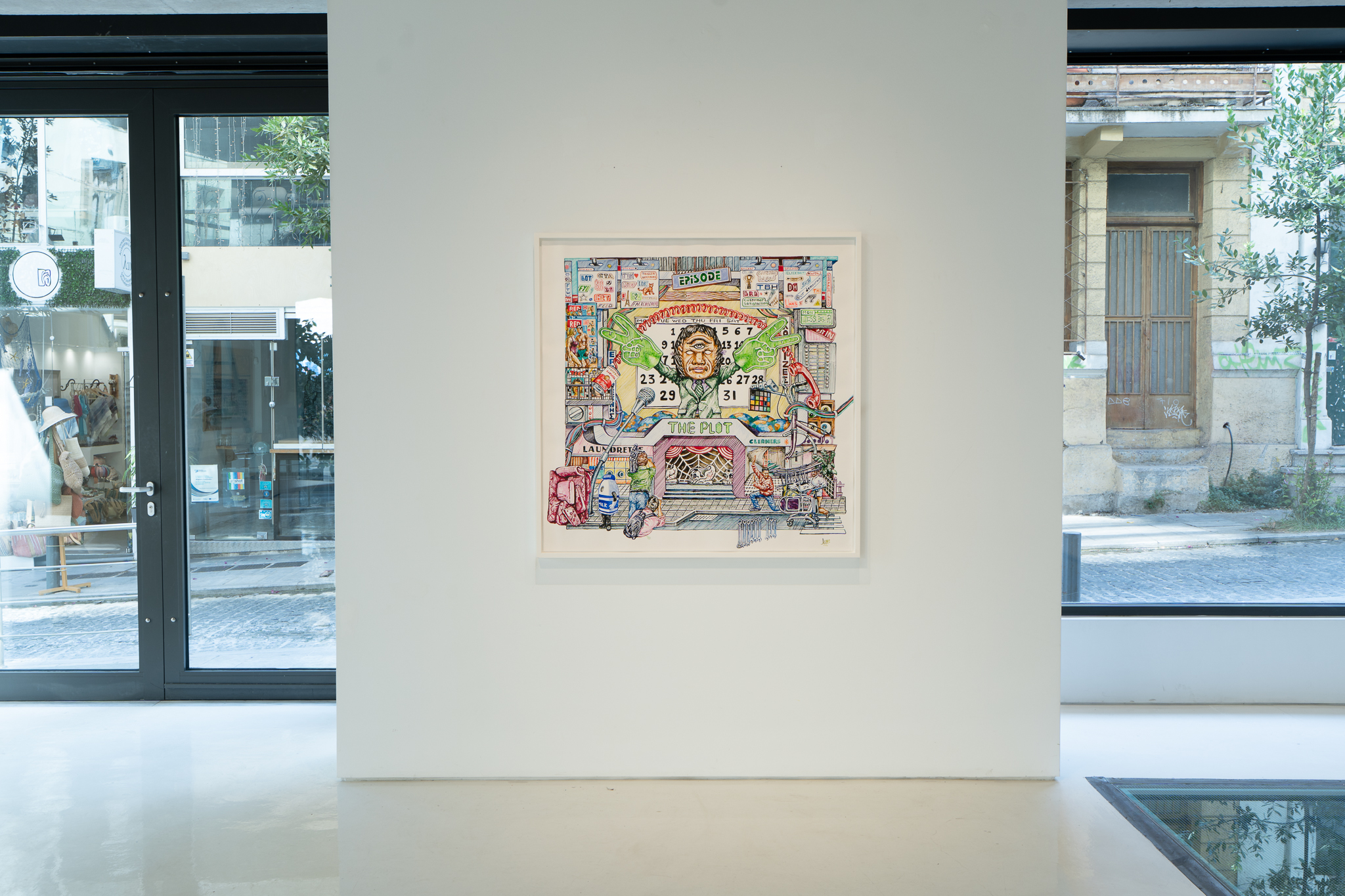
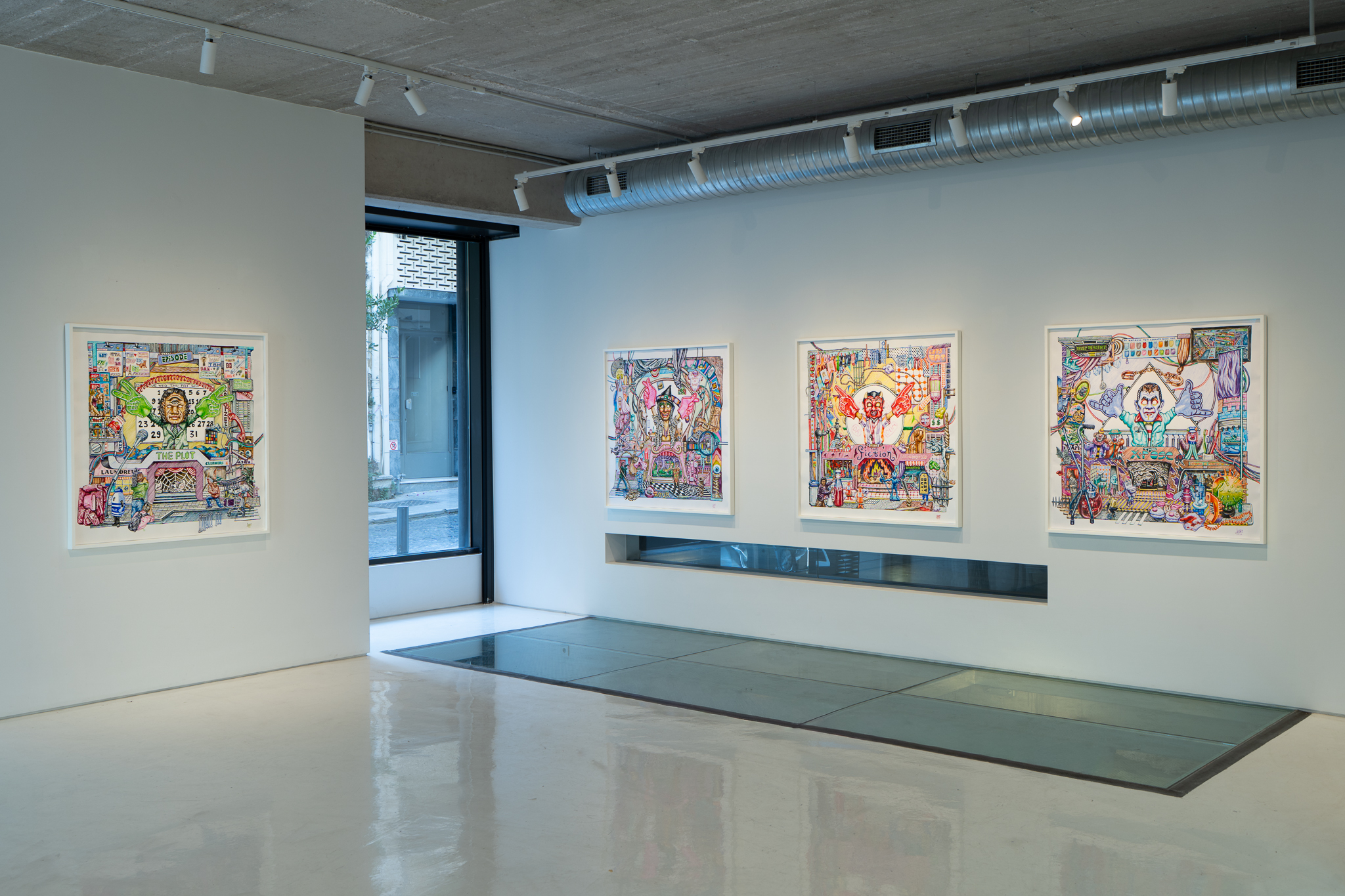
The new works function in much the same way. Faces, objects, symbols, and fragments of stories are organised into compositions of almost cinematic intensity. Narrative is not merely the content of the work; it determines the very way in which the work is structured. This logic also reveals the influence of the hand-painted film poster, in which different scenes and characters were condensed into a single image. The same principle reinforces the cinematic and theatrical character of the works, while their social and political dimension emerges through a world in which reality is continuously mediated by images, narratives, and roles.
“For most of our lives, the mind operates like a film studio,” Kafouros says. “It is a narrator and then a projector. And it functions through oppositions. In the ceaseless narratives of the self that judges, justifies, reacts, and resists, we are sometimes the hero and sometimes the villain. Very rarely, however, are we not the protagonist.”
Kafouros insists that he does not paint from imagination. Rather, he seeks to reconstruct an illusion of reality, even when it is fragmented through the aesthetics of collage. His world is not a world of fantasy but, as he himself writes, “the imprint of the imaginary that emerges from the continuous disintegration and reconstruction of the real.”
Perhaps, in the end, what Kafouros does is both very simple and very difficult: he takes the relentless noise of images, memory, desire, and information and transforms it into a world in which we can stand and look. A world that is excessive, funny, dark, tender, and restless — just like our own.
For if the mind is indeed a narrator and projector, as he says, then perhaps reality is never only what happens. It is also everything we invent in order to make it livable. And that, ultimately, is a deeply dramatic art
Elias Kafouros: Deeply Dramatic Art
Dio Horia Gallery
September 17 – November 7, 2026