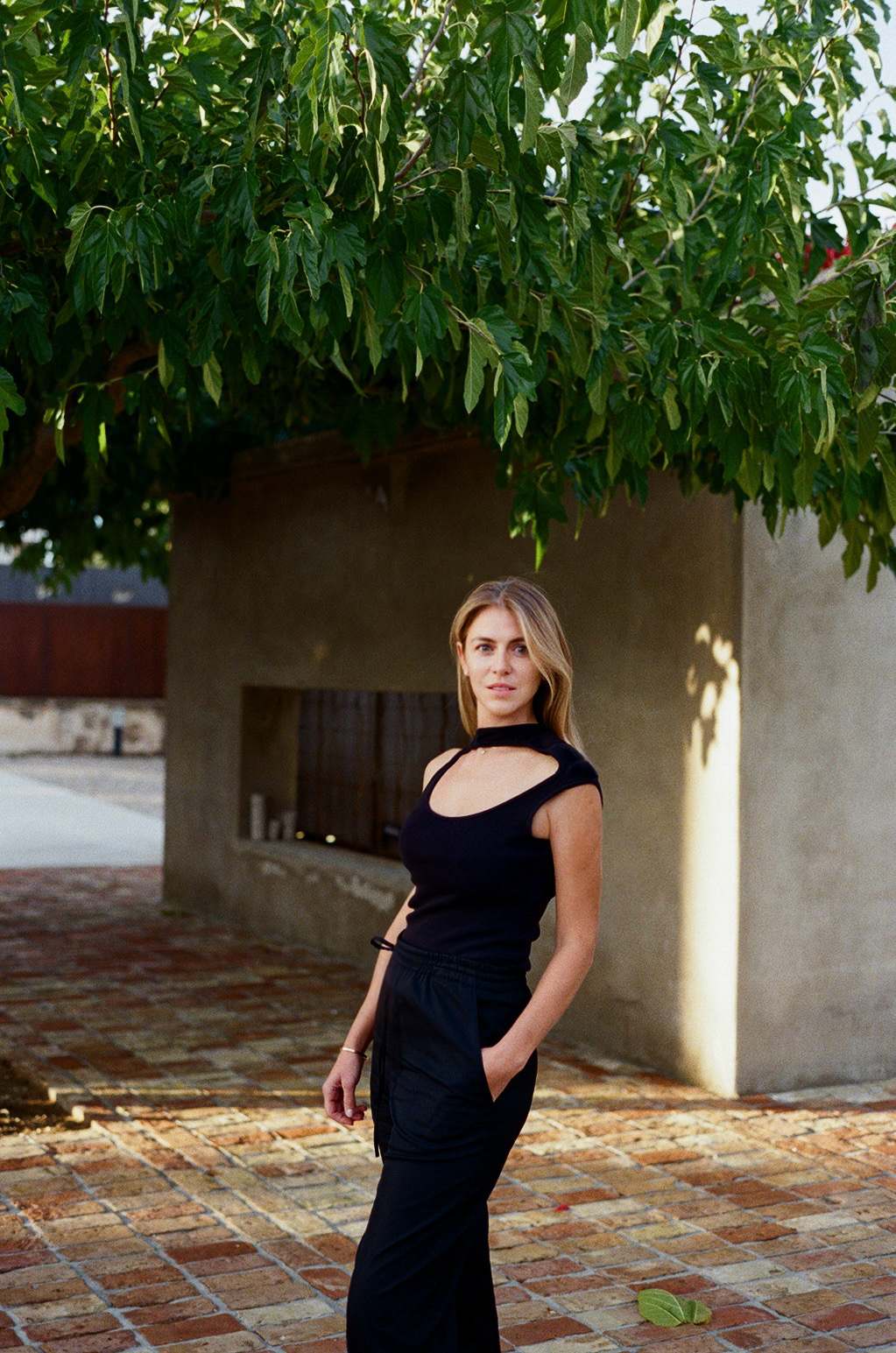
To begin with, tell us about the highlights of your journey. What have been the key steps and defining moments that have brought you to where you are today?
I think my journey has been shaped less by a single turning point and more by a series of seemingly unrelated experiences that gradually started making sense together.
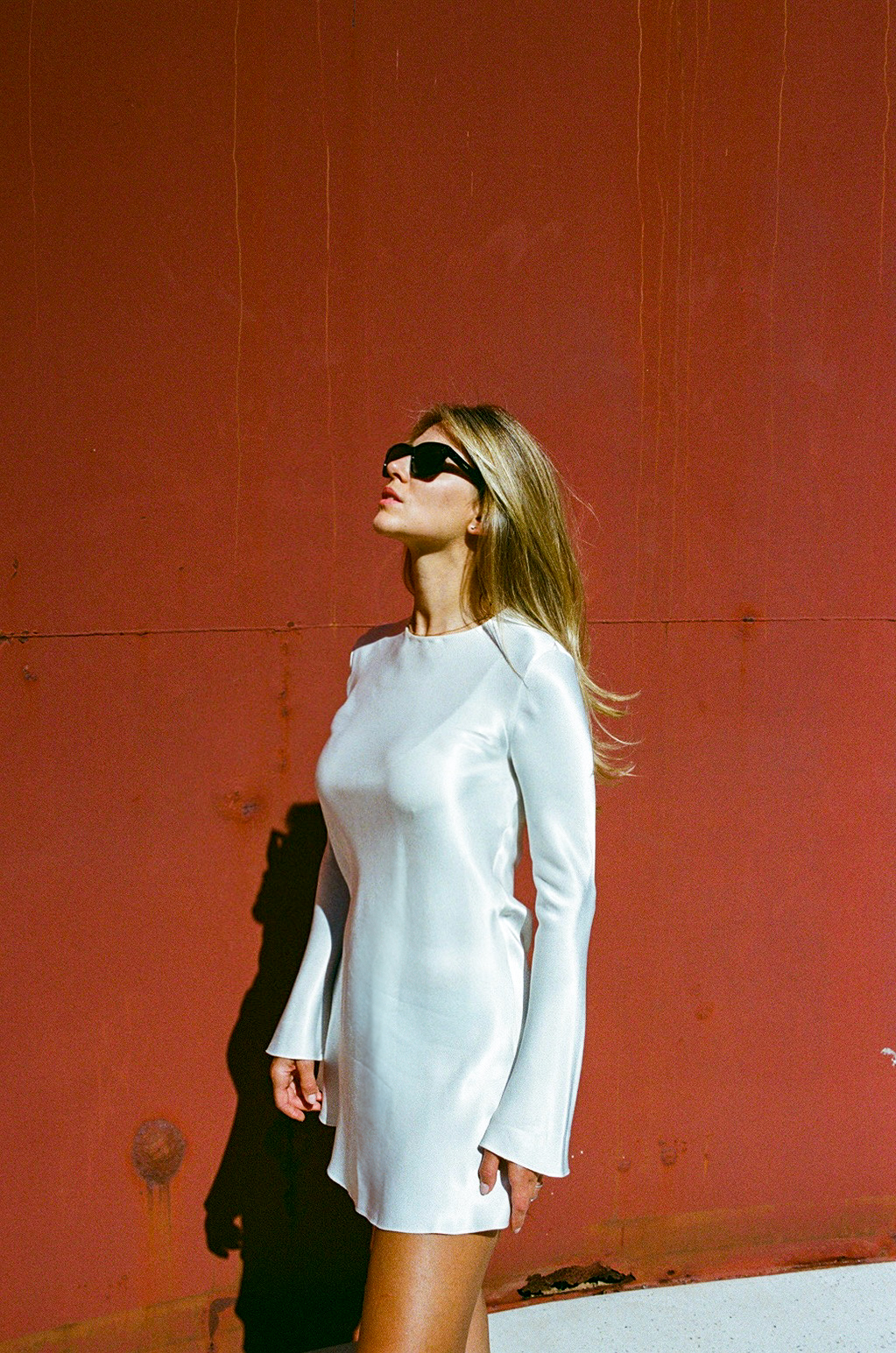
I was born in Baku and later moved to Athens, where I studied engineering. My professional path then took me through art, food journalism, fashion and communications, including working in communications for Gucci. Each of these experiences taught me something about visual language, people and storytelling, and eventually they all started to feed into the way I photograph.
Photography eventually became the place where all of these interests could coexist. Greece played a major role in that transition. Living here made me want to slow down and pay attention to the details of places that I had initially experienced simply as destinationsб the landscape, architecture, people, light and everyday rituals.
The decision to work more seriously with 35mm film was another defining moment. It changed the way I photograph and the way I observe. Over time, what started as a personal fascination became my profession and, increasingly, a long-term artistic practice
Tell us the story of how you discovered a creative path through photography. How was the first idea born, and how has it evolved over time?
Photography did not begin for me with the ambition of becoming a photographer. It started with an impulse to preserve the way a place felt.
I became increasingly interested in the things that are easy to overlook: a particular kind of light, the way a building sits within a landscape, a person passing through a frame, a table after a meal. At some point I realised that photography gave me a language for collecting these observations.
Then film became especially important to me. Shooting 35mm introduced a certain slowness and intentionality. You have a limited number of frames, so you become more selective. You wait, observe and accept that not everything needs to be captured.
What began as a way of looking gradually evolved into a profession, and then into a much broader visual practice.
You have a unique ability to elevate something simple and familiar aesthetically, transforming it into something truly distinctive. Where do you see the line between a photograph and a work of art?
I don’t think the distinction is necessarily in the photograph itself, but in the intention behind it and in what happens between the image and the person looking at it.
A photograph can document something, communicate something or simply be beautiful. But it can also create a space for interpretation, memory and emotion and that is where I think it starts moving towards art.
For me, the most interesting images are often the ones that leave something unresolved. They give you enough to feel something, but not enough to explain everything.
How do you feel your aesthetic has evolved over the years? How do you look back at your earlier work today?
My earlier work was much more intuitive. I was attracted to beautiful light, interesting compositions and places that immediately caught my eye. I still value those things, but with time I became more interested in what happens beyond the obvious image.
Today I think much more about atmosphere, context and what an image leaves behind. I have become more comfortable with imperfection, quietness and ambiguity.
Looking back at my earlier work, I don’t feel the need to distance myself from it. Looking back at my earlier work, I can see where my visual language started to take shape. The biggest change is probably that I now recognise my own visual language more clearly.
What would you consider your most significant achievements?
One of the things I value most is having built a practice that can move between commissioned photography and personal artistic work.
I am grateful that my work has taken me beyond Greece and into international exhibitions and collaborations, while at the same time allowing me to develop a long-term body of work around Greece itself.
My exhibitions, including Unspoiled at Mona Athens, were important milestones because they allowed the work to exist outside the context of social media or commercial assignments.
I am also particularly interested in the relationships I have built with places and people through photography.
What does your new exhibition at Dexamenes include? Tell us about the exhibition and what it explores.
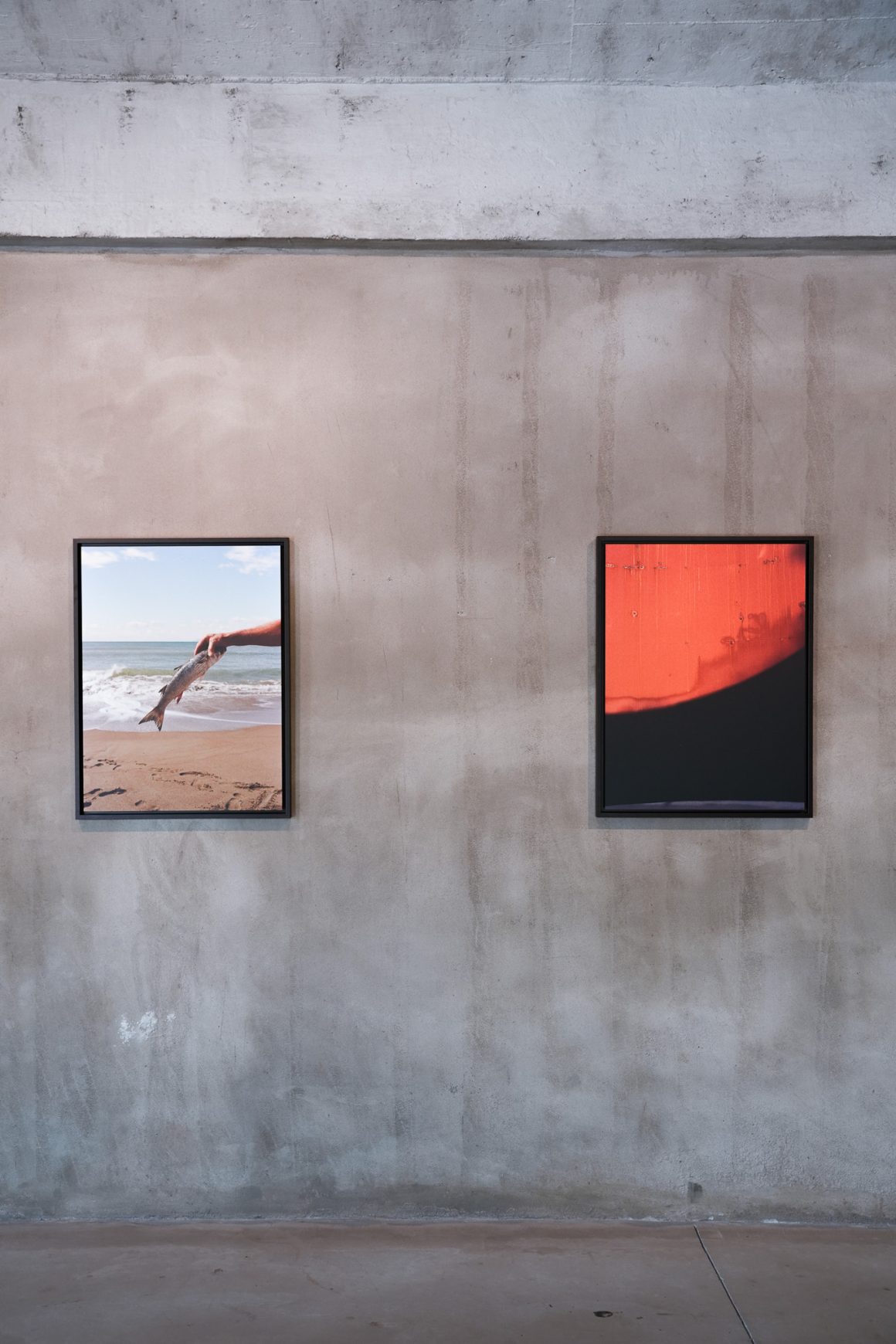
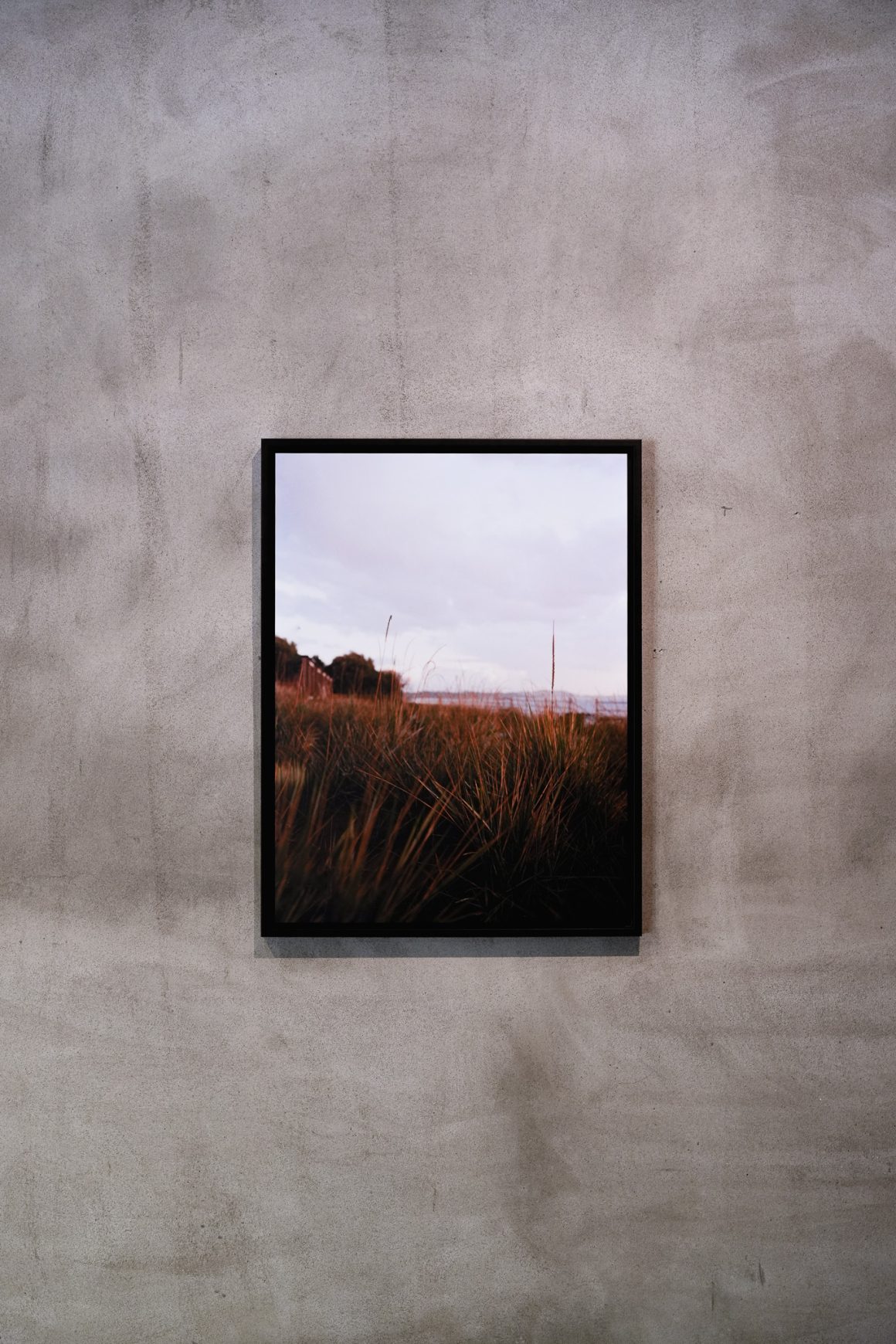
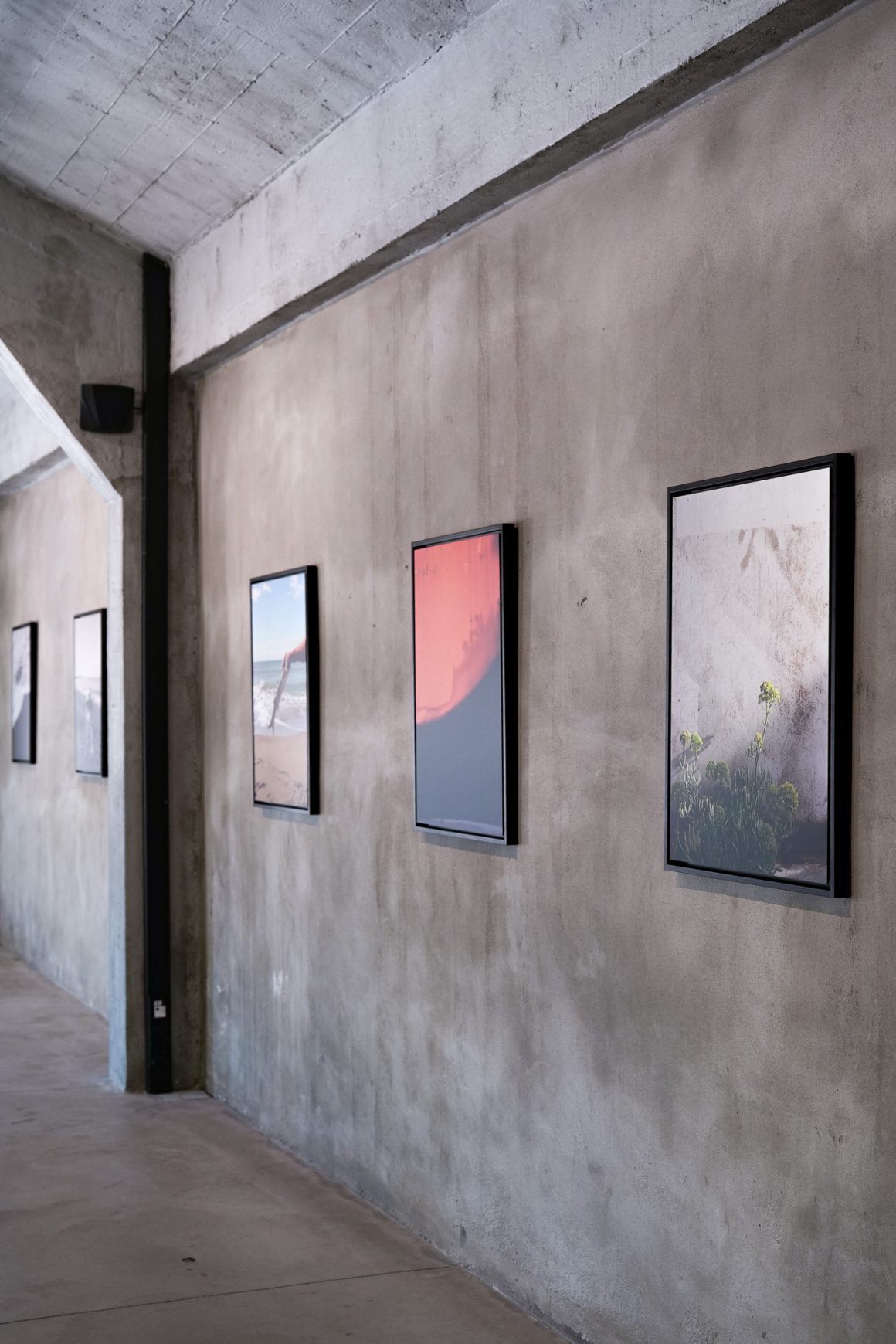
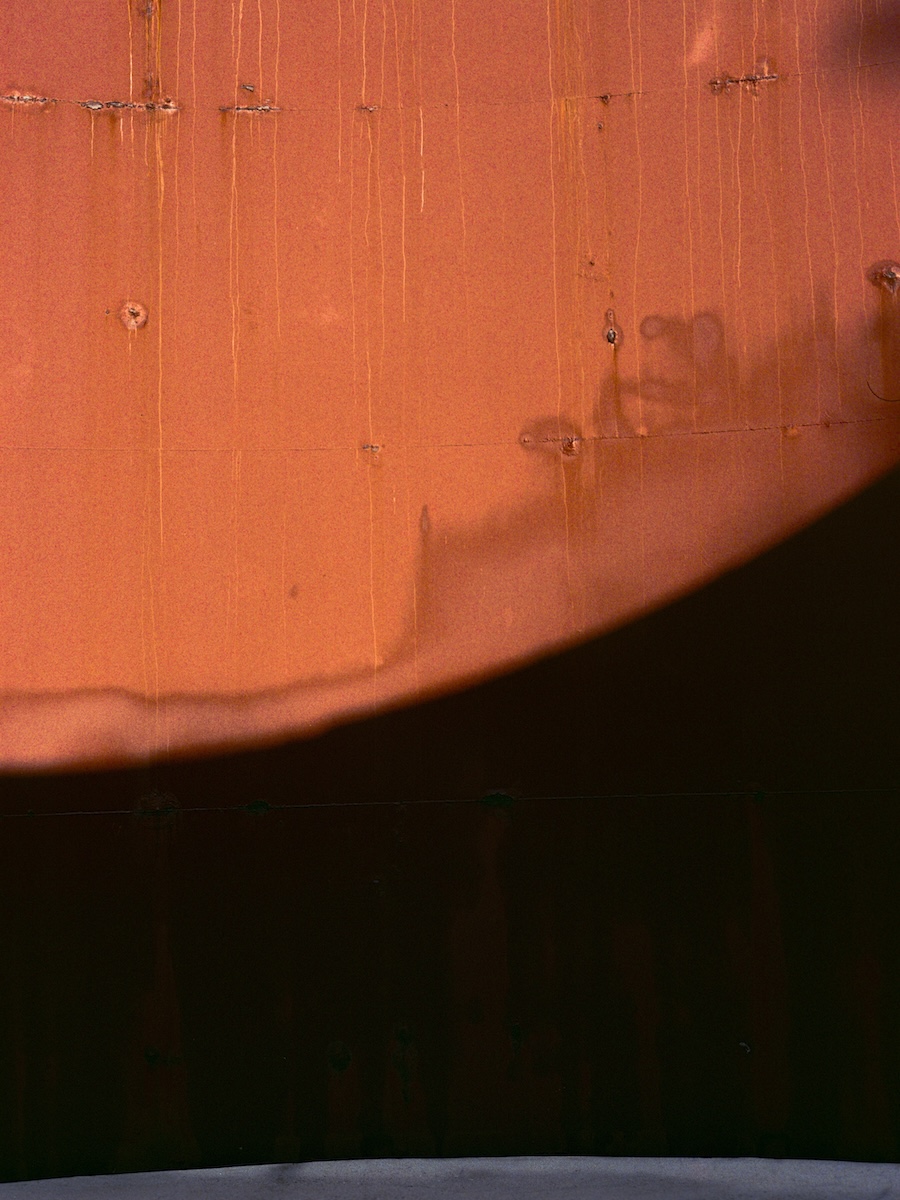
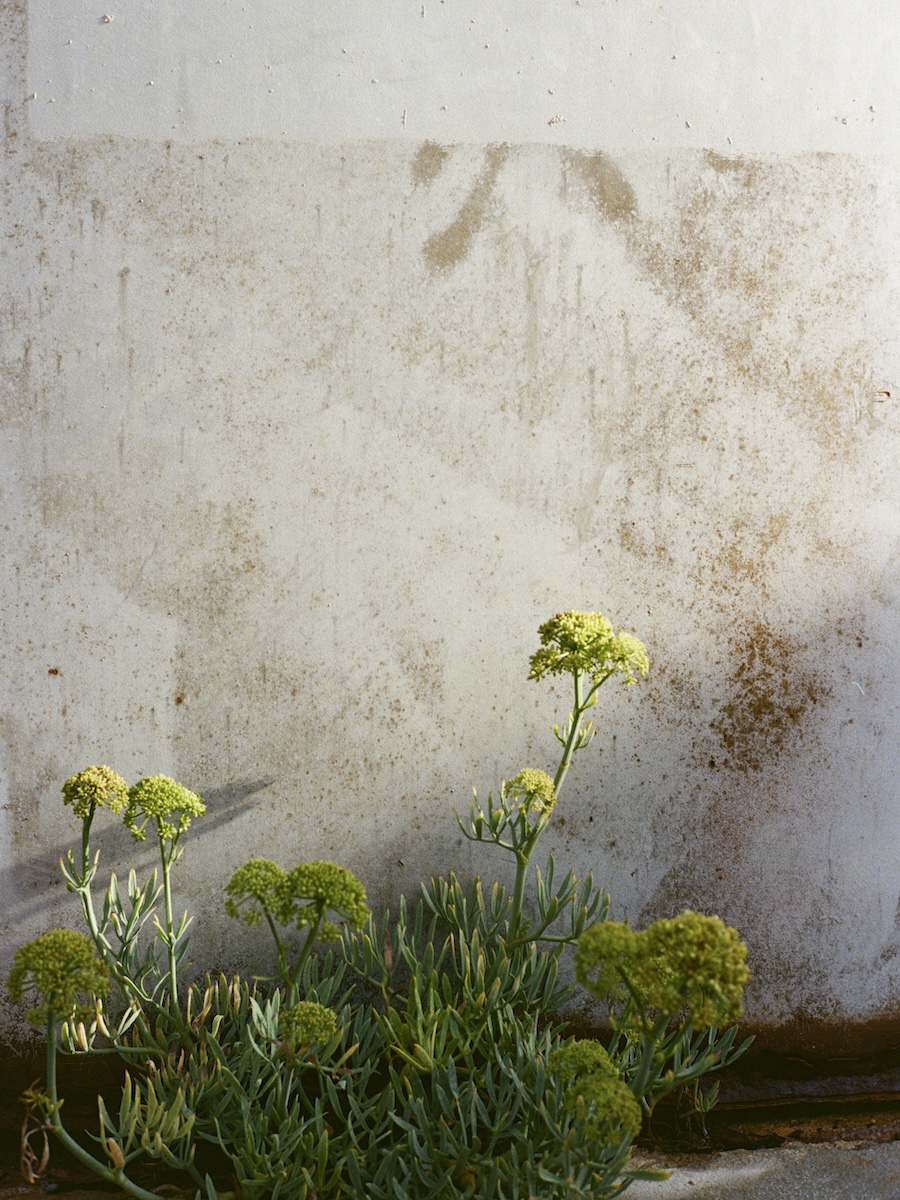
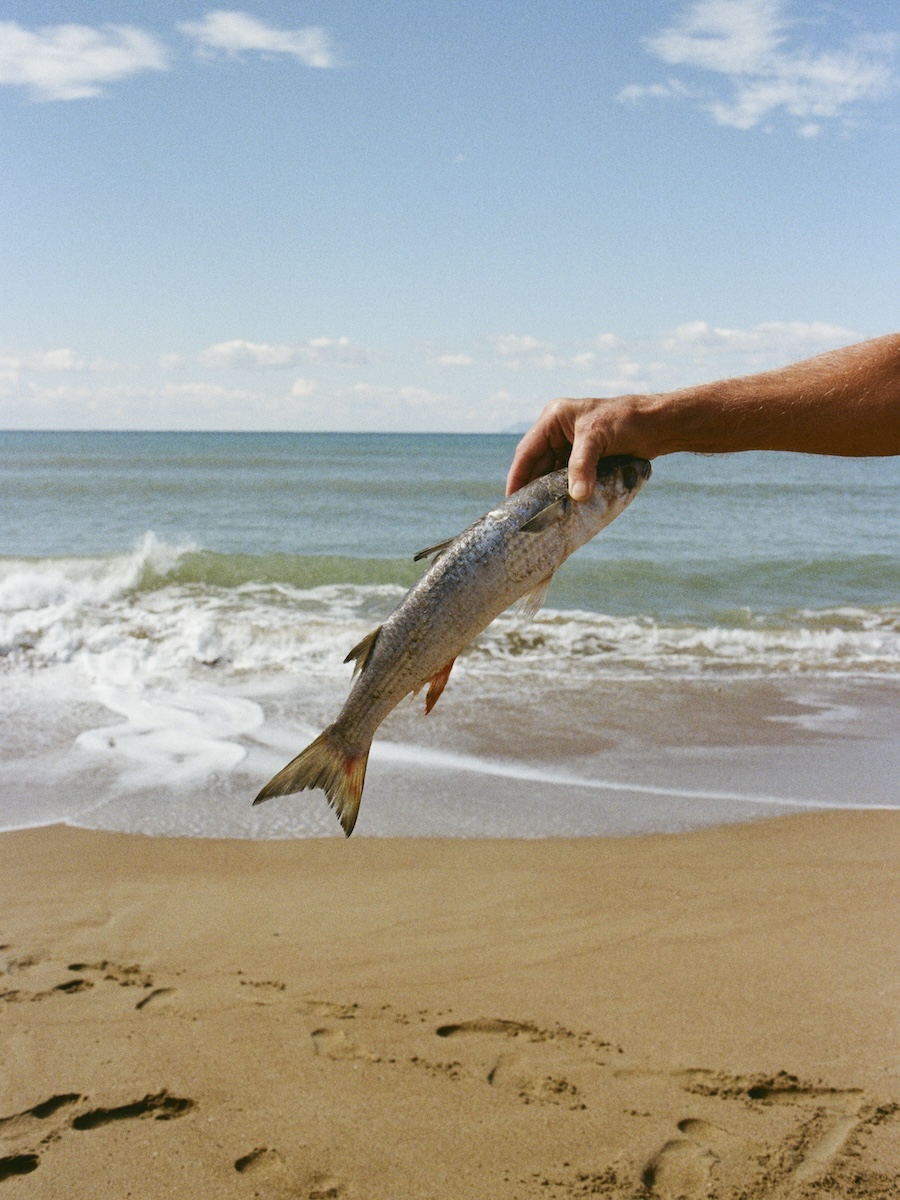
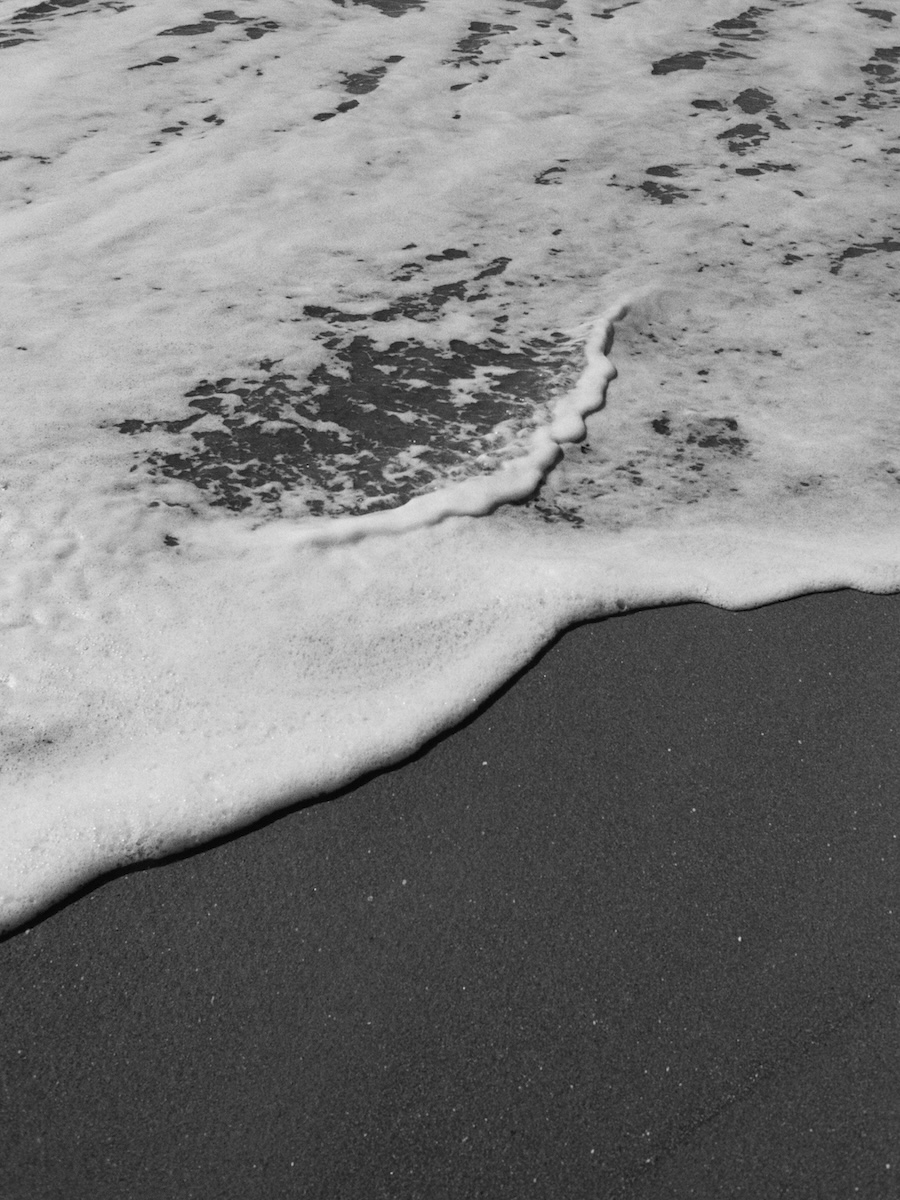
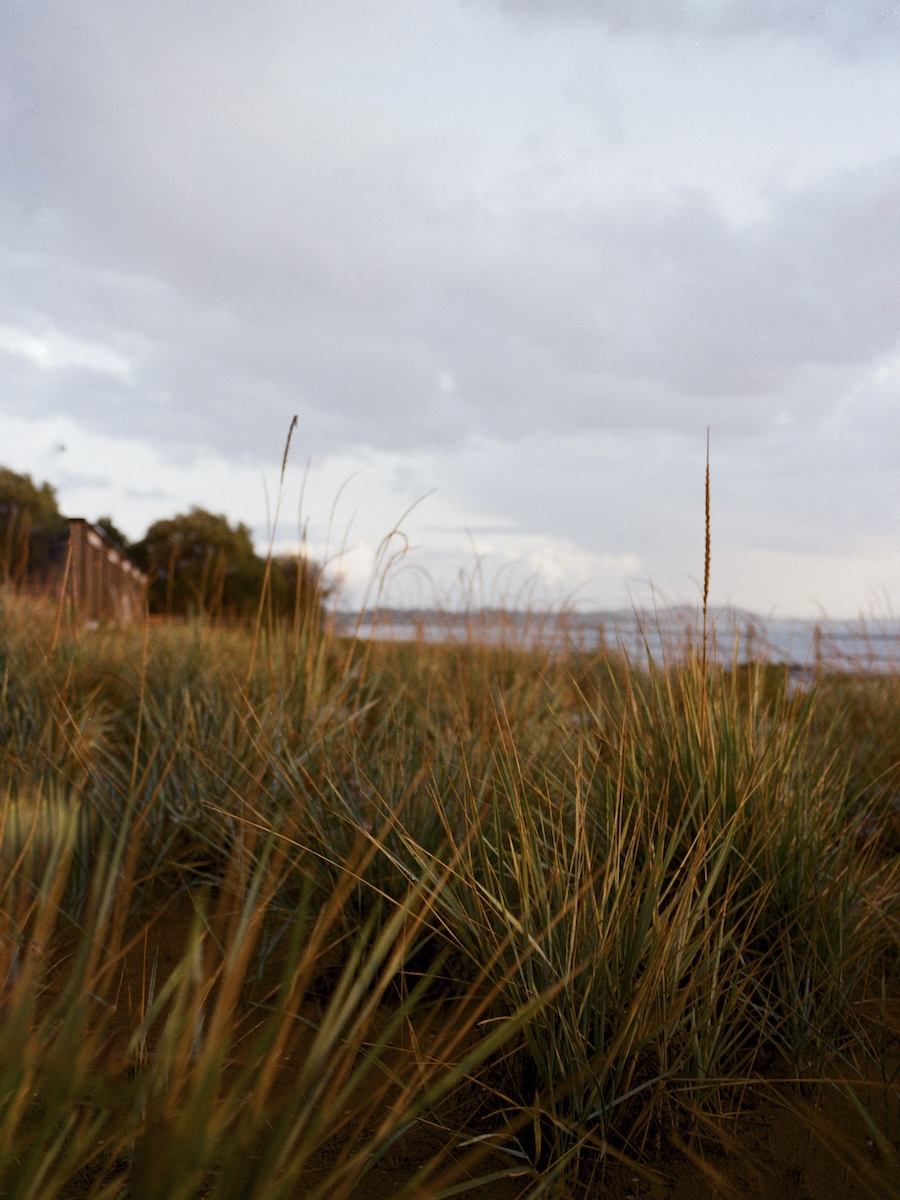
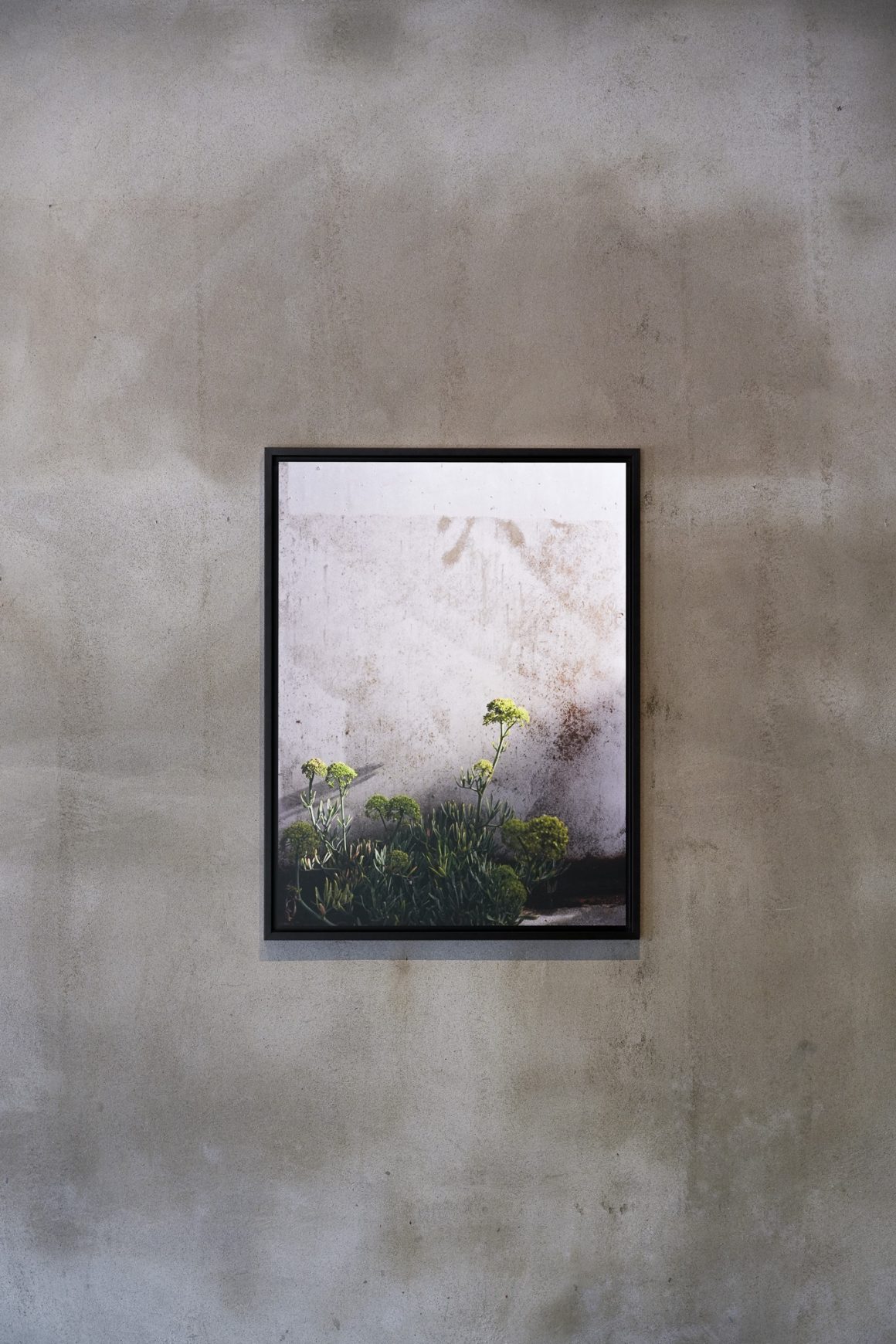
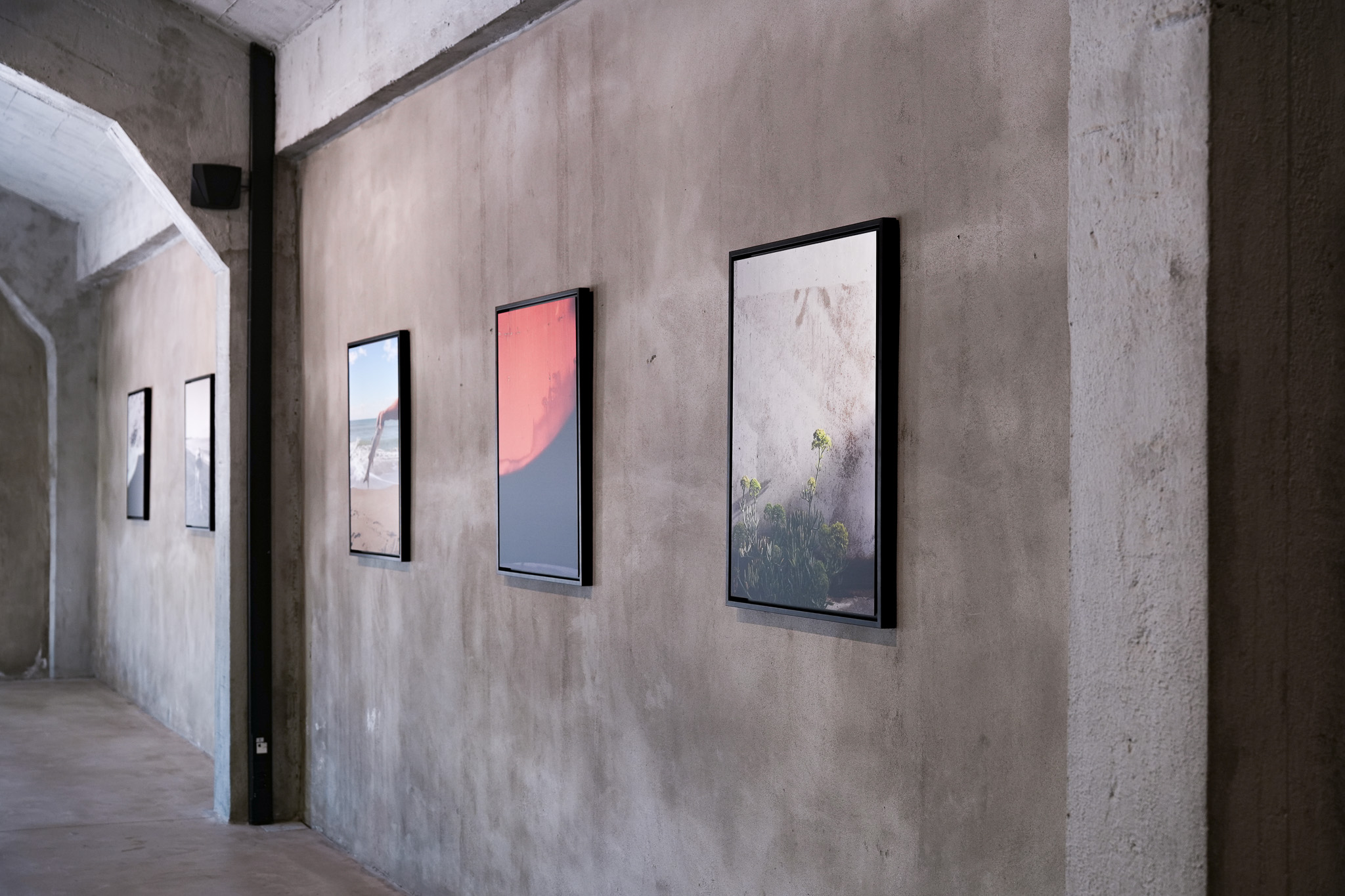
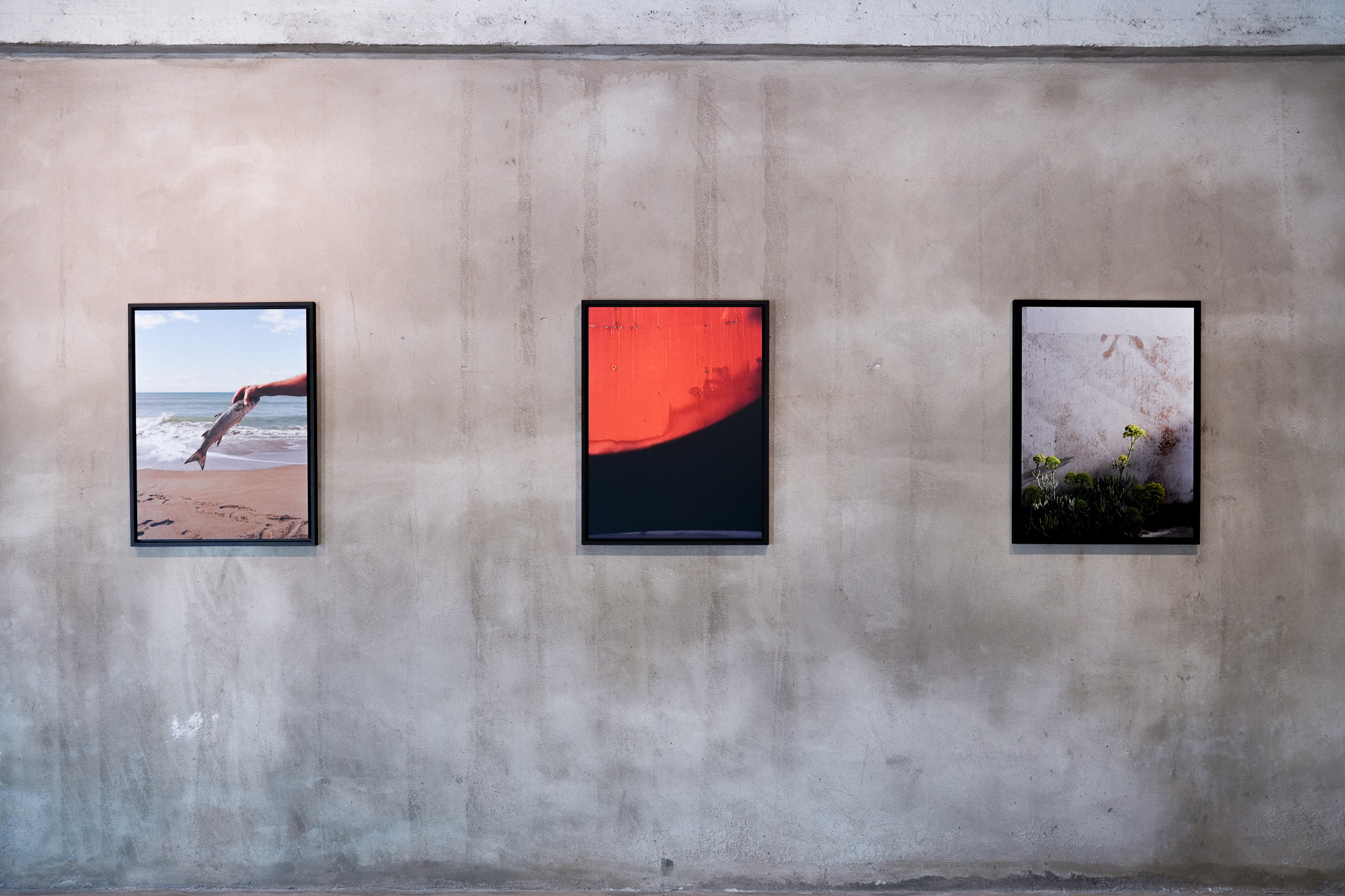
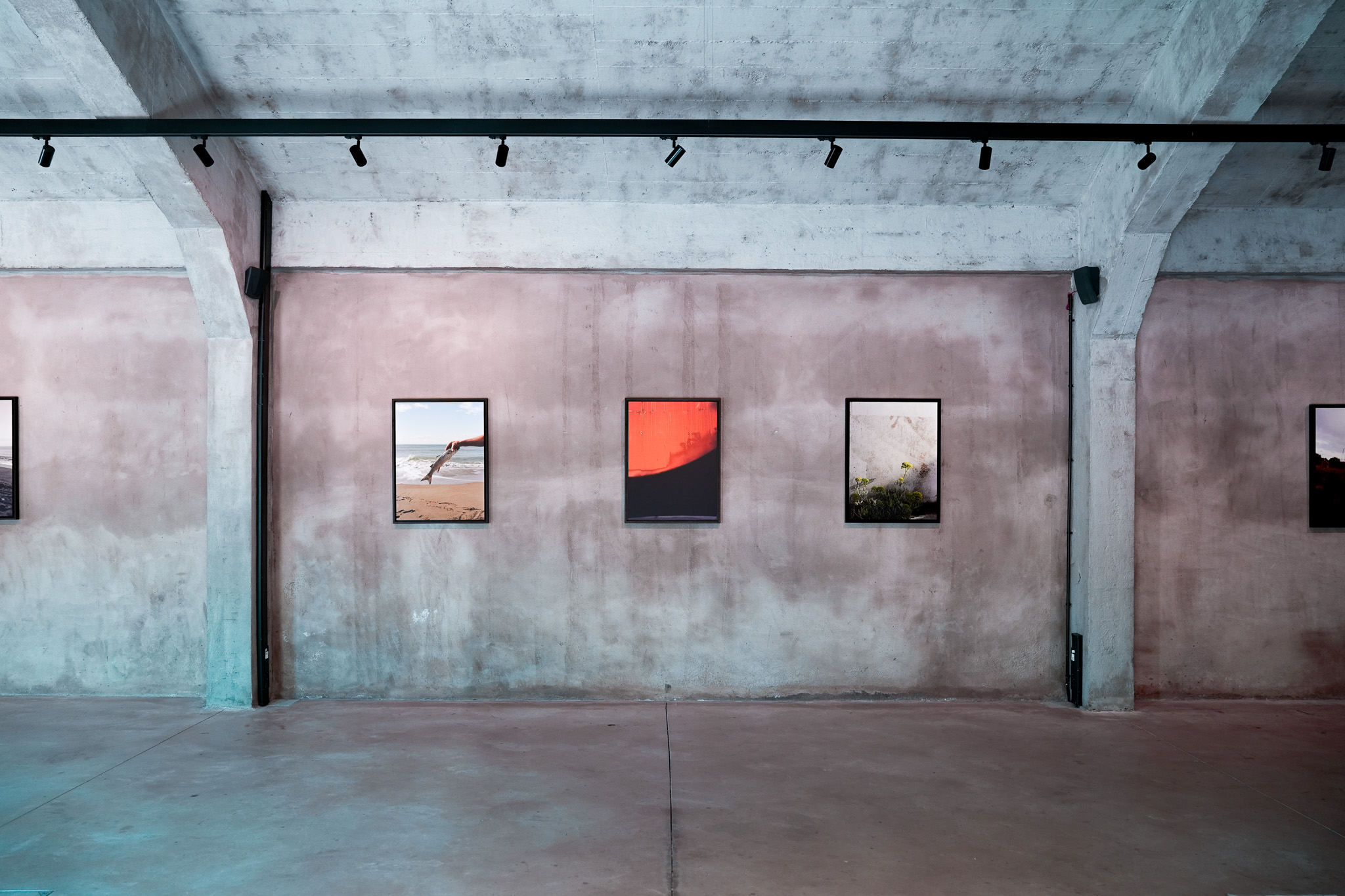
The exhibition, Slow Coast, brings together six photographs, all shot on 35mm film during my artist residency at Dexamenes in November 2025. It is entirely new work that has not been exhibited before.
Rather than photographing Dexamenes simply as a destination or focusing only on its architecture, I became interested in everything around it, the coast, the landscape, the former industrial structures of the winery, vegetation, weathered materials, animals and the traces of everyday life. I wanted to look at the place slowly and see how these seemingly unrelated elements exist alongside one another.
Working on film felt particularly appropriate for this project. It forced me to slow down and spend more time observing rather than trying to capture everything. The photographs are less about specific events and more about transitions, textures and small encounters that might otherwise go unnoticed.
What captures your interest today and has the potential to become the starting point for a new chapter or series in your work?
My ongoing interest in documenting Greece is something I see as a long-term project rather than a finished series.
I want to spend more time in places, return to them repeatedly and photograph them through different seasons and circumstances. I am interested in what remains when you move beyond the postcard, the people who live there, the traces of everyday life, architecture, landscapes and the small visual details that give each place its own character.
With such a strong presence in exhibitions abroad, what do you experience from an international audience in relation to your work? How different is the landscape in Greece?
International audiences often respond to the work through a certain sense of discovery. Greece is familiar as an idea, but every person carries their own image of it, and photography can either reinforce that image or complicate it.
Working internationally has made me realise how differently the same landscape can be read depending on where you are looking from.
In Greece, there is a different kind of intimacy. I have the opportunity to return to places, spend more time there and notice details that might not be immediately visible to someone passing through. I think both perspectives are valuable: one gives you distance, the other gives you depth.
What has this outward looking approach and international exposure offered you, and to what extent does it influence your work?
Working internationally has made me less interested in making photographs that belong to one particular visual context.
It has shown me that an image can communicate without needing to explain where it comes from. At the same time, it has made me more conscious of what is specific to Greece and to my own perspective.
Working internationally has given me a certain distance from my own work. When you see how people from very different backgrounds respond to an image, you realise that what feels very specific to you can still be understood universally.
What are your immediate plans? What comes next?
The immediate future is a combination of commissioned work, exhibitions and continuing my personal projects.
I want to keep travelling, but I am increasingly interested in returning to the same places rather than constantly looking for somewhere new. There is something very different that happens when you photograph a place for the second, third or tenth time.
I also want to give more space to film and to longer-form projects that can exist beyond the rhythm of social media.
What inspires you to take the next step and evolve the way you create? Tell us a story that captures this process.
Usually, it starts with a feeling that I haven’t finished looking at something.
I can visit a place and come back with photographs that I like, but then one particular image stays in my mind, not necessarily because it is the strongest photograph, but because it suggests that there is something I haven’t understood yet.
That feeling has often made me return. I think a new series usually begins this way for me: not with a perfectly formulated concept, but with a visual question that I cannot quite let go of.
What are the non-negotiable values that define your work?
Curiosity, honesty and freedom.
I don’t want to photograph something simply because it is expected to look good. I need to feel some kind of connection or curiosity towards what I am photographing.
I also value restraint. Knowing what not to add, what not to manipulate and when to leave an image alone is as important to me as the technical side of photography.
How has your philosophy of photography evolved over time, and what do you feel has acquired particular value today?
Over time, photography has become less about capturing something and more about paying attention to it.
Today I value presence more than perfection. A technically perfect photograph does not necessarily stay with you. Sometimes it is an imperfect frame, a strange light or an ordinary moment that carries much more feeling.
Photography has taught me to slow down, and I think that has become increasingly valuable in a culture where we are constantly encouraged to move on to the next image.
What is your connection with Greece and how do you feel about it?
Greece has become much more than a place where I live. It has gradually become one of the main subjects of my work.
What I find fascinating is the coexistence of opposites: ancient and contemporary, rough and refined, wild landscapes and very human traces, simplicity and excess. There is also an incredible quality of light that changes completely from one place to another.
The longer I live here, the less I feel that I have exhausted the subject. Quite the opposite, Greece keeps giving me more things to look at.
Beyond photography, what other forms of art inspire and inform your creative explorations?
I am drawn to art that creates an atmosphere rather than simply presenting an idea.
Painting, architecture, cinema, fashion and design all influence the way I look at photography. I am particularly interested in the relationship between composition, colour, space and materiality.
What would you love to create one day, what would be your dream project?
I would love to create a long-term photographic archive of Greece, not an encyclopaedic one, but a deeply personal portrait built over many years.
I would like to return to the same islands and places repeatedly, photographing them in different seasons and at different moments in their lives. I imagine it eventually becoming a book and an exhibition, something that documents not only what Greece looks like, but what it feels like to live alongside it.
I like the idea of a project that cannot be completed in a year.
Who are the photographers closest to your heart, and what is it about their work that speaks to you?
I am drawn to photographers who can make an ordinary moment feel slightly unfamiliar.
Henri Cartier-Bresson for his ability to recognise a moment before it disappears.
William Eggleston for making the ordinary feel completely new. His photographs remind me that you don’t need an extraordinary subject to make an extraordinary image.
Rinko Kawauchi for her relationship with landscape and her sense of place.
And Nikos Economopoulos, whose photographs of Greece and the wider region have a particular honesty and human depth that I admire. His work has influenced the way I think about photographing places that I know well.
Are we what we choose?
To some extent, yes. But I also think we are shaped by what we don’t choose, the places we come from, the people we meet, the circumstances that change us. Perhaps what defines us most is what we choose to do with all of that.
What is the last thing you bought, and what made you choose it?
A book about traditional Greek costumes from 1989. I’ve become increasingly interested in the details, materials and visual language of traditional dress. And, less poetically, something tennis-related, probably tennis balls or a tennis bag. My recent purchases seem to alternate between Greek history and tennis.
What is the best book you have read recently?
I have been rereading quite a lot of classics lately. I recently reread Alexander Ostrovsky’s The Dowryless Bride, which remains one of my favourite Russian plays.
Among more widely known novels, I reread Dostoevsky’s The Idiot not long ago. I find that returning to books years later can be almost like reading them for the first time, you notice completely different things depending on where you are in your own life.
Is there an object you would never want to part with?
My Contax G2. It has travelled with me to so many places that it feels less like an object and more like a companion.
Which artist do you love and would like to own a work by?
If I had the opportunity, there are quite a few.
I like discovering younger artists and occasionally buy works that speak to me, so I enjoy the idea of building a collection gradually rather than having a fixed list of names.
One artist whose work I would particularly love to own is Evgeny Shishkin, a Russian artist. I am especially drawn to his Flowers series — there is something very quiet and contemplative about them.
And then, of course, there are artists whose work I would love to live with if circumstances allowed: Mark Rothko, Francis Bacon and Gerhard Richter. Each of them creates such a strong atmosphere that I imagine their work changing the feeling of a room completely.
I think I would rather have one work that I have a personal connection with than something simply because it is considered important or valuable.
In another life, what would you like to have been?
I’m not sure I believe in past lives, although I do believe in intuition, energy and things that are harder to explain. And even if I did have another life, I’m not sure I would choose to have been someone else. I like the unexpected turns my life has taken. So perhaps I’d choose to be myself again — just with a little more time to explore.
Three places you love returning to — and why?
Amorgos, because I never seem to get tired of its particular combination of landscape, light and remoteness.
San Sebastián, because it has everything I love about a city by the sea, food, architecture, culture and a very strong local identity.
And the mountainous part of the Peloponnese. I love the feeling of driving through those landscapes without necessarily having a destination in mind. It is one of the places where Greece feels very different from its usual postcard image.
Describe yourself in three words.
Observant. Free. Sensitive.
Do you believe art and creativity, more broadly, can be a path towards becoming better human beings?
I think it can make us more attentive, and attention is already a form of empathy.
Art asks us to stop, look at something from another person’s perspective and accept that there may not be one correct interpretation. I don’t think art automatically makes us better people, but it can make us more curious about other people’s experiences — and that is a good place to start.
Tell us a story you will never forget.
A story I will never forget happened while we were driving through the mountains after visiting Meteora.
We passed two white dogs by the side of the road. They looked almost unreal, like two little elves that had somehow appeared in the middle of the mountains. We stopped and gave them some food, and for a moment I assumed that was all they wanted.
But they were much more interested in playing than eating. They were completely carefree, running around us as if we had known each other forever.
I took a photograph of them that I still love. It is one of those completely unplanned encounters that stays with you precisely because you were not looking for it.
Which museum and which work of art have stolen your heart?
There are three places that immediately come to mind, for very different reasons.
The first is Claude Monet’s house and gardens in Giverny, just outside Paris. It is probably quite a touristy place, but I remember it as one of the first museums where I understood where an artist’s inspiration actually came from. You can see the same lines, the water, the ponds, the garden, the changing light, and suddenly the paintings become much more tangible. You are not simply looking at the work; you are standing inside the landscape that produced it. There is something almost immersive about that experience.
The Van Gogh Museum in Amsterdam had a very different effect on me. The space itself allows you to spend time with the paintings and see them from a different perspective, rather than simply moving from one masterpiece to another. The way the collection is presented creates a much deeper sense of immersion in his life and work.
And then there is the Yusupov Palace on the Moika in St Petersburg. It is particularly special to me because it was probably the first museum I visited when I was already consciously interested in art and had some understanding of what I was looking at. The palace itself is extraordinary, but what fascinates me most is the story of the collection and the person who lived with these works.
I also think it is a remarkably underrated museum. Unfortunately, many of the works that once hung in the palace were lost after the Revolution, and I often find myself thinking how extraordinary it would be if even some of them could return one day. Seeing the palace today, you can almost sense the absence of the collection that once completed it.
If I had to choose one work of art, it would probably be something by Gerhard Richter.
His Candle has stayed with me for a long time. There is something almost contradictory about it, the image feels so photographic and familiar, yet the more you look at it, the more you become aware of the distance between photography and painting, between reality and memory.
I am also deeply drawn to his portraits, particularly Betty. What fascinates me about Richter is his ability to take something that could be an ordinary photographic image and transform it into something much more ambiguous and emotionally charged.
Perhaps that is also why his work resonates with me as a photographer: he constantly questions what an image can tell us, and what it chooses to leave uncertain.
Give us your own definition of beauty
Beauty is something that makes you look twice.
It doesn’t have to be perfect, polished or conventionally attractive. Sometimes it is a particular light on an old wall, a person completely unaware of being observed, or something slightly out of place.
For me, beauty begins where attention begins.
What do you consider authentic today?
Authenticity is not the absence of intention.
Everything we create involves a choice, so I don’t think authenticity means being completely spontaneous or untouched. For me, it means that the choices you make are consistent with what you actually see, feel and believe, rather than with what you think will be well received.
If you could photograph one thing for TheAuthentics.gr, what would it be?
Something in Greece, without a doubt.
I would probably choose a place like Karpathos — somewhere where the traditional way of life, landscape and architecture still feel deeply connected to one another. I am drawn to places that haven’t been completely transformed for visitors, where you can still see the everyday life of the people who live there.
I would want to photograph it at the end of the day, when the light changes and the island becomes quieter. Not the Greece of postcards, but the Greece that exists when nobody is performing for the camera.