What have been the highlights of your journey — the key steps that shaped your path?

It all began about ten years ago at CAN Gallery, founded by Christina Androulidaki, where I completed my internship and came into direct contact with the art world. A defining moment in my journey, I believe, was in 2021, when I curated the exhibition Ki-nimata in Spetses, creating an artistic walk. It was both a challenge and a completely new experience, as I worked outside Athens and in a public space.

From then on, and over the next three years, I moved nomadically across different parts of the island, presenting exhibitions such as Baltiza: Work in Progress at the Poseidonion Grand Hotel (2022), Home at the Old Port (2023), as well as projects at the Roussopoulos residence and Baraka Art Space (2024). In each initiative, I was interested in highlighting aspects of the island’s history while also engaging the local community as much as possible.

At the same time, I have curated exhibitions in galleries and independent spaces in Athens, and have also been involved in coordinating artist residencies, as well as other exhibitions and artistic programs.

How did the idea of pursuing a creative path in art emerge, and how has it evolved over time?

All the exhibitions I’ve curated tend to begin somewhat spontaneously, stemming from personal experiences and questions that concern me at a given time. The first idea revolved around female identity, for which eight artists designed their own “flag.”

Today, I find myself returning to concepts and themes that once felt more distant, or that I wasn’t yet ready to approach — such as the subject of my current exhibition. I see this whole process as an ongoing journey: an opening toward new directions and a desire to better understand both myself and the world around me.

How do you feel your aesthetic evolves over time, and what are your main interests?

My aesthetic develops gradually through experiences, travel, and my engagement with art and everyday life. I don’t see it as something fixed, but as something that evolves alongside me.

At home, there is a strong presence of objects that carry memory and history. I love mosaic flooring and marble sinks, and I have an obsession with anything handmade — anything that bears the imprint of human craftsmanship. For example, I have a Skyrian textile chosen by my parents, which holds many memories for me.

My friends often joke that my home feels like it belongs to another era — perhaps because it doesn’t follow trends, but rather a more timeless and emotional approach to space. I’m deeply interested in cinema and literature, and I try to travel and visit exhibitions as much as possible, in order to understand different periods and artistic approaches and enrich my own visual vocabulary.

Tell us about the new exhibition you’re curating — what is its theme and how was it developed?

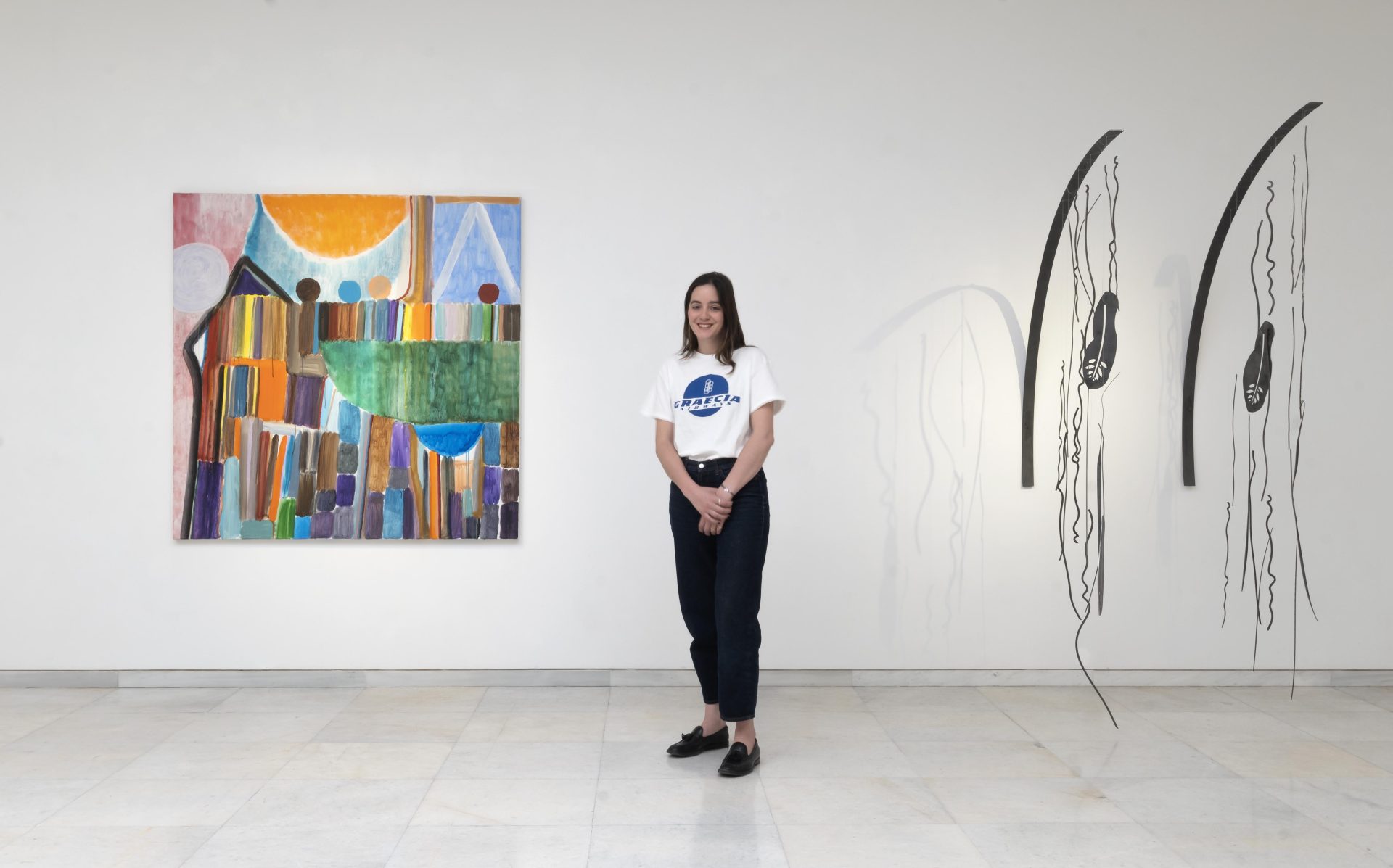
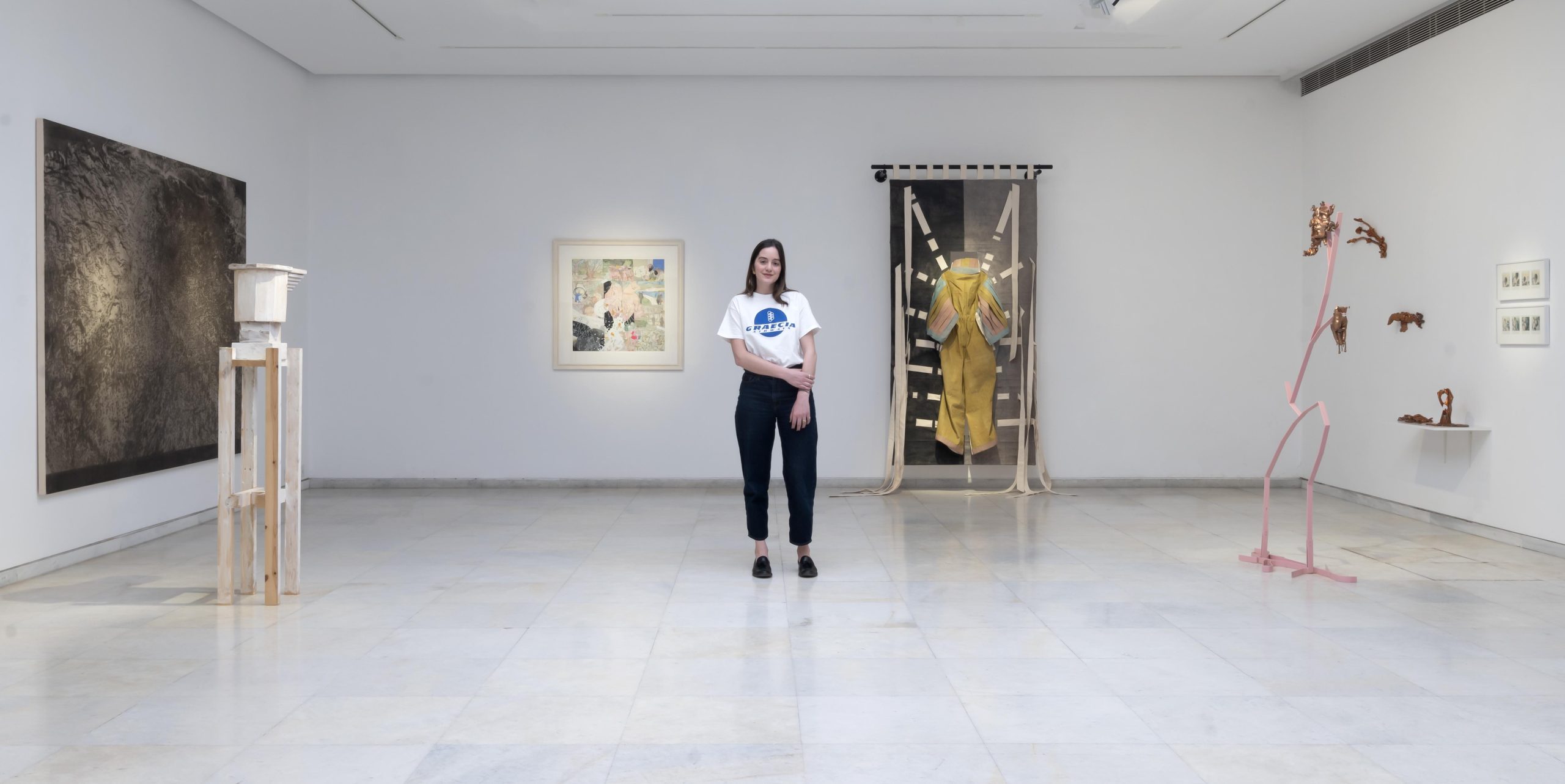
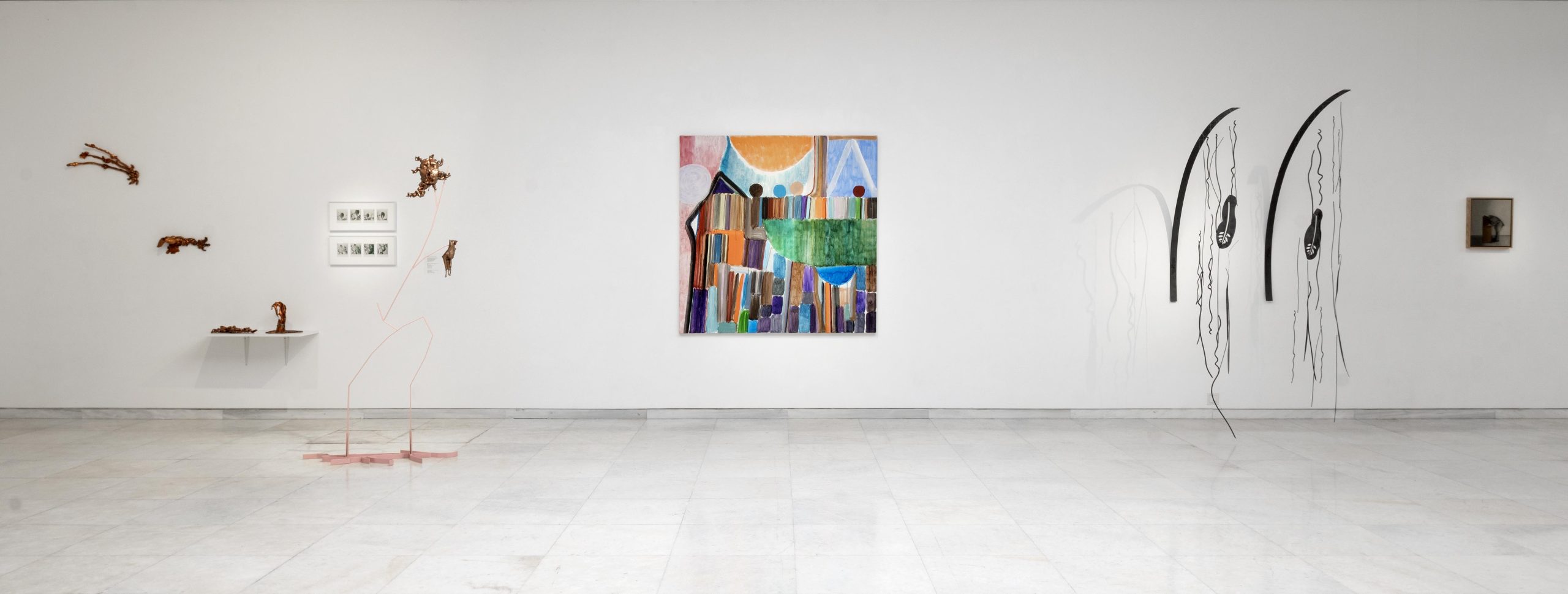
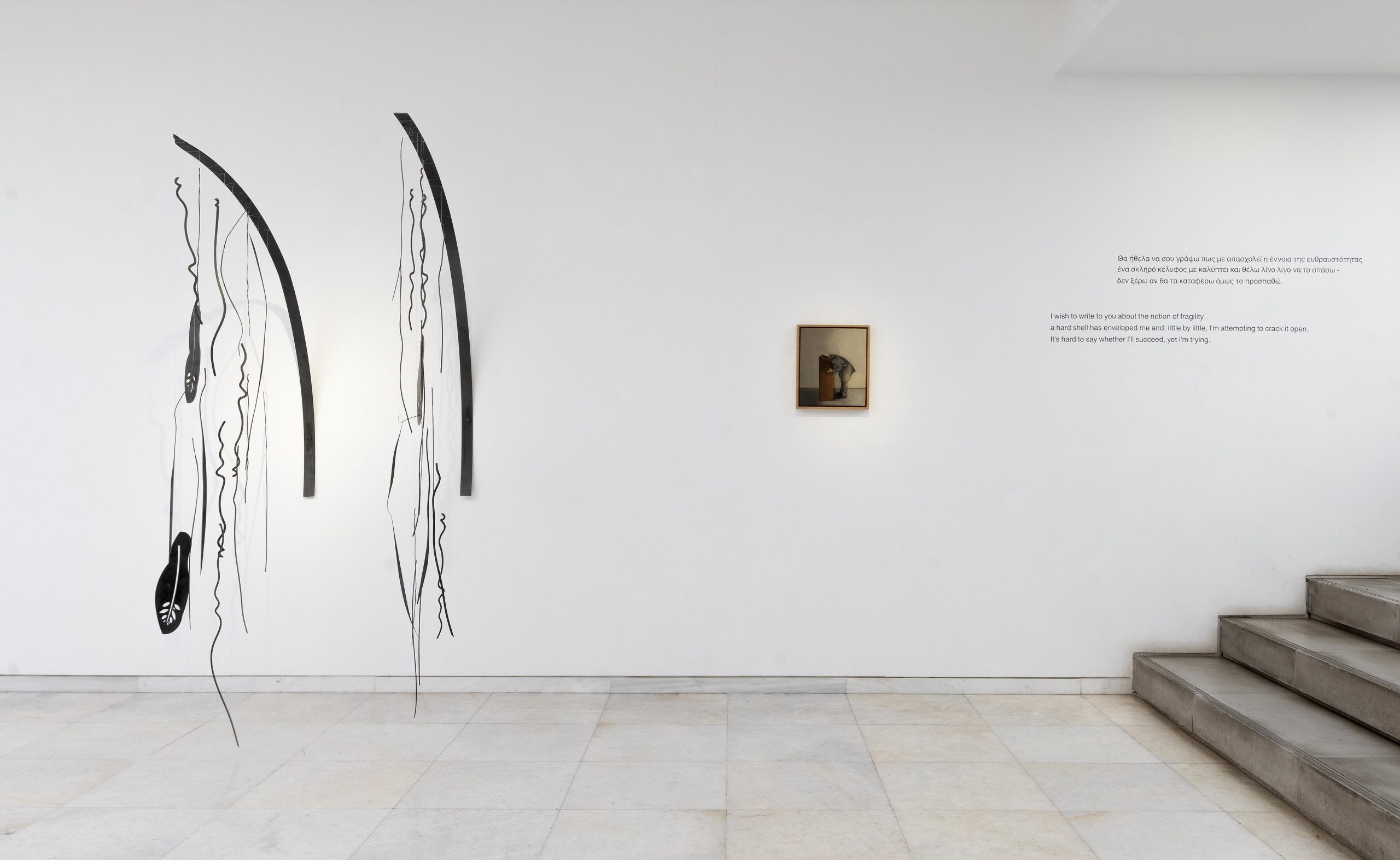
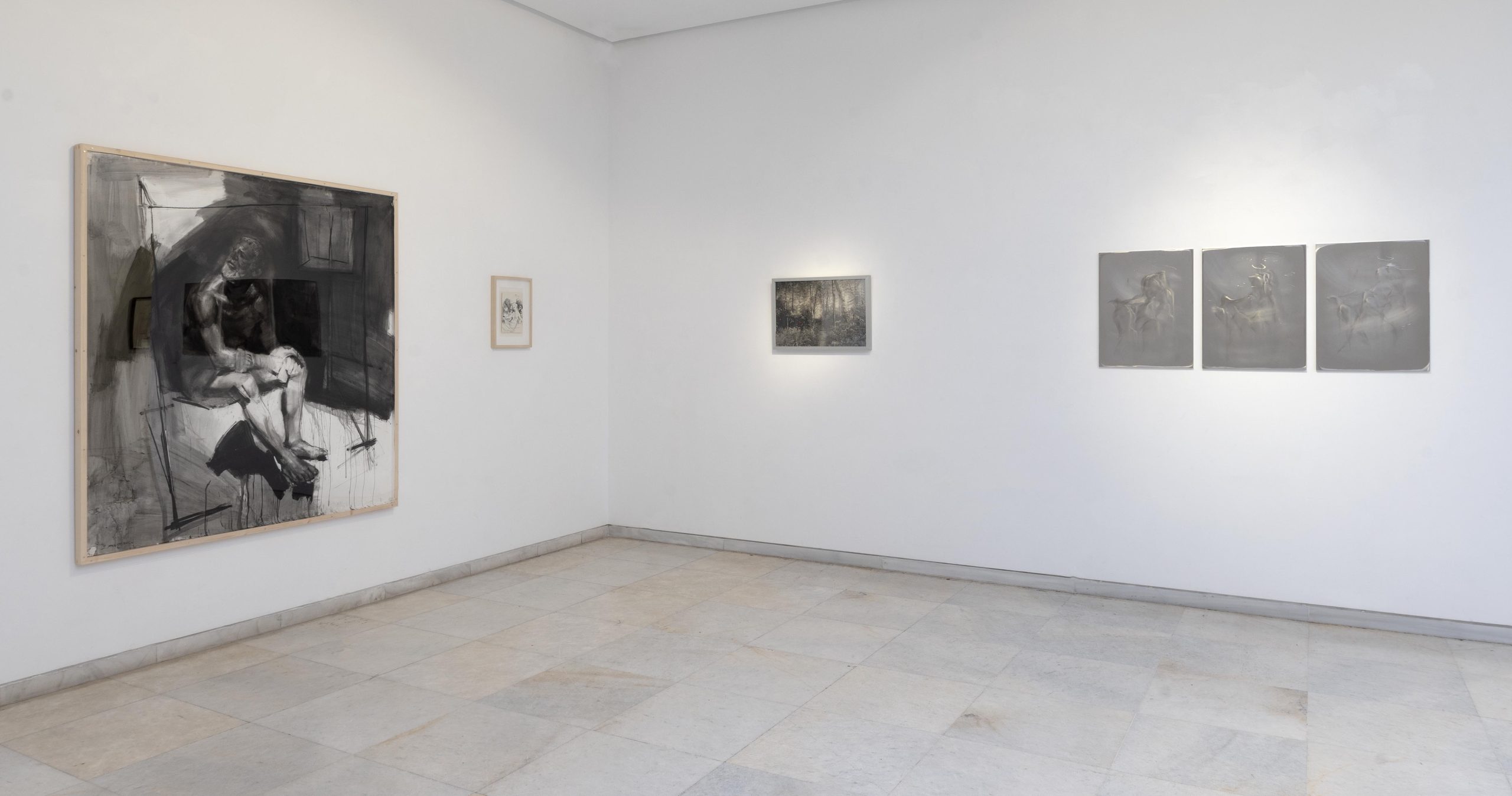
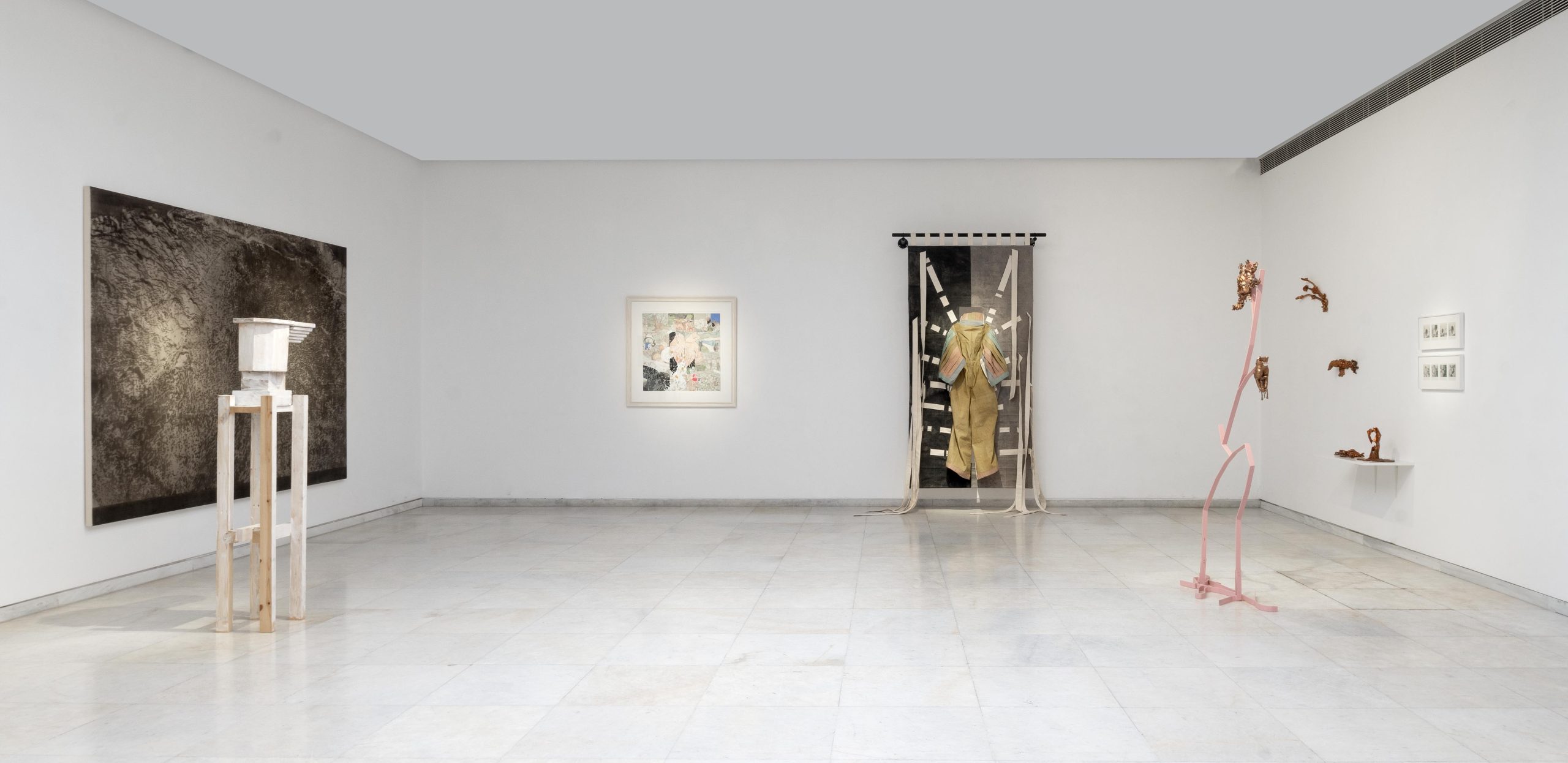
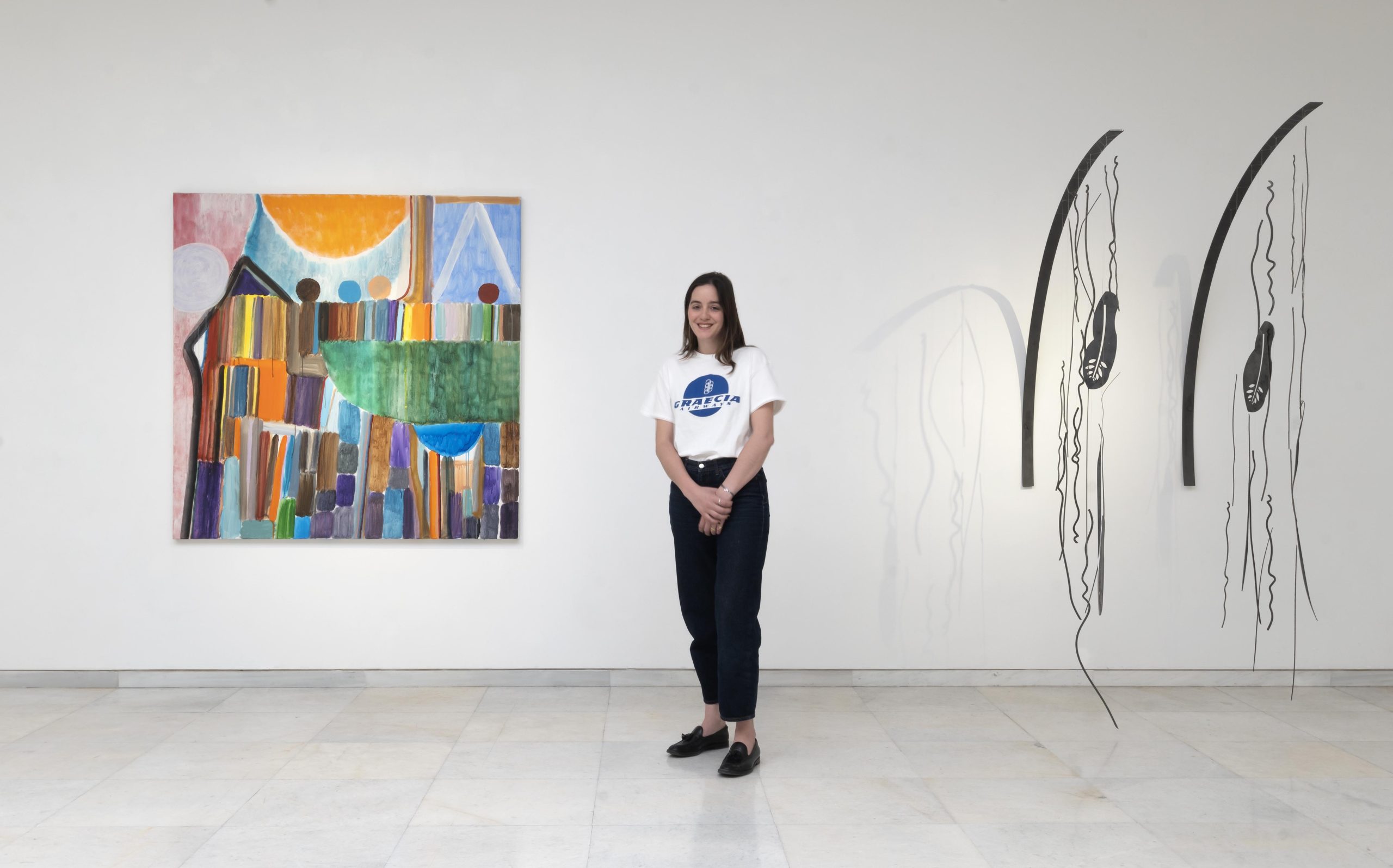
The exhibition Masking at Zoumboulakis Galleries explores the notion of fragility, and I believe it’s important, especially in the current political and social climate, for this concept to come to the forefront. Through research and reading, I realized that this topic has been explored for decades — and I wanted to bring it back into focus, as I see it as a timeless condition.

Interestingly, the idea for the exhibition began in a rather unexpected way, through the book The Snow Leopard by Sylvain Tesson. At one point, the author describes how the leopard disappears into the mountains: “A magical shadow! I thought it had vanished,” I said. “That’s what it wants us to believe.”

This sparked my first question: have we ultimately learned to camouflage our emotions? As if we perceive others as threatening, and therefore choose not to reveal parts of ourselves?

When I began selecting the artists and works for the exhibition, I did not focus on the “fragility” of the materials themselves, but rather on each artist’s research field and how their work relates to vulnerability — whether on a social, political, or existential level.

Which artists are participating, and how do their works fit within the exhibition?

The exhibition brings together eleven artists — Elli Antoniou, Giorgos Avgeros, Kostis Velonis, Marina Gennadieva, Panagiotis Kefalas, Marilena Kranioti, Xenofon Bitsikas, Malvina Panagiotidi, Nefeli Papadimouli, Stefanos Rokos, and Kostas Christopoulos — whose practices engage in dialogue through different media and approaches, including painting, sculpture, and installation.

Each work is situated within this thematic framework, through which personal artistic inquiries emerge. For instance, in Elli Antoniou’s work, the study of the same landscape focuses on slowness and, in part, the acceptance of vulnerability and error. Marilena Kranioti, with her piece Rituals for the Sun, made of metal, emphasizes the shadows it casts, as for her “the shadow takes on a central role, symbolizing the part of the self that remains unaccepted or unexplored.”

Marina Gennadieva continues mapping Cyprus’ “dead zone,” an active minefield, using it as a starting point to reveal how nature is not simply present, but “masked” within a field of geopolitical tension. Meanwhile, Xenofon Bitsikas, through an ongoing dialogue with iconic painters, locates fragility within the very experience of “seeing and being seen,” in the relationship between observer and observed.

What kind of feedback did you receive from the audience? How did they respond to such a distinctive concept?

I can say that we received very positive feedback from the audience, particularly regarding the way artists from different generations engage in dialogue within the exhibition. What’s interesting is that each visitor connects with a different work, and many people commented positively on the exhibition text — saying they related to it directly, almost as if they were reading something that concerned them personally.

How important is your collaboration with Zoumboulakis Galleries, and what have you gained from it?

I’m very happy about this collaboration with Zoumboulakis Galleries, a historic gallery in Athens, and I especially appreciate the trust that Daphne Zoumboulaki has shown in my work. Through this partnership, I’ve gained valuable experience — both in terms of presenting my work and through engaging in dialogue with a wider audience.

What comes next?

On May 22, the exhibition Elongated Acts, which I am curating, opens at Amphicar Studio — an artist-run space that invites a curator each year to bring together artists working both within and beyond the studio. For the first time, I’ll be collaborating with sixteen artists, and I’m really looking forward to it.

How important is it today to connect with people who share a common language and aesthetic? How often does that happen, especially in such a demanding field as yours?

I believe this happens quite organically; in a way, energies “flow,” and we eventually find ourselves surrounded by people with whom we share a common language and aesthetic. I feel very fortunate to have built such a circle, which continues to grow. I actively seek new collaborations through which meaningful human relationships can emerge.

At the same time, I think it’s essential to have people we trust — with whom we can speak openly, engage in dialogue, and practice constructive critique. These are crucial elements for growth, especially in such a demanding field.

What would be a dream project for you?

I haven’t defined it yet, but I would certainly be interested in a project in public space, as that’s where I feel I express myself best. I would like, at some point, to take on such a space in Athens, even though I know it would be particularly demanding, requiring coordination and organization on many levels. Still, it’s a challenge that deeply interests me — and this question is definitely food for thought.

Do you think Greeks love art? Are they open to new ideas, or more skeptical?

Having worked both in Athens and on several islands — such as Spetses, Crete, and Chios — I believe that audiences need time to engage with art. There will always be people who are more skeptical or feel it doesn’t concern them directly, but that’s not necessarily a negative thing.

For example, in Spetses, it was particularly interesting: some people supported me from the very beginning, while others gradually grew closer. These encounters are extremely valuable to me, which is why I continue working in this field.

In Athens, I think things are different, as there is greater familiarity with contemporary art and more independent spaces that encourage audiences to experiment and discover new forms of expression.

What is your personal definition of beauty?

Beauty comes from within — I often associate it with light.

What do you consider authentic today?

Something that doesn’t make me question it — something I perceive as genuine and organic.


Exhibition duration: April 23, 2026 – May 23, 2026

Photo: Studio Vaharidis

Author