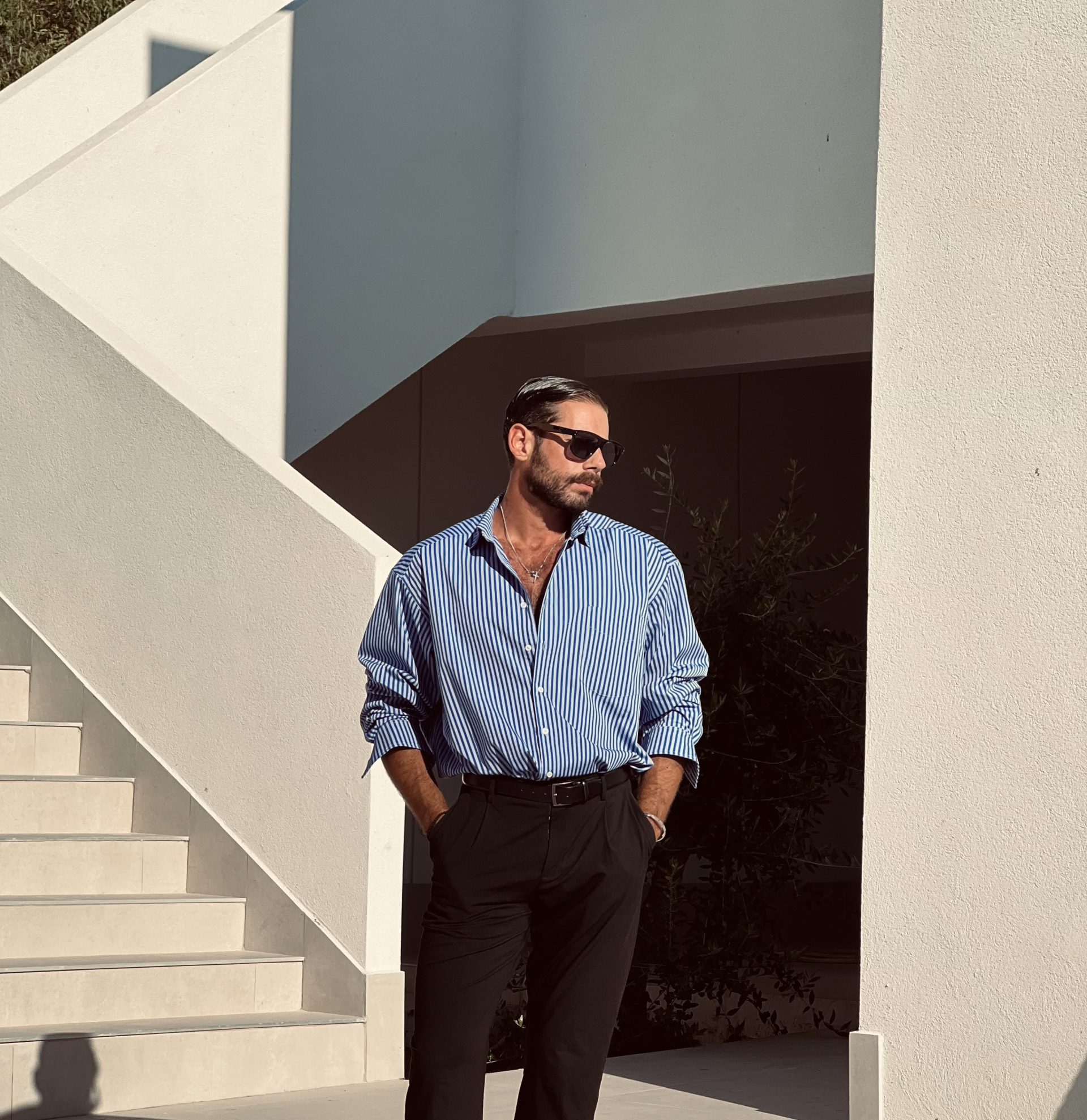
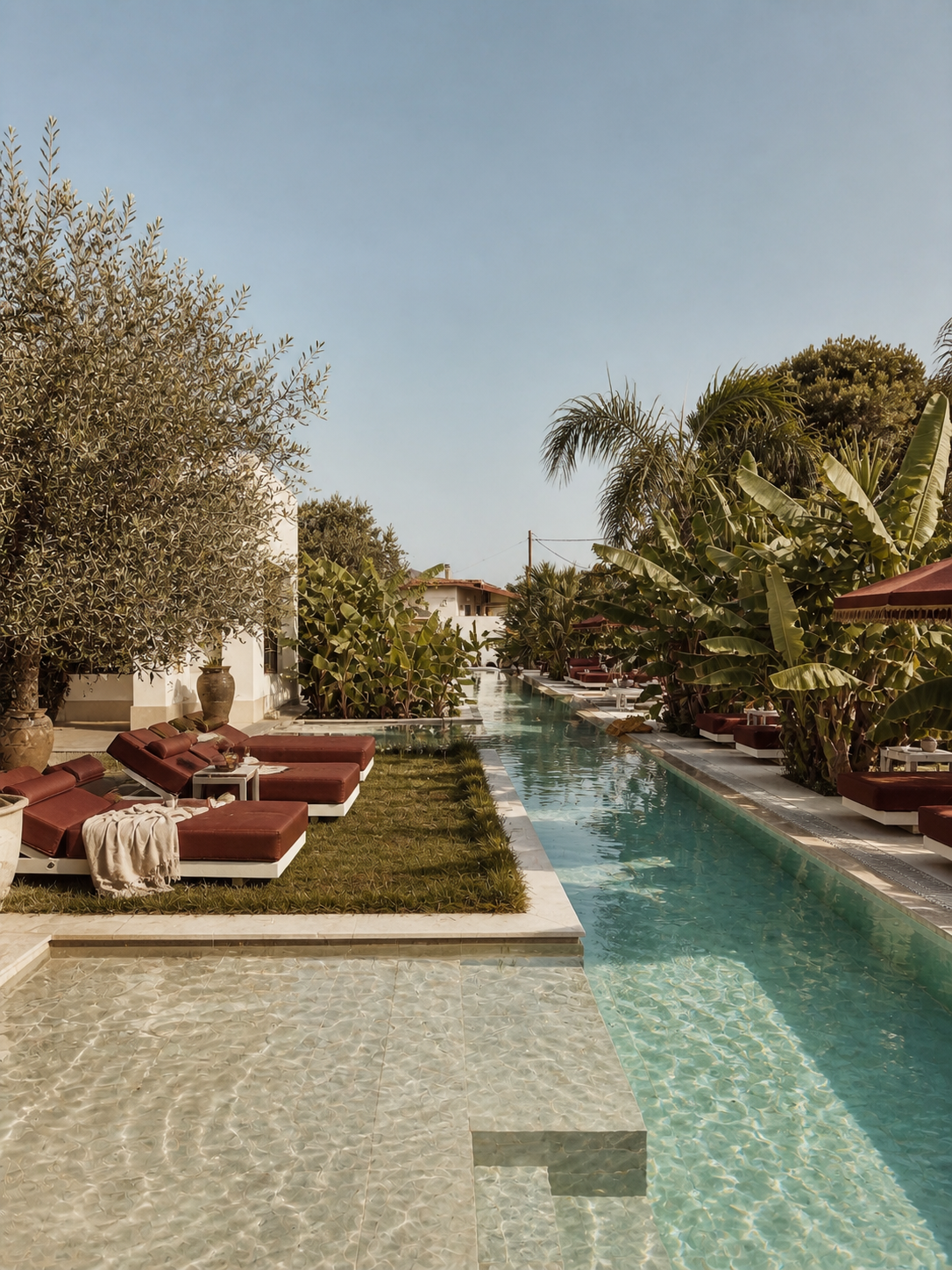
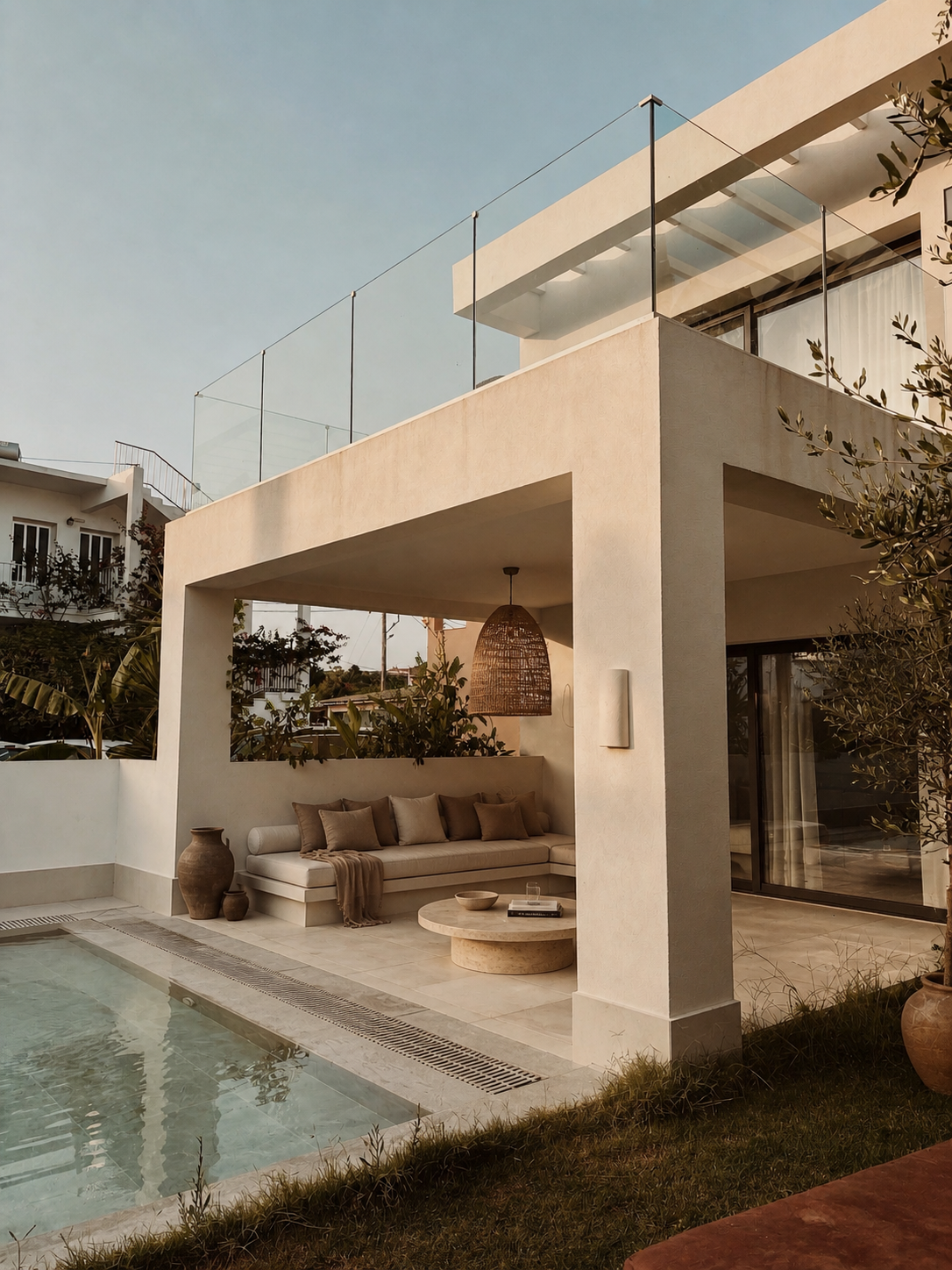
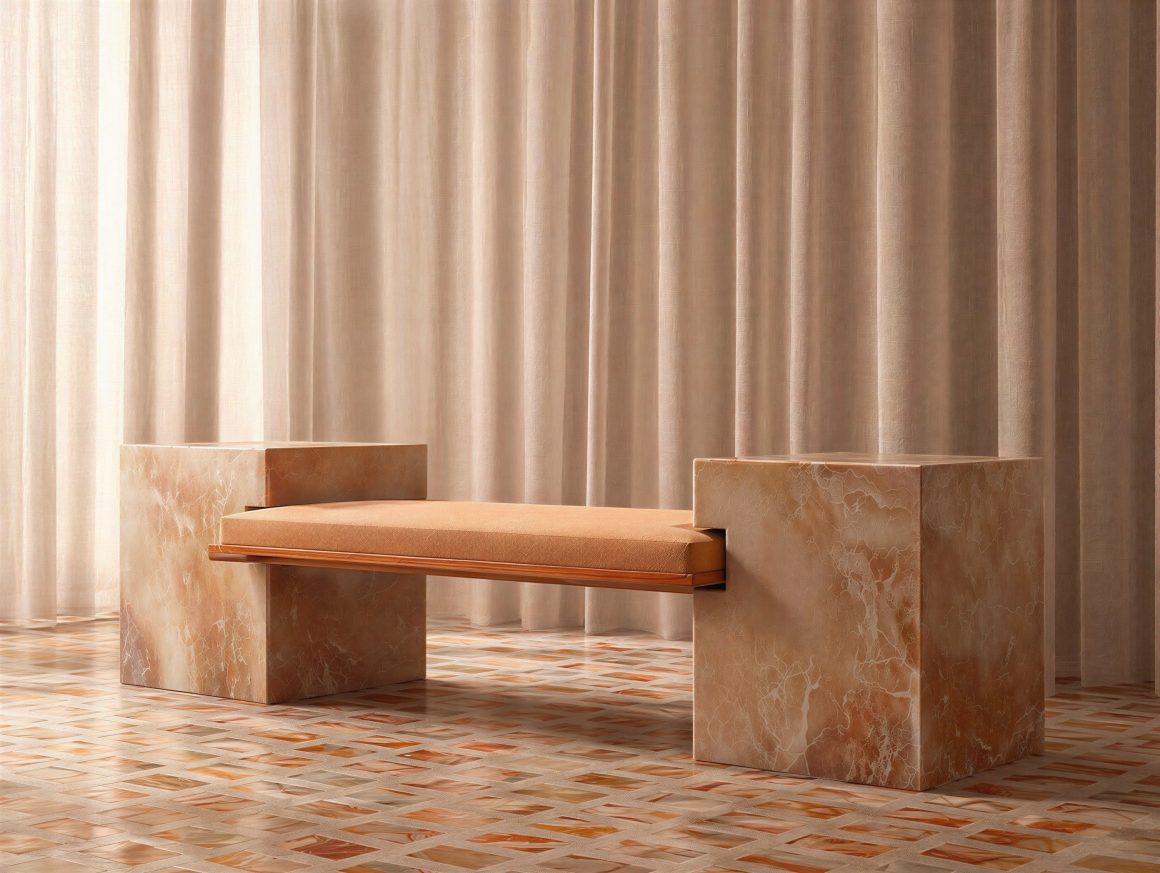
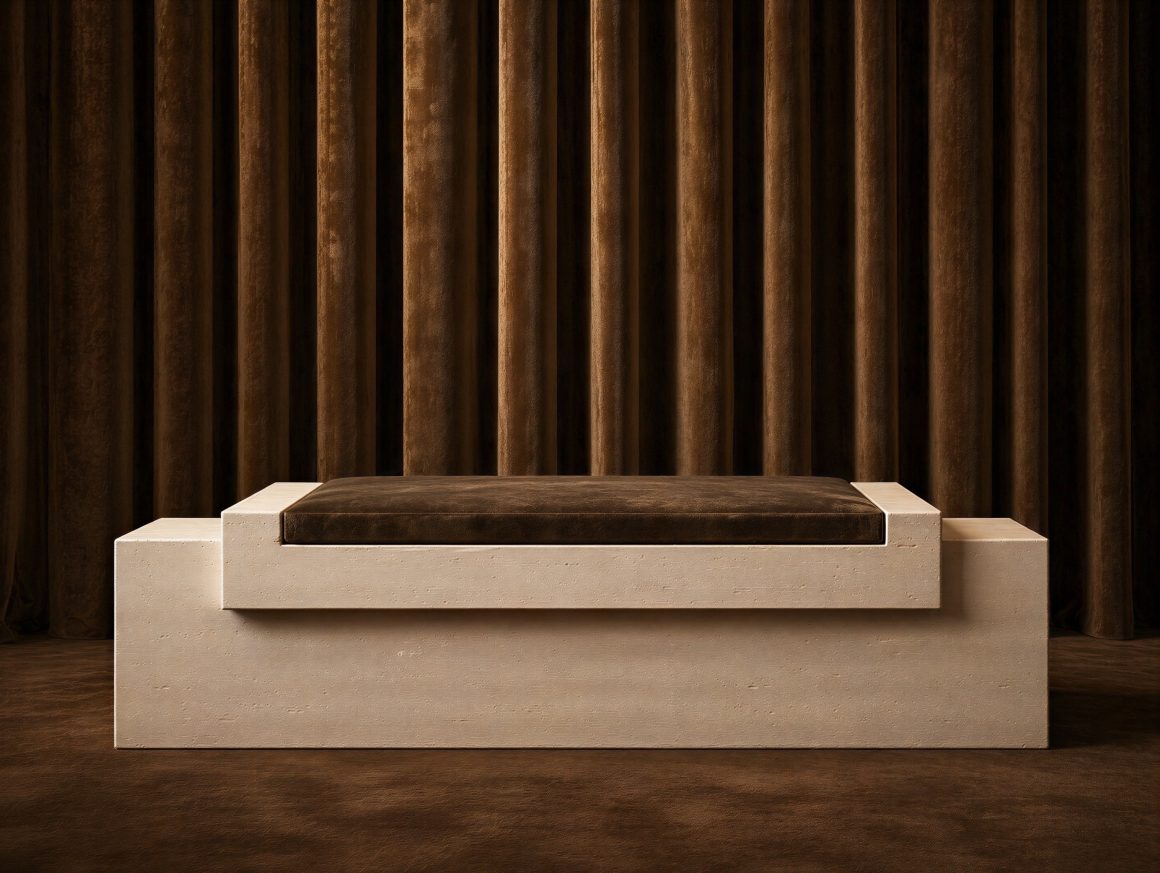
What were the key milestones in your journey, the ones that shaped your path?
The first defining influence in my life was my grandmother, one of the finest seamstresses in Northern Greece in her time. She introduced me to the world of fabrics and the magic of color combinations, nurturing my aesthetic sensibility from an early age.
The second highlight was my graduation from the Department of Physics at the Aristotle University of Thessaloniki. It was there that I realized with certainty what I did not want to pursue professionally: a technocratic career.
The third and perhaps most decisive step was my first job at the largest fashion advertising agency in Greece. Through my involvement in the creative process and set design, I discovered my love for creating spaces — spaces with identity and longevity, not confined to a single season but evolving over time and telling a story.
Having explored different fields, how did your love for creation emerge and evolve over time?
I wasn’t one of those people who knew from an early age what path they wanted to follow. Although I always felt the need to express myself creatively through drawing, space, and music I hadn’t settled on a specific professional direction.
That’s why I chose to study Physics, a field that provided me with a strong academic foundation and the opportunity to explore different ways of thinking. Over time, through experimentation and trial, I began to discover what truly resonated with me discarding what didn’t fit and keeping what genuinely interested me.
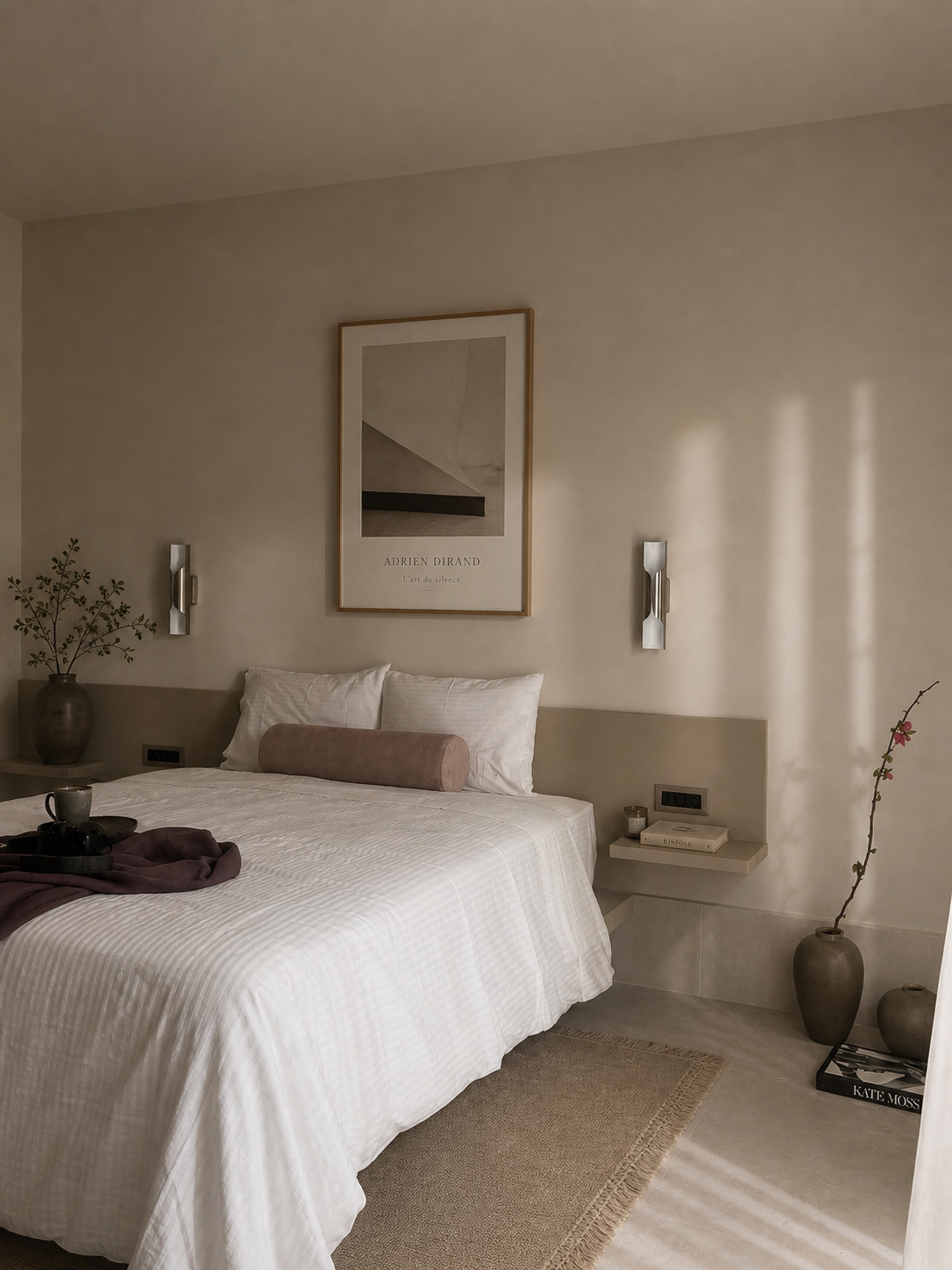
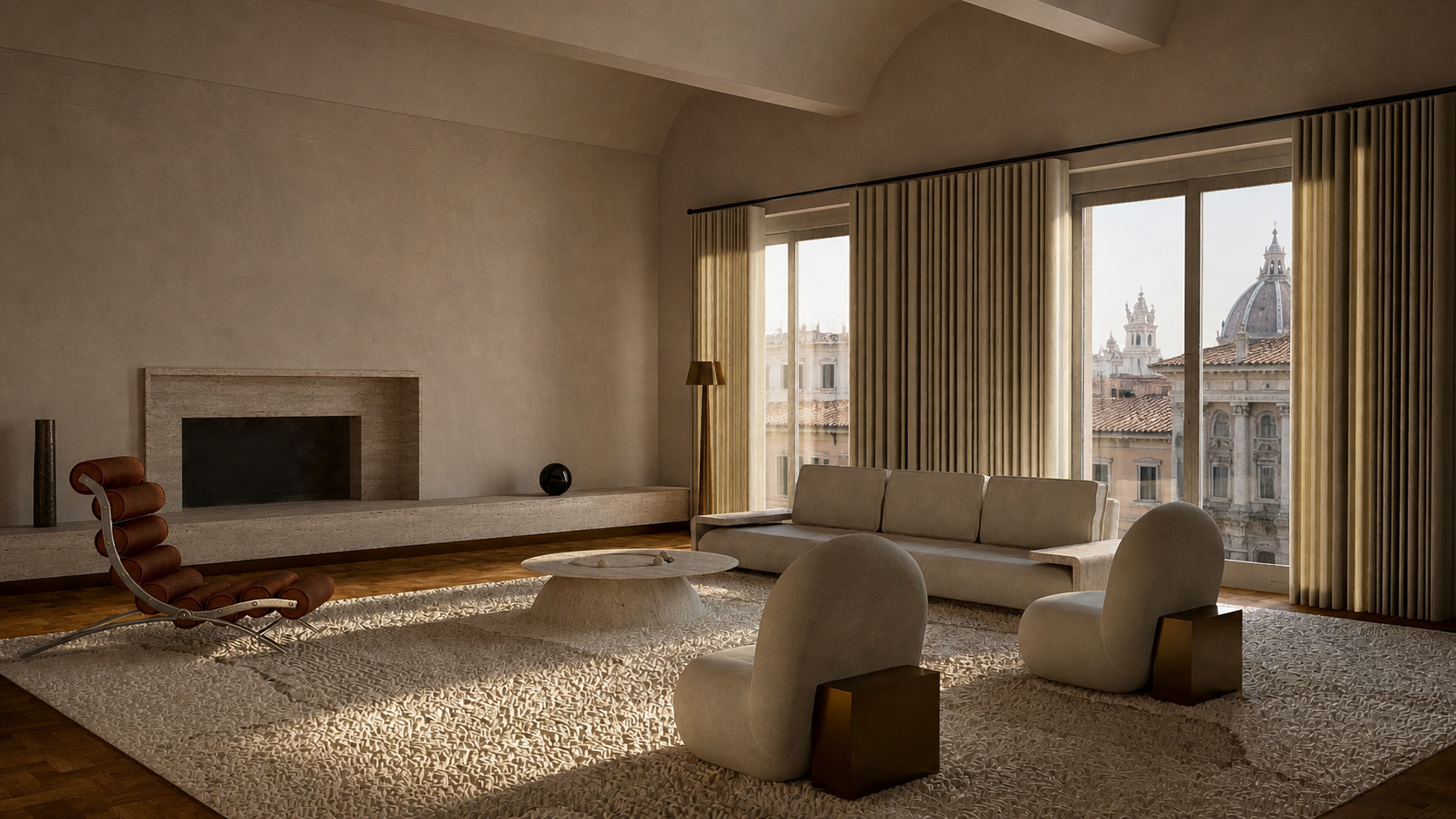
Gradually, this search took on a more defined shape and led me into the field of interior design. Even today, I continue to evolve and deepen my practice, with my interest now increasingly shifting toward a more specialized area: furniture design.
What elements have shaped your path, and how do you feel your aesthetic continues to evolve?
If I’m completely honest, my journey has been shaped by constant questioning and a deep search for my own identity. I believe that for any creator, it’s essential to recognize and accept who they are; only then can they express themselves authentically through the works and objects they create.
This process, however, has no endpoint. Self-discovery is an ongoing journey, as we are constantly evolving as individuals. Images, experiences, relationships, people who inspire us as well as those who challenge us, all contribute to this evolution. Everything becomes material, a personal “composition” that is absorbed into the creative process.
Through this journey, the work gains substance and identity. It becomes a carrier of experiences and emotions, a way of conveying your personal truth. And perhaps that is where uniqueness lies: in having a genuine story to tell, and the courage to give it form.
You create objects in a distinctly personal way. What led you to this mode of expression, and what does your creative process look like?
What I would like people to recognize in my work is a clear stance: that being different is not only acceptable, but essential. To have your own voice, your own aesthetic, your own narrative. In an era that often promotes uniformity, I believe the greatest act of courage lies in choosing to be authentically yourself and to stand out.
That’s why I want my work to act as a reminder of this freedom — to encourage individuality, to make space for difference, and to convey the power of personal expression. Not merely as objects, but as carriers of a way of life: that each person’s truth deserves to be told, and in the most personal and distinctive way.
Is metal your favorite material, and why? Would you experiment with other materials?
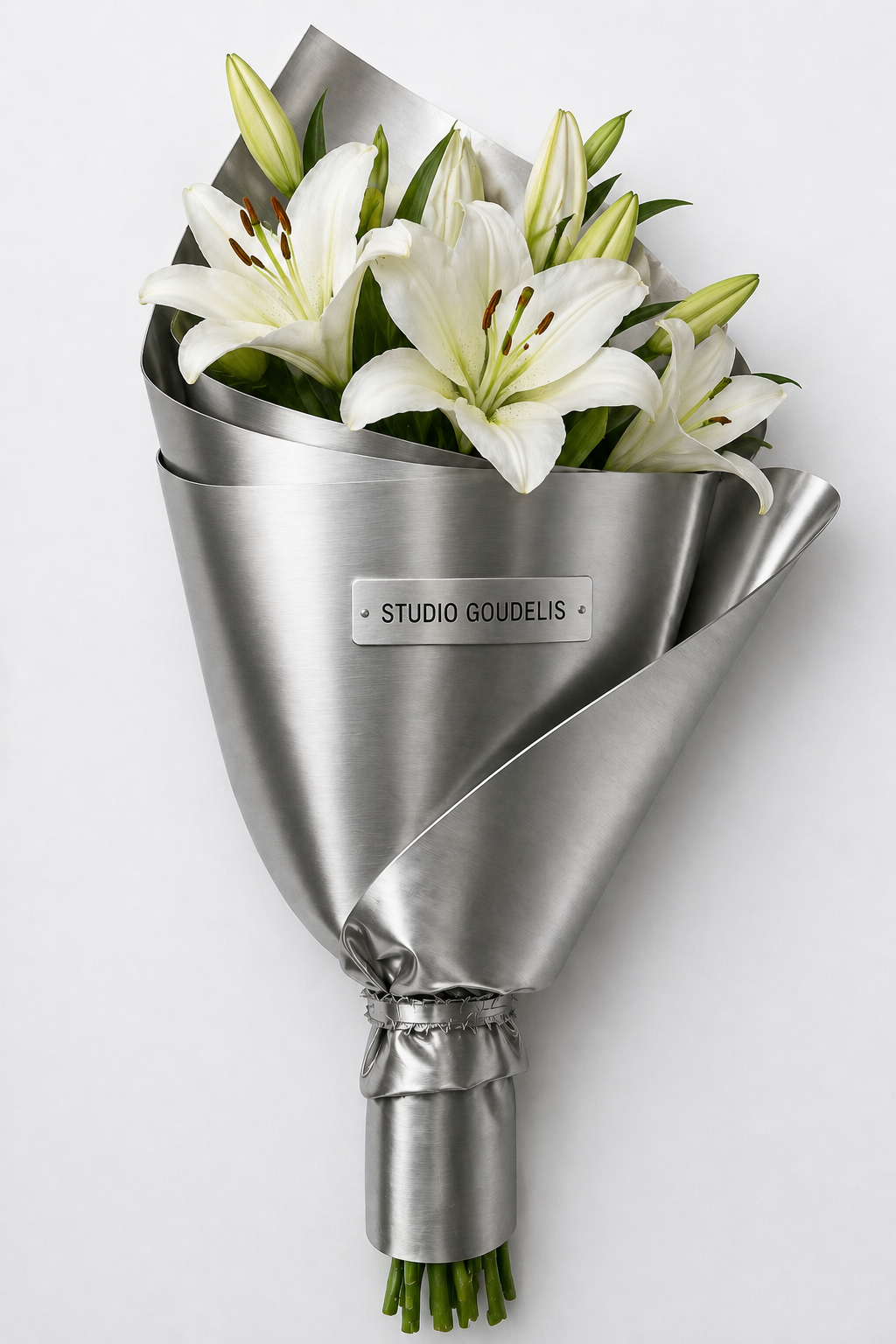
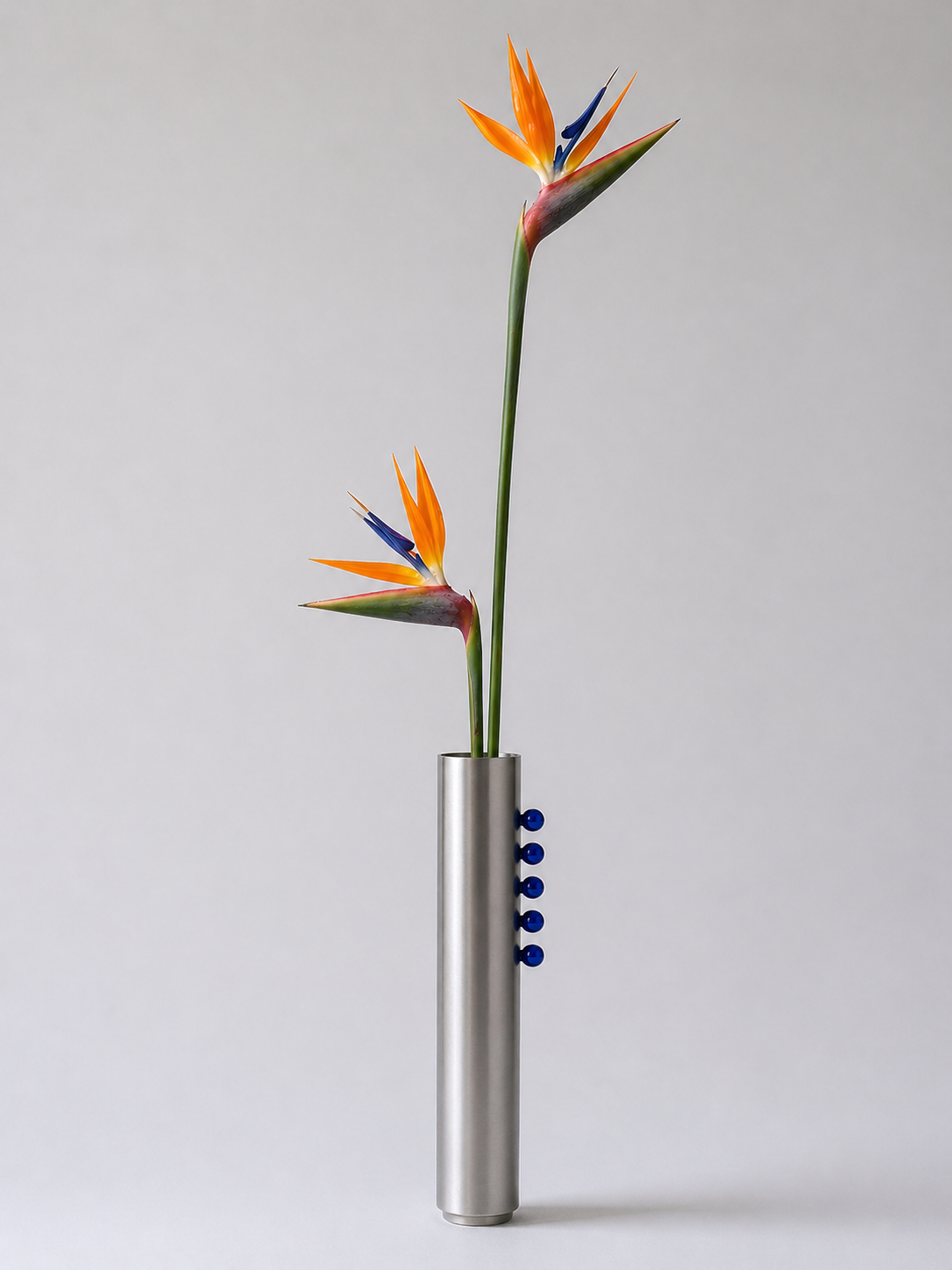
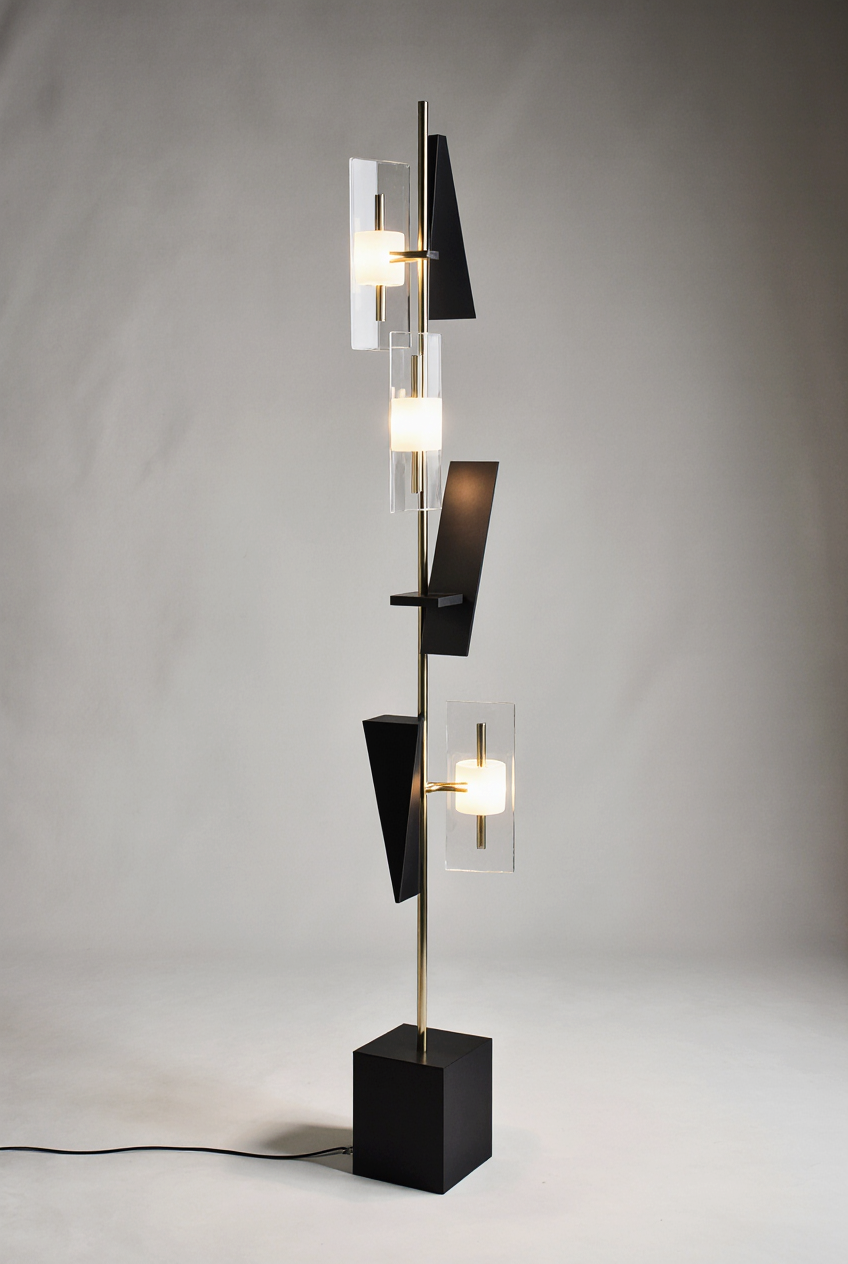
Metal is a material I find endlessly fascinating to experiment with. What draws me to it most is its versatility — the different textures and finishes that allow it to express multiple “personalities.” Depending on its use and treatment, it can feel strict and industrial, or soft and almost poetic. Perhaps that’s why I feel such a strong connection to it; like me, it isn’t confined to a single identity.
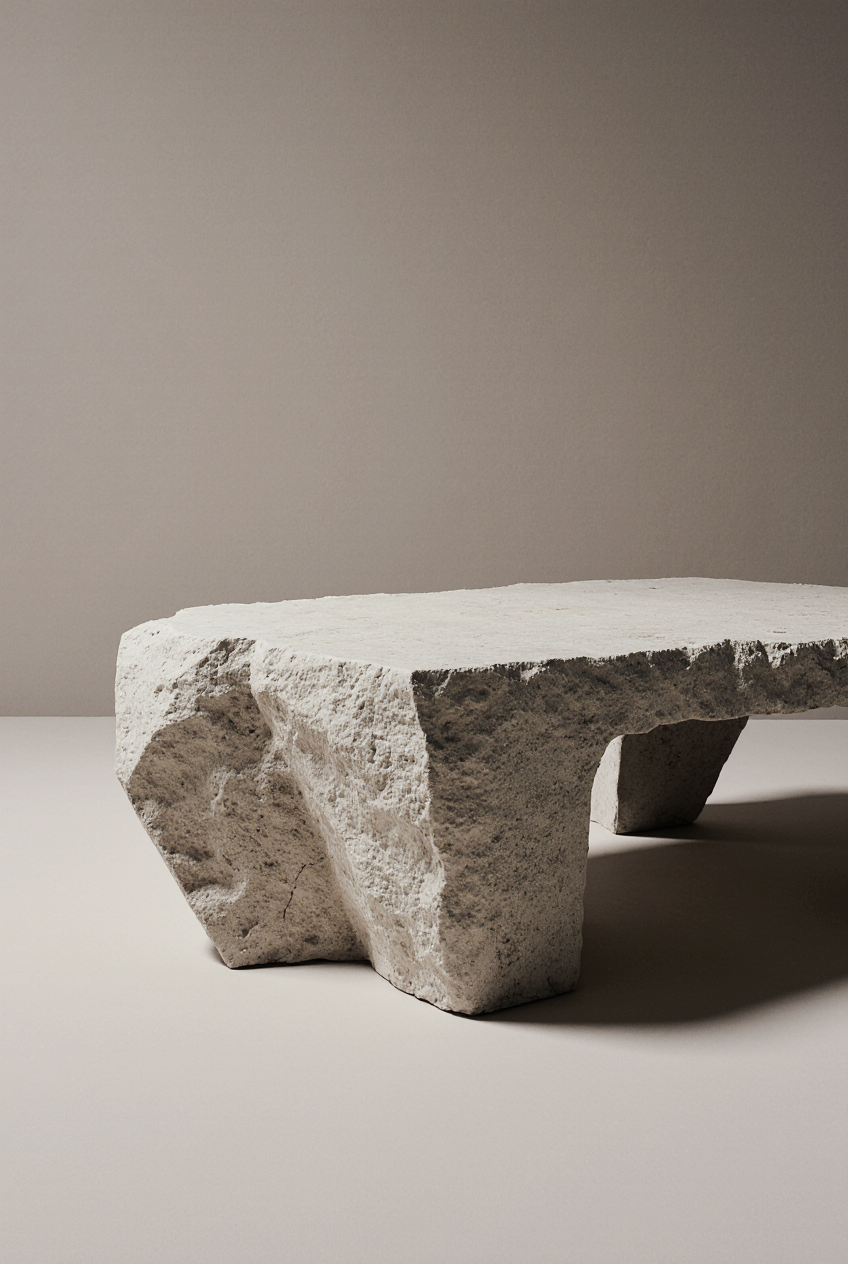
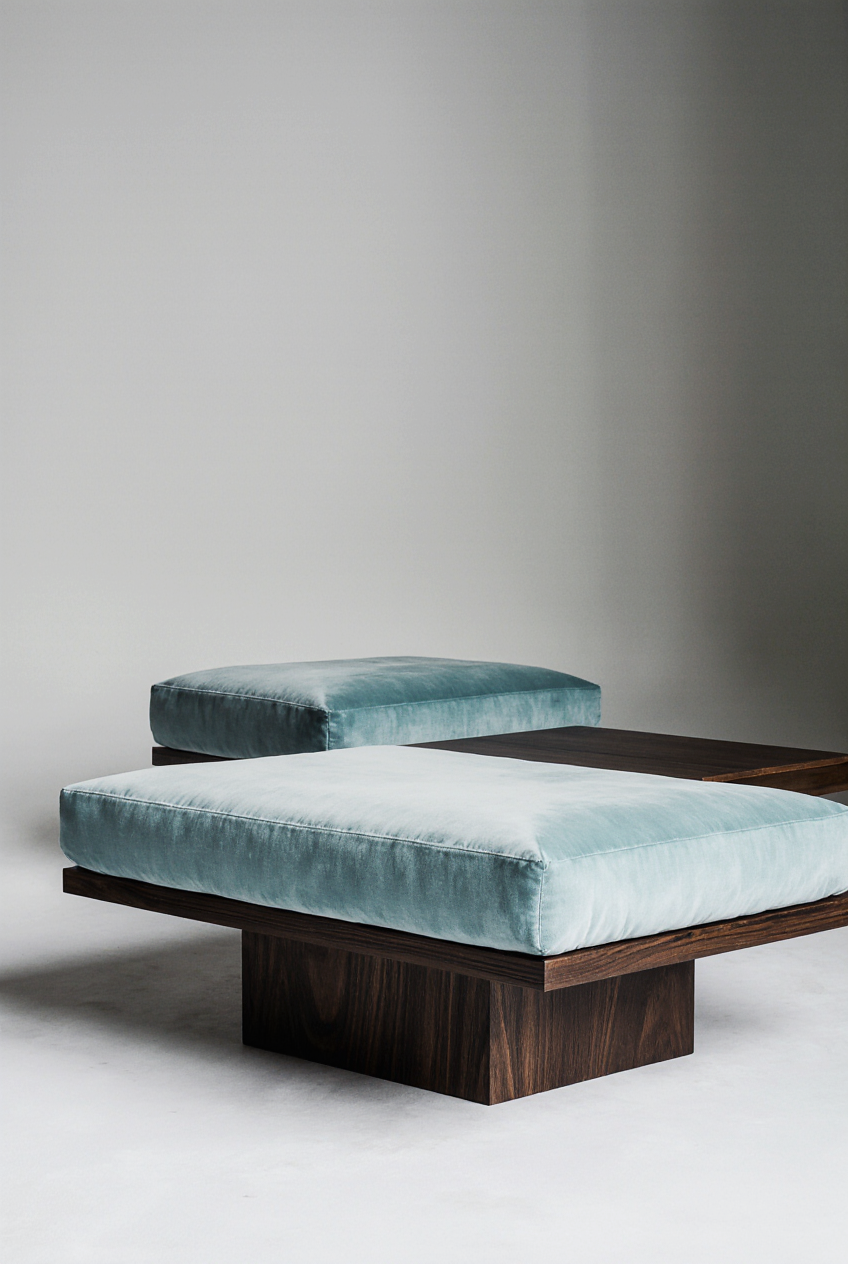
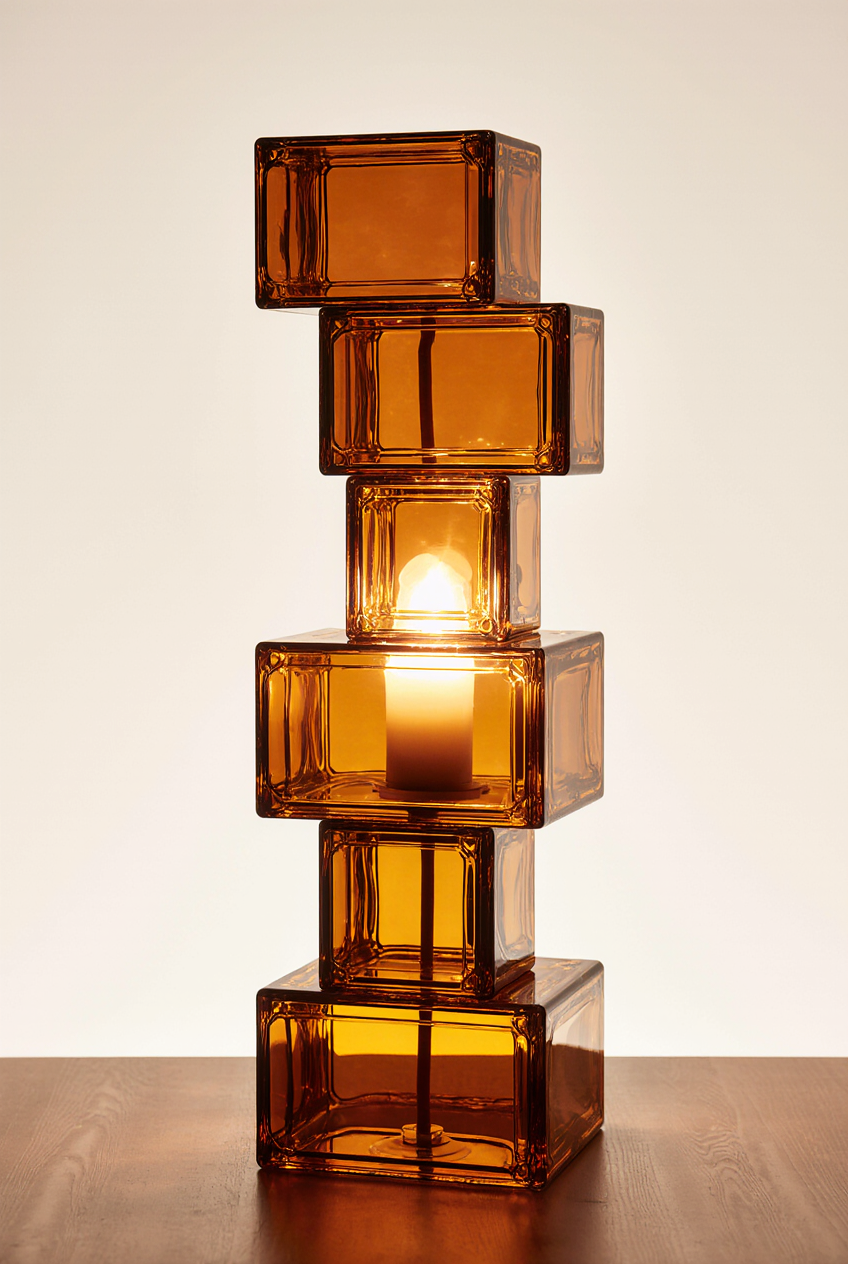
At the same time, I’m interested in how metal interacts with other materials. Glass, with its transparency, and wood, with its warmth and organic quality, create contrasts that bring depth and balance to a space. Through these combinations, the result becomes more layered and alive — a composition in which each material contributes to a complete experience.
What would you like an ideal viewer to take away when encountering your objects?
What I would like people to recognize in my work is a clear stance: that being different is not only acceptable, but essential. To have your own voice, your own aesthetic, your own narrative. In an era that often promotes uniformity, I believe the greatest act of courage lies in choosing to be authentically yourself and to stand out.
That’s why I want my work to serve as a reminder of this freedom — to encourage individuality, to create space for difference, and to communicate the strength of personal expression. Not simply as objects, but as carriers of a mindset: that each person’s truth deserves to be expressed, in the most personal and distinctive way possible.
How do you engage with technology, and what new possibilities has it offered you?
Technology now plays a decisive role in my profession. From the two- and three-dimensional tools used by interior designers to the new possibilities offered by AI, it has become an integral part of the contemporary creative process.
However, when it comes to the artistic dimension — beyond the purely technical or construction aspect — I believe the relationship with technology must remain balanced. AI can function as a powerful complementary tool, but not as a substitute for creative thinking. Technology is inherently structured and “square,” whereas art requires freedom, instinct, and personal expression.
When used without measure, there is a risk that technology may limit that freedom and weaken the final outcome. For me, what matters is using it as a means to enhance creation — not as the mechanism that defines it. Art should remain alive, authentic, and deeply human.
What else lies within the spectrum of your explorations?
At the core of my work is anything related to aesthetics. From the beginning, I experimented not only with spaces and furniture, but also with objects, constantly searching for new modes of expression. Over the past two years, this need to create has taken on another form through my own shirt brand, goudee — a natural extension of my aesthetic identity.
I believe every creative individual is on a continuous path of evolution. There is an inherent need to test oneself, to move between different fields, to experiment without constraints. It’s in our nature to be curious — to observe, absorb, and redefine.
This curiosity is what keeps creativity alive. It is the driving force behind every new idea, every transition, every next step.
What can we expect from you — what’s coming up next?
The coming period looks particularly creative, with exciting projects that have either already begun or are currently in progress. It’s a time filled with anticipation and inspiration; however, it’s still too early to share more details.
What I can say is that every new project is an opportunity for growth and redefinition — a continuation of my creative journey, driven by the same desire for experimentation, identity, and substance.
What’s the first thing you notice when entering a space?
If there’s one element I never overlook in a space, it’s the skirting board. It has almost become an obsession — a detail that, for me, carries immense importance. I’m particularly drawn to skirting boards made from unexpected or “unusual” materials, because it’s precisely in that small zone between the wall and the floor that an entire character can be hidden.
It’s one of those elements that often goes unnoticed, but when treated creatively, it can transform the overall feel of a space. For me, the skirting board is not just a finishing detail; it’s an opportunity for expression.
What would be your dream project?
One of the most distinctive projects I’ve envisioned began as a personal exercise during my student years. At the time, I had the opportunity to design a space without constraints — a highly atmospheric, bold, and deeply sensory environment that explored the limits of experience and perception: a sex club.
Since then, this idea has stayed with me as a kind of dream project. Not simply as a concept, but as a challenge: to create a space with a strong identity, one that provokes, narrates, and engages the visitor in a complete, multi-layered experience.
It’s a project I would like to realize one day — when the conditions allow — because I believe such spaces have the power to redefine how we perceive the experience of design.
The artists closest to your heart, and why?
Tristan Auer, Kelly Wearstler, and Pierpaolo Piccioli. They handle eclecticism and maximalism with surgical precision.
A work you wish you had created yourself
Fondazione Prada and the Saint Laurent flagship store in Paris.
In another life, you would be
A florist, with a small shop on a pedestrian street.
Three places you love returning to, and why
The first is my hometown, Arillas in Corfu. It has the most beautiful sunset I’ve ever seen, and it always moves me.
The second is Milan. It’s the only city where I feel I truly belong.
The third, although I’ve only been once, is Anafi — I can’t wait to return. It’s the most authentic place I’ve experienced.
Your definition of beauty
Imperfections within absolute symmetry.
What do you consider authentic today?
Being yourself.
If you were to design something for TheAuthentics.gr, what would it be?
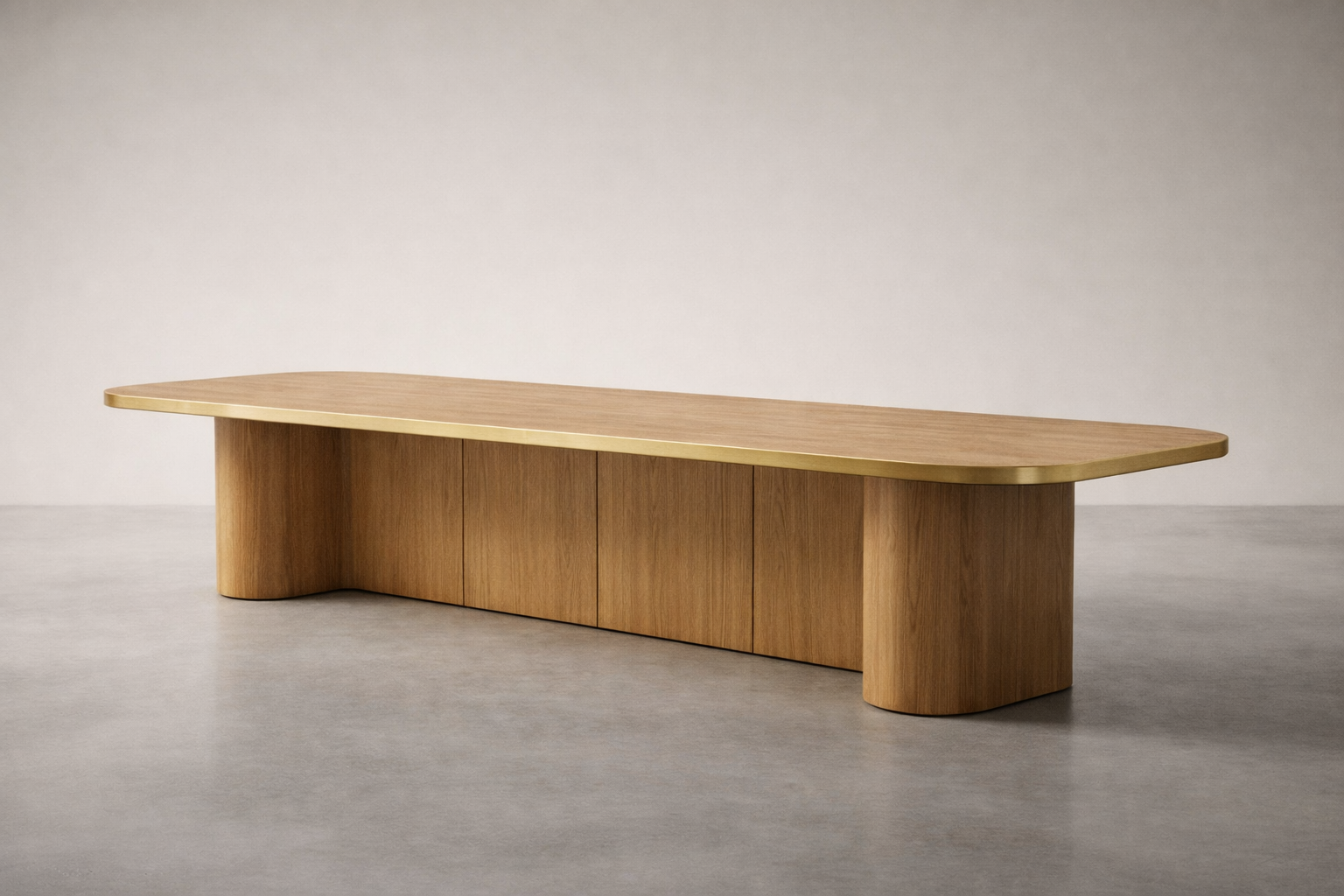
A large marble table for your meetings — one that would also function as a gathering point for friends, for authentic conversations, authentic dinners, and the genuine smiles of the people sitting around it.