How did your creative path begin? Tell us about your life story and the key steps to your career.

I was born and raised in a small coastal town in South Eastern Australia. My Dutch parents had migrated to Australia in the 1950’s, as many young Europeans did at that time. My family was not particularly focussed on culture or art, but hanging in our family home were some fading reproductions of paintings from the golden age of Dutch painting. To this day I can’t escape the faded radiance of Johannes Vermeer’s The Milkmaid (1658), and the late summer, exhausted camaraderie of Pieter Bruegel the Elder’s The Harvesters (1565).

When I was very young, there was a room in our newly-built house which was designated ‘off limits’. It was off limits because it was unfinished. It had raw concrete floors and unpainted walls. It was a sparse room and all of its surfaces were hard, but the light filtering through the bedsheets that covered the large windows, thereby masking the untamed Australian landcape, was very beautiful. There was one piece of furniture in that room, an old wooden bookcase, and it housed an A3 folio of colour plates of paintings by the 15th century German/ Flemish painter Hans Memling. I would secretly sneak into to that room and spend hours with the Memlings, simultaenously transfixed and terrified by the devils in the hell-scene of The Last Judgement triptych (1467). I can remember having nightmares at that time, that featured Memling’s fantasy hell-scene, set within the luminous light of the unfinished room, intercut with glimpses of the Australian bush.

Later I came to understand that those fading reproductions, more The Milkmaid and The Harvesters than The Last Judgement, linked me with something that I felt connected to. The connection was weak, stretched thinly across vast physical distances and tightly between cultural diferrences, but I felt it. Noone else in my family seemed interested in those icons of Netherlandish culture that were hanging around the house, but they made me feel differently than anything else in our home did, so I paid attention to them.

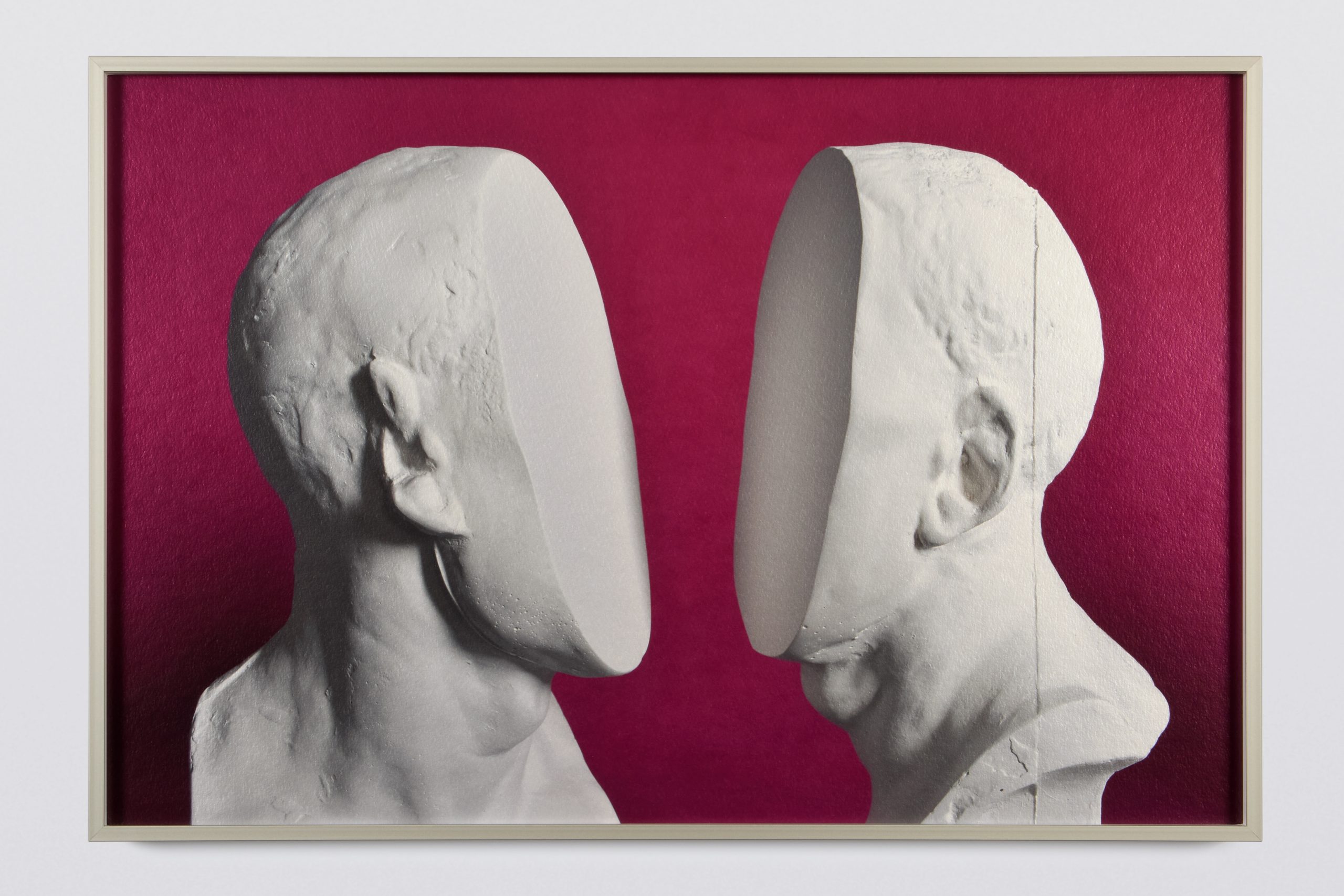
I first moved away from home to go to university to study and to be trained in the graphic design practice. The possibility of me going to an art school was unimmaginable to my factory working parents. So, after much argument and against my parents wishes, I went for my second option, which was to study design. In our family, like many working class migrant families, it was inconcievable that anyone from our family could be an artist. While studying design I was introduced to the discipline of Art History and importantly how it is an alive history, and how it can be used to make sense not only of how past people lived, but also to help us better understand our time. I remain deeply interested in art history and sometimes I make works in response to artworks made by other artists in other periods. One of the photographic works in the exhibition Beauty Is Between Us, is titled The Lovers (A Secret) 2020. I created it as a queer response to Rene Magritte’s small paintings Les Amantes that he created in 1928, just before my parents were born.

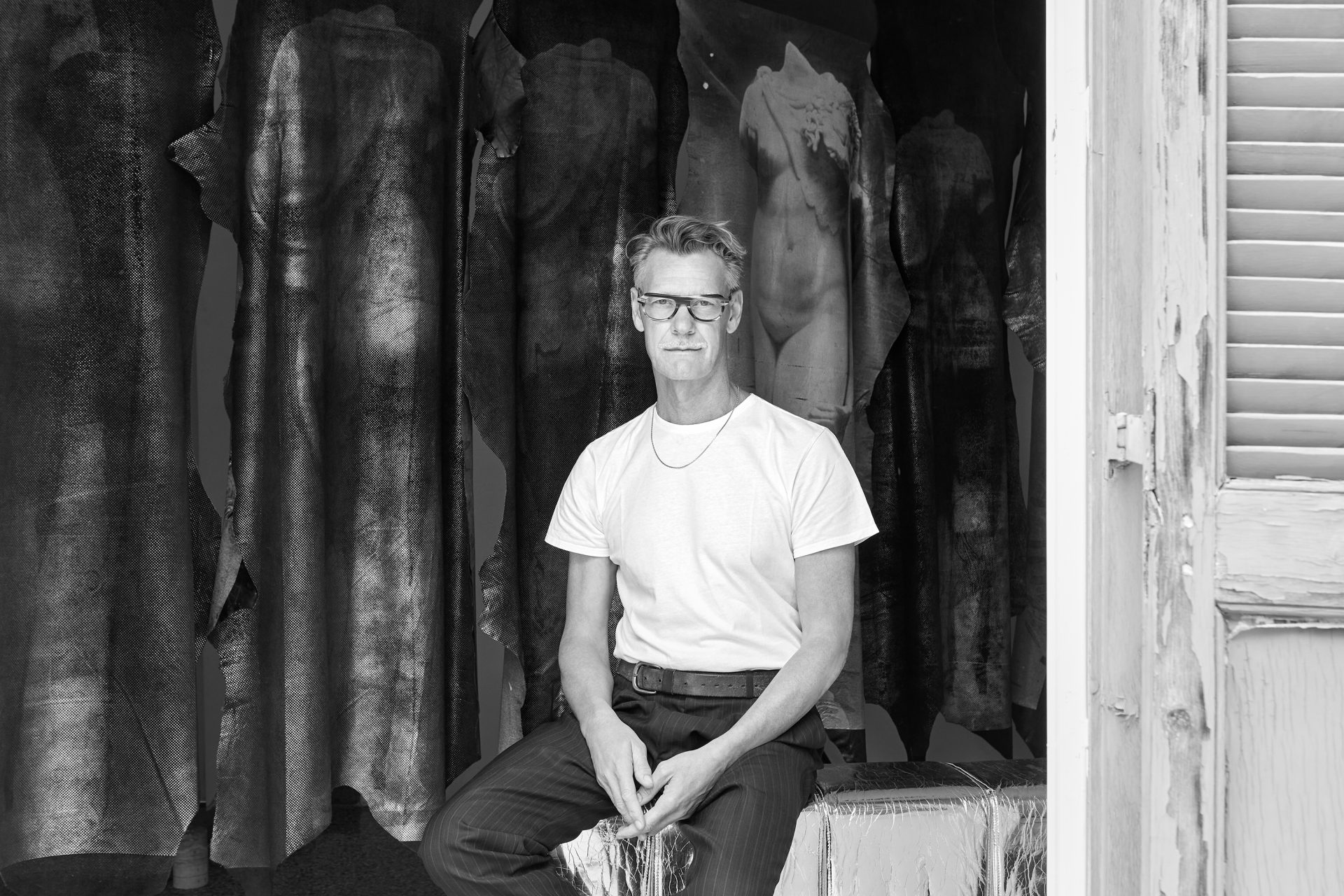
After ten years of practicing design in Sydney, Singapore and Hongkong, I returned to Australia to try to redress what I felt was a self-limiting imbalance between my highly visible, public design practice, and my private, nervous and perhaps secretive drawing practice. I applied with a folio of drawings for a position at the studio-based, academy model, premier art school in Australia at the time, The Victorian College of the Arts, and I was accepted. Soon after starting I moved into the sculpture studios. It was the three years I spent there doing a practice-led Masters of Fine Art (Research), followed a decade later by a practice-led PhD at Sydney College of the Arts : University of Sydney (where I was located in the Photomedia Department), that I developed my idiosyncratic, research-rich artistic practice, which spans diverse research and creation methodolgies including a range of activities in the expanded field of lens-based practice and sculptural processes (typically casting), alongside museum collections engagement projects and photo archive research.

Beauty between us is obvious in your current exhibition. What is this all about?

The words – Between Us – the second half of the title of my current exhibition Beauty Is Between Us, resonate on two distict related registers. They resonates in a practical sense on the exhibition-making register, and they resonate in a conceptual way on the artwork-making register.

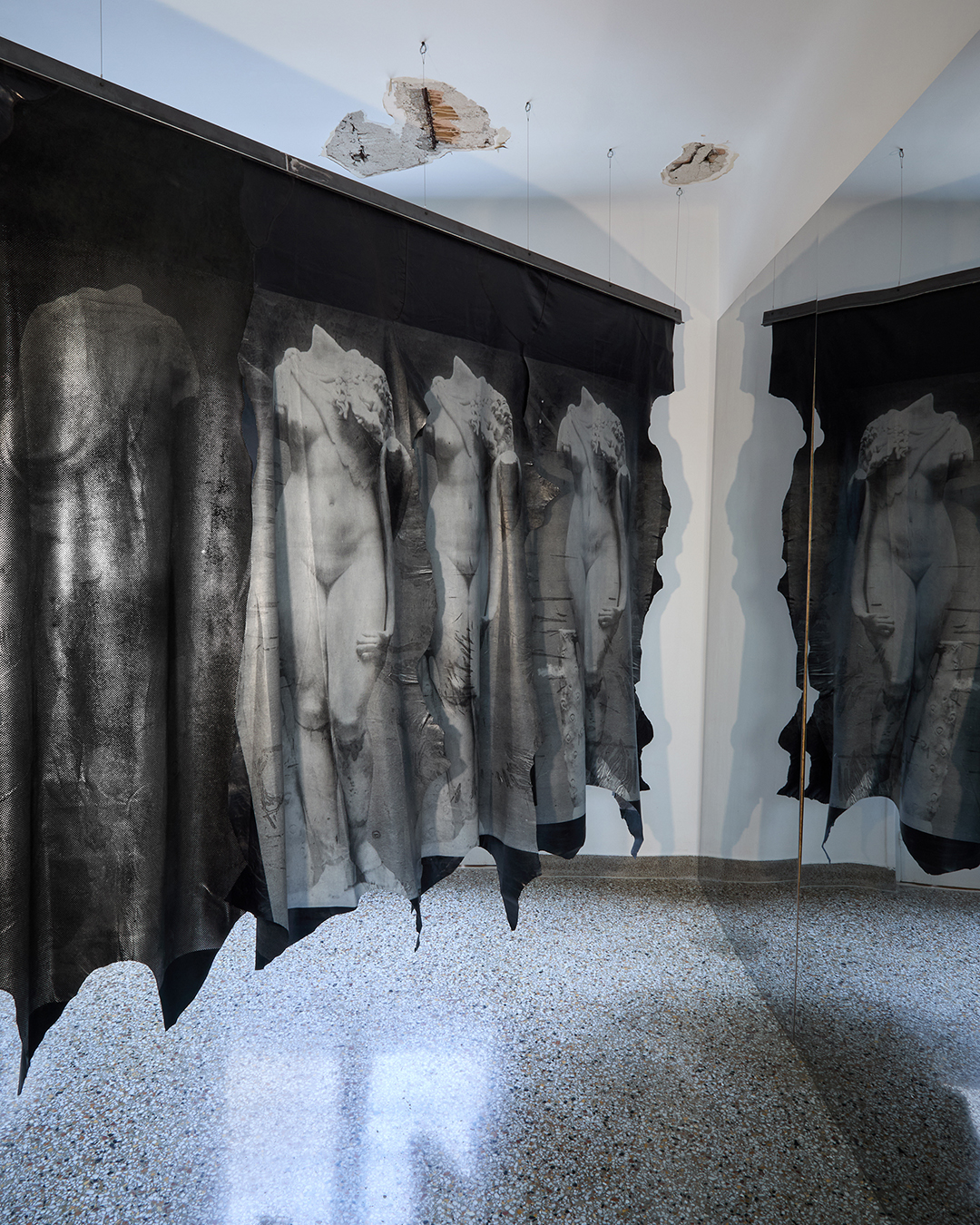
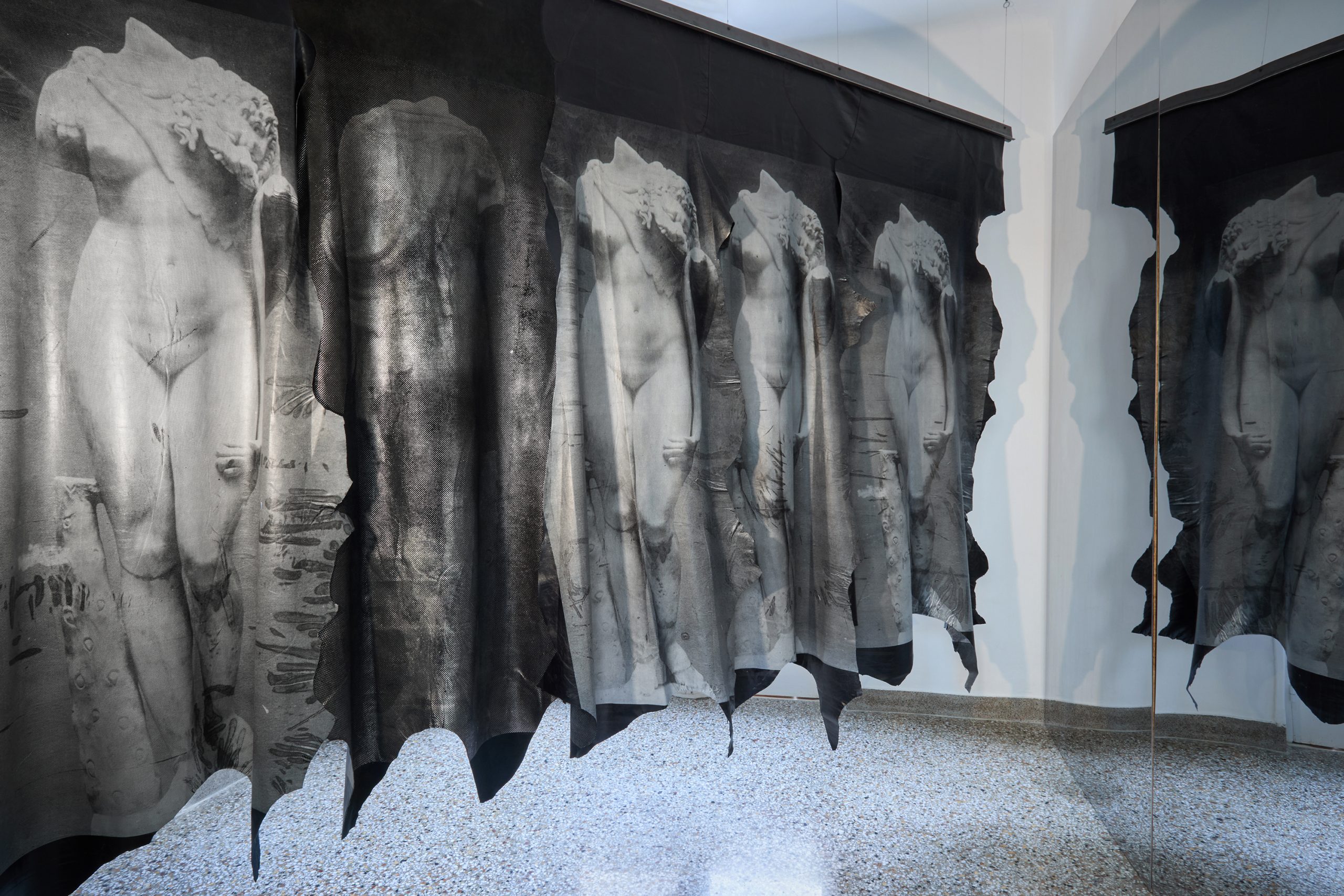
The exhibition Beauty Is Between Us was born in a very natural, efforteless way, during a visit to my studio by my close friend Nikos Yfantis. As I was unrolling a large photographically screen-printed work on leather, Suspicious Marble (Omphale) 2017, it captured his attention and he fell under its spell. When I mentioned that it had not yet been shown in Greece he said “we could do something together with it if you like” and that is how the project began.

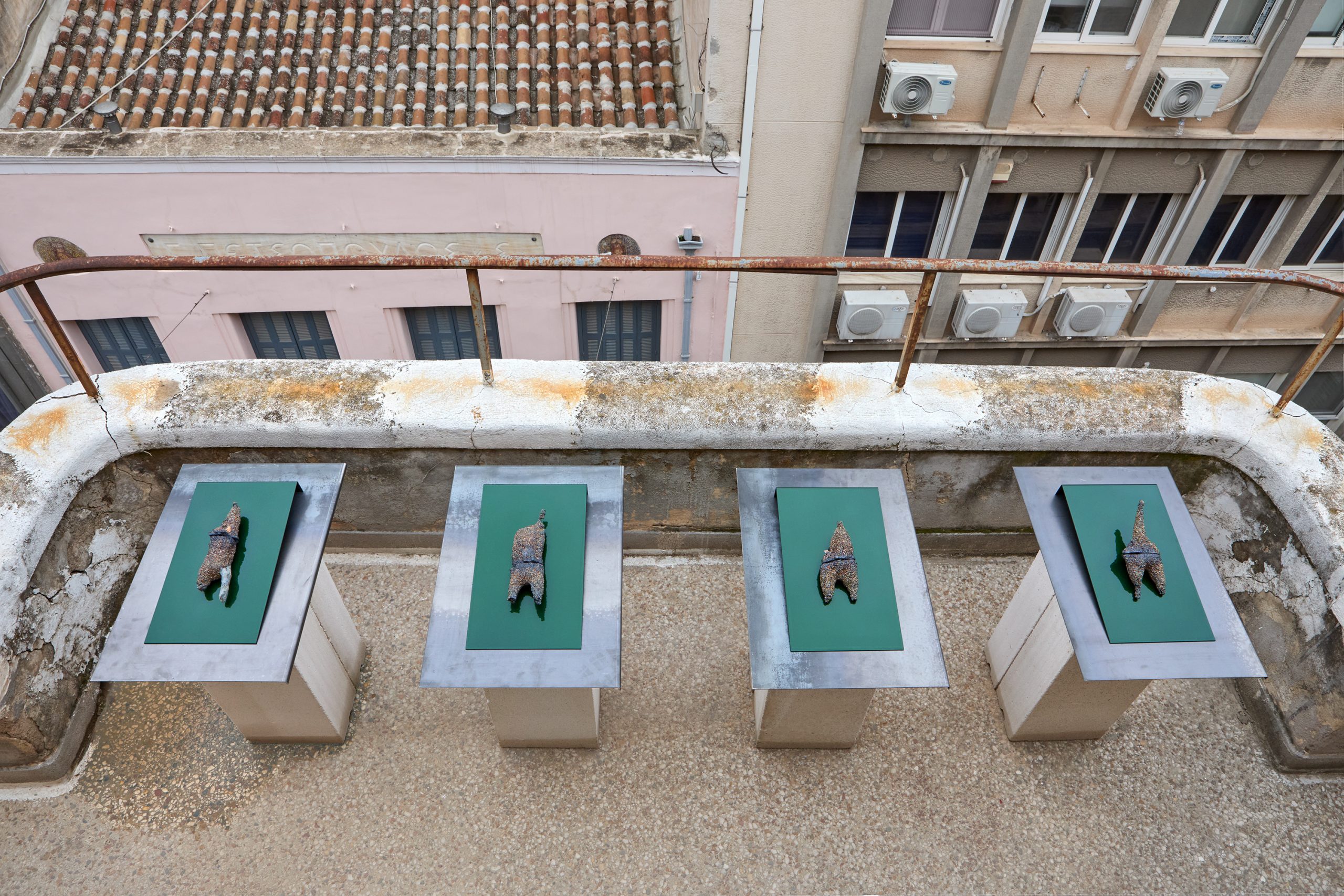
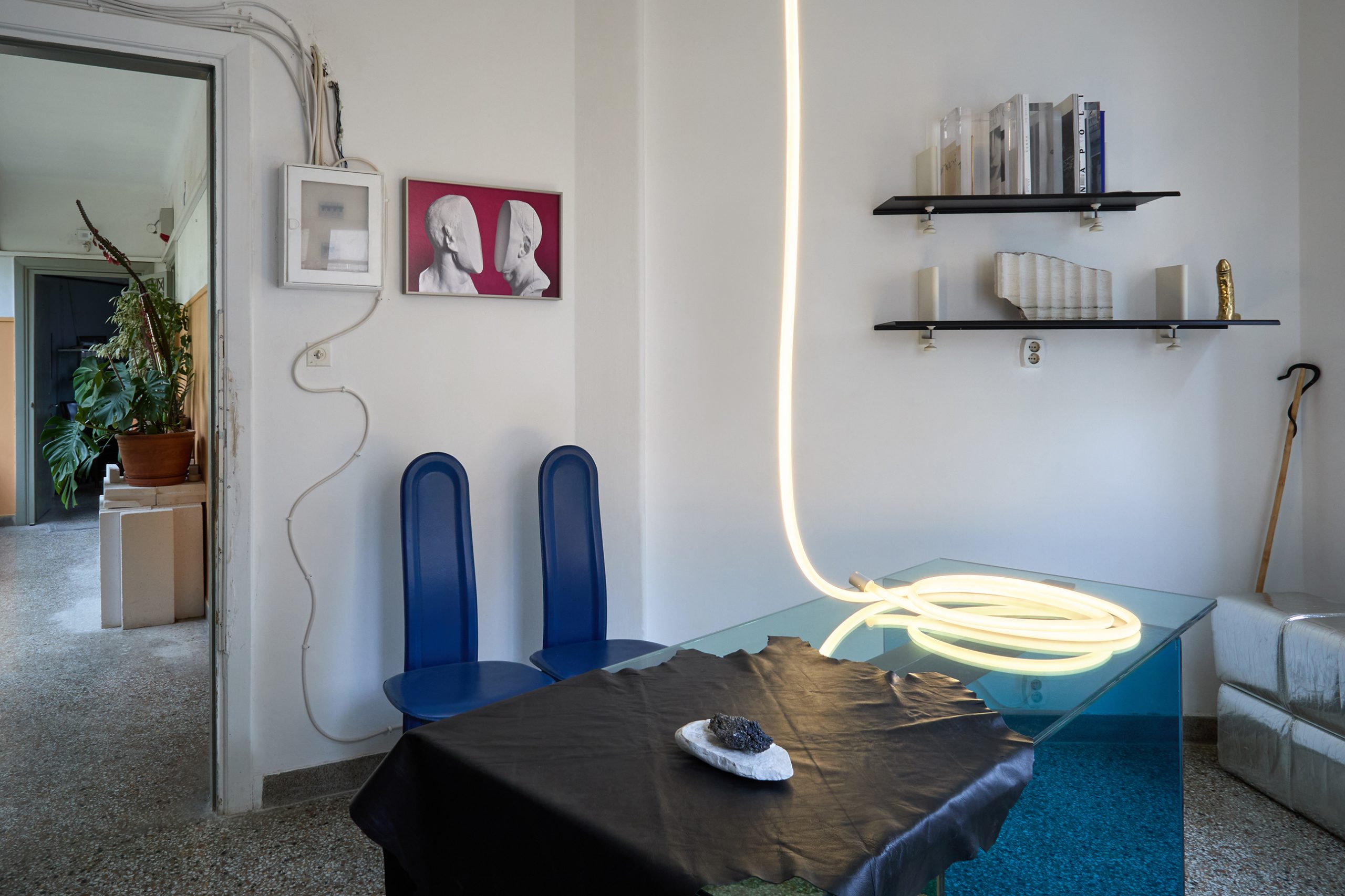
Yfantis is a prodigiously talented and highly successful, Athens based creative / art director, set / interior designer, scenographer and sometimes curator. When he proposed the possibility of us working together, and generously offered his private studio space as a space for a public presentation, it felt like a wonderful opportunity to work closely together and to present artworks within the context of some of his design objects, outside more conventional gallery and museum systems that I am more expereinced working with. The space had most recently had been the periodic tattoo studio of a mutual friend of ours from Cyprus, and it enabled us to explore creative potentials inherent in presenting artworks outside of more canonical, traditional exbibition making models and sites. The development and the making of the exhibition progressed through a series of beautiful interactions between us, and I think that there is a residual presence of that beauty in the rooms and balconies that the artworks inhabit.

A helpful way into thinking about beauty on the conceptually informed, artwork-making register, is by closely examining the expression ‘between us ‘, which carries several potential readings. In one of those readings, perhaps the most common, it reflects a pairing – between you and me – for example. Another reading involves a more plural, distributed way of thinking, as in – between all of us. By thinking about beauty between us (in the plural context) we can come to understand beauty as a socially ramifying phenomenon, rather than an individually experienced and embodied quality of a person, object or image.

The artworks presented in the exhibition were created over the past nine years. They are drawn from different series and bodies of work. While selecting the works included in this exhibition I have kept in mind the wider, more inclusive, distributed way of thinking about beauty. I could have included the words – between all of us- in the title, however, for me that would have been too didactic, instructive, and singular. The title Beauty Is Between Us offers two propositions – you and me, and all of us – and as such it offers an opportunity for finding meaning between related propositions, rather than in triumphal singularity. Betweenness can be understood as an oscillating interdependence, and it is in this way that betweenness is an important aspect of the forms of beauty this exhibition seeks to unfold. Beauty Is Between Us can be approached as an installation of elements that that collectively propose cascading interrelations, and an opportunity for the viewer to reimagine their conception and experience of beauty.

How did your love for photography begin, and what kind of editing are you doing? What’s your point?


At design school, I majored in Photographic Design. Now my artistic practice includes a diverse range photographic activities. I shoot medium format film and capture images digitally, in both still and durational formats. I also sometimes work with institutional photographic archives and collections. Parrallel with those activities I collect vernacular and professsional photographic negatives made by photographers who remain anonymous or unknown to me. The negatives that I collect represent ancient objects, typically damaged figurative scuplture, and ancient constructed environments in varying states of ruin.

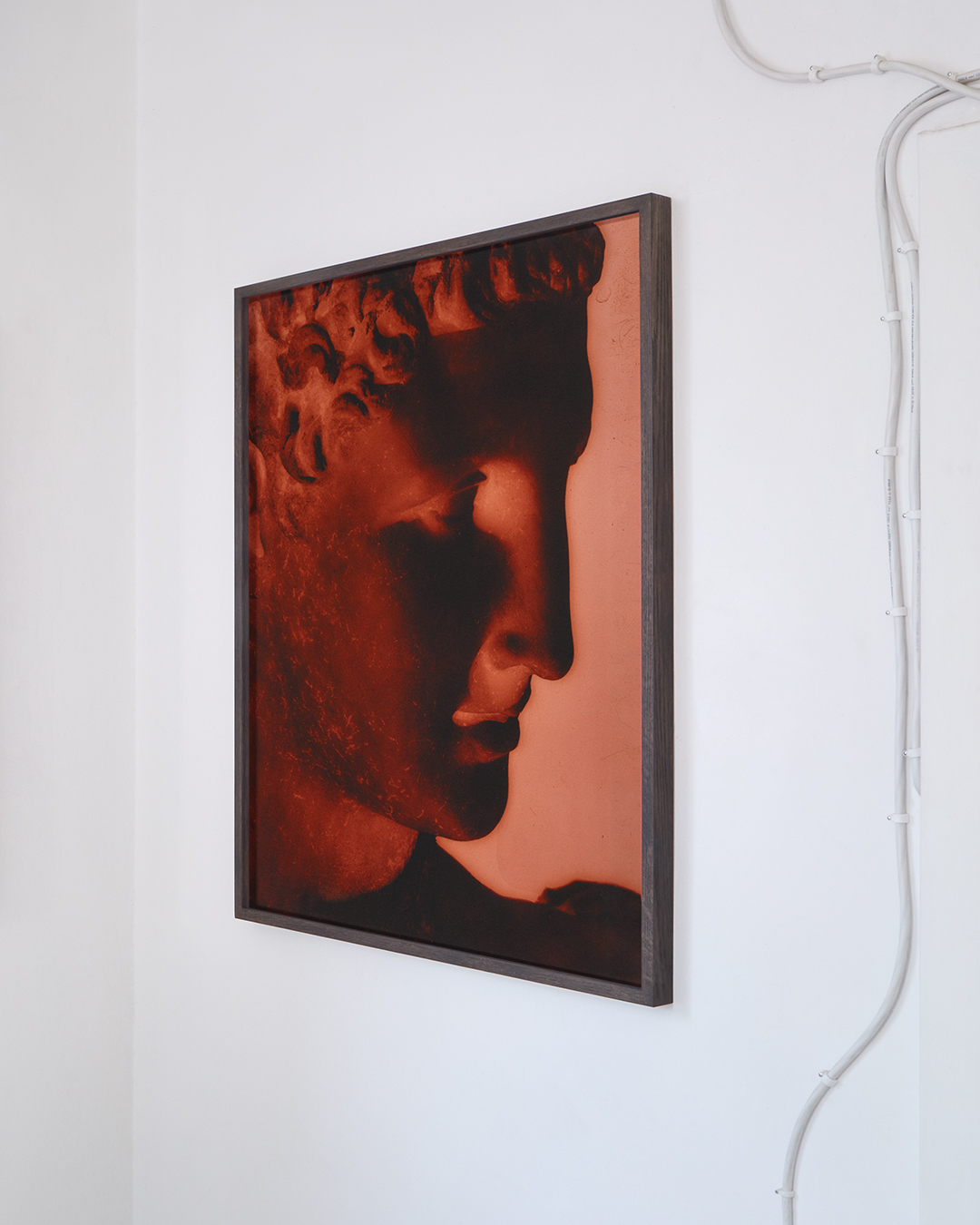
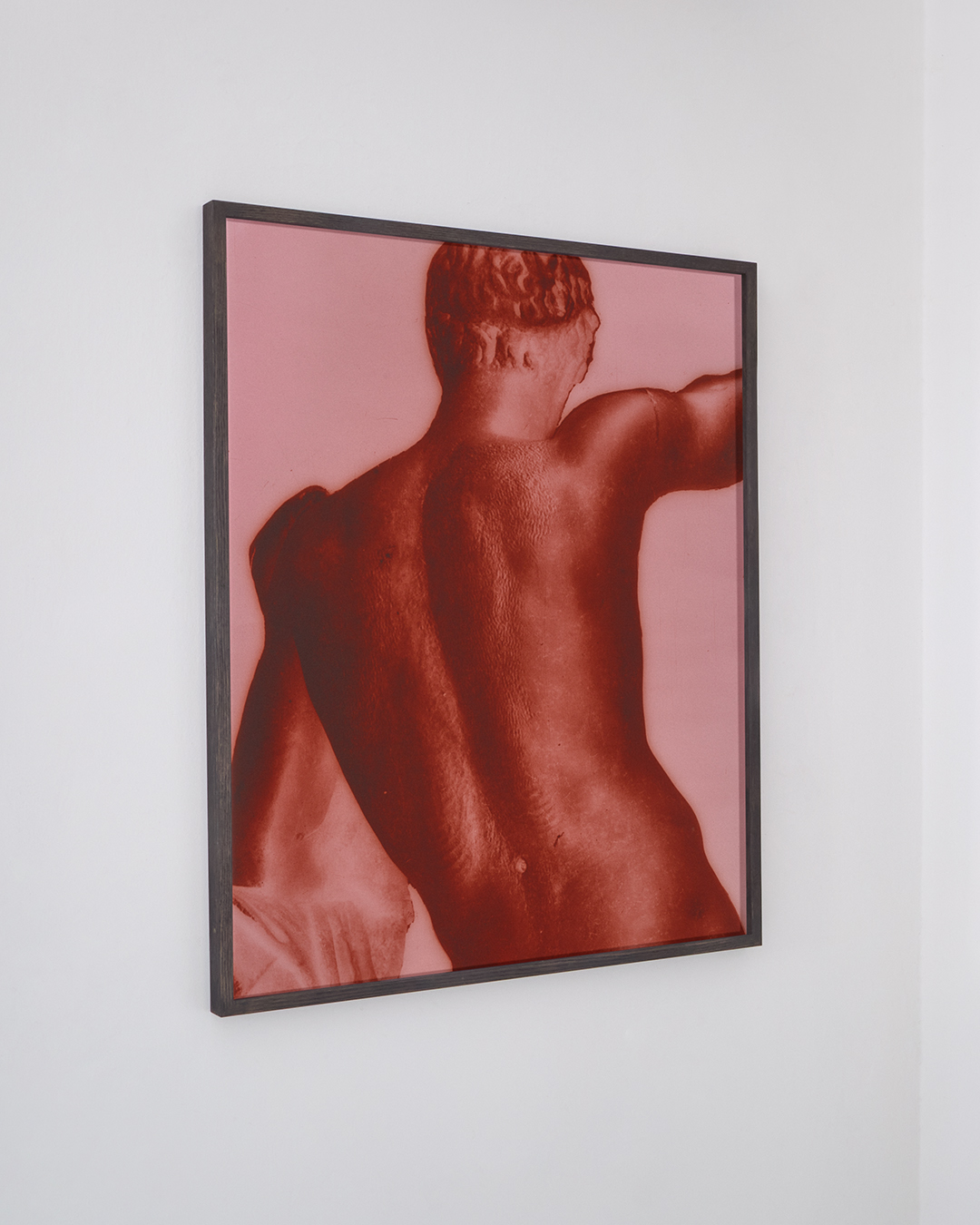
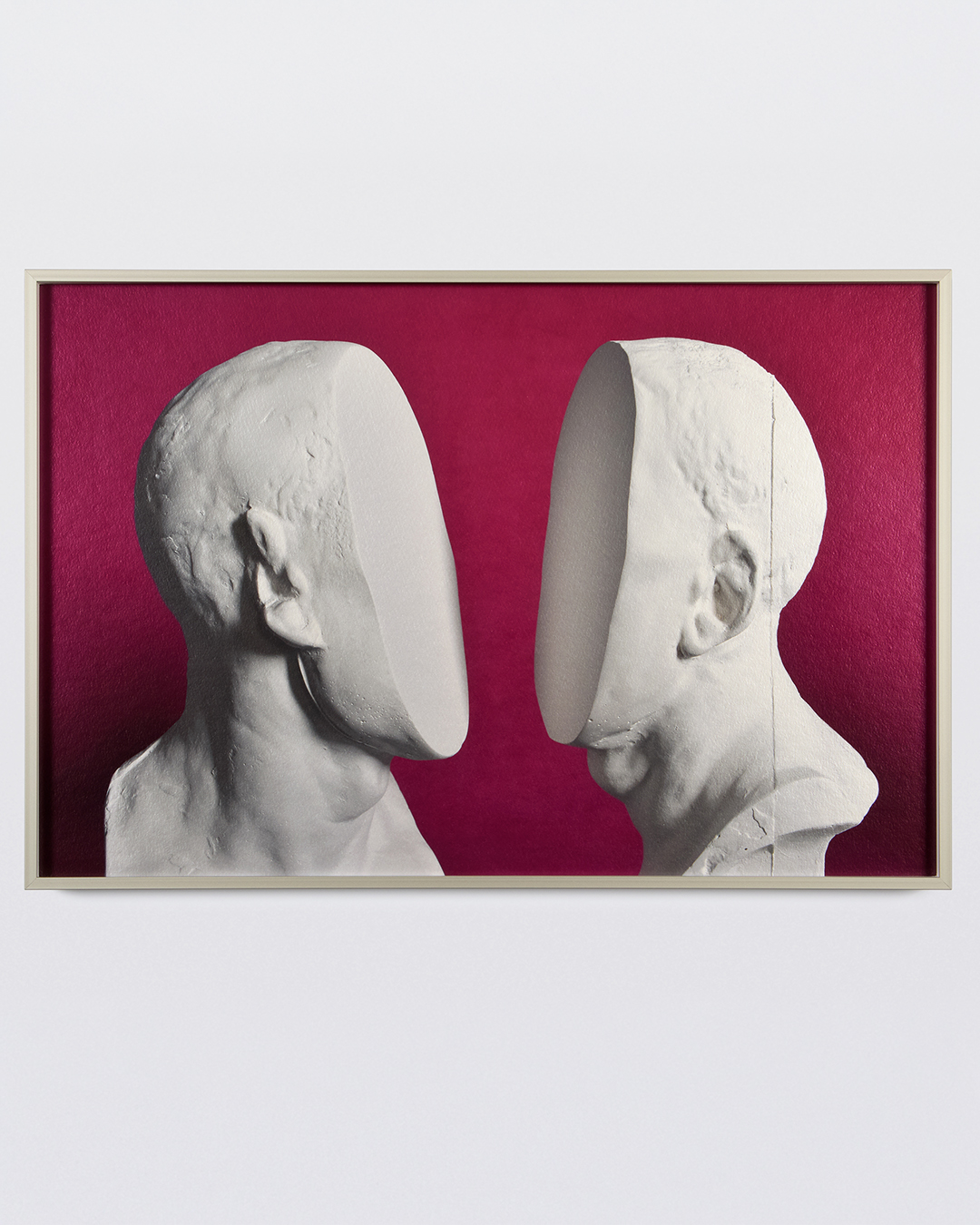
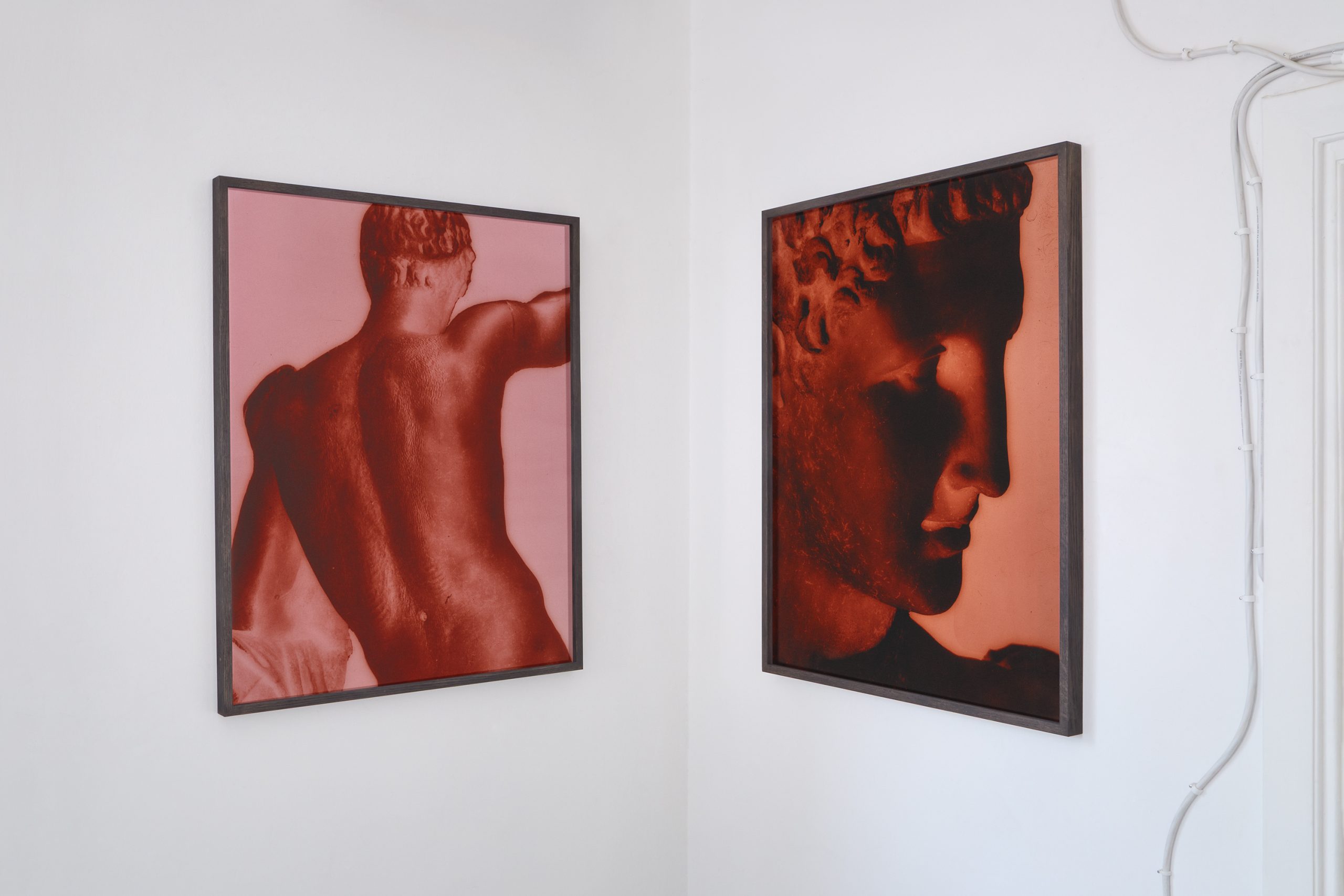
Two of the photographic works in the exhibition are made with negatives from my ongoing personal collection of anonymous negatives. The richly coloured photographs titled After Praxiteles and Mapplethorpe 1 (2024) and Hermes (2024) are chromogenic darkroom prints , C prints made from black and white 10 x 8 inch negatives, that were produced around the middle of last century. Both of these photographs represent the same subject, from different perspectives. The subject is the famous statue Hermes and the Infant Dionysus created by Praxiteles in the 4th century BCE. The negatives that I worked with to produce these large colour prints were professionally produced with a museological/ scientific/ archaeological intent.

When I acquired the negatives in an Athens flea market it was obvious that they were badly damaged. They bear the scars, scratches and abrasions of a long period of neglect. I consider these negatives damaged artefacts of modernity that cradle images of damaged artefacts of antiquity. The ongoing oscillating interdependence between periods of care and neglect that they embody points toward one of the main concerns of the exhibition which is the potential for beauty to emerge from all forms of betweenness, in this instance the conditions of care and neglect. The two prints are drawn from my series of nine images collectively titled Time Travels Through The Body (2024). In creating that body of work I applied techiques like radical cropping, shifting from black and white to super saturated gem-like colour, and moving between negative and positive states. I have tried to make the represented stone bodies of antiquity somehow more alive, and therefore easier to imagine as part of our contemporary reality rather than existing in exile in an airless museological dimension.

What’s the story of your sculpture figurines, giving birth to them in the sand?

The archaeological record tells us that many classical Greek bronzes were cast in terracotta moulds set into clay in the earth. There is actually a casting site on the upper southern slopes of the Acropolis of Athens. This is one of the reasons why I became interested in taking sculptural casting practices out of the foundry and into the landscape. Another aspect of my reasoning is the ways in which taking casting practice into the landscape reflects what happened with the emergence of the transformative painting practice that occurred in the nineteenth century when painting moved out of the studio into the landscape – en plein air . By doing so painters working at that time, during which industrialisation was gathering pace and reshaping societies and landscapes alike, began to think about and look at human / nature relationships differently as they sought to capture the ephemerality of a moment, of fleeting light, and as they rendered the atmospheres that they lived in with a painterly fragility. The term en plein air describes their physical and radical action of moving painting out of the studio and the painting movement it became. Sometimes the terminology en plein air is used in an overly romantic way, but I consider that a very limited way of thinking. Perhaps what we see in en plein air painting is the emergence of a rethinking of how humans, though collective activity, affect the lansdscapes and atmospheres we live in. A rethinking about the relationships between human beings, non human beings and the materialities the the planet.

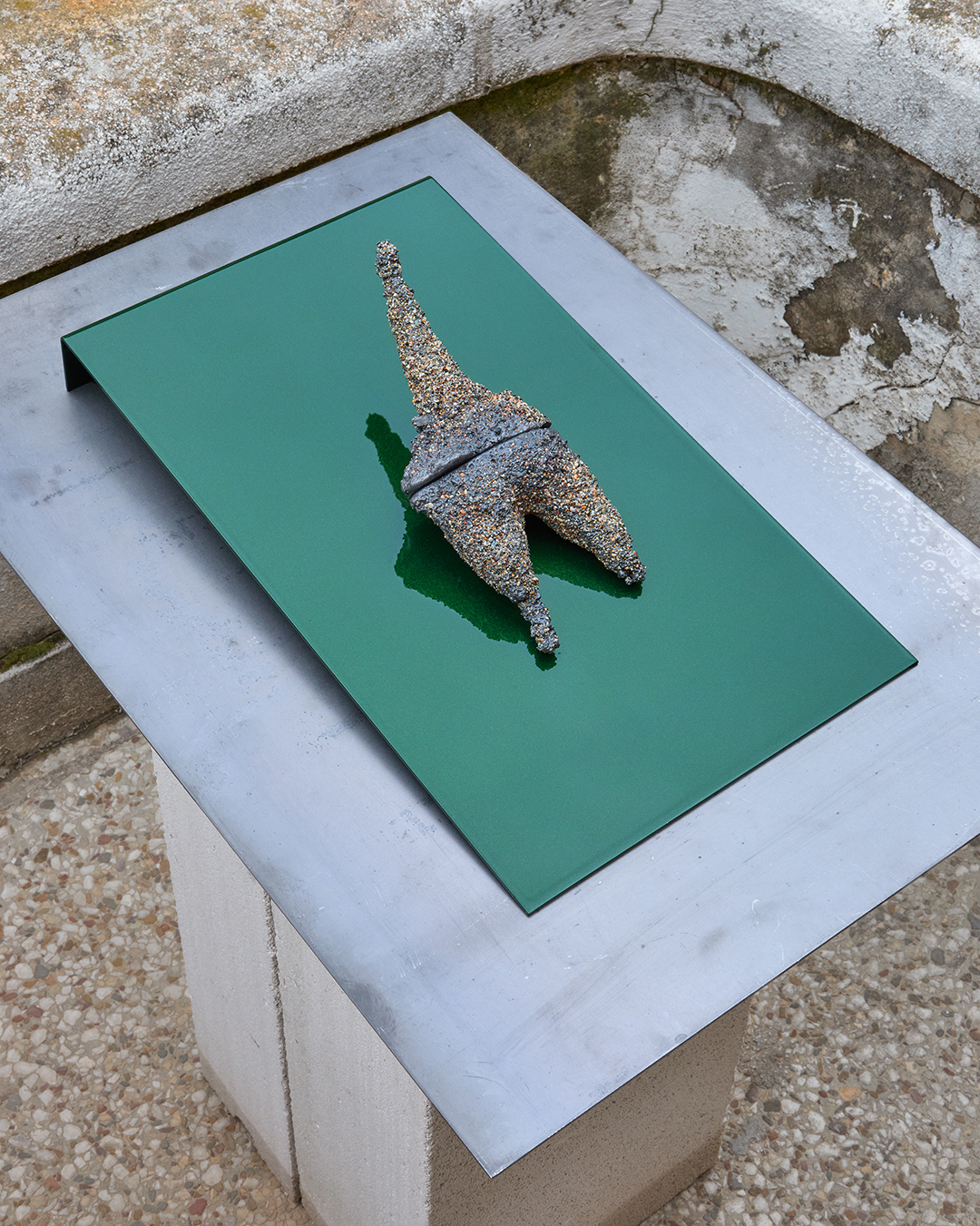
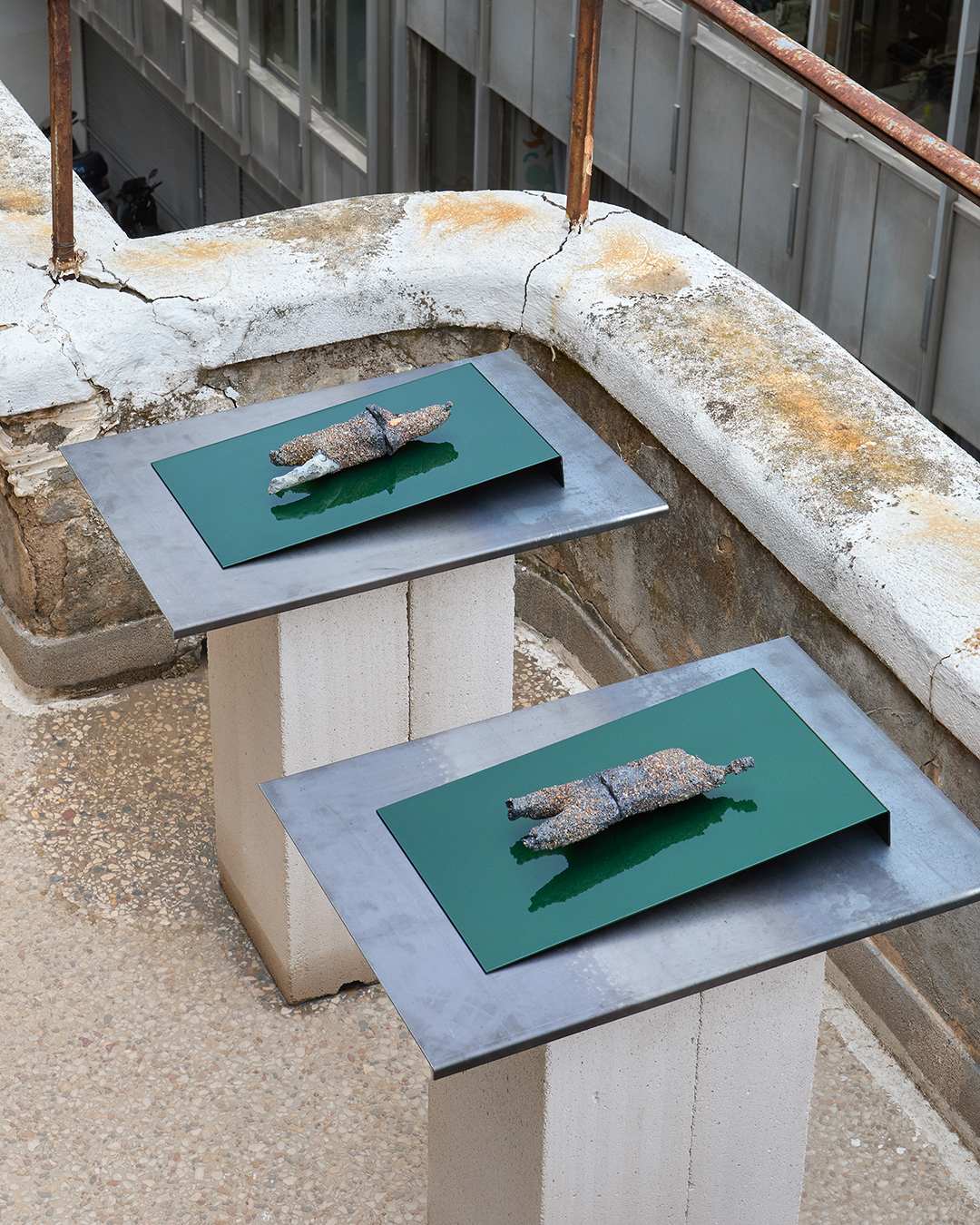
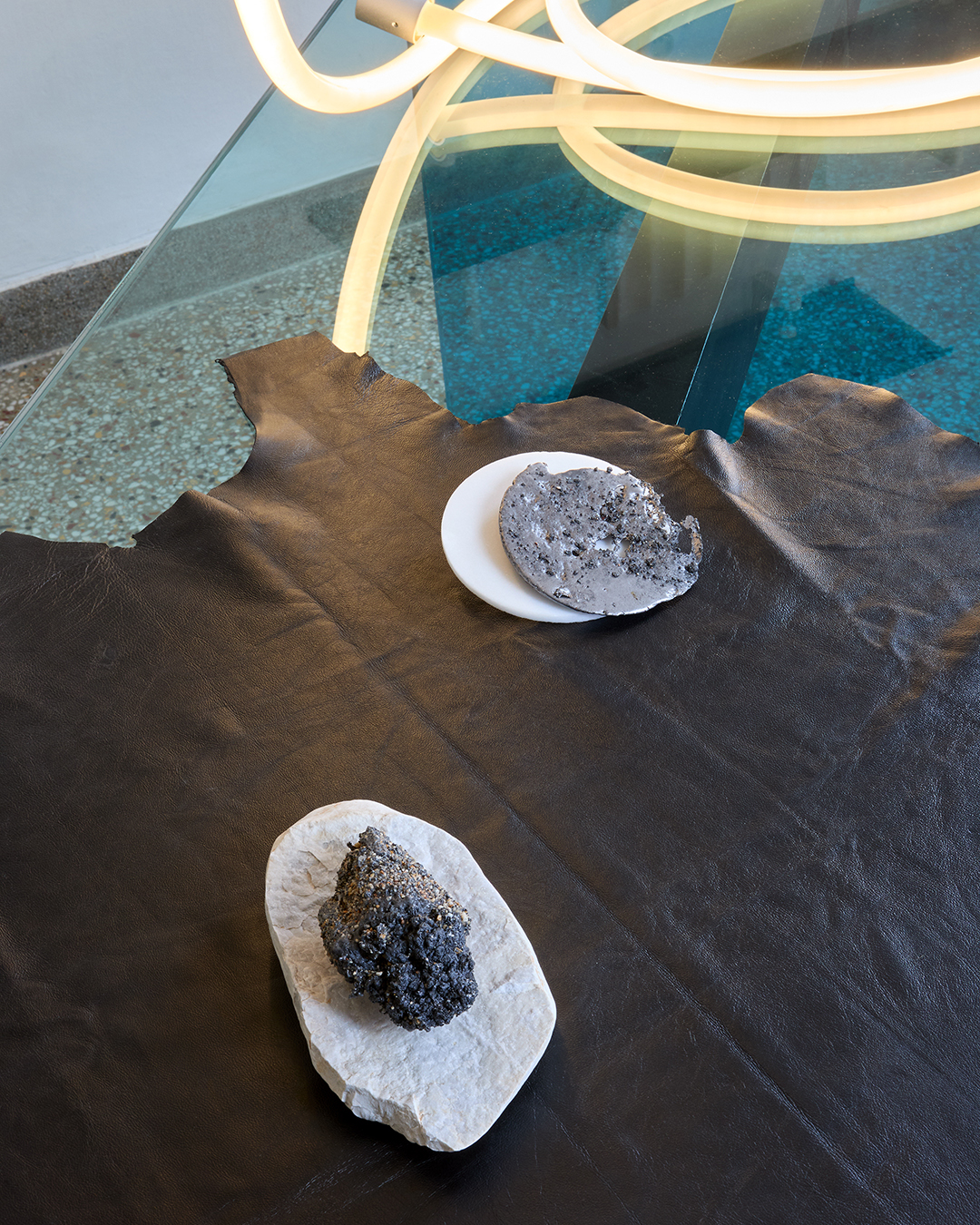
By taking sand casting out of the foundry and into the landscape, I create moulds in the geological material that comprises the sites that I choose to work with. The moulds are shaped as much by the geological properties of the site that I am working with as the hand modelled ceramic “positives” that I bring to the site. Many factors unpredictably affect the mould and thereby a cast produced in it. This is largely because the size, consistency, and individual lithic and mineral properties of the site-specific material affects the mould’s capacity to hold the form of the negative space. Sometimes other relational properties between geological and metallic material also effects the cast. For example marble and lead have a very special relationship which has been understood since antiquity. Lead and marble are non-bonding materials which is why during antiquity the moulds used for casting lead sling-shot bullets were carved in small, paired blocks of marble. The non-binding relationship between the two materials means that the cast lead bullets were very easy to remove from the mould. Theoretically, because of their small size, these anceint bullet moulds could be carried into a battlefield and the bullets could be made in situ mid battle, or at very least the moulds could travel with soldiers on extended military campaigns.

In my landscape casting experience sometimes small, smooth, marble pebbles form part of the geological aggregate in which the mould is made. When this occurrs unanticipated depressions are created in the cast object where the lead and the marble have come into contact. I like the marks this non-bonding relationship leaves in the cast, they are evidence of a very specific relationship between two materials, and as with drawing practice all mark making, intentional and unplanned, are part of the work. The sites that I have I have been working with thus far are coastal spaces and river banks. You might think of this way of working as a kind of geological collaboration with a landscape, a collaboration with not only the geological histories of a site, but also the histories of its inhabitation and the residues of human activity of a site. This brings to mind a comment made by an artist I respect very much Adrián Villar Rojas who mentioned ,while discussing his “self-modelling’ diachronic objects, “ I see matter as a register of human and nonhuman activity on earth.” This was evidenced in the surfaces of a series of lead figure cast in sand and silt that I excavated had from the banks of the Tiber river in Rome in 2025. The residual micro-elements of chemicals and other residues of industry, among other markers of human activity, generated unexpected patinations on the surfaces of the cast lead.

The figures that I cast in the landscape carry in their surfaces and volumes the material residues of the human and the nonhuman histories of their place of origin, perhaps a reflection of the human feelings of connectedness to one’s place of origin.


What’s your connection with Greece and what are the influences  to your work ?

I have lived in Greece for the past five years and only recently I have been questioning the nature of my connection with it and where that sense of connection comes from. I think that the fact that I grew up in a small, coastal, fishing town has some relevance. There are obvious shared cultural realtionships with the sea. And I believe all sea-people have a special sensitivity to the powerful relationship between light and water.

The town that I grew up in was made up mostly of newly arrived migrant families. I attended the the local high-school and our classrooms were populated by Greeks, Turks, Cypriots, Lebanese, Italians and Egyptians. I never really thought about their cultures within a regional context , and we never really spoke to each other about the cultures that we came from, but you could say that from a very young age, although coming from Dutch cultural heritage, I was surrounded by Eastern Medittereanean culture. Perhaps some of it seeped in under my skin and is a part of the reason I feel so at home here in Greece.

Where does your inspiration come from?

The mysterious. The uncertain.


Is beauty something obvious or something you have to search for?

It is both. I think that there are as many conceptions of beauty as there are living creatures. What I mean by that is that I don’t think of beauty as an exclusively anthropic phenomenon. If we consider beauty an aesthetically stimulated, multi-sensorial phenomenon, it makes sense that all creatures with senses have the capacity to experience beauty. A overly simplified way of saying that is that all earthly creatures can not only stimulate a sense of the beautiful in human beings, but they too can expereince and respond to beauty.

Considering aesthetic stimulation it is important to understand that when I use the word aesthetic I do not use it in the way that it is commonly deployed in the English language, which tends to infer and prioritise visual stimuli thereby narrowing our understanding of beauty as something experienced only through vision. Rather, when I use the word aesthetic, I use it with all of the resonance of its deeper original Greek signification – αισθητικός – meaning of or for perception by the senses, which stems from the root αίσθησις meaning perception, sensation, feeling. To my way of thinking, beauty emerges as commingled feelings and sensations at the confluence of the senses.

What was the first object you created, and how far is it from your work today?

A few years ago, while melting fishing weights to cast lead figures in the sands that comprise the shores of the Libyan Sea on the south coast of Kriti, I remembered a childhood experience that still I cannot remember previously remembering. I have already mentioned that I grew up in a small working fishing town in Australia, as I melted and poured hot lead into the sand that forms the European shores of the Libyan Sea, I remembered doing exactly the same thing with my two brothers and my father in my father’s workshop in Australia about 40 years earlier.

I must have been about seven years old at the time. We had gathered sand from the beach at the end of our street and placed it in wooden trays. Into the neatly flattened and smoothed damp sand we pressed soup spoons to create impressions which were our moulds. Then, melting lead on a kerosene camping stove, we poured the shimmering liquid into the impressions. We were not making sculptures, rather we were making ‘sinkers’, fishing weights for our next fishing expedition.

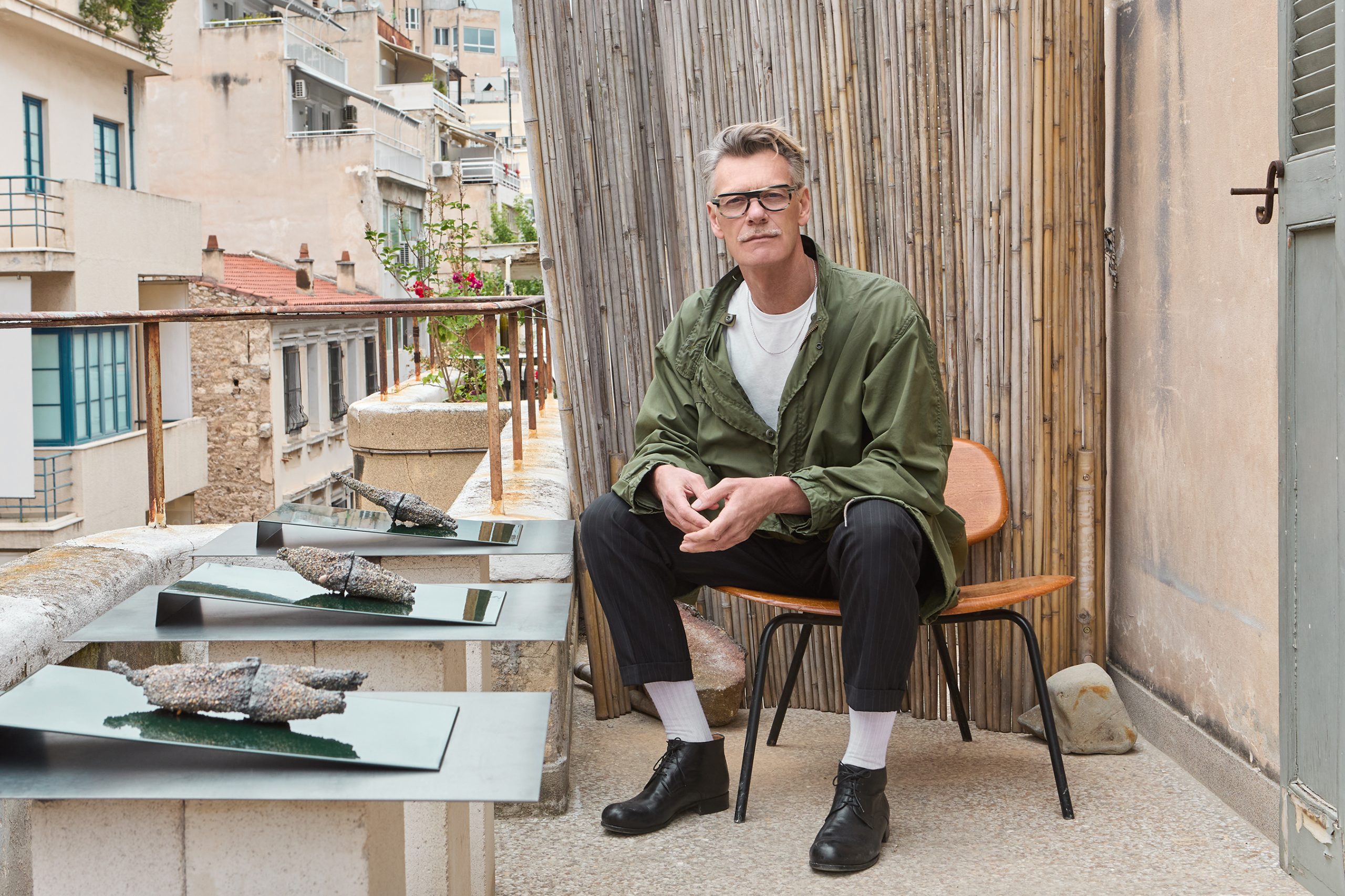
I was a terrible fisherman, and I remain so, but I always made the finest sinkers. That memory struck something deep inside of me. Since then I have continued working in this way, developing and refining the methodology of casting in the landscape. Four of the works in the exhibition Beauty Is Between Us were created through this process on the North and South facing shores of the small Cycladic island of Anaphi.

What makes your art so exceptional and  stand out? What unique qualities define it?


I’m not sure of the best way to approach that question Stavroula, but perhaps it’s apt here to paraphrase the Welsh poet R. S. Thomas who brings his poem Don’t Ask Me to end with an idea that has always resonated with me – that the best artistry “arrives at the intellect by way of the heart”.

What would you consider the main highlights of your career? 

Listening to people express how my work makes them feel.

What is your philosophy for Art

Authenticity

What is Authentic for you?

Generosity


Author