The Guggenheim Museum presents Carol Bove, the first major museum survey of the acclaimed artist, on view from March 5th until August 2nd, 2026. Filling Frank Lloyd Wright’s iconic spiral rotunda, the exhibition spans more than 25 years of Bove’s practice, highlighting her inventive explorations across collage sculptures, steel, paper, and installations.
Collage sculptures and monumental works
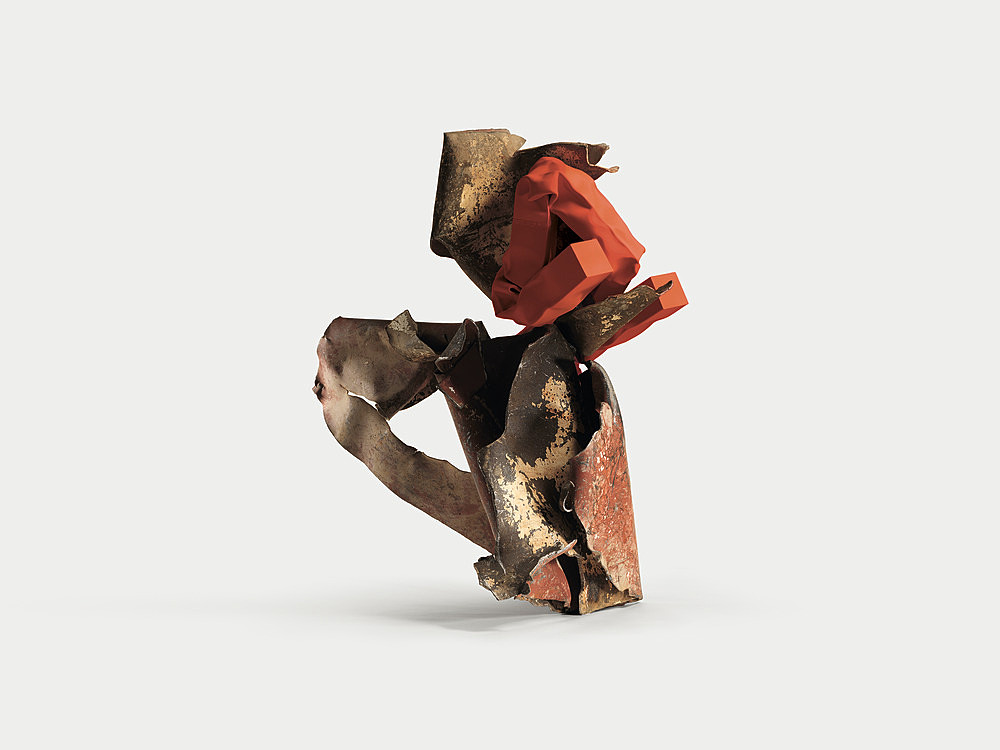
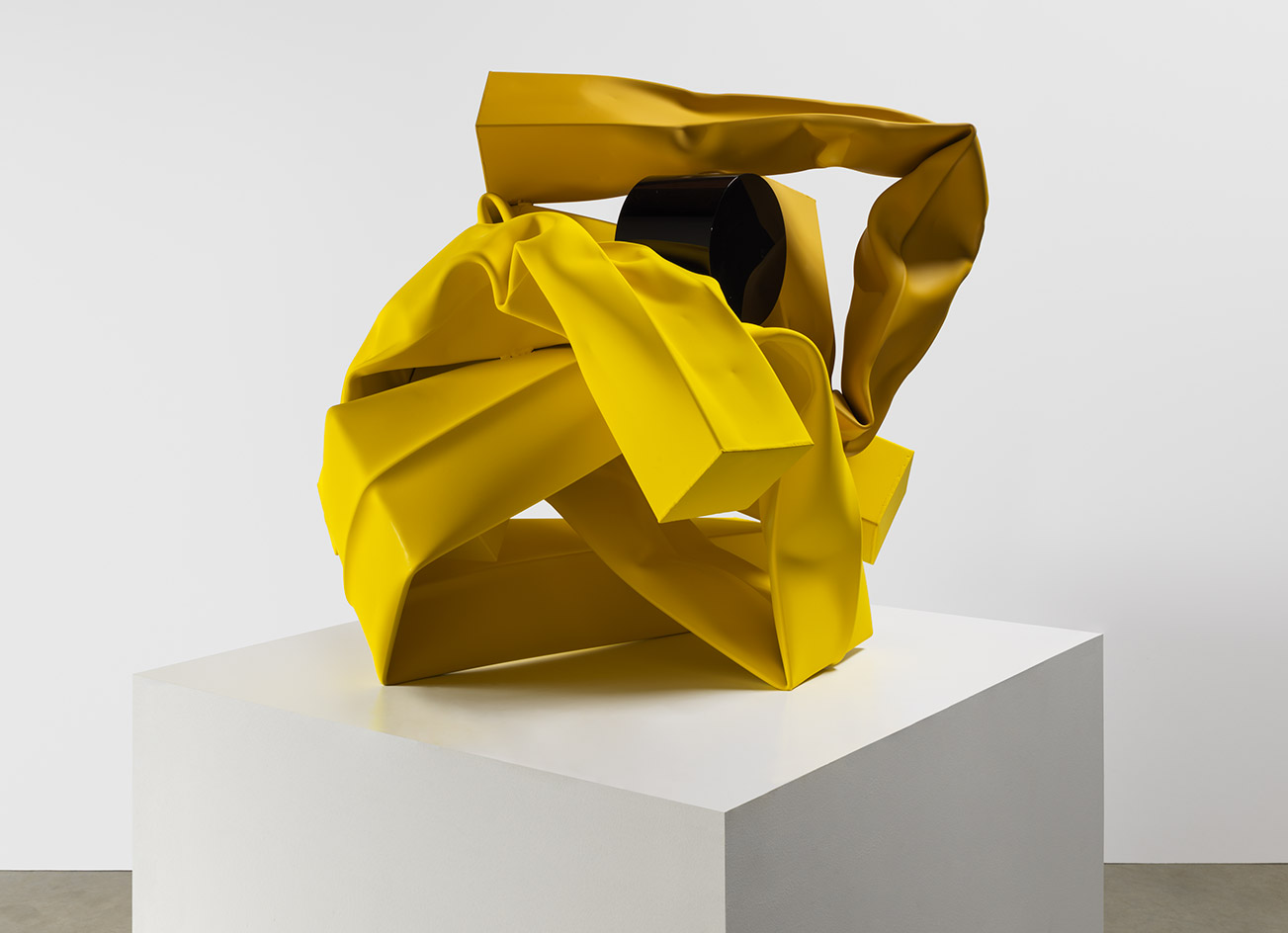
Bove’s inventive “collage sculptures” take center stage, combining scrap metal, tubing, and mixed materials into towering, dynamic compositions. Alongside these, works on paper, aluminum panels, and earlier book and paper assemblages invite viewers to navigate shifting scales, surfaces, and textures. The rotunda itself becomes part of the exhibition, its architecture subtly activated by the reflective surfaces and vertical arrangements of Bove’s sculptures.
Engaging space, history, and perception
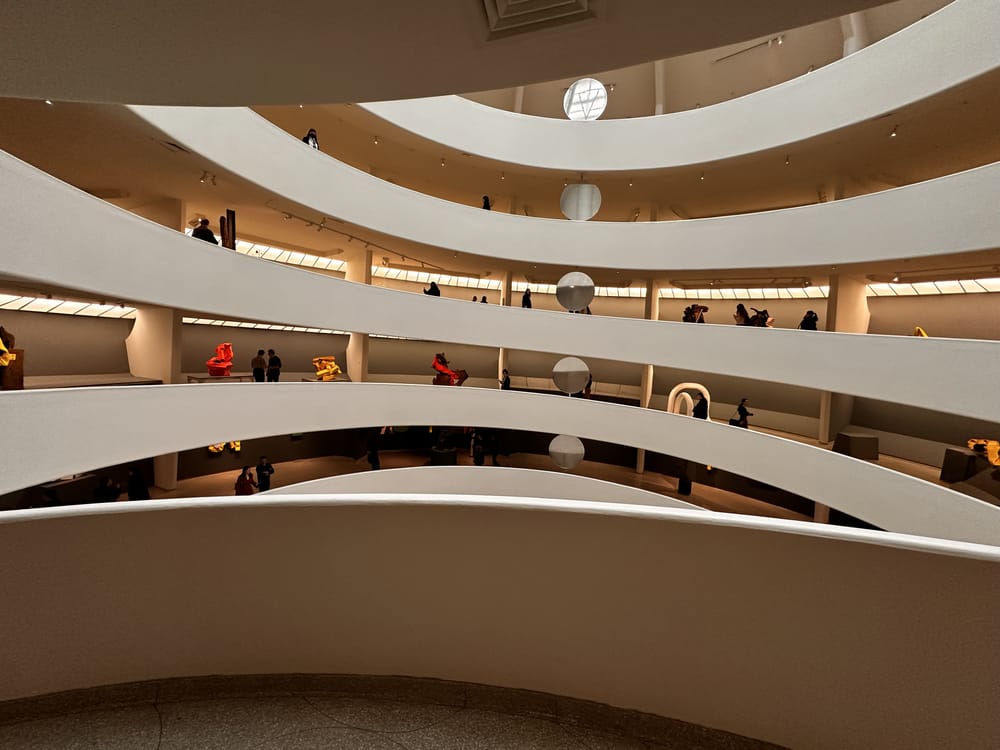
Bove curates a dialogue between her work and that of earlier generations, incorporating pieces by Joan Miró, Bruce Conner, and Agnes Martin. A long-hidden 1960s mural by Miró and Josep Llorens Artigas is partially revealed through a diamond-shaped cutout, which anchors a column of reflective disks ascending the rotunda. These gestures exemplify Bove’s interest in perception, space, and the interplay between objects and their surroundings, creating moments of immersive engagement for visitors.
Carol Bove’s Guggenheim survey transforms the museum’s spiral into a vibrant environment where monumental collage sculptures meet intimate works, reflecting a career defined by material experimentation, spatial awareness, and imaginative resonance.
Carol Bove is the first museum survey of the work of Carol Bove (b. 1971, Geneva, Switzerland; lives and works in New York). The exhibition fills the Guggenheim’s spiral rotunda, tracing pivotal shifts in the artist’s career across more than 25 years. Bove’s inventive practice ranges widely, from assemblages of paperback books and intimate paper collages to towering steel sculptures. She explores the workings of perception through ongoing experiments with surface, color, scale, and space, inviting viewers into moments of heightened imaginative awareness.
The Frank Lloyd Wright–designed rotunda offers a resonant setting for Bove’s long-standing interest in tuning the relationship between objects and their surroundings. She approaches the building as a sculpture in its own right, subtly activating its distinctive geometries and open sight lines, which allow works to remain visually connected across levels. Throughout the exhibition, she has incorporated spaces for rest, reflection, and play. These include comfortable seating built into the architecture, a tactile library in which materials from the artist’s studio may be handled directly, and artist-made chess tables where visitors are invited to set up a game.
Reflecting Bove’s interest in the way artistic languages are exchanged and transformed over generations, works by other artists appear at times alongside her own. Notably, she partially reveals—for the first time in decades—a mural by Joan Miró and Josep Llorens Artigas that was built into the Guggenheim’s ramps in the 1960s. A diamond-shaped cutout offers a view of the mural, which becomes an element in Bove’s immersive reimagining of Frank Lloyd Wright’s luminous “temple of spirit.”
This exhibition is organized by Katherine Brinson, Daskalopoulos Senior Curator of Contemporary Art and Director of Global Initiatives, with support from Charlotte Youkilis, Curatorial Assistant, Exhibitions, and Bellara Huang, former Curatorial Assistant, Exhibitions.
About
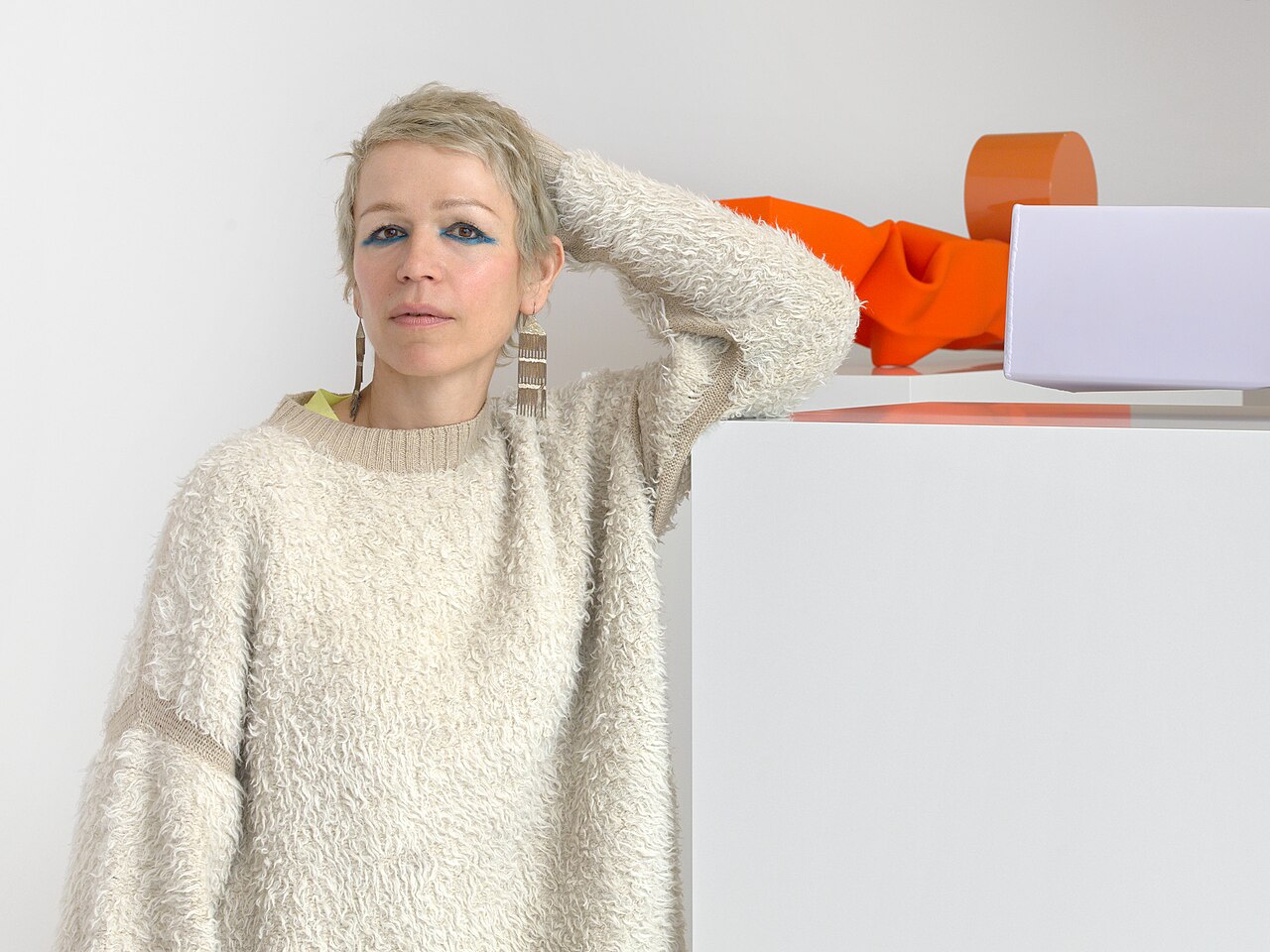
Carol Bove was born in Geneva in 1971 and raised in Berkeley, California. She earned a BS from the New York University School of Education in 2000. Bove’s work combines sculpture and conceptual assemblage, and transforms disparate materials into arrangements that articulate a minimalist aesthetic while speaking to social history. Her approach is derived from her early, formative encounters with public art installations in Berkeley.
Interested in the social dynamics of the late 1960s and early ’70s, Bove uses period-specific artifacts, such as a copy of Betty Friedan’s 1963 book The Feminine Mystique (a feminist touchstone), to create almost anthropological displays that memorialize the era. One such installation, Vague Pure Affection (2012), is an assemblage of books, periodicals, and brass and concrete objects set on wall-mounted shelves crafted from wood and steel. Bove’s choices regarding materials and arrangement create an interconnectedness of objects that presents an atmosphere of bohemianism within a structure that gestures toward modernist abstract sculpture. The installation The Foamy Saliva of a Horse (2011), originally presented at the Venice Biennale, includes driftwood suspended within a bronze frame, a curtain woven of thousands of silver links, and a rusty oil drum found on the Hudson River shore near the artist’s studio in Red Hook, Brooklyn. Bove alters the room-size arrangement for each exhibition space, producing a unique environment that examines the ingrained symbolism of individual objects and the relationship between the components. Her recent large-scale sculptures exist in the realm of public art. One example is Caterpillar (2013), a group of seven works commissioned by New York’s High Line and displayed in the last wild and untouched stretch of the public park and former railway.
Bove’s work has been the subject of numerous solo exhibitions, including those at the Institute of Contemporary Art, Boston (2004); Kunsthalle Zürich (2004); Blanton Museum of Art, Austin, Texas (2006); Horticultural Society of New York (2009); Palais de Tokyo, Paris (2010); and the Common Guild, Glasgow (2013). Her work has been featured in group exhibitions at P.S. 1 Contemporary Art Center (now MoMA PS1), New York (2004 and 2005); New Museum of Contemporary Art, New York (2007); The Museum of Modern Art, New York (2007 and 2009); Tate Modern, London (2007); Whitney Museum of American Art, New York (2008); and Palais des Beaux-Arts, Paris (2013). She also participated in the exhibition Contemplating the Void: Interventions in the Guggenheim Museum, New York (2010), and the Venice Biennale (2011) and Documenta, Kassel, Germany (2012). Bove lives and works in Brooklyn.
Carol Bove is the first museum survey of the work of Carol Bove (b. 1971, Geneva, Switzerland; lives and works in New York). The exhibition fills the Guggenheim’s spiral rotunda, tracing pivotal shifts in the artist’s career across more than 25 years. Bove’s inventive practice ranges widely, from assemblages of paperback books and intimate paper collages to towering steel sculptures. She explores the workings of perception through ongoing experiments with surface, color, scale, and space, inviting viewers into moments of heightened imaginative awareness.