The exhibition Tom Wesselmann: Seascapes, Still Lifes, and Nudes, opening on March 17, 2026, presents iconic paintings and drawings spanning the entirety of Wesselmann’s career and marks his first solo exhibition in Greece.
A pioneering and unconventional figure, Tom Wesselmann (1931–2004) emerged in the early 1960s as one of the founding artists of Pop Art. Drawing inspiration from traditional artistic genres, he created mixed-media works—interiors, landscapes, nudes, and still lifes—combining the figurative language of modernist painting with references to mass culture. In a period of profound social and cultural transformation, when consumption, representation, and sexuality were being radically reexamined, Wesselmann redefined artistic iconography through an abstract, contemporary, and distinctly American lens, guided by what the artist himself described as “erotic simplification.”
A key work in the exhibition is Great American Nude #1 (1961), which initiated a series of one hundred numbered works that continued until 1973. A nude female figure reclines across the upper half of the composition; flat colors without gradation, simplified forms, and elegant curved lines echo the stylistic legacy introduced by Henri Matisse. Behind the figure appears a collage of rolling hills and a sea view, the tricolor of the French flag, and a pattern of stars referencing the American flag—elements that point to Wesselmann’s artistic influences.
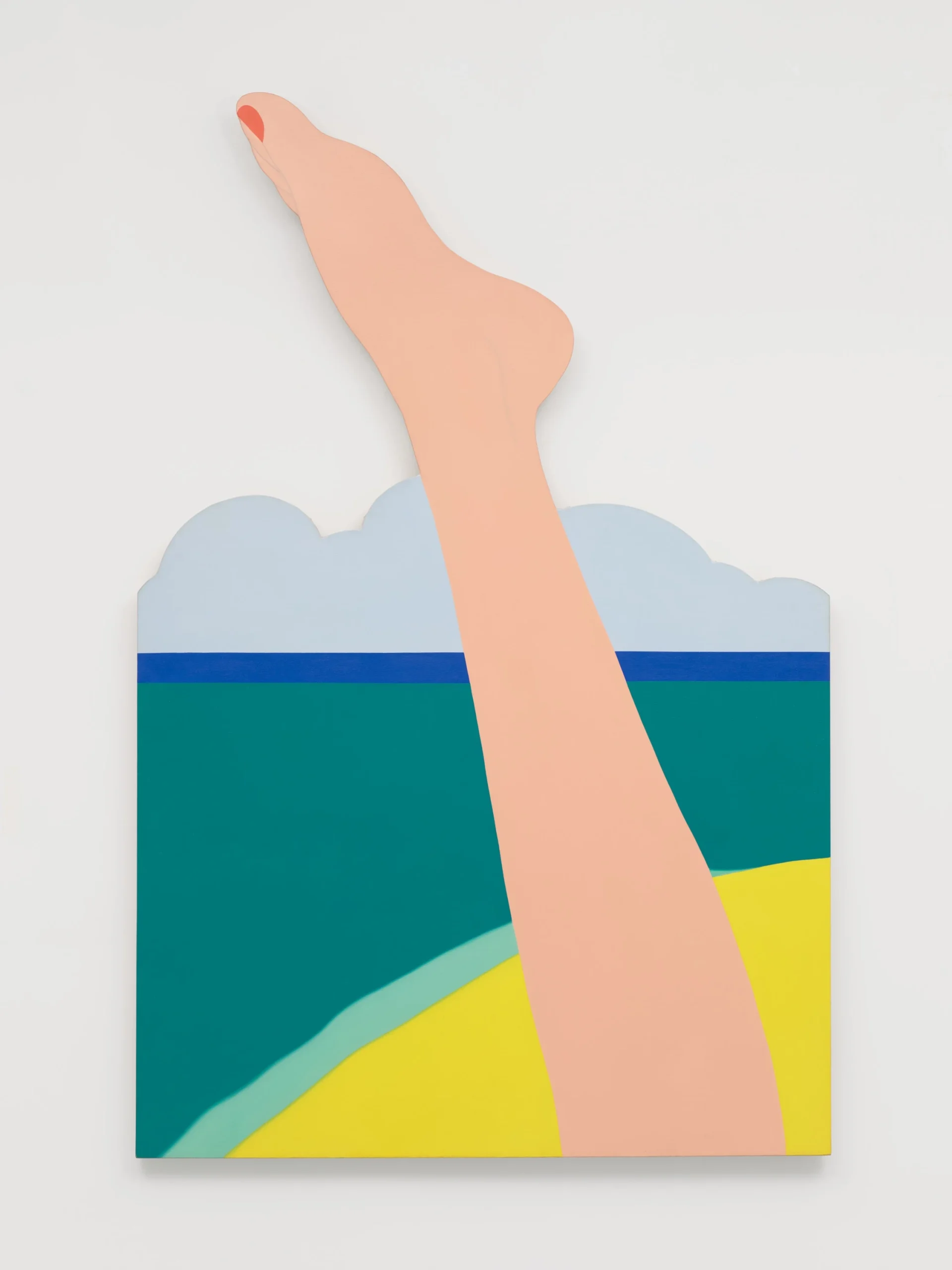
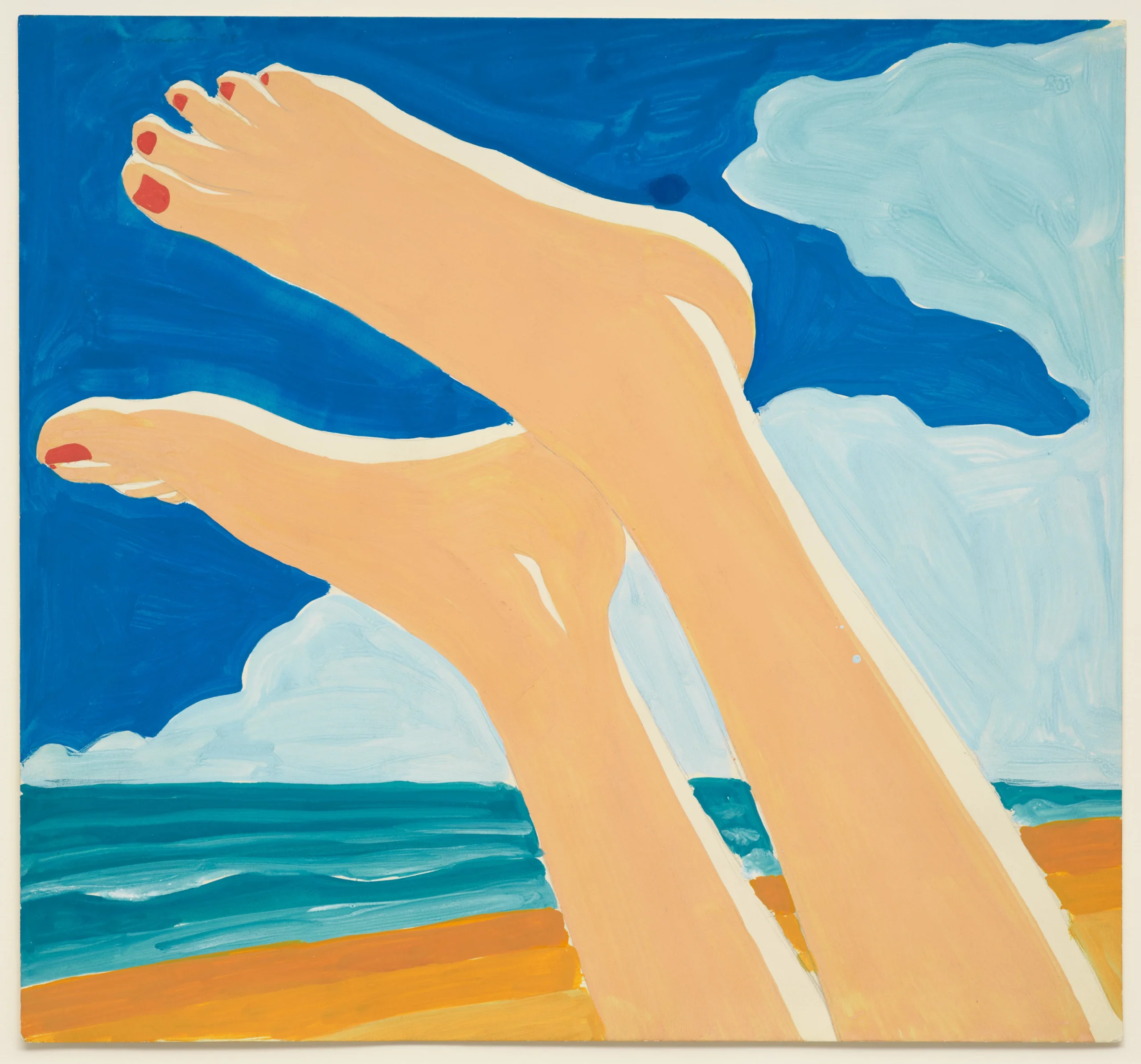
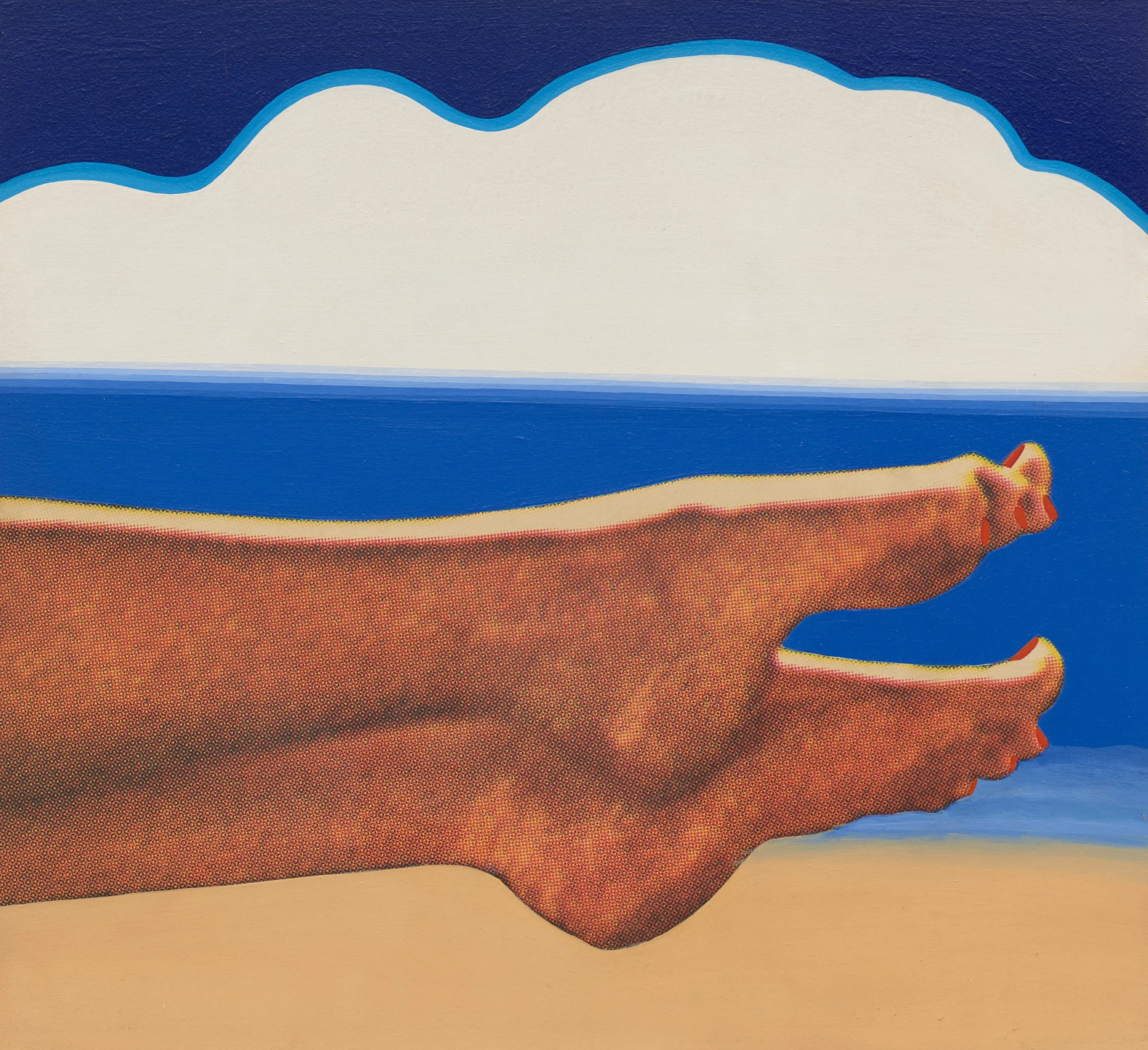
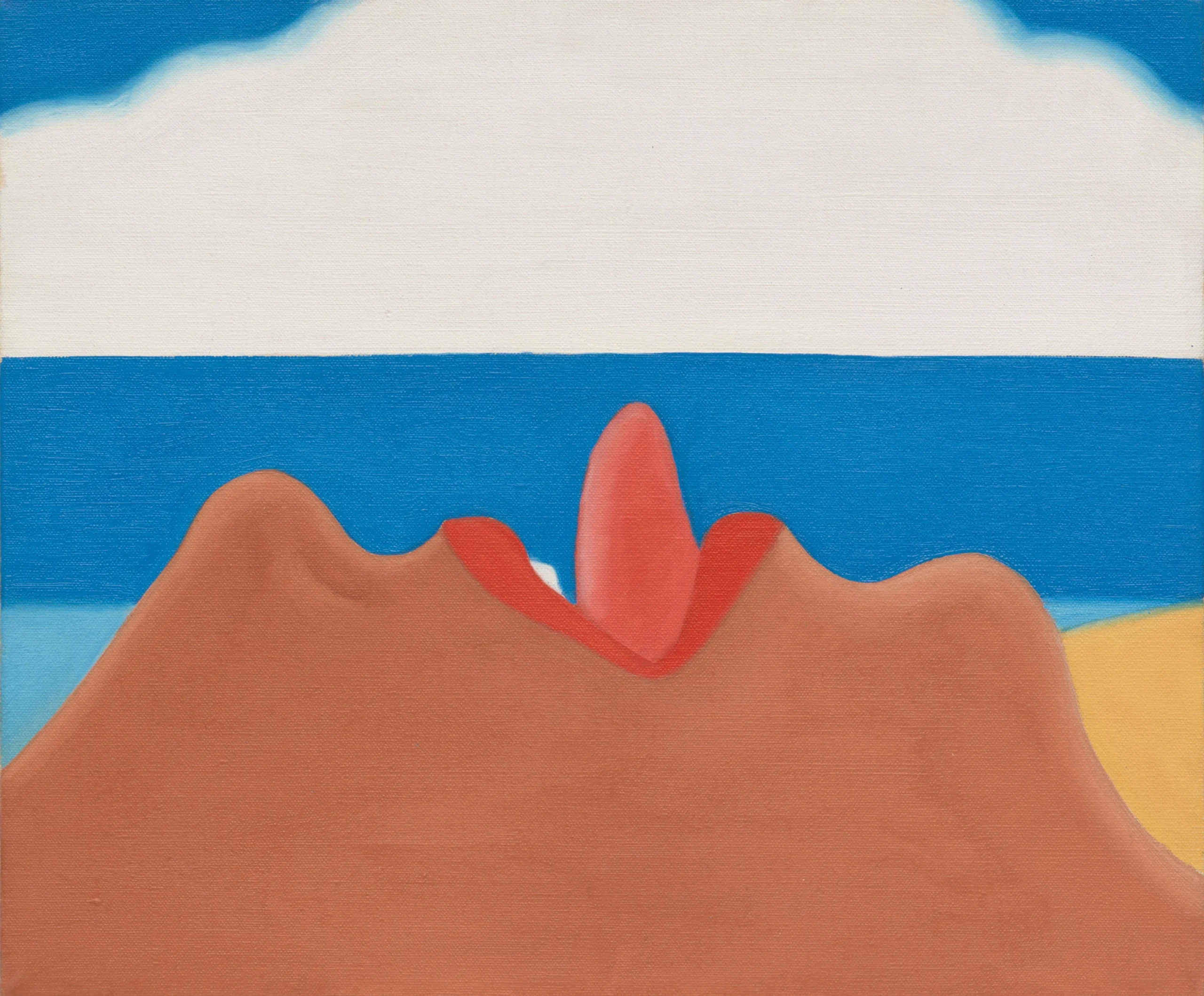
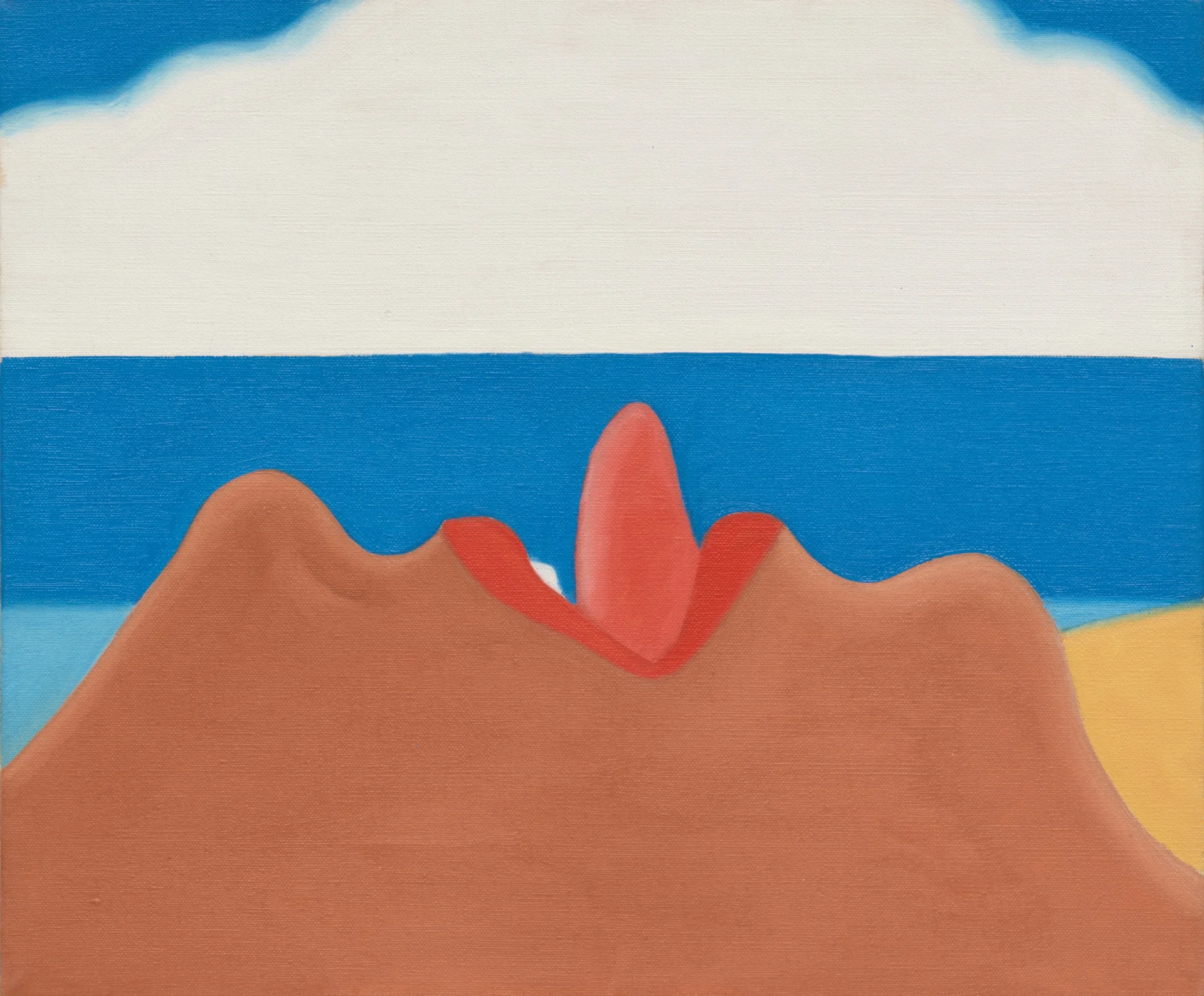
Beginning in 1965, Wesselmann developed a series of seascapes and collages depicting fragmented parts of the human body—legs, breasts, or facial profiles—set against bold fields of color suggesting sky, waves, and sand. The artist continued to explore this theme in works that juxtapose the human body with the natural landscape. In Seascape #24 (1967–71), the female breast is implied through its absence. “As may happen on a sunny beach,” he wrote, “the flesh disappears in that moment of awareness when the gaze turns toward the distance, toward the sun; yet the nipple remains an element of the composition through its color, its form, and its significance as a focal point.”
Other paintings and drawings trace Wesselmann’s ongoing experimentation with style and form throughout his career. Still Life with Daffodil, Rose and Green Plate (1985) and Country Bouquet with Hibiscus (1989) employ a process in which linear drawings were transformed into interlocking pieces of laser-cut steel, which the artist subsequently painted. Works such as Still Life with Blonde and Two Goldfish (1999) and Blue Nude #8 (2000) testify to his enduring interest in abstraction, luminous color, and the recurring themes of the nude and still life.
Tom Wesselmann
Seascapes, Still Lifes, and Nudes
Opening: Tuesday, March 17, 6–8 pm
March 17 – May 30, 2026
22 Anapiron Polemou St., Athens
The prime mission of my art . . . is to make figurative art as exciting as abstract art.
—Tom Wesselmann
Tom Wesselmann (1931–2004) was one of the leading American Pop artists of the 1960s. Departing from Abstract Expressionism, he explored classical representations of the nude, still life, and landscape, while incorporating everyday objects and advertising ephemera.
Wesselmann was drafted into the US Army in 1952, two years into the Korean War. During his military service, he learned—then taught—aerial photography interpretation, and began to draw cartoons about his experiences. Upon his return to his hometown of Cincinnati, he completed a BA in psychology at the University of Cincinnati and began taking classes at the Art Academy of Cincinnati. In fall 1956, he moved to New York City to study art at the Cooper Union for the Advancement of Science and Art, where the artist Nicholas Marsicano was one of his instructors. At Cooper Union, he met Claire Selley, who would become his wife and lifelong muse. Wesselmann’s early drawings of Selley often took the form of hybrid collages, incorporating sketches, scraps of wallpaper, and found advertisements. Similarly, his early assemblage paintings, which include functioning objects and gadgets, present shifting images that advance and retreat depending on the viewer’s relative position.
Living in Brooklyn, Wesselmann supported himself by selling cartoons to the Saturday Evening Post, “gag” magazines, and advertising agencies. In the late 1950s, he cofounded the Judson Gallery in the West Village with Marc Ratliff and Jim Dine. After completing his studies at Cooper Union, Wesselmann spent three years teaching high school art and math. During the evening, he continued to expand his own artistic practice, making small portrait collages, such as his groundbreaking Portrait Collage #1 (1959). Wesselmann recalled: “I wanted my painting to be spatially and visually aggressive like de Kooning. But in order to be myself, I knew I had to forget de Kooning, just as he got around Picasso.”
Wesselmann is highly regarded for his Great American Nude series (1961–73), which combines sensual depictions of the female figure with references to art history and popular culture. Many of these lounging female subjects were painted in patriotic red, white, and blue, quoting the Western figurative tradition while incorporating elements of high voltage American advertising. In the late 1960s Wesselmann created close-up views of the nude in the Bedroom Paintings (1968–83). In these works a single part of the body, such as a hand or a breast, is juxtaposed with objects common to the bedroom—a light switch, flowers, the edges of pillows, and curtains.
From 1967 through 1981 Wesselmann worked on his Standing Still Life paintings, monumental works comprising multiple canvases shaped according to the outline of the commonplace objects that they depict; in 2018 the complete series of nine works was exhibited for the first time at Gagosian on West 24th Street, New York. After the Standing Still Lifes, Wesselmann continued to make three-dimensional sculptural work. He also developed an innovative technique of “drawing” with sculptural materials, cutting steel and aluminum in the shape of his drawn forms. His abstract works of the mid-1990s, through the early 2000s expanded this mode of working on a larger scale, and continued to push the boundaries between painting and sculpture.