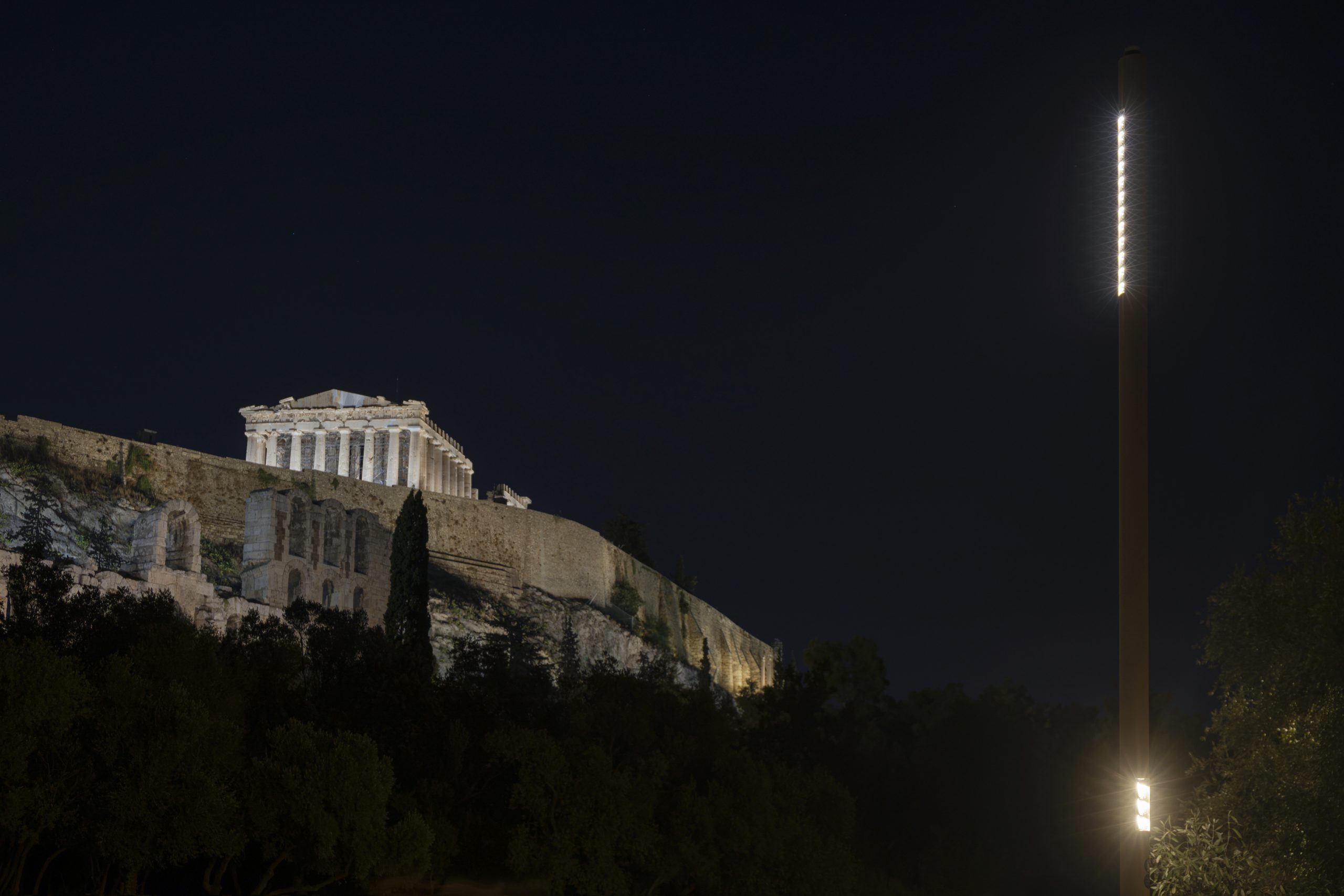
A New Lighting Identity for Athens’ Historic Walk

The Onassis Foundation has handed over to the Municipality of Athens the newly upgraded lighting scheme for Dionysiou Areopagitou and Apostolou Pavlou Streets.

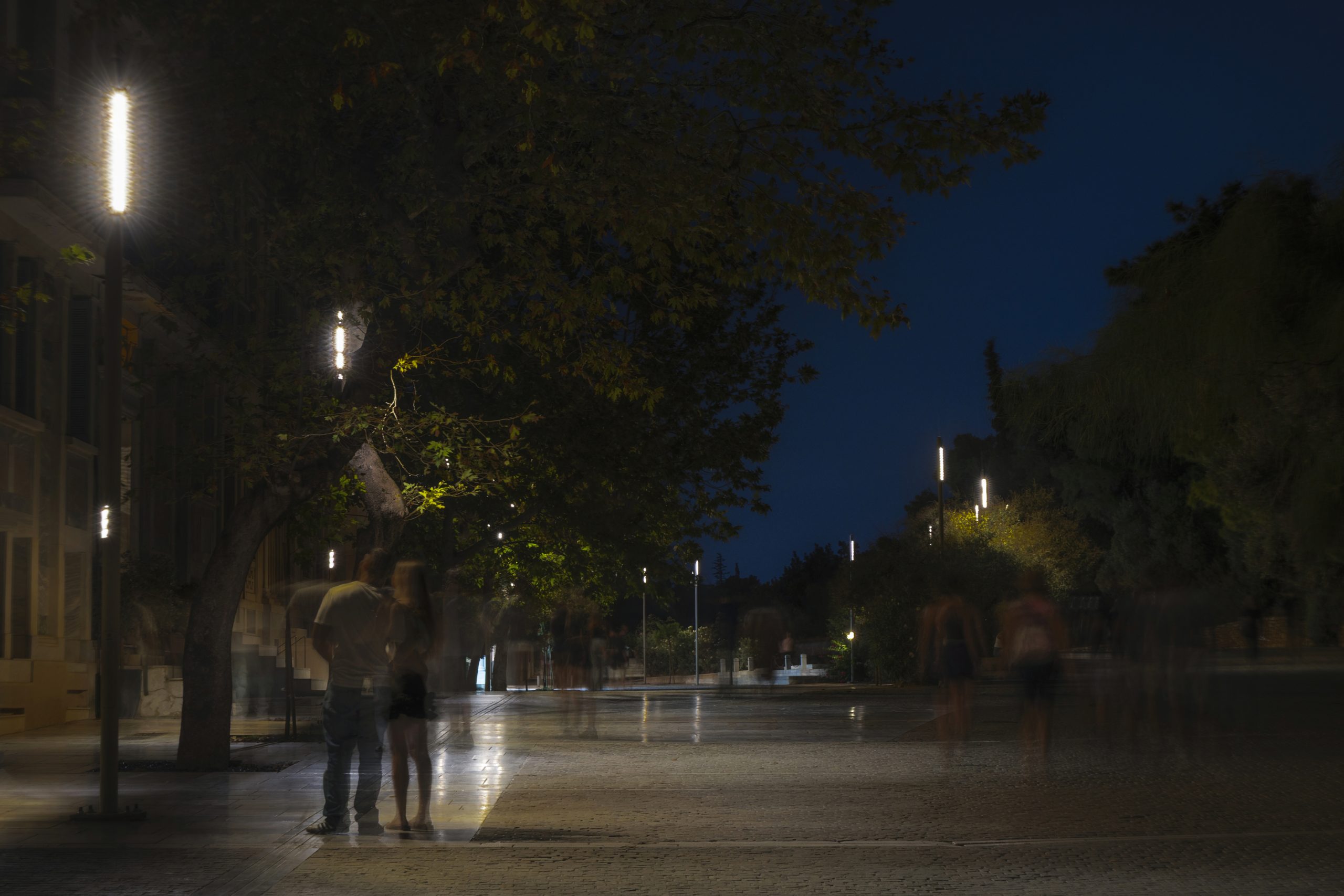
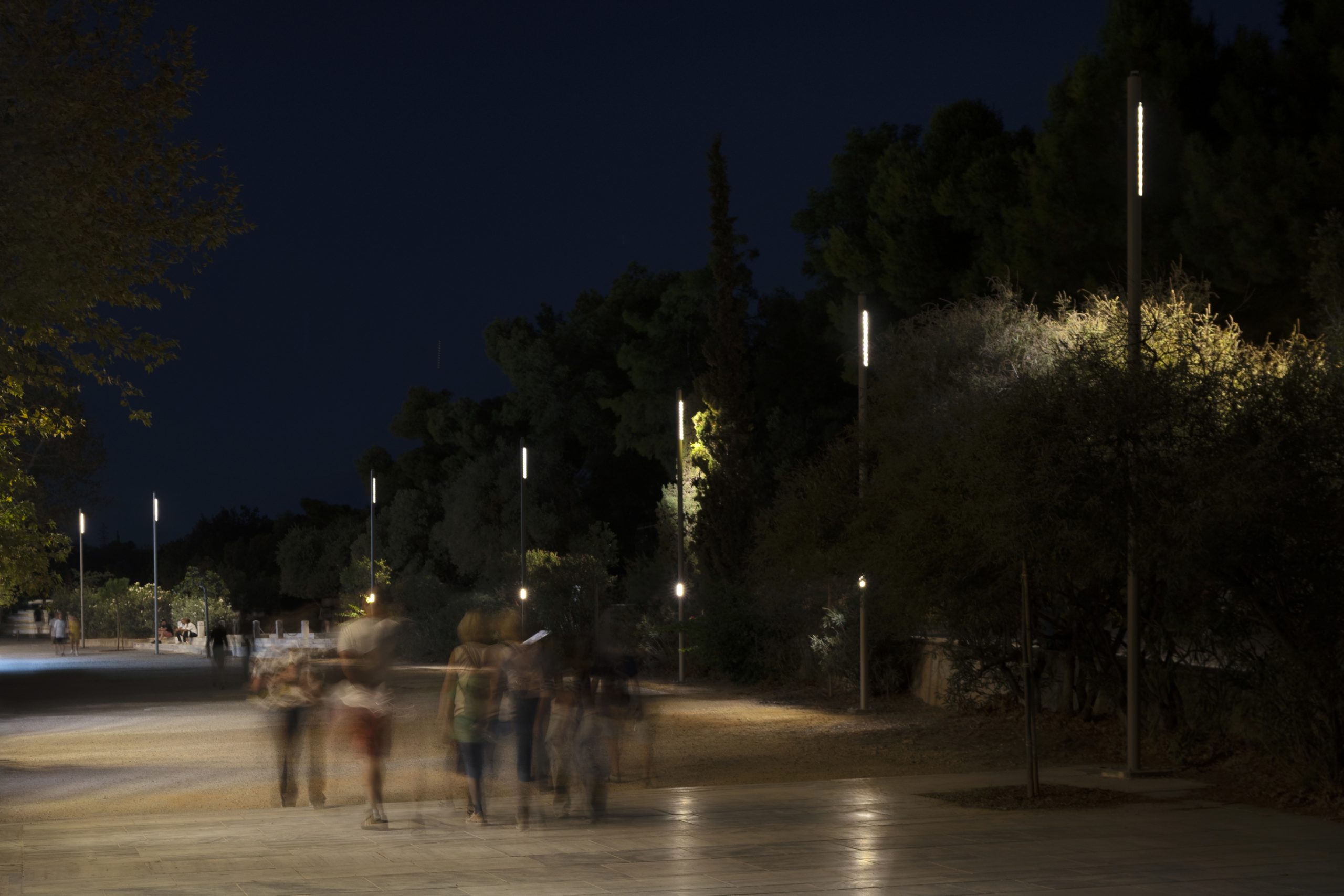
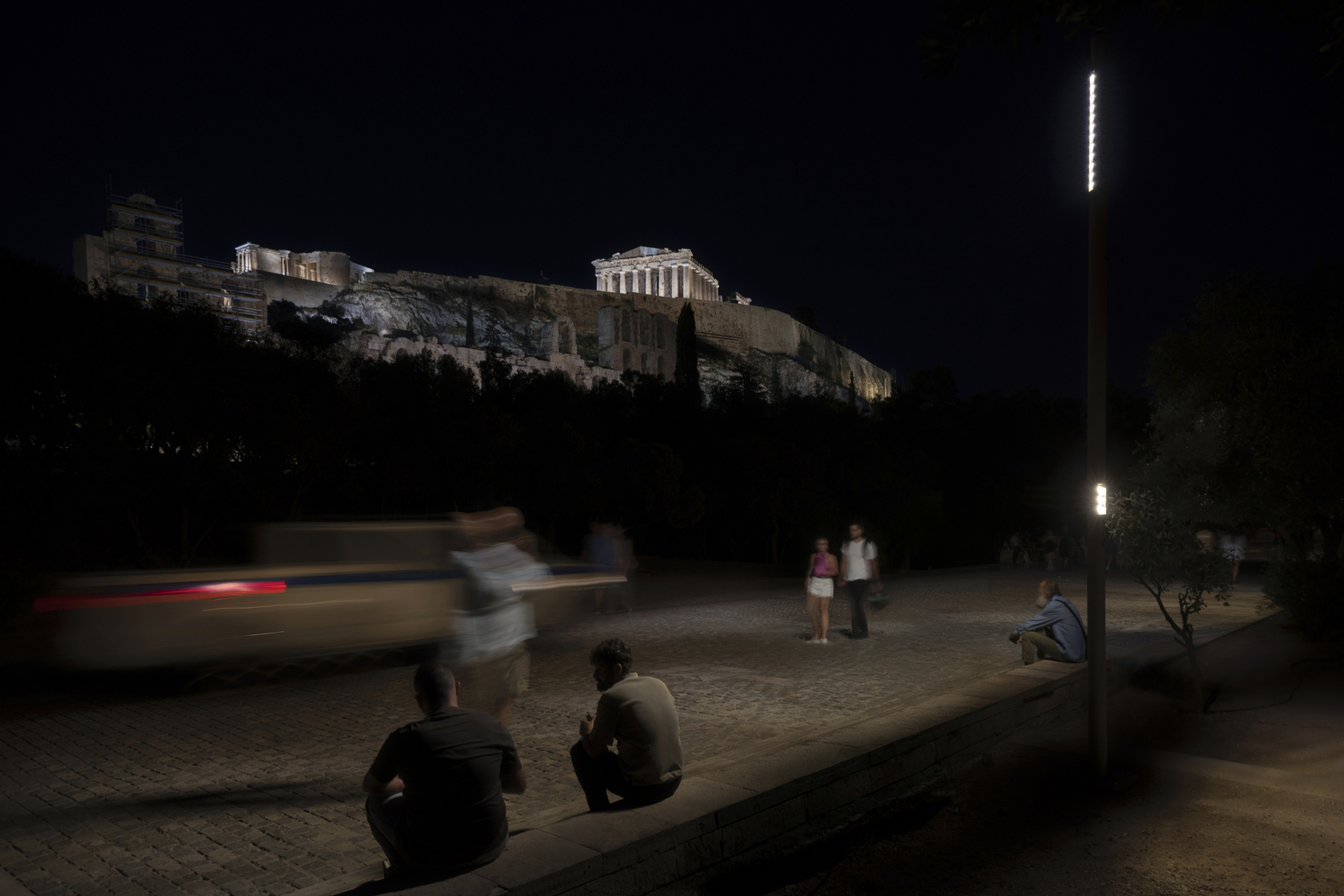
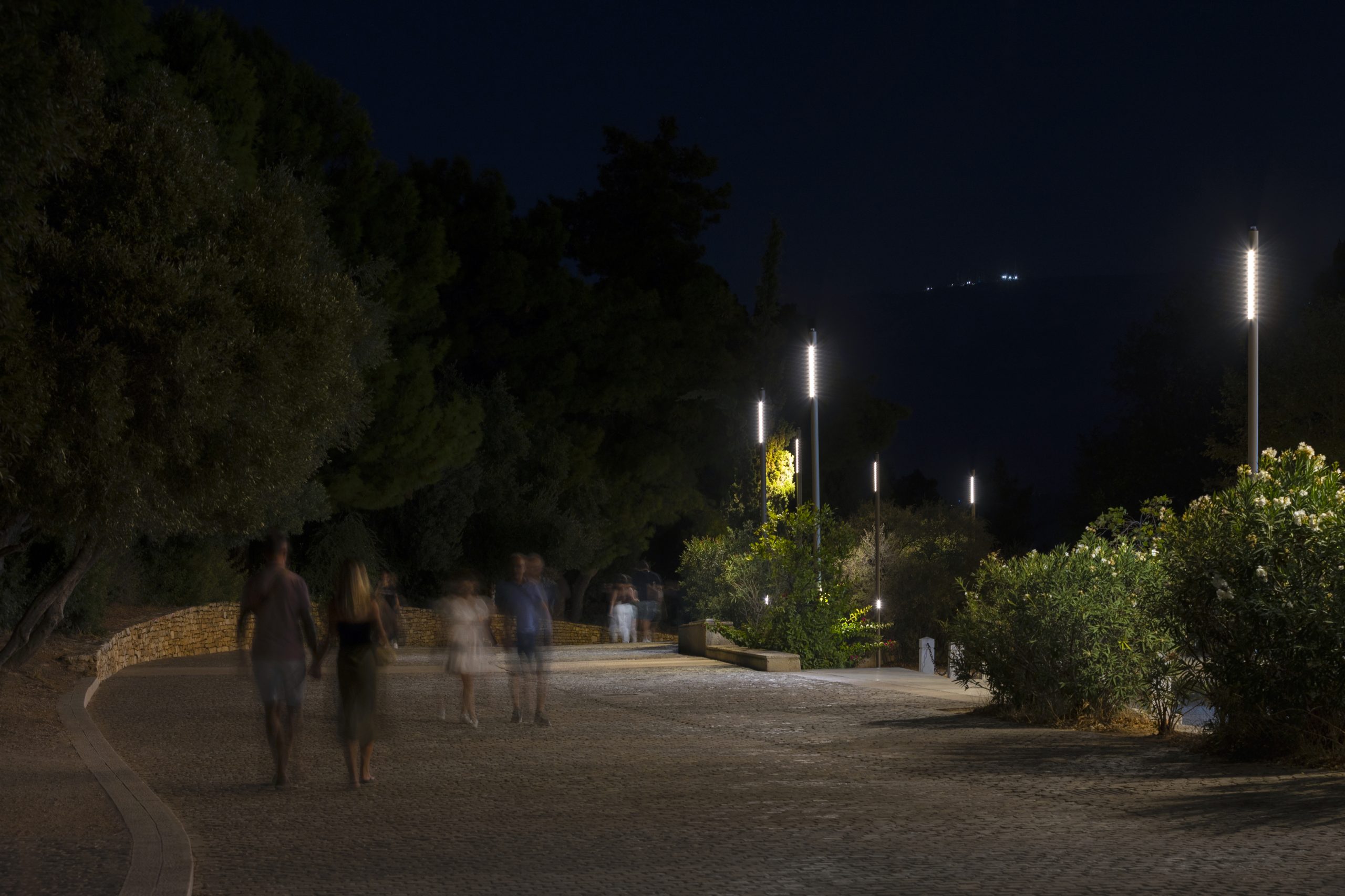
One of Athens’ most iconic walks has been given a new lighting identity with the support of the Onassis Foundation, with 125 new lighting columns installed along Dionysiou Areopagitou and Apostolou Pavlou Streets. Designed by lighting designer Eleftheria Deko, the project integrates discreetly into the monumental and natural landscape surrounding the Acropolis, highlighting the route while enriching the experience of the walk after dark.

The project was officially handed over to the Municipality of Athens by Onassis Foundation President Antonis S. Papadimitriou on Monday, 5 October, symbolically completing a cycle of significant interventions in the Acropolis area aimed at highlighting the site and its surrounding landscape, improving accessibility and enhancing the experience for residents and visitors alike.

The event was attended by representatives of the political and institutional community, as well as members of the press. Remarks were delivered by Antonis S. Papadimitriou, President of the Onassis Foundation; Minister of Culture Lina Mendoni; Mayor of Athens Haris Doukas; and Eleftheria Deko.

Antonis S. Papadimitriou, President of the Onassis Foundation, said: “The new lighting of Dionysiou Areopagitou and Apostolou Pavlou concerns one of Athens’ most important public spaces, a place where history forms part of the city’s everyday life. For the Onassis Foundation, highlighting cultural heritage has always been connected to access: to the possibility for everyone to experience and enjoy this shared space.

“Our collaboration with Eleftheria Deko continues through this project, with the same sensitivity towards the historical and natural environment that has characterised our previous collaborations. The lighting of the Acropolis, the improvement of accessibility to the Acropolis Hill and the tactile route all express the same principle we share at the Onassis Foundation: that culture is a matter of democracy and that cultural heritage should be open to everyone. Our ongoing collaboration with the Ministry of Culture and the Municipality of Athens is crucial in turning initiatives such as these into reality.”

Lighting designer Eleftheria Deko explained: “Dionysiou Areopagitou–Apostolou Pavlou: I don’t think there is another road in the world with such a view, one that has moved poets and everyday walkers as much as this one. And while poets speak of natural light, since once there was no other, we dared, through artificial light, to evoke in the nocturnal image the emotion they describe.

“With respect and restraint, as with the monuments in 2020, so now with the route that surrounds them, our primary concern was not to introduce unnecessary elements or obstruct views towards the monuments. The lighting is achieved through fixtures mounted on simply designed, five-metre-high columns, created to stand the test of time and finished in a special sand colour so that they remain discreet during the morning hours.

“With a warm light, reminiscent of the colour of the walls, and at an intensity that does not compete with the Acropolis and its monuments, the illumination is pleasant and sufficient for a carefree walk with friends or for the quiet contemplation of a solitary walker. The light does not disrupt our connection with the ancient past; instead, it brings it closer to the present.”

The Lighting of the Historic Route

The intervention builds on previous projects in the area designed by Eleftheria Deko and realised with the support of the Onassis Foundation. In 2020, Deko oversaw the renewal of the lighting of the Acropolis Hill and its monuments—an initiative of the Ministry of Culture carried out through a donation and commission by the Foundation. More recently, she designed the lighting for the sculpture of C. P. Cavafy on Dionysiou Areopagitou, created by sculptor Praxiteles Tzanoulinos.

The new lighting scheme was designed to highlight the route around the Acropolis with the lightest possible intervention, while respecting the area’s distinctive monumental landscape. A total of 125 new lighting columns have been installed, 106 in existing positions and just 19 in new locations. All are positioned on the side of the buildings, ensuring unobstructed views towards the Parthenon.

Their design is understated and discreet, finished in a special sand tone that allows them to blend harmoniously into their surroundings and “converse” with the stone and materials of the monuments.

In certain locations, the lighting has been designed to frame elements of the archaeological landscape to their best advantage. At the same time, low-level fixtures have been installed along the adjacent path of Dionysiou Areopagitou and on Theorias Street, enhancing the existing levels of illumination, while subtle planting illumination has been introduced in areas that had previously remained in darkness.

As part of the intervention, archaeological remains have also been illuminated for the first time, including the Roman cistern shortly before the entrance to the Odeon of Herodes Atticus.

The new lighting fixtures have a long lifespan, while their operation can be remotely controlled and adjusted by the relevant services of the Municipality of Athens. Special lenses and accessories help prevent glare and light pollution, creating greater uniformity while enhancing both the safety and the overall experience of the route—without allowing the light to overpower the landscape itself.

Completing a Cycle of Interventions in the Acropolis Area

The project marks the culmination of a wider series of initiatives undertaken and supported by the Onassis Foundation in the Acropolis area over the past six years, in collaboration with the Ministry of Culture, the Municipality of Athens and the relevant institutional bodies.

These interventions include the upgrade of the lighting of the monuments and the Acropolis Hill (2020), the installation of a modern inclined lift (2020), and the improvement of routes for people with mobility difficulties (2020).

This was followed by the creation of a tactile route and specialised visitor-guidance tools for people with visual impairments (2022), as well as the railing and site-furnishing project at the Acropolis archaeological site (2022–2023), which included the design, construction and installation of new seating, waste bins and lighting bases.

In 2023, the Foundation supported the project for managing rainwater at the Acropolis and its Northern Slope, while the upgrade of active and passive safety systems was completed in 2023–2024.

With the completion of the intervention along Dionysiou Areopagitou and Apostolou Pavlou, this commitment now extends from the Acropolis Hill itself to the historic walk that surrounds it.

From the protection of monuments and infrastructure to accessibility and the enhancement of visitors’ everyday experience of public space, these interventions reflect a consistent vision of the Onassis Foundation: that cultural heritage acquires its true meaning when it remains alive, visible and in an ongoing relationship with the city and society.

Author